
Search the Site with

|
Search the Site with
|
 General Characteristics Crew List Memorabilia History Homeports of USS Jefferson City Patch Gallery Image Gallery to end of page
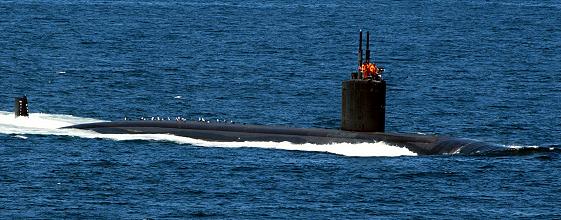 |  |
USS JEFFERSON CITY is the 48th attack submarine in the LOS ANGELES class and the 21st ship in that class built by Newport News Shipbuilding in Newport News.
| General Characteristics: | Awarded: November 26, 1984 |
| Keel laid: September 21, 1987 | |
| Launched: August 17, 1990 | |
| Commissioned: February 29, 1992 | |
| Builder: Newport News Shipbuilding Co., Newport News, Va. | |
| Propulsion system: one nuclear reactor | |
| Propellers: one | |
| Length: 360 feet (109.73 meters) | |
| Beam: 33 feet (10 meters) | |
| Draft: 32,15 feet (9.8 meters) | |
| Displacement: Surfaced: approx. 6,300 tons Submerged: approx. 7,100 tons | |
| Speed: Surfaced: approx. 15 knots Submerged: approx. 32 knots | |
| Armament: | |
| Cost: approx. $900 million | |
| Homeport: Apra Harbor, Guam | |
| Crew: 13 Officers, 116 Enlisted |
 back to top go to the end of the pageback to top go to the end of the page
Crew List:
This section contains the names of sailors who served aboard USS JEFFERSON CITY. It is no official listing but contains the names of sailors who submitted their information.
back to top go to the end of the pageback to top go to the end of the pageUSS JEFFERSON CITY History:
The nuclear-powered fast-attack submarine USS JEFFERSON CITY is an improved LOS ANGELES-class boat named for the capital of the state of Missouri. The construction contract was awarded to Newport News Shipbuilding on November 26, 1984. Her keel was laid at Newport News, Virginia, on September 21, 1987, she was launched on August 17, 1990, and she entered commissioned service as a U.S. Navy attack submarine on February 29, 1992.
Following commissioning, JEFFERSON CITY completed the standard period of post-delivery trials, shakedown operations and crew training typical for a new U.S. nuclear submarine. Those early years in service are only briefly summarized in publicly available sources, which note routine operations and exercises in support of U.S. Pacific Fleet tasking but do not provide detailed port lists or day-by-day movements, reflecting the generally classified nature of submarine operations.
The first clearly documented major operation in the boat's career came in 1996, during a deployment with the battle group built around the aircraft carrier USS CARL VINSON (CVN 70). In the mid-1990s, CARL VINSON and her escorts were heavily involved in enforcing Iraqi no-fly zones and maritime sanctions in the Arabian Gulf under U.S. Central Command. In the summer of 1996, the battle group moved into the region as tensions with Iraq increased. On September 3-4, 1996, U.S. forces carried out Operation DESERT STRIKE, a cruise-missile campaign intended to punish Saddam Hussein's regime for ground operations against Kurdish areas in northern Iraq and repeated violations of United Nations Security Council Resolution 688. During DESERT STRIKE, guided-missile cruiser USS SHILOH (CG 67), guided-missile destroyers USS LABOON (DDG 58) and USS RUSSELL (DDG 59), destroyer USS HEWITT (DD 966) and attack submarine USS JEFFERSON CITY collectively launched at least thirty-one Tomahawk land-attack missiles at Iraqi air-defense sites. CARL VINSON served as the strike group's flagship and also exchanged data with JEFFERSON CITY during the operation, integrating the submarine's Tomahawk launches into the overall strike plan.
After these combat operations, JEFFERSON CITY remained in the U.S. 5th Fleet area of responsibility. A surviving extract from the boat's 1996 command history shows that she conducted a port visit to Bahrain from September 30 to October 2, 1996, followed by further at-sea operations from October 3 to 6. Although the brief extract does not describe the nature of those subsequent operations, the timing places them squarely in the continuing pattern of maritime enforcement and presence operations in the Arabian Gulf that followed DESERT STRIKE.
Through the later 1990s, the submarine continued to alternate between deployments and maintenance. Public summaries of her command histories indicate additional operations in both the Western Pacific and the 5th Fleet region, but detailed day-by-day accounts and complete port lists for those years remain unpublished. What is clear is that by the turn of the century JEFFERSON CITY had settled into the typical rhythm of a forward-deploying U.S. attack submarine, conducting long deployments in support of carrier strike groups and theater commanders and returning periodically to the U.S. West Coast for upkeep and crew turnover.
In 2003, JEFFERSON CITY entered Puget Sound Naval Shipyard in Bremerton, Washington, for an extended overhaul and modernization period. This yard period formed part of the mid-life maintenance pattern for LOS ANGELES-class submarines, combining reactor-plant work, hull and mechanical repairs, and updates to combat and sonar systems. After completing this availability and post-overhaul trials, JEFFERSON CITY returned to frontline service with the Pacific Fleet.
By the mid-2000s, the boat was homeported at Naval Base Point Loma in San Diego, California, assigned to Submarine Squadron 11. Contemporary biographies of officers who served on board describe a sequence of demanding deployments from San Diego: a Western Pacific deployment, a separate Arabian Gulf deployment, and at least one dry-docking maintenance period. During this phase, JEFFERSON CITY earned significant recognition within the submarine force. Under the squadron's evaluation system she received the Battle Efficiency "E" award from Commander, Submarine Squadron 11 in 2006, and the ship as a unit was also awarded a Meritorious Unit Commendation, reflecting consistent high performance in both deployed operations and material readiness.
On September 11, 2007, JEFFERSON CITY departed San Diego for a six-month deployment to the Western Pacific. Photographs from that day show family members on the pier at Naval Base Point Loma as the submarine sailed, with the boat noted as one of five submarines assigned to SUBRON 11 and carrying a crew of around 140 sailors. During this deployment, JEFFERSON CITY operated across the Western Pacific under U.S. 7th Fleet, conducting a variety of missions that included theater security and exercises with regional partners. When she returned to San Diego on March 10, 2008, a Navy news release recorded that the deployment had included port visits to Yokosuka and Sasebo in Japan, to Guam, and to Saipan. The same account notes that the boat encountered challenging weather - including a hurricane - during the cruise, but completed all assigned missions and returned safely to her homeport.
The submarine deployed again from San Diego in late 2009. On October 14, 2009, JEFFERSON CITY got underway from Naval Base Point Loma for a scheduled deployment to the Western Pacific. After roughly six months at sea she returned to San Diego on April 14, 2010. Navy imagery and captions from that day describe the deployment as one that combined operations in the U.S. 5th Fleet area of responsibility - which includes the Arabian Gulf and adjacent waters - with missions in the Western Pacific under 7th Fleet. Over the course of the cruise, JEFFERSON CITY covered more than 40,000 nautical miles and made port visits in Japan, Bahrain and Singapore, underscoring the boat's dual role as both a forward-deployed combatant and a visible symbol of U.S. presence in key regional ports.
In February 2011, a new commanding officer took charge of JEFFERSON CITY, and under his command the submarine undertook another major deployment, this time focused on the Arabian Gulf. Biographical material and submarine-association reports describe this 2011-2012 deployment as a cruise to the Arabian Gulf that earned the boat a Meritorious Unit Commendation and the Battle Efficiency "E" for 2012. The recognition reflects the intensity of the operational tempo in that theater at the time, with U.S. submarines supporting broader maritime security operations, intelligence collection and, where directed, strike-warfare tasking connected to ongoing conflicts in Iraq and Afghanistan and to wider regional stability missions.
One specific episode from this deployment is documented in a Navy news story released on December 26, 2011. During that cruise, JEFFERSON CITY made at least two port calls to Bahrain. After a scheduled visit to Manama, the boat departed Bahrain on December 21, 2011, following several days in which sailors had the opportunity to visit local cultural sites, shop and contact families at home. The article explicitly notes that this was the second Bahrain port visit of that deployment, demonstrating the pattern of JEFFERSON CITY shuttling between operational patrols in the Arabian Gulf and periodic logistics and liberty stops in the kingdom, which hosts the U.S. 5th Fleet headquarters.
Following her return from the Arabian Gulf, JEFFERSON CITY continued to be based in San Diego. In early 2013, however, U.S. defense-budget sequestration led to the cancellation of several planned deployments. A contemporary report in a naval-affairs periodical notes that the frigate USS RENTZ (FFG 46) and the attack submarine USS JEFFERSON CITY, both based at San Diego, were kept in port rather than undertaking scheduled deployments, with the Navy explicitly attributing the decision to budget-driven limitations. This episode illustrates how fiscal factors occasionally influenced not only training schedules but also the operational employment of front-line submarines during that period.
In 2014, JEFFERSON CITY shifted her homeport away from San Diego. An official COMSUBPAC news release later recorded that in that year the submarine arrived in Hawaii from her previous homeport at Naval Base Point Loma, California. Once in Hawaii, JEFFERSON CITY conducted a regularly scheduled maintenance availability for upgrades and repairs and then deployed to the Indo-Pacific area of operations.
During her time in Hawaii the submarine underwent significant technical work on her vertical launch system. An engineering report from the Navy's manufacturing technology program notes that Pearl Harbor Naval Shipyard & Intermediate Maintenance Facility employed an advanced laser-cladding repair system (VLS-LCRS) to refurbish the sealing surfaces of vertical launch tubes on several LOS ANGELES-class submarines. After initial implementation on USS ASHEVILLE (SSN 758), the system was "effectively deployed on USS JEFFERSON CITY for the repair of her VLS tubes", reflecting how the boat's maintenance period was used to introduce new, longer-lasting repair techniques intended to extend the life of her Tomahawk launch infrastructure.
The most visible milestone in this Hawaiian maintenance phase came in late 2019. On November 12, 2019, JEFFERSON CITY departed Pearl Harbor Naval Shipyard after completing what was described as an engineering overhaul intended to prolong the submarine's service life. Navy photographs from that day show the boat getting underway from the shipyard, with captions explaining that shipyard workers and the crew had carried out multiple repairs, preventative maintenance tasks and equipment upgrades to both tactical systems and the propulsion plant during the extended yard period. The departure marked her return to active operations after several years largely confined to the shipyard.
Following post-overhaul sea trials and local operations out of Joint Base Pearl Harbor-Hickam, JEFFERSON CITY remained based in Hawaii for a further period, operating under Commander, Submarine Squadron 1 and later under broader COMSUBPAC control. Open sources record her participation within the Pacific Fleet's undersea force but, as is typical, do not provide a detailed public chronology of every exercise and patrol during these years.
In December 2021, the submarine's strategic position shifted once more. A COMSUBPAC news story dated December 16, 2021, reports that JEFFERSON CITY departed Joint Base Pearl Harbor-Hickam on December 8, 2021, and arrived at Naval Base Guam on December 16 following a formal change of homeport from Pearl Harbor to Guam. The article notes that she joined Submarine Squadron 15 at Polaris Point, placing her among a small group of LOS ANGELES-class fast-attack submarines forward-deployed to the Western Pacific. The release explains the broader context: the evolving security environment in the Indo-Pacific led the U.S. Navy to station its most capable ships and submarines forward, in order to achieve the fastest possible response times and to concentrate striking power close to key areas of interest.
Once based in Guam, JEFFERSON CITY began operating on a forward-deployed model, conducting shorter but more frequent patrols and exercises throughout the Western Pacific and wider Indo-Pacific region. Publicly available imagery and releases depict her in and around Guam and at sea in 7th Fleet waters, but as with earlier periods, the specifics of individual missions remain classified. What can be stated is that the boat routinely supported theater undersea warfare, surveillance and deterrence missions while also engaging in training and bilateral or multilateral exercises with regional partners when directed.
By 2024, JEFFERSON CITY had completed at least one deployment from Guam that is described in some detail. On October 27, 2024, she returned to Naval Base Guam following a deployment in the Indo-Pacific. A DVIDS news release and a contemporaneous article in Seapower magazine both report that she moored at her homeport that day after what was characterized as a "short" deployment. The public statements emphasize that during the cruise the submarine undertook "critical missions" that strengthened national security, enhanced operational maritime capabilities and contributed to deterrence in the region. They also note that thirty-eight members of the crew earned their submarine warfare insignia during the deployment, underscoring the intensive operational and qualification workload carried on board.
Those same 2024 accounts situate JEFFERSON CITY's current role clearly: as of late 2024 she is one of the LOS ANGELES-class fast-attack submarines forward-deployed at Polaris Point, Guam, under Commander, Submarine Squadron 15.
back to top go to the end of the pageHomeports of USS JEFFERSON CITY:
| Period | Homeport |
|---|---|
| commissioned at Norfolk, Va. | |
| 1992 - 2014 | San Diego, Calif. |
| 2014 - 2021 | Pearl Harbor, Hi. |
| 2021 - present | Apra Harbor, Guam |
back to top go to the end of the pageUSS JEFFERSON CITY Patch Gallery:
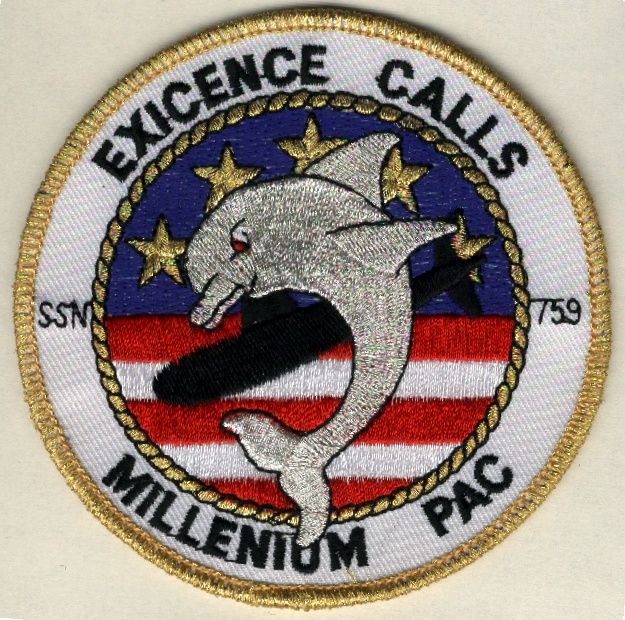 contributed by Ian Johnson |
back to top go to the end of the pageUSS JEFFERSON CITY Image Gallery:
 |  | 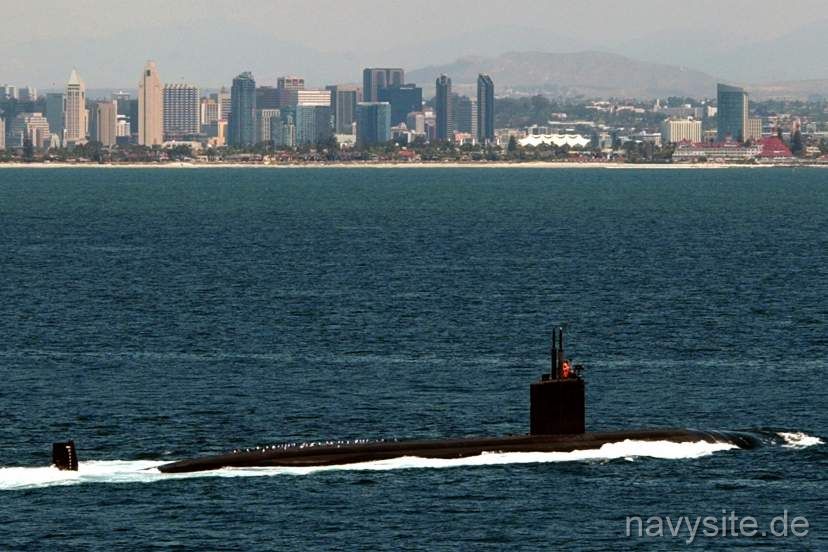 | 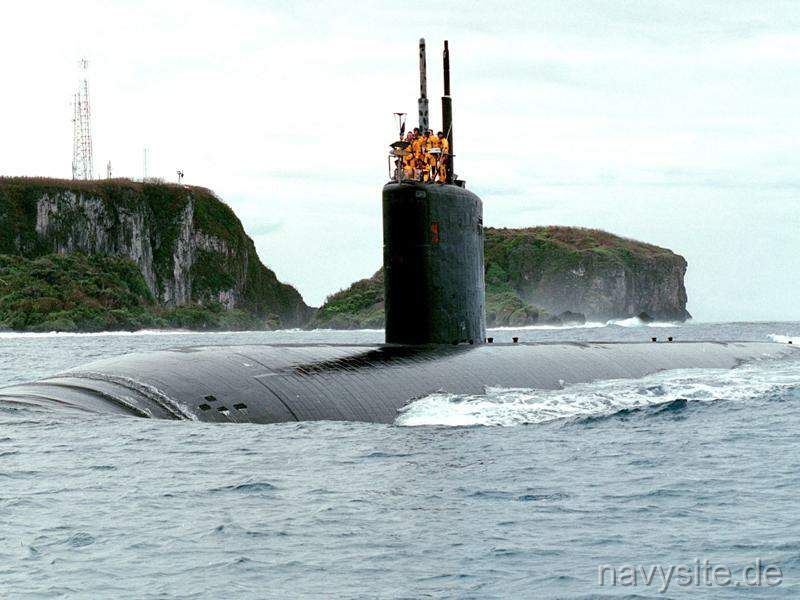 |
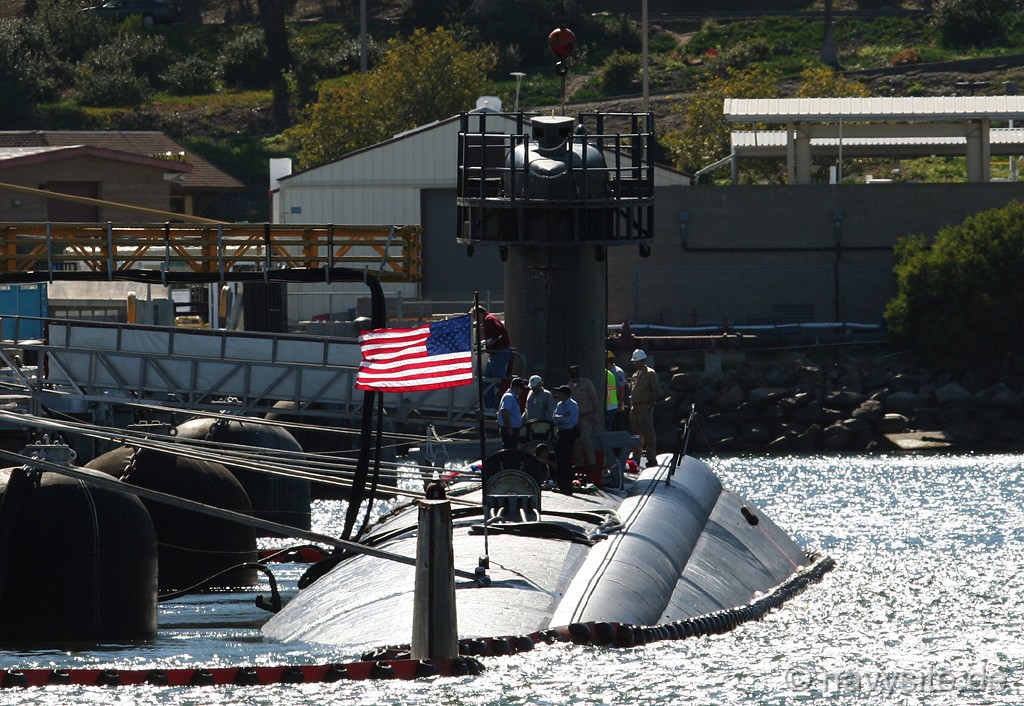
The photos below were taken by me and show the JEFFERSON CITY at Coronado, Calif., on March 10, 2008.
 |  |
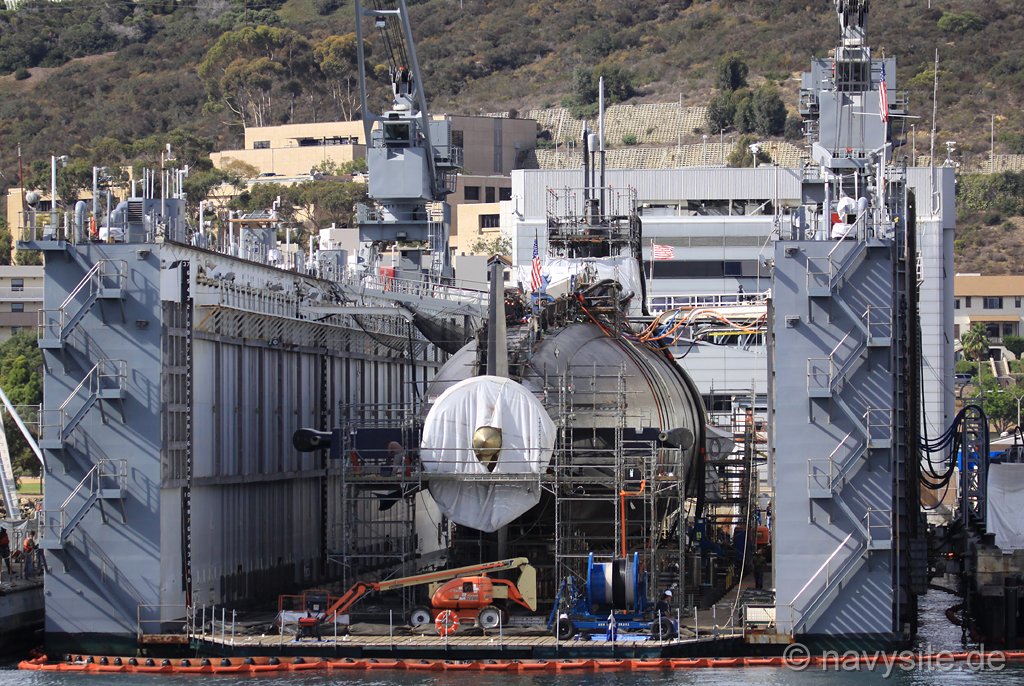
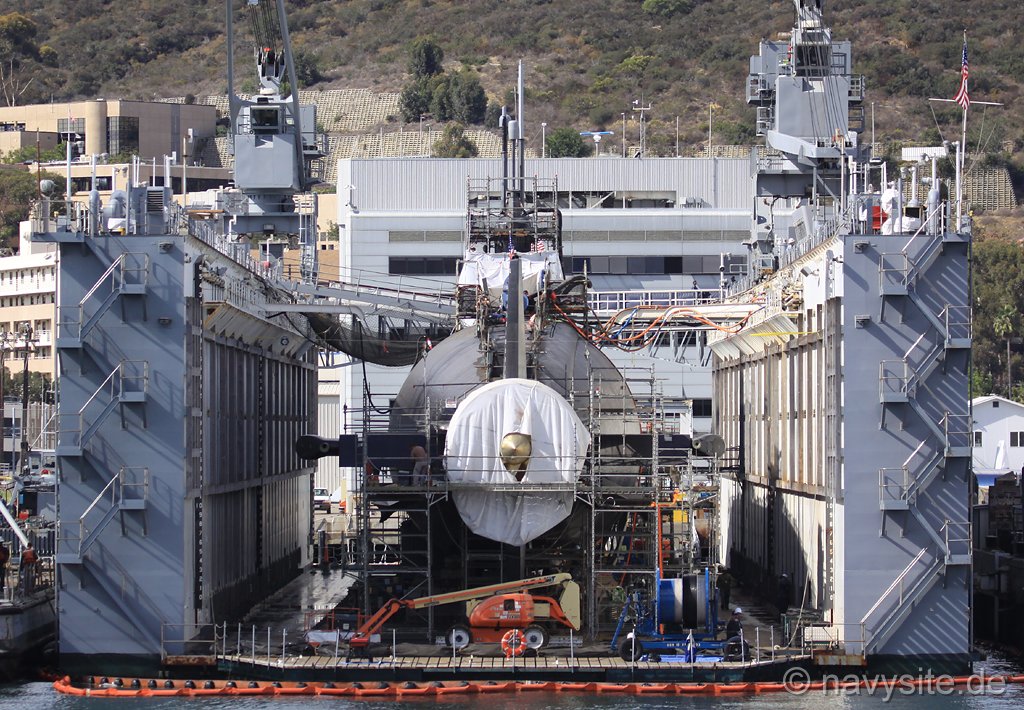
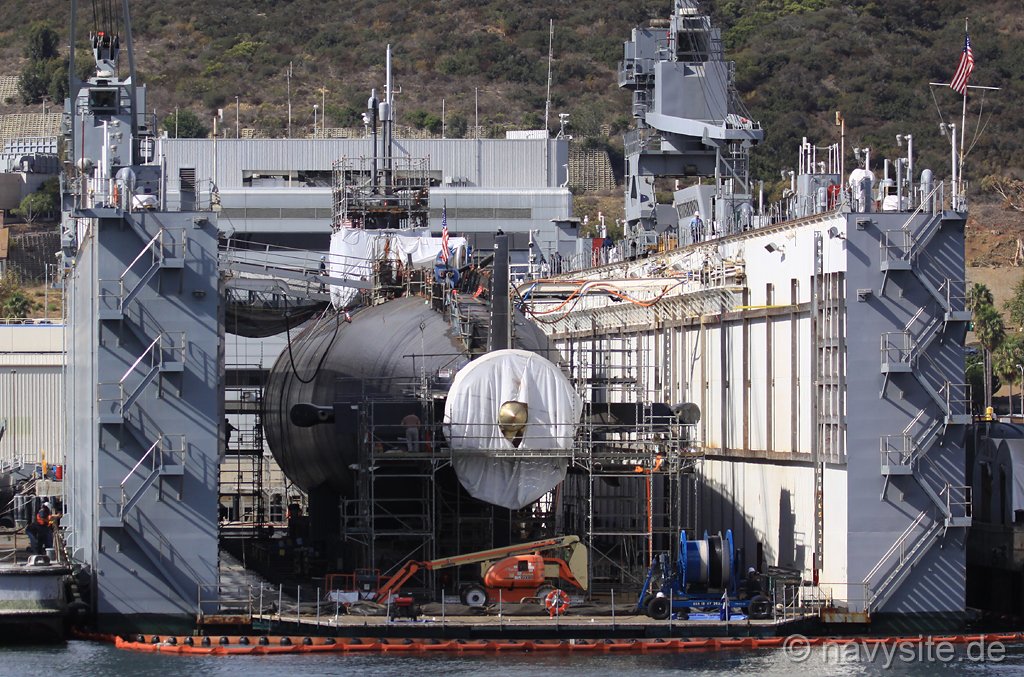
The photos below were taken by me and show the JEFFERSON CITY drydocked in ARCO (ARDM 5) at Submarine Base Point Loma, Calif., on October 11, 2012.
 |  |  |
back to top Back to Submarines list. Back to ships list. Back to selection page. Back to 1st page.