
Search the Site with

|
Search the Site with
|
 General Characteristics Crew List Memorabilia History Image Gallery to end of page
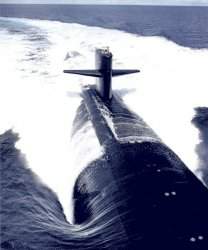 |  |
USS PITTSBURGH was the 33rd LOS ANGELES - class nuclear-powered Attack Submarine and the fourth ship in the Navy named after the city in Pennsylvania.
| General Characteristics: | Awarded: April 16, 1979 |
| Keel Laid: April 15, 1983 | |
| Launched: December 8, 1984 | |
| Commissioned: November 23, 1985 | |
| Inactivation: August 6, 2019 | |
| Decommissioned: April 15, 2020 | |
| Builder: Electric Boat Division of General Dynamics Corporation, Groton, Conn. | |
| Propulsion system: one nuclear reactor | |
| Propellers: one | |
| Length: 360 feet (109.73 meters) | |
| Beam: 33 feet (10 meters) | |
| Draft: 32,15 feet (9.8 meters) | |
| Displacement: Surfaced: approx. 6,000 tons Submerged: approx. 6,900 tons | |
| Speed: Surfaced: approx. 15 knots Submerged: approx. 32 knots | |
| Armament: | |
| Cost: approx. $900 million | |
| Crew: 12 Officers, 115 Enlisted |
 back to top go to the end of the pageback to top go to the end of the page
Crew List:
This section contains the names of sailors who served aboard USS PITTSBURGH. It is no official listing but contains the names of sailors who submitted their information.
back to top go to the end of the pageback to top go to the end of the pageUSS PITTSBURGH History:
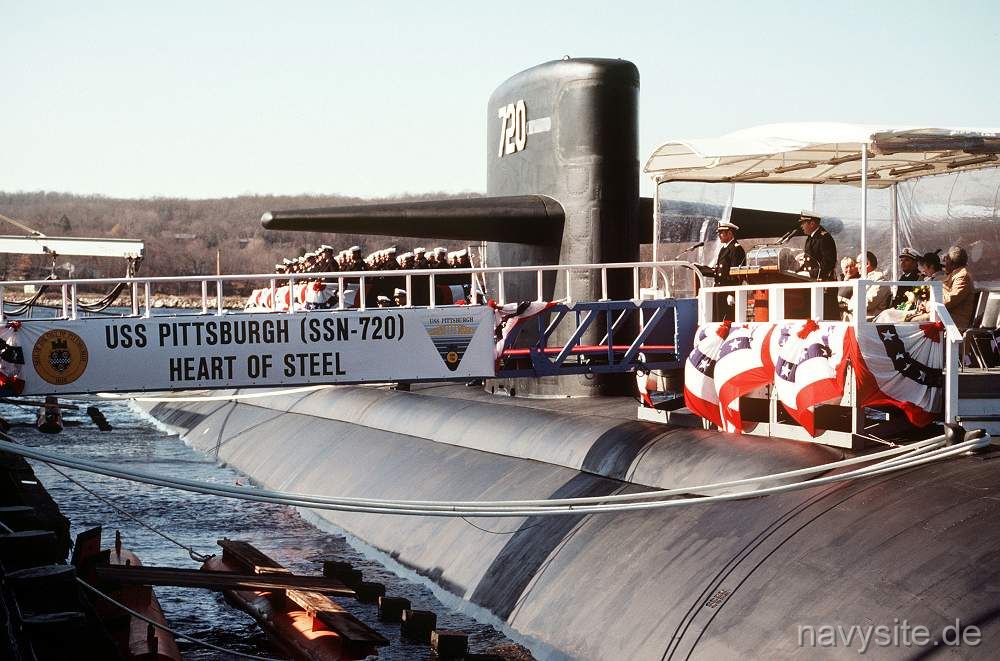
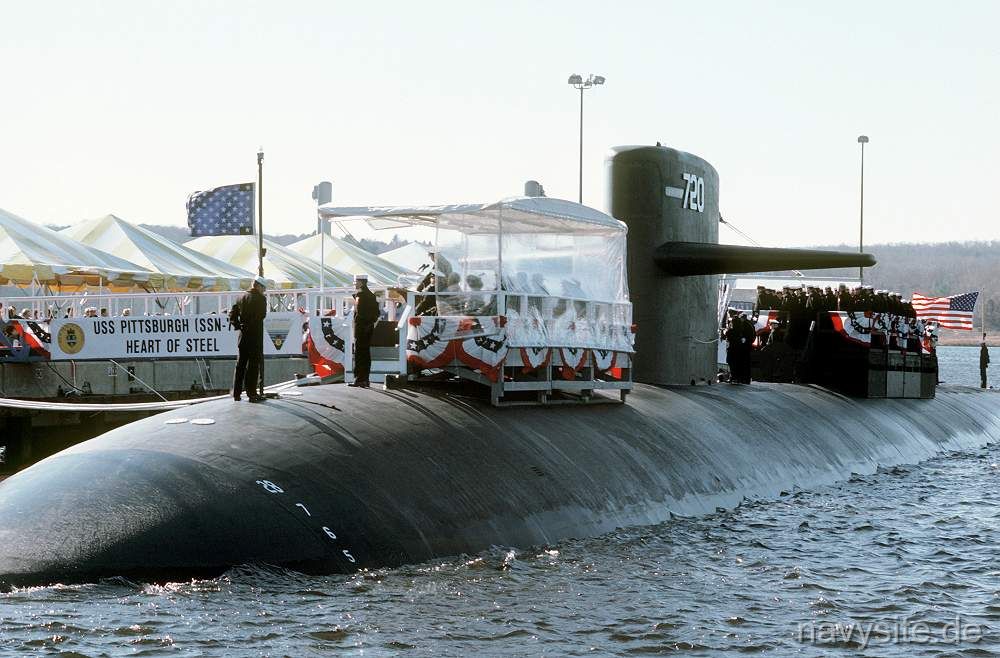
The origins of USS PITTSBURGH lie in the late Cold War expansion of the U.S. attack submarine force. The contract for the boat, an early "Flight I" LOS ANGELES-class nuclear-powered attack submarine, was awarded to General Dynamics' Electric Boat Division at Groton, Connecticut, on April 16, 1979, as part of a broader effort to field fast, quiet submarines optimized for long-range anti-submarine and strike operations against the Soviet Navy. Her keel was laid at Groton on April 15, 1983, she was launched on December 8, 1984, and delivered to the Navy on November 9, 1985. The submarine was christened and commissioned at Groton on November 23, 1985, with Professor Carol Sawyer as ship's sponsor, beginning a 35-year association with the city and with Submarine Base New London.
After commissioning, USS PITTSBURGH entered the typical cycle of post-delivery shakedown, weapons and systems trials, and tactical work-ups in the western Atlantic. Operating initially under Submarine Squadron 12 from Groton, she conducted exercises to prove her sonar suite, combat system, and propulsion plant, and qualified successive crews in all watch stations as she moved from new construction into routine fleet operations. These early years coincided with the final phase of the Cold War, when Atlantic attack submarines were heavily focused on tracking and, if necessary, countering Soviet submarines transiting between the Barents Sea, the Norwegian Sea, and the broader North Atlantic.
A major early milestone came in the autumn of 1986, when USS PITTSBURGH successfully conducted the first vertical launch of a Tomahawk cruise missile from a submarine using the then-new vertical launch system (VLS) installed in the LOS ANGELES-class. This test demonstrated the ability to fire land-attack cruise missiles from below the surface without occupying torpedo tubes, significantly increasing the class's strike capacity. In late summer 1987, the submarine carried out a Northern Atlantic deployment, during which she crossed the Arctic Circle for the first time, reflecting the continued emphasis on operations in the Norwegian Sea and adjacent waters as NATO monitored Soviet activity in the High North.
In the spring of 1988, after additional work-ups and evaluations, USS PITTSBURGH became the first submarine to receive formal certification for vertical Tomahawk launch, marking the transition from developmental testing to an operational strike capability. The performance of the crew during this period earned the boat her first Meritorious Unit Commendation. Two years later, in the spring of 1990, she deployed again to the North Atlantic, operating in an environment still dominated by NATO-Warsaw Pact competition even as political changes in Eastern Europe were accelerating. That deployment brought a second Meritorious Unit Commendation, underlining how quickly the ship had moved from a new construction unit to a front-line asset in Atlantic anti-submarine and surveillance operations.
When Iraq's invasion of Kuwait in August 1990 led to Operation Desert Shield and ultimately Operation Desert Storm, USS PITTSBURGH shifted from a primarily North Atlantic focus to Middle East contingency operations. In early 1991, she was deployed to the region as part of the U.S. and coalition maritime forces assembled to eject Iraqi forces from Kuwait and degrade Iraq's military capabilities. On April 2, 1991, USS PITTSBURGH joined USS LOUISVILLE (SSN 724) in launching Tomahawk land-attack cruise missiles against targets in Iraq, contributing to the wider strike campaign associated with Operation Desert Storm. For her combat service she received a Navy Unit Commendation and the Southwest Asia Service Medal, reflecting both the successful execution of strike missions and sustained operations in support of the campaign.
Following Desert Storm, the submarine returned to Atlantic and Mediterranean tasks as U.S. naval strategy adjusted to the post-Soviet environment but continued to maintain presence in the Middle East. In the spring of 1992, she supported the battle group built around the aircraft carrier USS SARATOGA (CV 60) in the Mediterranean and Arabian Gulf, participating in post-war containment and enforcement missions directed at Iraq. After this deployment, USS PITTSBURGH shifted homeport to Portsmouth Naval Shipyard at Kittery, on the Maine-New Hampshire border, to begin a Depot Modernization Period that ran through 1994. During this extended yard period, she received modernization upgrades to her combat systems and machinery, reflecting evolving requirements for strike warfare and intelligence collection in the new strategic environment. When the work was completed she returned to active operations, again associated with the Groton submarine community even as maintenance support continued to come from Portsmouth.
In the winter of 1995, USS PITTSBURGH earned another Meritorious Unit Commendation as she completed a demanding series of inspections, certifications and exercises that positioned her for renewed forward presence missions. In the summer of 1996, she deployed as part of the battle group centered on the carrier USS ENTERPRISE (CVN 65), heading for the Mediterranean and Arabian Gulf at a time of recurring tension with Iraq over sanctions and weapons inspections. During this period, the submarine supported Operations Vigilant Sentinel and Desert Strike, which combined maritime presence, air operations and cruise-missile strikes to signal U.S. resolve and to enforce no-fly and weapons-related restrictions on the Iraqi regime. In this role, USS PITTSBURGH exemplified the post-Cold War use of attack submarines for both covert surveillance and overt strike and presence missions in the Persian Gulf region.
In the spring of 1999 the submarine again moved to the front line of a European crisis when she deployed to both the Arabian Sea and the Adriatic Sea in support of Operation Allied Force, the NATO air campaign over the Federal Republic of Yugoslavia during the Kosovo crisis. From these waters, USS PITTSBURGH conducted operations that included intelligence collection and support to strike planning, contributing to maritime aspects of the NATO effort. For her performance in this campaign she received another Navy Unit Commendation, reflecting sustained effective operations in a complex joint and combined environment. Between deployments she continued to operate from the U.S. East Coast, conducting exercises with surface ships and maritime patrol aircraft, as well as providing services for training commands and supporting various inspections and evaluations.
The early 2000s saw the submarine again heavily engaged in the Middle East and adjacent regions as U.S. attention shifted toward counter-terrorism and renewed confrontation with Iraq. In the autumn of 2002, USS PITTSBURGH deployed to waters under both European Command and Central Command, including the eastern Mediterranean and northern Arabian Sea. During this period, she supported Operation Enduring Freedom and Operation Southern Watch, combining intelligence, surveillance and reconnaissance tasks with contingency strike readiness as coalition forces maintained pressure on the Taliban and al-Qaida in Afghanistan and continued enforcement of Iraqi no-fly zones. On March 21, 2003, at the opening phase of Operation Iraqi Freedom, she conducted a second strike campaign when she launched Tomahawk missiles against Iraqi targets, again employing the vertical launch system that had been proven on board her in the 1980s. Contemporary accounts note that this strike activity drew specific recognition from President George W. Bush as part of the broader coalition effort.
In 2004, USS PITTSBURGH turned south for a deployment under U.S. Southern Command in support of the evolving Global War on Terror. During this deployment she participated in the multinational exercise PANAMAX, a recurring maritime security exercise focused on the defense of the Panama Canal against a range of conventional and asymmetric threats. In PANAMAX, U.S. and partner-nation naval forces practiced maritime interdiction operations, coastal surveillance, and protection of critical infrastructure. The submarine's role included covert surveillance of shipping patterns and acting as a high-value asset to test coalition anti-submarine procedures. This period highlighted how an attack submarine built for Cold War North Atlantic operations had become a flexible tool in multi-national security cooperation efforts in the Western Hemisphere.
From September 2003 to January 2007, USS PITTSBURGH was commanded by an officer - CDR David J. Hahn - who would later become a senior admiral, and under his command the boat conducted additional deployments to the Caribbean Sea and the Pacific, as well as completing an engineered overhaul at Portsmouth Naval Shipyard in New England. These deployments reflected a pattern of global employment in which the submarine alternated between Atlantic, Caribbean and Pacific operating areas as fleet requirements shifted. After this tour, a successor commanding officer - CDR Andrew C. Jarrett - took the boat through another important phase: between roughly 2007 and June 2009, the submarine executed a deployment that covered both the U.S. Southern Command and U.S. Africa Command areas of responsibility, indicating operations off Latin America and in parts of the Atlantic and possibly African littoral regions. During the same period, USS PITTSBURGH earned the U.S. Fleet Forces Command Retention Excellence Award for 2008, an indicator of strong crew stability and personnel management at a time when submarine manning and retention were key concerns for the Navy.
On April 1, 2010, USS PITTSBURGH departed Groton for another six-month deployment to the European Command area of responsibility. Operating primarily in the North Atlantic and adjacent seas, she conducted missions that combined surveillance, exercises with allied navies and presence operations in strategically important waters. During this deployment, she made a series of port calls that underlined long-standing U.S. naval relationships in Europe: visits to Faslane, on the Clyde in Scotland; Haakonsvern near Bergen in Norway; Brest on the Atlantic coast of France; and Portsmouth in southern England. The boat returned to Naval Submarine Base New London on October 15, 2010, where a series of Navy photographs show her passing the museum ship NAUTILUS (SSN 571) on the Thames River and mooring as families assembled on the pier to welcome the crew after the regularly scheduled six-month deployment.
In the following years, USS PITTSBURGH remained heavily tasked. In 2012, she deployed to the Arabian Sea and broader Central Command region. Imagery from April 22, 2012 shows the submarine transiting on the surface in the Arabian Sea, illustrating her presence in waters that remained central to counter-terrorism, maritime security and regional stability missions more than a decade after the attacks of September 11, 2001. During this deployment, she took part in the multinational anti-submarine exercise Arabian Shark, conducted in the Arabian Sea and involving a Royal Navy TRAFALGAR-class submarine and other coalition units. The exercise focused on complex anti-submarine scenarios in a busy sea lane, and contemporary reports highlight that USS PITTSBURGH and the British submarine made a rare joint appearance on the surface for a group photograph at the conclusion of the exercise, symbolizing close U.S.-UK undersea cooperation.
Around this time, the Navy also continued to invest in the boat's material condition. In 2013, the Navy announced the completion of a 10-month Extended Drydocking Selected Restricted Availability (E-DSRA). After sea trials and a return to routine local operations out of Groton, the submarine entered another deployment cycle.
In November 2014, USS PITTSBURGH left Groton again for a six-month deployment under European Command. During this deployment, she executed the Chief of Naval Operations' maritime strategy in the Atlantic and northern European waters, conducting maritime security operations and missions described as "vital to national security" in contemporaneous Navy reporting. The boat steamed more than 30,000 nautical miles during this period and repeated a familiar pattern of port visits in northern Europe, calling at Haakonsvern in Norway, Rota in Spain, and Faslane in Scotland. She returned to her homeport at New London on May 12, 2015, under the command of CDR William E. Solomon III who emphasized the crew's performance in often severe weather and noted that a significant number of sailors had completed their submarine warfare qualification during the deployment. Later that year, in October and November 2015, the submarine marked the thirtieth anniversary of her commissioning, an occasion noted by the Naval History and Heritage Command in the context of a small group of ships reaching major service milestones.
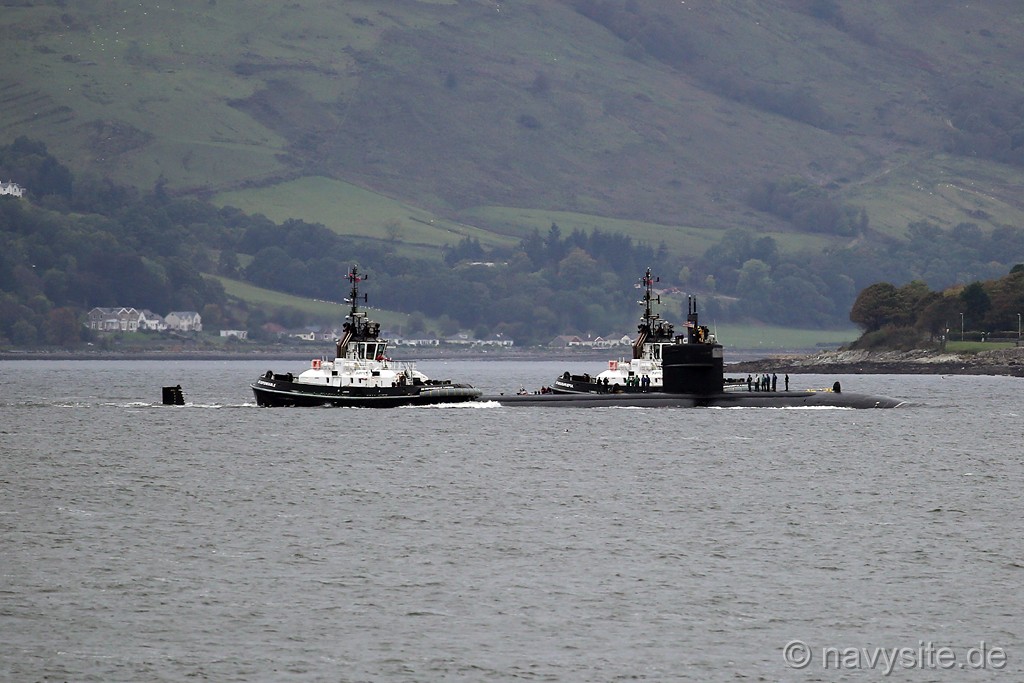
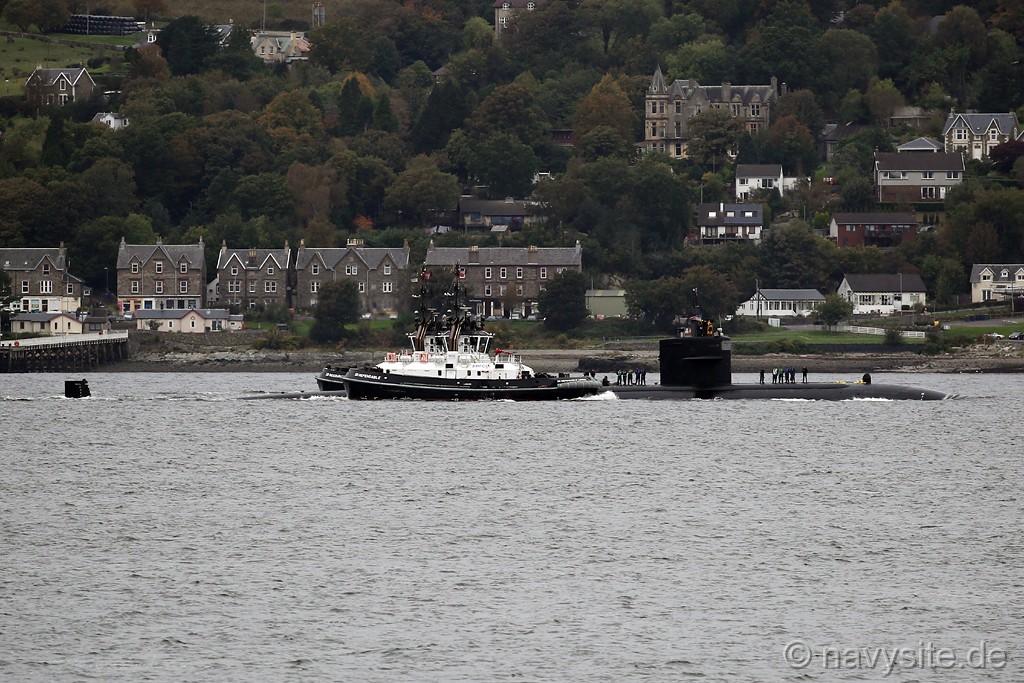
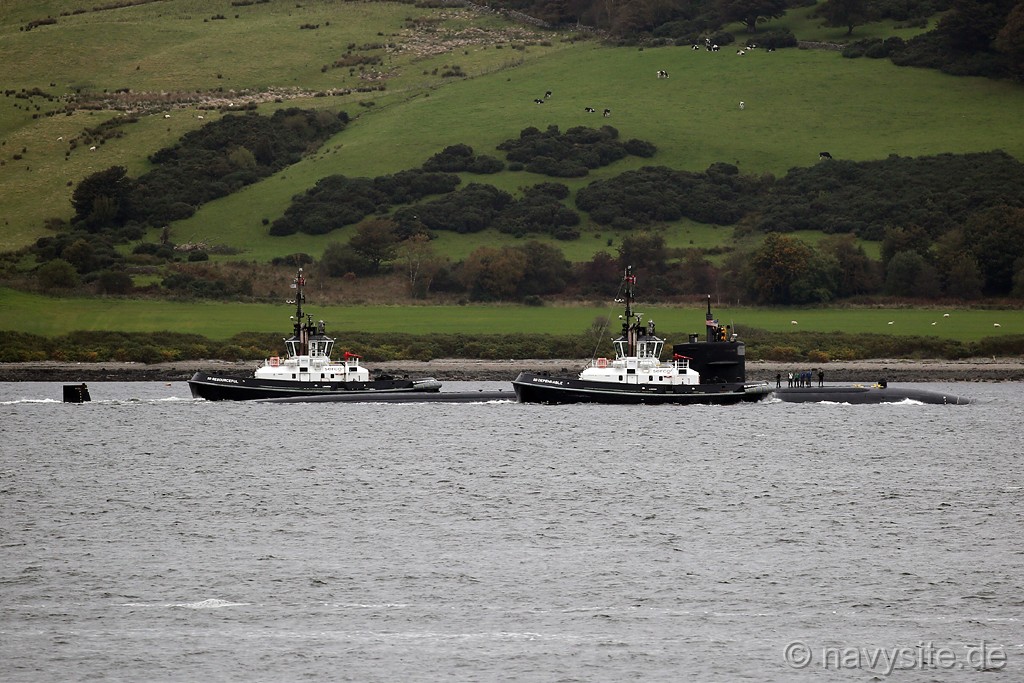
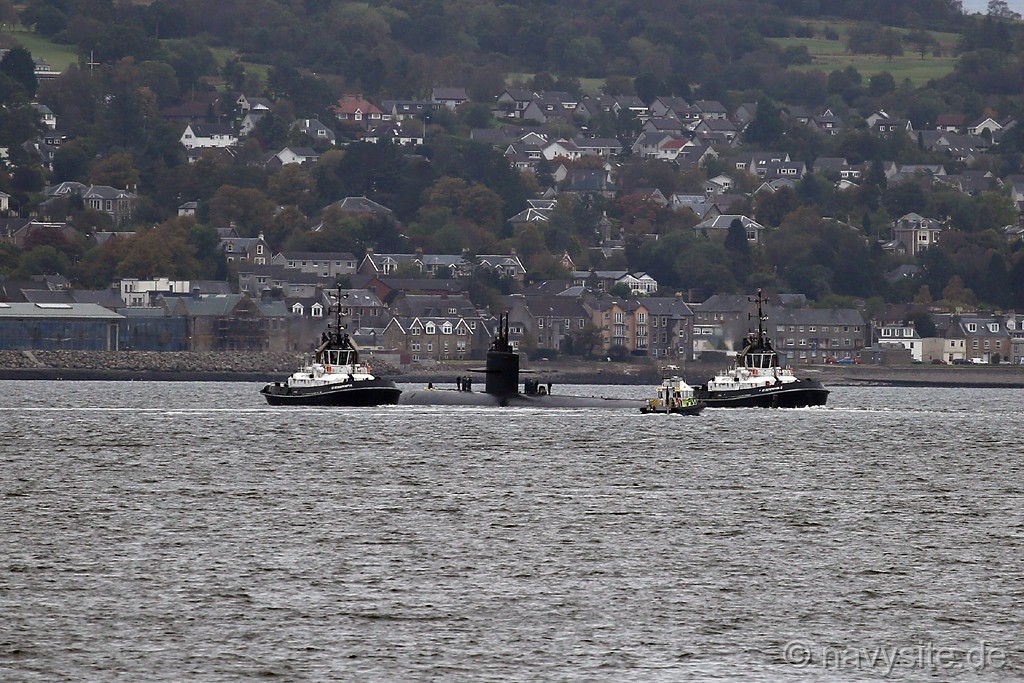
On August 17, 2016, USS PITTSBURGH left Groton for a scheduled six-month deployment to the U.S. 6th Fleet area of responsibility, operating under U.S. European Command. After her Atlantic transit, she made a routine liberty stop at naval station Rota in southern Spain, departing Pier 1 there on September 27, 2016, before continuing north toward the United Kingdom. In early October, she conducted a port visit to Faslane on the Clyde in Scotland, where photographs show the submarine alongside at HMNB Clyde on October 8 and 9. She put back to sea on October 12 after completing the visit and joining Exercise Joint Warrior. For the remainder of the deployment, USS PITTSBURGH carried out submerged operations, training events and presence missions in North Atlantic and European waters under 6th Fleet and European Command, contributing to broader NATO maritime security and surveillance efforts without public disclosure of specific patrol areas. The deployment concluded when she returned to naval submarine base New London, mooring at Pier 8S on February 17, 2017, after what official reporting described as a six-month deployment to the U.S. 6th Fleet area of responsibility.
The latter half of the 2010s combined continued operations with milestones that reflected the boat's longevity. On November 15, 2017, USS PITTSBURGH completed her 1,000th dive, an event marked in Navy imagery and described as a historic achievement for a three-decade-old attack submarine. The photographs show the crew and commanding officer, by then CDR Neil Colston, marking the occasion at Groton, underscoring the enduring relationship between the submarine and her Connecticut homeport. Around this period, she continued to conduct shorter underways, exercises, and local operations, including visits to East Coast ports such as Port Canaveral and Kings Bay associated with training and fleet support tasks.
In her final operational cycle, USS PITTSBURGH was commanded by CDR Jason Deichler, a native of the Pittsburgh area. Under his leadership the submarine undertook her last deployment to the European Command area of responsibility in late 2018. While exact departure dates are not publicly specified, Navy reporting shows that she returned to Submarine Base New London on February 25, 2019, after steaming approximately 39,000 nautical miles. During this final deployment she again combined maritime security operations and execution of the maritime strategy in the North Atlantic and adjacent waters, and she made port visits to Faslane, Rota and Haakonsvern, continuing long-standing patterns of cooperation with the United Kingdom, Spain and Norway. The homecoming on February 25, 2019, was accompanied by traditional "first hug" and "first kiss" ceremonies on the pier, as documented by official photographs and news stories, and was widely noted in Pittsburgh-area media as the end of the boat's last deployment.
With operational deployments complete, the submarine prepared for inactivation. After a short period of post-deployment stand-down and preparations at Groton, USS PITTSBURGH departed New London for the last time and conducted her first Arctic transit, taking a high-latitude route to the Pacific Northwest for her final homeport change. She arrived at Naval Base Kitsap-Bremerton on May 28, 2019, to begin the inactivation and decommissioning process at Puget Sound Naval Shipyard, as recorded in Navy press releases and defense media coverage. There, she joined other LOS ANGELES-class submarines in various stages of the Navy's submarine recycling program, marking a shift from operational status to a lengthy technical and administrative process focused on defueling and safe disposition of the hull.
The Navy held a formal inactivation ceremony for USS PITTSBURGH at the U.S. Naval Undersea Museum in Keyport, Washington, on January 17, 2020. The event, attended by current and former crew members, families, and senior officers including a rear admiral who had earlier served aboard the submarine, commemorated thirty-five years of service and highlighted key episodes from her operational history: early Cold War patrols, pioneering vertical-launch Tomahawk work, combat operations in the 1991 and 2003 Iraq conflicts, and repeated deployments to the North Atlantic, Mediterranean, Arabian Sea, Caribbean and Pacific. On April 15, 2020, exactly thirty-seven years after her keel was laid, USS PITTSBURGH was formally decommissioned at Bremerton, her crew was released to other assignments, and the boat moved fully into the submarine recycling program phase.
back to top go to the end of the pageUSS PITTSBURGH Image Gallery:
 |  | 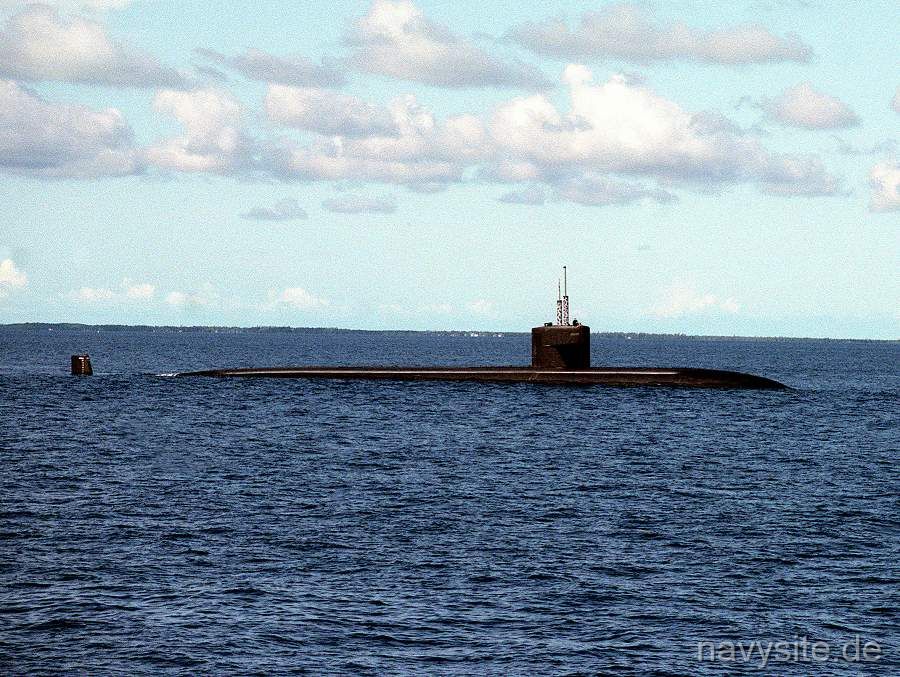 | 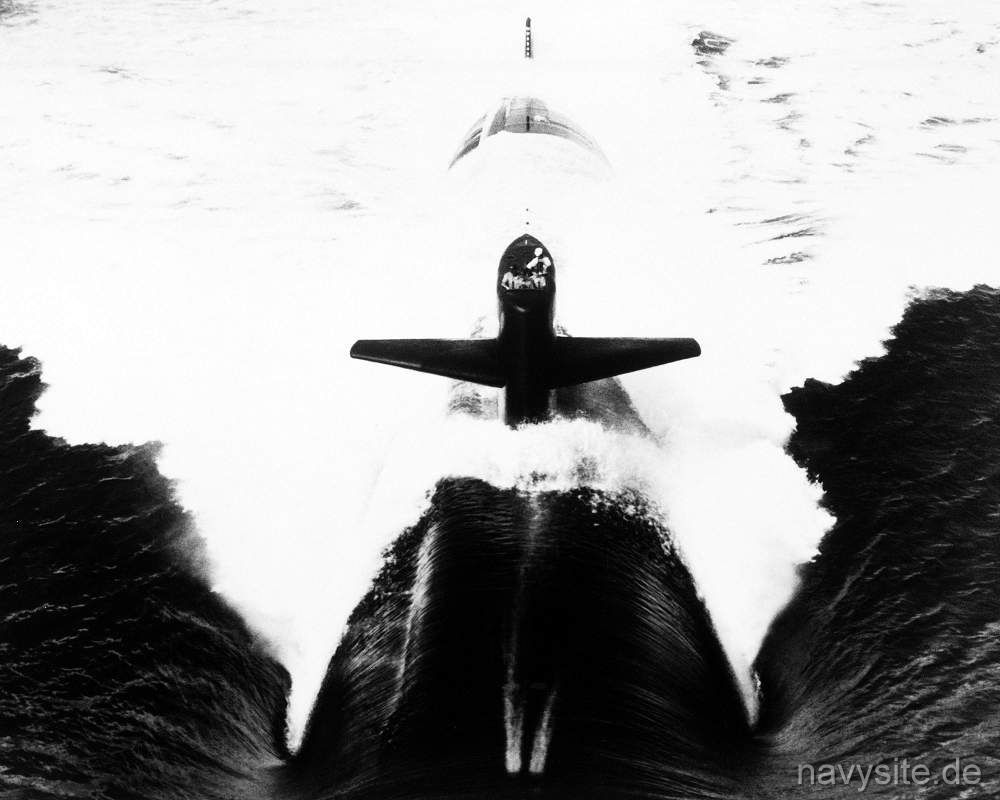 |  |
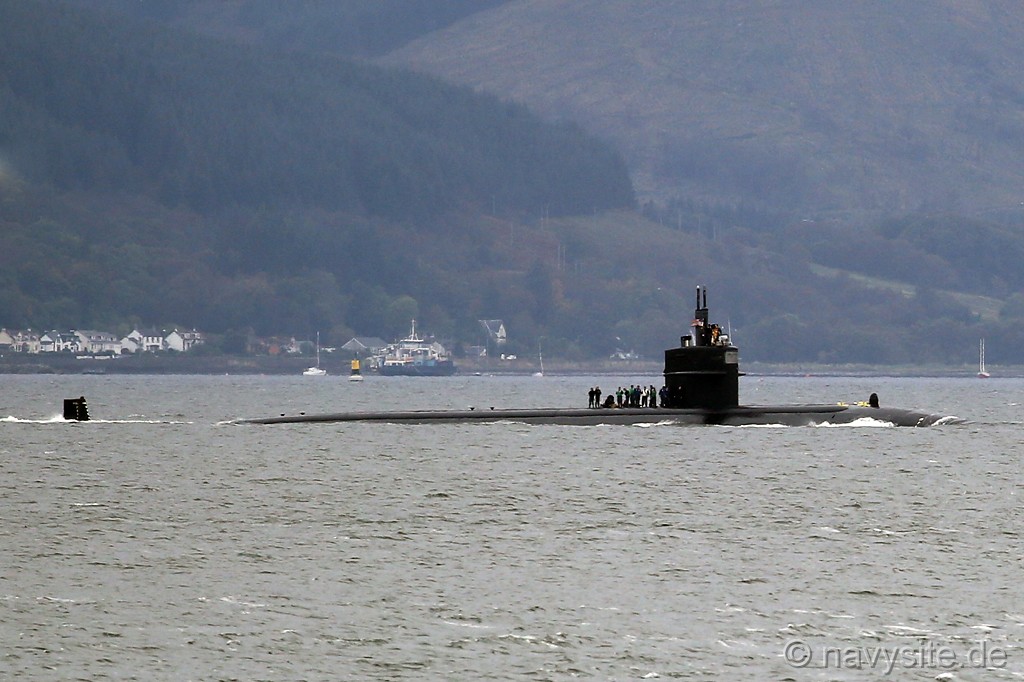
The photos below were taken by me and show the PITTSBURGH arriving at Faslane, Scotland, for a port visit on October 8, 2016. The photos were taken from Greenock. The last two photos show the PITTSBURGH at HMNB Clyde, Faslane, on October 8 and 9. The PITTSBURGH left her homeport on August 17 for a scheduled deployment. In late September she had already visited Rota in Spain.
 |  |  |  |  |
 |  |
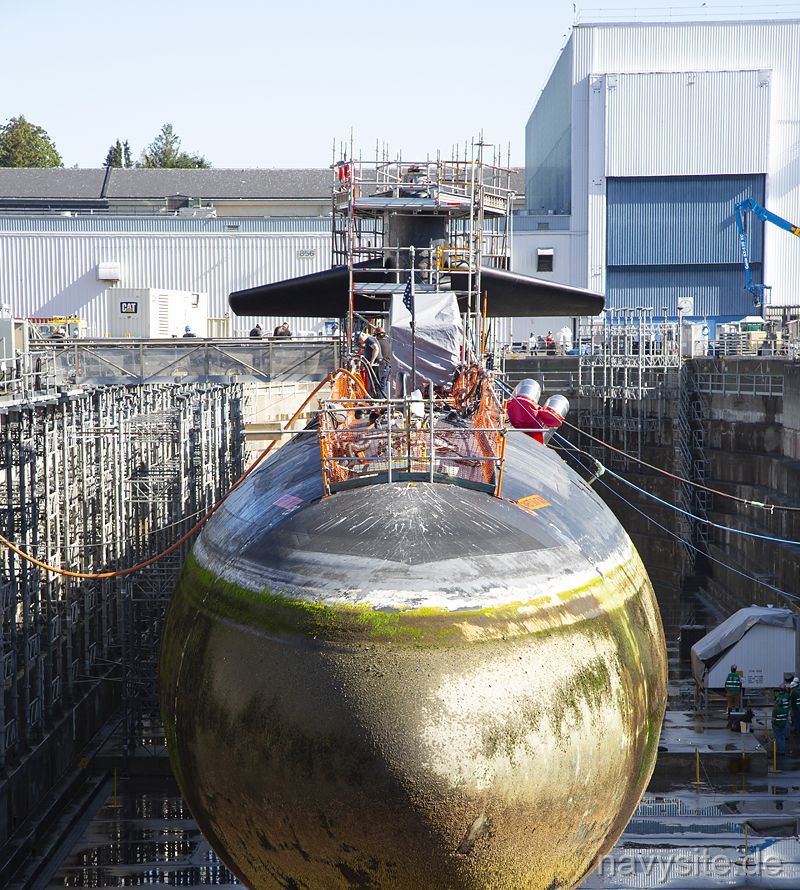
The photo below was taken by Michael Jenning and shows ex-PITTSBURGH laid up at the Puget Sound Naval Shipyard in Bremerton, Wash., on August 4, 2023.
 |
back to top Back to Submarines list. Back to ships list. Back to selection page. Back to 1st page.