Search the Site with 
General Characteristics Crew List Memorabilia History Image Gallery to end of page

USS Salt Lake City (SSN 716)

- decommissioned -


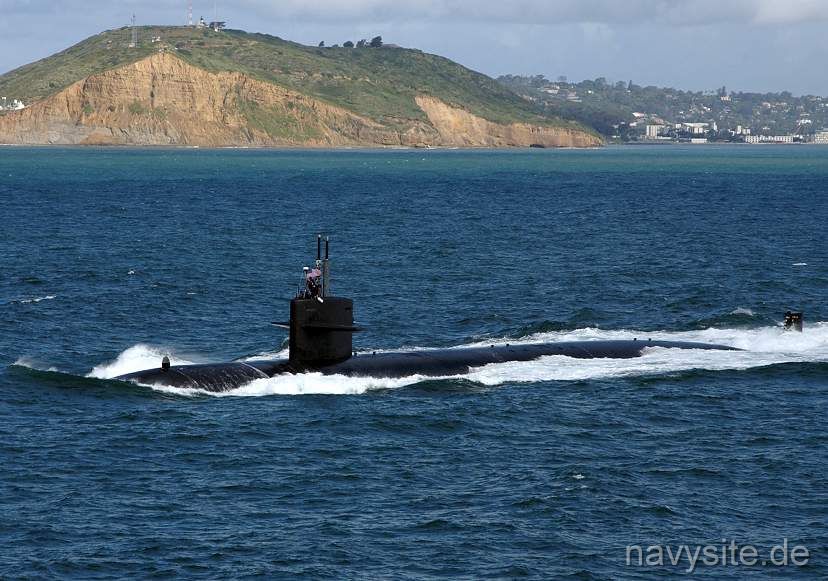
USS SALT LAKE CITY was the 29th LOS ANGELES-class Attack Submarine and was deactivated on October 26, 2005, at San Diego, Calif.

General Characteristics:Awarded: September 15, 1977
Keel laid: August 26, 1980
Launched: October 16, 1982
Commissioned: May 12, 1984
Decommissioned: January 15, 2006
Builder: Newport News Shipbuilding, Newport News, Va.
Propulsion system: one nuclear reactor
Propellers: one
Length: 360 feet (109.73 meters)
Beam: 33 feet (10 meters)
Draft: 32,15 feet (9.8 meters)
Displacement: Surfaced: approx. 6,000 tons     Submerged: approx. 6,900 tons
Speed: Surfaced: approx. 15 knots     Submerged: approx. 32 knots
Armament: four 533 mm torpedo tubes for Mk-48 torpedoes, Tomahawk and Harpoon missiles
Cost: approx. $900 million
Crew: 12 Officers, 115 Enlisted


Back to topback to top  go to endgo to the end of the page


Back to topback to top  go to endgo to the end of the page

Crew List:

This section contains the names of sailors who served aboard USS SALT LAKE CITY. It is no official listing but contains the names of sailors who submitted their information.


back to top  go to the end of the page


Back to topback to top  go to endgo to the end of the page

USS SALT LAKE CITY History:

USS SALT LAKE CITY was ordered on September 15, 1977, as part of the first "flight" of the LOS ANGELES-class nuclear-powered attack submarines, at a time when the United States was expanding and modernizing its submarine force to keep pace with Soviet undersea capabilities late in the Cold War. The contract went to Newport News Shipbuilding and Dry Dock Company in Newport News, Virginia, which laid her keel on August 26, 1980. She was launched from the yard on October 16, 1982, sponsored by Kathleen Garn, and completed fitting out and trials over the following eighteen months. On May 12, 1984, she was commissioned at the naval base in Norfolk, Virginia, as USS SALT LAKE CITY (SSN 716), the second ship to bear the name of Utah's capital. From the outset she was configured as a multi-mission platform: optimized for anti-submarine warfare but also capable of strike warfare with Tomahawk missiles, anti-surface work with Harpoon and torpedoes, mine warfare, intelligence collection, and special operations support.

Shortly after commissioning, USS SALT LAKE CITY remained on the U.S. east coast while she completed her post-shakedown work. From October 1, 1984, to April 29, 1985, she was back at Newport News Shipbuilding for her post-shakedown availability. During this period, her sonar outfit was upgraded to the AN/BQQ-5C suite, bringing her sensors into line with the most advanced acoustic capabilities then entering service in the U.S. submarine force. This early yard period also allowed her crew to work through the usual deficiencies and fine-tuning that follow any ship's first months at sea.

With post-shakedown work complete, USS SALT LAKE CITY shifted to the Pacific. Between May 1 and May 22, 1985, she sailed from Norfolk toward her new homeport. She transited the Panama Canal on May 8, reported to the Pacific Fleet on May 12, and tied up at San Diego, California, on May 22, beginning what would be the core pattern of her operational life: deployments into the Pacific and Indian Oceans from a west coast base. Late that summer, she went north for her first extended operating period in the Pacific Northwest. Over about two months, completed by October 7, she worked in the Puget Sound and Nanoose Range areas, conducting technical and operational evaluation of the new advanced-capability Mk 48 ADCAP torpedo. She returned to San Diego on October 15, 1985, having already been involved in both weapons testing and fleet-level readiness in the North Pacific.

On April 28, 1986, USS SALT LAKE CITY began her first Western Pacific deployment at a point when U.S. undersea forces were heavily engaged in tracking Soviet submarines and supporting allied navies in the region. Departing San Diego, she made a brief stop at Adak, Alaska, on May 5 for minor voyage repairs, then crossed the international date line the next day. She reached Apra Harbor, Guam, on June 25 and remained there for roughly three weeks of upkeep before resuming operations. Later in the deployment, she called at Chinhae, South Korea, arriving on September 17 for a three-day port visit that underscored U.S.-Republic of Korea naval cooperation, and then continued to Subic Bay in the Philippines, entering that port on September 24. She returned to San Diego on October 27, 1986, and began a thirty-day stand-down the next day. For the work of this maiden deployment, which included real-world patrols during a period of ongoing Cold War tension in the western Pacific, the submarine was later awarded a Navy Unit Commendation covering the April-October 1986 period.

Through 1987, USS SALT LAKE CITY's activities combined maintenance, trials, and higher-visibility weapons work. Early in the year, she completed about a month of operations in the Pacific Northwest, wrapping up this phase by January 31. She then entered her first selected restricted availability from April 23 to July 5, a shipyard-period focused on maintenance and minor upgrades rather than the deep modernization that would come later. On July 10, she executed an operational test launch of a Tomahawk cruise missile, reflecting the integration of long-range land-attack capability into the attack-submarine force. During the year, she also hosted Admiral David Jeremiah, then Commander in Chief, Pacific Fleet, an indication that the boat was seen as a representative example of the forward-deployed Pacific submarine force.

In 1988, USS SALT LAKE CITY undertook her second Western Pacific deployment, departing San Diego on January 19 and remaining deployed until July 15. During this cruise, senior leaders again used the submarine as a platform to observe fleet operations: Vice Admiral Paul Miller, Commander 7th Fleet, visited on February 24, and Vice Admiral C. H. Kim, Chief of Naval Operations of the Republic of Korea Navy, embarked alongside Admiral Jeremiah on April 14. After returning to San Diego, the boat hosted Secretary of the Navy William Ball on August 5, a visit framed by the continuing modernization of the submarine force at the end of the Cold War. Later in 1988, she conducted Chief of Naval Operations project operations in the Pacific Northwest, finishing these on December 1. During this late-1980s period, the submarine also supported the production of the film "The Hunt for Red October": she participated in filming work, and actor Scott Glenn trained aboard and was briefly named honorary "Commander" to prepare for his role as a U.S. submarine captain in the movie.

USS SALT LAKE CITY continued to combine operational deployments with public-facing duties in 1989. On March 19, she hosted principal actors and production staff from the Paramount film, providing them with an at-sea or alongside familiarization with nuclear-submarine life. Later that year, she deployed again to the western Pacific for roughly two months, returning to San Diego on June 21. After this short deployment, she entered a two-month selected restricted availability, completed on September 14. On October 7, 1989, she represented the submarine force at Fleet Week in San Francisco, helping present the attack-submarine mission to a broader public as the Cold War neared its end.

In 1990, the submarine executed her third major Western Pacific deployment against the backdrop of the collapsing Soviet Union and rising concern about regional crises elsewhere. She left San Diego on February 12 and remained deployed until August 23, operating in the western Pacific at a moment when U.S. naval forces were still concentrating on open-ocean anti-submarine warfare but were increasingly paying attention to littoral operations and regional contingencies. Later that same year, on November 28, she departed again for what is described as a two-month deployment to the same waters, bridging into early 1991 as the international crisis over Iraq's occupation of Kuwait reached its peak, though available records do not tie her movements directly to combat operations in the Persian Gulf.

USS SALT LAKE CITY returned to San Diego from this deployment on January 25, 1991, and then began preparing for a major modernization. On August 19, she completed a pre-Depot Modernization Period availability at the Trident Refit Facility in Bangor, Washington, then shifted to Mare Island Naval Shipyard at Vallejo, California, arriving there on October 18 and shifting her homeport to Vallejo the same day. On November 1, 1991, she entered her Depot Modernization Period, a deep-level refit intended to extend the life and update the capabilities of a first-flight LOS ANGELES-class submarine in the immediate post-Cold War years. She remained in this status from January 1, 1992, until May 28, 1993, undergoing extensive work on combat systems, machinery, and habitability at Mare Island while the U.S. submarine force adjusted to a world without a Soviet peer competitor.

After completing the modernization, USS SALT LAKE CITY returned to San Diego and to active operations. From May 29 to the end of 1993, she operated locally from her homeport. An eight-week availability and drydocking ended on October 6, 1993, after which she undertook a six-week underway period that concluded on November 24 and included port calls at Bangor, Washington, and Victoria, British Columbia, reflecting both weapons-related activity and familiarization with Canadian waters. Through the remainder of 1993, she continued local operations as the crew consolidated procedures around the upgraded systems installed during the Mare Island period.

On June 24, 1994, USS SALT LAKE CITY left San Diego for another major Western Pacific deployment, this time as part of the battle group centered on aircraft carrier USS KITTY HAWK (CV 63). The deployment, which ran until December 22, 1994, saw the submarine provide anti-submarine and anti-surface warfare support during both pre-deployment workups and the transoceanic transit of the carrier group. Port visits during this cruise included Yokosuka in Japan, Chinhae in South Korea, Hong Kong, Singapore, Pattaya in Thailand, as well as Guam and Pearl Harbor. Operationally, the deployment included the tracking of modern non-U.S. submarines: the battle group encountered both a Chinese HAN-class submarine and a Russian OSCAR II-class boat, and USS SALT LAKE CITY's performance in prosecuting these contacts drew formal praise from Commander Destroyer Squadron 17. Diplomatic engagements were also part of the cruise: she hosted U.S. Ambassador to Singapore Timothy A. Chorba on October 22 and senior Thai military leaders, including General Mongkong, Deputy Chairman of the Royal Thai Joint Chiefs of Staff, on November 1. She returned to San Diego three days before Christmas 1994.

In 1995, the submarine's high operational pace was recognized formally. She received a Meritorious Unit Commendation on March 30, covering performance between March 1992 and that date, much of it associated with the post-modernization period and the 1994 Western Pacific deployment. On March 31, she shifted administratively to Submarine Squadron 11 following the decommissioning of Submarine Squadron 3, but remained based in San Diego. Between June 27 and September 19, she went into the medium auxiliary repair dry dock ARCO (ARDM 5) for another selected restricted availability. After emerging from dry dock she conducted acoustic sound trials near Ketchikan, Alaska, from September 22 to October 12, using the static site there to measure and refine her acoustic signature. Shortly thereafter, she made a forty-day emergent deployment on short notice, returning to San Diego on December 1, 1995. While the detailed nature of that deployment remains classified, a subsequent message from Rear Admiral Jon Barr, Commander Submarine Force, Pacific Fleet, highlighted the boat's ability to sustain prolonged high-speed transits and to deliver tactical capability quickly anywhere in the Pacific theater.

During 1996, USS SALT LAKE CITY remained based at San Diego and continued local operations, but also participated in several major exercises and operations that reflected the post-Gulf War security environment. From June 1 to June 15, she took part in the multinational RIMPAC 96 exercise in the central Pacific, operating with allied surface, air, and undersea forces. Later in the year, she deployed again to the western Pacific, departing on October 11 as part of the KITTY HAWK battle group. During this deployment, she operated in the Pacific and Indian Oceans and the Arabian Gulf, supporting carrier-group operations that included enforcement of Operation Southern Watch and maritime interdiction efforts intended to support United Nations sanctions against Iraq. In this role, she served as a ready weapons and surveillance platform, underscoring how attack submarines were increasingly used for regional crisis response as well as blue-water deterrence.

USS SALT LAKE CITY returned from this extended deployment on April 9, 1997, concluding a six-month Western Pacific cruise that spanned late 1996 and early 1997. During this deployment, members of her crew became "Golden Shellbacks" when the boat crossed the equator and the international date line at the same time, following a visit to Brisbane, Australia. She also took part in Exercise Tandem Thrust 97, working with Royal Australian Navy units in combined operations. For the rest of 1997, she operated locally from San Diego, including participation in exercises with the carrier battle group centered on USS ABRAHAM LINCOLN (CVN 72) from September 8 to 12. Later that year, during a nuclear weapons regeneration exercise from September 22 to October 17, she fired a Tomahawk cruise missile in support of the strategic-forces training exercise Global Guardian on September 28. On October 31, 1997, she re-entered ARCO for another dry-dock period, reflecting the continuing maintenance needed to keep a first-flight LOS ANGELES-class submarine fully capable in the late 1990s.

In 1998, USS SALT LAKE CITY completed her dry-dock availability on January 31, then rotated between local operations in the Southern California operating areas and maintenance periods alongside submarine tender USS McKEE (AS 41) from February 21 to March 30 and again from May 6 to July 12. After a pre-overseas movement certification from August 7 to 21 she deployed once more to the western Pacific on September 4. During this deployment she undertook two "extremely sensitive" missions described as being of vital importance to national security. While details remain classified, they fit the pattern of intelligence and surveillance tasks often assigned to attack submarines at the end of the 1990s. As liberty ports she visited Pattaya, Thailand, from October 25 to 30 and underwent maintenance alongside tender USS FRANK CABLE (AS 40) at Guam from November 6 to 13, before returning to San Diego on December 23.

Following a post-deployment and New Year's stand-down that lasted until January 18, 1999, the boat went through tactical weapons proficiency phases I and II from January 19 to February 10. A period of ship's-force upkeep led into another selected restricted availability in ARCO from February 22 to April 12. After completing this maintenance, she alternated ship's-force upkeep with sea trials. From May 18 to 25, she again carried out acoustic trials, then made a liberty visit to Esquimalt, British Columbia, from May 26 to 31. For the next six months of 1999, she conducted local operations out of San Diego. In early November, she participated in a Fleet Exercise from November 3 to 8, then continued local underway periods and in-port time, culminating in a torpedo exercise and a transit to Pearl Harbor from November 29 to December 7. She visited Pearl Harbor from December 8 to 11 and returned to San Diego between December 12 and 17, remaining there through year's end as the submarine force transitioned into the 21st century.

The year 2000 began with a stand-down and upkeep for USS SALT LAKE CITY from January 1 to 25. She conducted sea trials from January 26 to 28, followed by ship's-force upkeep from January 29 to February 6, then a pre-overseas movement certification from February 7 to 16, and a Western Pacific load-out from February 17 to 29. She deployed again on March 1, 2000, for another Western Pacific cruise. During this deployment, she is credited with three missions "vital to national security", interspersed with port visits and upkeep in several ports: Pearl Harbor from March 6 to 8, Yokosuka from March 16 to 17, Sasebo from April 5 to 9, Guam from May 27 to June 3, Gladstone in Australia from June 10 to 15, Hobart, Tasmania, from June 23 to 28, Chinhae from July 20 to 24, and another extended visit to Yokosuka from August 14 to 28. Maintenance alongside USS FRANK CABLE during the Chinhae and Yokosuka periods ensured the submarine remained fully mission capable. Between Gladstone and Hobart, she worked with Royal Australian Air Force P-3 Orion aircraft, practicing coordinated anti-submarine warfare. Returning to San Diego on September 7, she then went into a post-deployment stand-down until October 8, followed by maintenance from October 9 to November 12, tactical weapons proficiency phases I and II from November 13 to December 7, and a final period of local operations from December 11 to 15.

In early 2001, USS SALT LAKE CITY's schedule reflected both crew relations and technical upgrades. She conducted dependents' cruises on January 3 and 4 and a VIP cruise on January 6, then acted as a "mother submarine" for a deep submergence unit from January 8 to 11, supporting rescue- and test-related operations. On January 22, she entered ARCO once again for major system upgrades and repairs, remaining in dry dock until undocking on February 26. She stayed in port at Naval Base Point Loma into the first week of April.

After certification of a new ring-laser gyro navigation system and local operations from April 9 to 13, she returned to port, then transited north to Astoria, Oregon, from April 26 to 30, spending April 30 to May 4 in that port. Following this, she provided services to sister submarine USS BREMERTON (SSN 698) in support of BREMERTON's pre-overseas movement certification, then returned to San Diego on May 16. Over the summer, she completed further local operations and training, then joined the carrier strike group built around USS JOHN C. STENNIS (CVN 74) in a pre-deployment exercise from August 14 to 23. After additional independent at-sea training, more local operations, and a pre-overseas movement certification from October 28 to 31, she took part in a second pre-deployment exercise with the STENNIS group. Between late November and early December, she alternated in-port periods with local operations, including support to USS JEFFERSON CITY (SSN 759). On December 11, 2001, just months after the attacks of September 11, she deployed for Japan and the western Pacific, arriving in Yokosuka for a Christmas visit from December 24 to 27 before heading back to sea to rejoin the carrier group.

In early 2002, USS SALT LAKE CITY continued this deployment in a new strategic context, as U.S. forces carried out Operation Enduring Freedom against al-Qaeda and the Taliban. She visited Singapore from January 4 to 9, then proceeded to the U.S. 5th Fleet area and reported there on January 15. From January 16 to 26 she operated with the JOHN C. STENNIS carrier strike group in support of Enduring Freedom, contributing undersea surveillance, strike readiness, and intelligence-collection capabilities to a task force centered on air operations over Afghanistan and maritime security in the North Arabian Sea and adjacent waters. She visited Bahrain twice during the deployment, January 27 to February 3 and April 22 to 25, with a stretch of continuous transit and operations from February 4 to April 21 in between. On May 1, she shifted back to the 7th Fleet area en route to Australia, visiting Perth from May 9 to 13, then Guam from May 22 to 24. She paused briefly at Pearl Harbor around June 5 and reached San Diego on June 11, 2002.

Later that summer, she took part in 3rd Fleet Battle Experiment Juliet, helping test medium data-rate satellite communications, land-attack warfare systems, and the Navy fires network - an indication of how attack submarines were being integrated into joint and network-centric warfare concepts. After a maintenance period, sea trials, and a Chief of Naval Operations weapons test in which she served as the evading platform, she provided high-fidelity opposition during exercises with the JOHN C. STENNIS strike group, practicing realistic attempts to "sink" the carrier. In November, she again provided services to USS BREMERTON, then ended the year in port at San Diego from mid-December onward.

In 2003, the submarine alternated modernization work with acoustic and weapons trials. After a post-Christmas stand-down, she conducted local operations from January 21 to February 4, then entered another in-port phase before going into ARCO from February 19 to May 24. During this dry-dock period she received further system improvements. Sea trials from June 5 to 9 off southern California tested these upgrades. On June 10, she sailed for Bangor, Washington, then continued north to the Behm Canal in Alaska from June 19 to 25, using the static acoustic test facilities there on June 25 to refine her noise profile and validate changes made during refit. She returned to San Diego on July 3. Through the remainder of 2003, she cycled between local at-sea periods and maintenance in port, including a return to Bangor from September 11 to 15 for weapons certification between September 15 and 18, then home again to San Diego for additional operations and upkeep.

USS SALT LAKE CITY began 2004 by completing her Christmas stand-down and then preparing for another Western Pacific deployment as part of the evolving global war on terror. She conducted local operations beginning January 31 in support of 3rd Fleet units while running intensive onboard training. During pre-deployment preparations, she also hosted R. Lee Ermey of the History Channel program "Mail Call", who filmed aboard to explain submarine life to a television audience.

On April 22, 2004, she departed San Diego for the western Pacific, joining the carrier strike group built around USS JOHN C. STENNIS. After a transit across the Pacific she visited Yokosuka from May 5 to 11. Over the following months, she carried out three missions described as vital to national security - periods from May 12 to June 11, June 17 to July 2, July 3 to August 18, and then September 14 to October 1 - interspersed with port visits. These included Singapore from June 11 to 17, Sasebo from July 2 to 3, Guam from August 18 to 22 and again from August 26 to September 2, Chinhae from September 10 to 14, and another visit to Yokosuka from October 1 to 6. Throughout this deployment, she formed part of the JOHN C. STENNIS carrier strike group as it conducted joint and combined operations in the eastern and western Pacific in support of the global war on terror and, more specifically, as part of Summer Pulse '04, the first major demonstration of the Navy's new Fleet Response Plan. She steamed nearly 36,000 nautical miles during the deployment. Transiting back toward Hawaii from October 6 to 13, she paused at Pearl Harbor from October 14 to 17 and then returned to San Diego on October 22, 2004, remaining in port afterward except for a short stint of local operations in the Southern California operating area from November 29 to December 1.

By late 2005, USS SALT LAKE CITY's career was drawing to a close. On October 26, 2005, she held her inactivation ceremony at Naval Base Point Loma in San Diego, with dignitaries from her namesake city, plankowners, and former crewmembers in attendance. On that date her status shifted to "in commission, in reserve", marking the start of an inactivation cycle that would remove her from the active fleet roster. Soon after the ceremony, she departed San Diego on a final mission: a transit under the polar ice to the Atlantic coast and ultimately to Portsmouth Naval Shipyard in New Hampshire for decommissioning.

This last voyage included a distinctive Arctic operation. During the polar transit USS SALT LAKE CITY surfaced through the pack ice in the Arctic Ocean on November 17, breaking through more than a foot of ice near the North Pole. This was reported as the first time a first-flight LOS ANGELES-class submarine had surfaced through the polar pack ice in that way. On the ice the crew briefly enjoyed the unique polar environment, opened care packages sent by the USO, and marked the occasion by awarding silver dolphins to a newly qualified submariner. The boat also conducted a burial at sea, committing the ashes of Gene Bloom, a former Arctic Submarine Laboratory employee associated with under-ice operations. After submerging again, she carried out a scientific program, collecting ice and oceanographic data to support research projects, and at one point operated at the geographic North Pole. During this transit she also "joined the Order of Magellan" by circling the globe in less than an hour, a traditional way of describing a complete circumnavigation achieved by transiting through the vicinity of the poles.

USS SALT LAKE CITY was decommissioned at Portsmouth Naval Shipyard on January 15, 2006, and stricken from the Naval Vessel Register the same day. Over a year later, on May 8, 2007, her hulk arrived under tow at Puget Sound Naval Shipyard in Bremerton, Washington, to enter the Navy's nuclear-powered ship and submarine recycling program. The recycling process, which involves defueling, careful dismantling of radioactive components, and scrapping of the hull, was completed on November 30, 2019, formally ending the life of the submarine after more than three decades from keel-laying to final disposal.


Back to topback to top  go to endgo to the end of the page


Back to topback to top


Back to Submarines list. Back to ships list. Back to selection page. Back to 1st page.