
Search the Site with

|
Search the Site with
|
 General Characteristics Crew List Memorabilia Accidents aboard the Ship About the Ship's Name History Image Gallery to end of page
 | 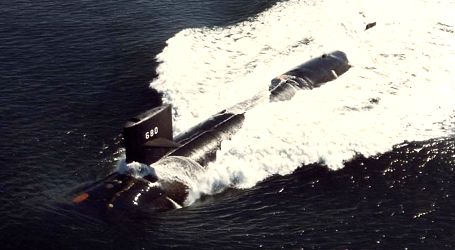 |
The first ship in the Navy to be named after William H. Bates, the USS WILLIAM H. BATES was one of the STURGEON - class nuclear-powered attack submarines. Both decommissioned and stricken from the Navy list on February 11, 2000, the submarine subsequently entered the Navy's Nuclear Powered Ship and Submarine Recycling Program at the Puget Sound Naval Shipyard at Bremerton, Wash. Recycling was finished in 2002.
| General Characteristics: | Awarded: June 25, 1968 |
| Keel Laid: August 4, 1969 | |
| Launched: December 11, 1971 | |
| Commissioned: May 5, 1973 | |
| Decommissioned: February 11, 2000 | |
| Builder: Ingalls Shipbuilding, Pascagoula, Miss. | |
| Propulsion system: one S5W2 nuclear reactor | |
| Propellers: one | |
| Length: 302 feet (91.5 meters) | |
| Beam: 31.7 feet (9.65 meters) | |
| Draft: 29.2 feet (8.9 meters) | |
| Displacement: Surfaced: approx. 4,250 tons | |
| Submerged: approx. 4,700 tons | |
| Speed: Surfaced: approx. 15 knots | |
| Submerged: approx. 30 knots | |
| Armament: four 533 mm torpedo tubes for | |
| Crew: 12 Officers, 95 Enlisted |
 back to top go to the end of the pageback to top go to the end of the page
Crew List:
This section contains the names of sailors who served aboard USS WILLIAM H. BATES. It is no official listing but contains the names of sailors who submitted their information.
back to top go to the end of the pageback to top go to the end of the pageAccidents aboard USS WILLIAM H. BATES:
| Date | Where | Events |
|---|---|---|
| April 13, 1981 | Hood Canal, Wash. | USS WILLIAM H. BATES is reported to run into gill nets near the Hood Canal in Washington state. |
back to top go to the end of the pageAbout the Ship's Name:
William H. Bates - born on 26 April 1917 at Salem, Mass., - enlisted in the Navy in July 1940. Commissioned as ensign in the Naval Reserve on 30 January 1941, Bates received instruction at the Naval Medical Center, Washington, D.C., before serving successive tours of duty at the Washington Navy Yard and in, former sloop-of-war, unclassified miscellaneous vessel CONSTELLATION (IX-20).
Bates remained in the Supply Corps through the end of World War II, participating in the Iwo Jima campaign in the spring of 1945 and eventually becoming the supply officer for the 4th Naval District by 1949. While Bates was stationed there, his father - Representative George J. Bates of the 6th Massachusetts Congressional District - was killed in a plane crash at the Washington (D.C.) National Airport on 1 November 1949.
Bates resigned his reserve commission - he had attained the rank of lieutenant commander by that time - on 14 February 1950, to fill the seat of his late father in the United States House of Representatives. For the nearly two decades preceding his death on 22 June 1969, Bates staunchly advocated a strong military posture for the United States. On the Joint Congressional Committee on Atomic Energy and the House Armed Services Committee, he vigorously supported the development of nuclear-powered naval vessels. He also vigorously backed incentive pay programs and the establishment of better housing facilities for servicemen. He constantly sought means to enhance the training, caliber, and morale of military personnel.
back to top go to the end of the pageUSS WILLIAM H. BATES History:
USS WILLIAM H. BATES was a long-hull STURGEON-class nuclear-powered attack submarine and the only United States Navy ship to bear the name William H. Bates. She was originally projected as USS REDFISH, continuing the fish-name tradition then normally used for American attack submarines, but she was renamed after Representative William H. Bates of Massachusetts after his death on June 22, 1969. Bates had served in the United States Navy during and after World War II, resigned his reserve commission after being elected to Congress in 1950, served on the House Armed Services Committee and the Joint Committee on Atomic Energy, and became closely associated with congressional support for naval nuclear propulsion.
The construction contract for the submarine that became USS WILLIAM H. BATES was awarded to the Ingalls Nuclear Shipbuilding Division of Litton Industries at Pascagoula, Mississippi, on June 25, 1968. Her keel was laid down at Pascagoula on August 4, 1969, after the name change from REDFISH to WILLIAM H. BATES. She was launched on December 11, 1971, sponsored by Mrs. Andrew R. Grainger, Congressman Bates's daughter. Her first sea trials began on February 9, 1973. USS WILLIAM H. BATES was commissioned on May 5, 1973, with Commander Glenn N. Arthur, Jr., in command.
After commissioning and shakedown, USS WILLIAM H. BATES was homeported at New London, Connecticut, operating from the submarine base at Groton. It placed her in the normal early-career cycle of trials, shakedown, correction of deficiencies, crew training, certifications, and fleet integration. Her first years took place during a period in which the Atlantic Fleet attack-submarine force was heavily focused on the North Atlantic, Soviet submarine activity, NATO sea-lane protection, and the development of advanced nuclear-submarine tactics.
On July 17, 1974, USS WILLIAM H. BATES began her first Atlantic Fleet deployment, an eastern Atlantic patrol. During that deployment she visited Holy Loch, Scotland, on September 4, 1974, and Halifax, Nova Scotia, on September 22, 1974. Holy Loch was a key United States submarine support site in Scotland during the Cold War, while Halifax was a major Canadian naval port on the North Atlantic approaches. USS WILLIAM H. BATES returned to New London on October 4, 1974. This deployment gave the new submarine practical experience in the North Atlantic operating environment that remained central to NATO planning throughout the Cold War.
USS WILLIAM H. BATES deployed again to the eastern Atlantic on December 30, 1974. She arrived at Holy Loch on January 5, 1975, for voyage repairs and shifted to Faslane, Scotland, on January 17, 1975, for a port visit. She returned to New London on January 30, 1975. After that early 1975 patrol, she entered a refit period at Norfolk Naval Shipyard in Portsmouth, Virginia, beginning in April 1975. During the summer she conducted local operations and torpedo-related work off Fort Lauderdale and Port Everglades, Florida. These activities kept her in the Atlantic Fleet training and readiness cycle before another deployment to European waters.
On September 15, 1975, USS WILLIAM H. BATES again deployed to the eastern Atlantic. During this period, she took part in anti-submarine-warfare activity and in November participated in NATO Exercise Moby Dick '75 and Exercise Ocean Safari '75. These exercises belonged to the larger NATO effort to train for North Atlantic sea control, convoy protection, reinforcement routes, and submarine detection in waters that would have been critical in any major NATO-Warsaw Pact conflict. USS WILLIAM H. BATES returned to New London on December 20, 1975.
On May 5, 1976, exactly three years after commissioning, USS WILLIAM H. BATES departed New London for her first Mediterranean deployment. She called at Holy Loch on May 10, 1976, while en route, and then entered the United States Sixth Fleet operating pattern. During this deployment, she visited Bizerte, Tunisia, on June 10, 1976; Augusta Bay, Sicily, on June 20, 1976; La Spezia, Italy, on July 10, 1976; and Naples, Italy, on July 20, 1976. The Mediterranean was one of the most important maritime theaters of the Cold War, combining NATO's southern flank, Soviet naval presence, Middle Eastern instability, North African tensions, and United States crisis-response requirements. USS WILLIAM H. BATES departed the Mediterranean on September 6, 1976, participated in Ocean Safari '76 in mid-September, and returned to New London on October 14, 1976. After this deployment, she underwent another shipyard repair period at Portsmouth Naval Shipyard, Kittery, Maine.
In 1977, USS WILLIAM H. BATES prepared for and conducted another northern deployment. She departed New London on June 1, 1977, and the deployment is identified in shipboard timeline material as a "Northern Run" beginning on June 10, 1977. On August 15, 1977, she crossed the Arctic Circle, an event traditionally recognized in the Navy by the "Bluenose" ceremony. She completed her assigned mission on October 3, 1977, mooring alongside the submarine tender USS HOLLAND (AS 32) at Holy Loch. She then transited the North Sea and visited Bremerhaven, West Germany, beginning on October 24, 1977, spending five days there. Bremerhaven was a significant NATO and United States support port in northern Germany during the Cold War. USS WILLIAM H. BATES then participated in Ocean Safari '77 while returning from European waters. The deployment ended on December 10, 1977, and she returned to New London on December 15, 1977.
Early in 1978, USS WILLIAM H. BATES participated in a Caribbean torpedo exercise. In May 1978, she changed home port from New London to San Diego, California, and was assigned to Submarine Squadron Eleven. This transfer to the Pacific Fleet included a transit through the Panama Canal and shifted the submarine from an Atlantic and Mediterranean operating pattern to the Pacific Fleet cycle of Western Pacific and Indian Ocean operations. On August 1, 1978, Commander William L. Hicks relieved Commander William P. Houley as commanding officer.
During the 1978-1979 Pacific deployment cycle, USS WILLIAM H. BATES began operations that public timeline material identifies as WestPac '78-'79. A timeline entry records September 1, 1978, as the beginning of this deployment cycle and September 15, 1978, as the beginning of a special operation. The documented sequence includes Apra Harbor, Guam, on November 20, 1978, and Subic Bay, Philippines, on December 20, 1978. On December 27, 1978, she departed for Hong Kong, but by December 29, 1978, she had returned to Subic Bay. On December 31, 1978, she departed Subic Bay for Indian Ocean carrier escort duty.
This 1978-1979 operating period occurred at a time of rising tension across the wider Indo-Pacific and Indian Ocean region. The Iranian Revolution was underway, Soviet naval activity in the Indian Ocean remained a concern for American planners, and the United States Navy was increasingly focused on sea lines connecting the Pacific, Indian Ocean, and Persian Gulf approaches. On January 2, 1979, USS WILLIAM H. BATES crossed the equator, an event marked aboard ship by the traditional "Crossing the Line" ceremony. She returned to Subic Bay on February 7, 1979, departed for Hong Kong on February 21, 1979, and arrived there on February 23, 1979. On February 26, 1979, she departed for Pearl Harbor, Hawaii. She conducted an Operational Reactor Safeguards Examination on March 15, 1979, proceeded toward San Diego on March 21, 1979, and arrived at San Diego on March 25, 1979. After local operations in April, she entered a major yard period later that year.
In the September-October 1979 period, USS WILLIAM H. BATES entered Puget Sound Naval Shipyard at Bremerton, Washington, for her first overhaul. During this yard period, the broader strategic environment changed sharply: the Iranian hostage crisis began in November 1979, Soviet forces entered Afghanistan in December 1979, and the Indian Ocean became still more important to American naval planning. USS WILLIAM H. BATES remained in overhaul during this period.
On April 13, 1981, while associated with the Puget Sound area, USS WILLIAM H. BATES was reported to have run into gill nets near Hood Canal, Washington. On September 9, 1981, she departed Puget Sound Naval Shipyard, and on September 10, 1981, she conducted sea trials. She visited Nanaimo, British Columbia, on October 15, 1981, and arrived back at San Diego on October 28, 1981. On December 1, 1981, she began daily operations connected with submarine equipment performance testing. The completion of the Puget Sound overhaul returned the submarine to the Pacific operating cycle of inspections, local operations, testing, and deployment preparation.
On August 11, 1982, Commander Leon J. Uplinger relieved Commander Hicks as commanding officer. On September 2, 1982, USS WILLIAM H. BATES departed San Diego for another Western Pacific deployment. She visited Pearl Harbor on September 6, 1982, crossed the International Date Line on September 14, 1982, and arrived at Sasebo, Japan, on September 19, 1982. A special operation began on September 25, 1982. She visited Subic Bay on November 26, 1982, spent Christmas underway, visited Sattahip, Thailand, on December 28, 1982, and returned to Subic Bay on January 10, 1983. Sources record a "Whale Bump" on February 2, 1983. She reached Apra Harbor, Guam, on February 4, 1983, and Adak, Alaska, on February 26, 1983. She participated in FleetEx '83 on March 29, 1983, then entered a selected restricted availability and drydock period at Mare Island Naval Shipyard on March 31, 1983. USS WILLIAM H. BATES arrived back at San Diego on June 1, 1983, conducted a weapons load on June 10, 1983, and conducted deep-submergence rescue vehicle operations on June 15, 1983. The DSRV work reflected the submarine force's continuing attention to rescue capabilities for disabled submarines.
On September 9, 1983, USS WILLIAM H. BATES departed San Diego for another Western Pacific and Indian Ocean deployment. She crossed the International Date Line on September 21, 1983. This deployment included the Indian Ocean and a port call at Perth, Western Australia. The strategic context was the continuing Cold War competition in the Indian Ocean, the Iran-Iraq War, the importance of oil routes, and the Soviet war in Afghanistan. From March to June 1984, USS WILLIAM H. BATES completed another shipyard repair period. She then returned to operations and conducted an Operational Reactor Safeguards Examination on September 10, 1984.
From January through June 1985, USS WILLIAM H. BATES completed her fourth Western Pacific deployment. During that deployment, she visited Yokosuka, Japan; Subic Bay, Philippines; Guam; and Sattahip, Thailand. On July 12, 1985, a contemporary submarine-base newspaper item recorded her return from WestPac '85. On August 15, 1985, at Naval Submarine Base San Diego, Commander Kurt M. Trautman relieved Commander Uplinger as commanding officer. By that time, USS WILLIAM H. BATES had already received two Navy Unit Commendations and a Meritorious Unit Commendation. On December 3, 1985, she again conducted DSRV-related operations, continuing her participation in submarine rescue training and support.
On September 1, 1987, USS WILLIAM H. BATES began another Western Pacific deployment. Her unit-awards list records a Navy Unit Commendation period from September 1, 1987, through March 31, 1988.
In early 1989, USS WILLIAM H. BATES was still operating from San Diego. In mid-1989, she transited north from San Diego, stopped at Mare Island Naval Shipyard at Vallejo, California, for minor repairs and crew rest, and continued to Puget Sound Naval Shipyard at Bremerton for an extensive refueling overhaul and retrofit. This was separate from her first Puget Sound overhaul and was a major late-career engineering and modernization period. The overhaul and retrofit took place as the Cold War was nearing its end. By the time USS WILLIAM H. BATES returned to operational service, the Soviet Union was weakening, the United States Navy was reassessing force structure, and attack submarines were increasingly expected to support not only open-ocean anti-submarine warfare, but also regional crisis response, special operations, strike support, and littoral missions.
In 1991, after completion of the overhaul, USS WILLIAM H. BATES shifted to Pearl Harbor, Hawaii, and was assigned to Submarine Squadron One. From Pearl Harbor she completed several Western Pacific deployments and operations during the 1990s. In December 1991, Dry Deck Shelter 06-P was fitted to the submarine. This modification was significant because a Dry Deck Shelter allowed a submarine to support Naval Special Warfare personnel, swimmer delivery vehicles, and related equipment while retaining the covert mobility of a nuclear-powered submarine. The installation gave USS WILLIAM H. BATES a special-operations support capability in addition to her traditional attack-submarine roles.
From June 18 to December 18, 1992, USS WILLIAM H. BATES completed a six-month Western Pacific deployment from Pearl Harbor. She conducted visits to Guam, Yokosuka, and Hong Kong during this deployment. The deployment took place shortly after the end of the Cold War and after Operation Desert Storm, during a period when the United States Navy was redefining its Pacific and Indian Ocean presence for regional contingencies, allied exercises, special operations, and crisis-response tasks. Force-level Pacific submarine command-history material for 1992 also identifies communications and combat-systems modernization work affecting submarines of this type, including ELF communications installation and fire-control interface upgrades among the force, with USS WILLIAM H. BATES included in some force modernization lists. These changes reflected a Navy-wide effort to improve connectivity and operational flexibility for battle-group, strike-warfare, and special-mission operations in the post-Cold-War era.
From June 23 to August 18, 1993, USS WILLIAM H. BATES conducted a 56-day deployment to the Western Pacific. During that deployment, she participated in Exercise Tandem Thrust '93, visited Brisbane, Australia, and on August 13, 1993, crossed the equator and the International Date Line simultaneously, making the crew "Golden Shellbacks" by naval tradition. Tandem Thrust was a major joint and combined exercise in the western Pacific and Australian area, intended to strengthen interoperability among United States and allied forces in regional contingencies. USS WILLIAM H. BATES's participation placed a Dry Deck Shelter-capable nuclear attack submarine within that post-Cold-War exercise environment, where undersea, surface, air, amphibious, and special-operations capabilities were increasingly trained together.
Following another WestPac '94-'95 beginning on September 6, 1994, USS WILLIAM H. BATES was among the participants in Exercise Ke Koa '95, conducted from August 26 to August 28, 1995, in and around the Hawaiian Islands. During the second half of the 1990s, USS WILLIAM H. BATES continued to serve from Pearl Harbor as one of the older STURGEON-class submarines still in commission. Many of her sister ships were decommissioned during this period as the Navy reduced Cold War-era force structure and relied increasingly on LOS ANGELES-class submarines and newer platforms. Her awards list records Secretary of the Navy Letters of Commendation for September 11, 1997, through March 1, 1998, and March 1, 1999, through July 1, 1999.
By 1999, USS WILLIAM H. BATES was in her final period of service and she was approaching the end of nearly twenty-seven years of commissioned service. Captain Mark Stevens is identified in later biographical material as the last commanding officer of USS WILLIAM H. BATES. USS WILLIAM H. BATES was decommissioned and simultaneously struck from the Naval Vessel Register on February 11, 2000. After decommissioning, ex-USS WILLIAM H. BATES returned to Puget Sound Naval Shipyard at Bremerton, Washington, for disposal through the Nuclear-Powered Ship and Submarine Recycling Program. Recycling was carried out at Puget Sound Naval Shipyard in 2002.
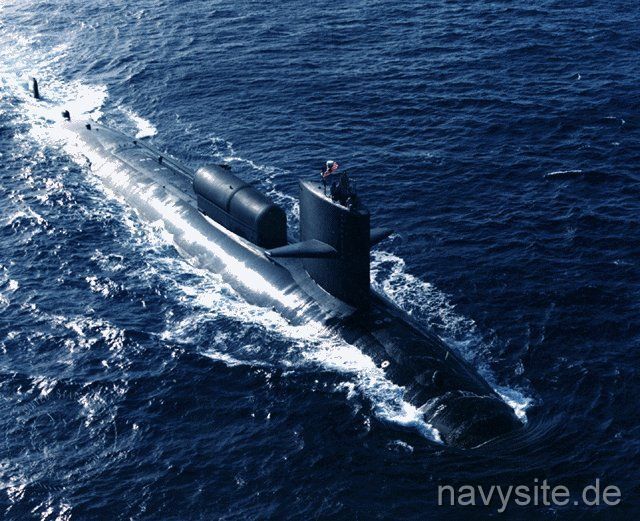
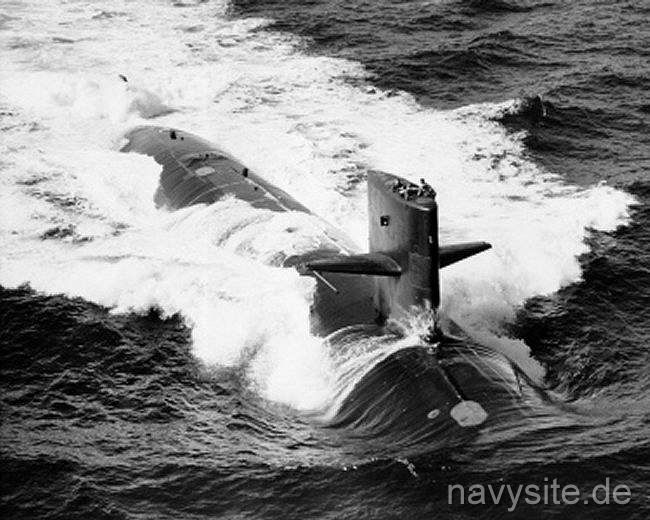
back to top go to the end of the pageUSS WILLIAM H. BATES Image Gallery:
 |  |
back to top Back to Submarines list. Back to ships list. Back to selection page. Back to 1st page.