Search the Site with 
General Characteristics Crew List Memorabilia History Image Gallery to end of page

USS Scamp (SSN 588)

- decommissioned -

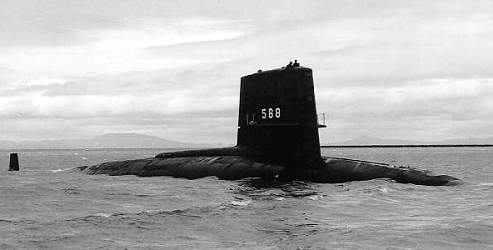
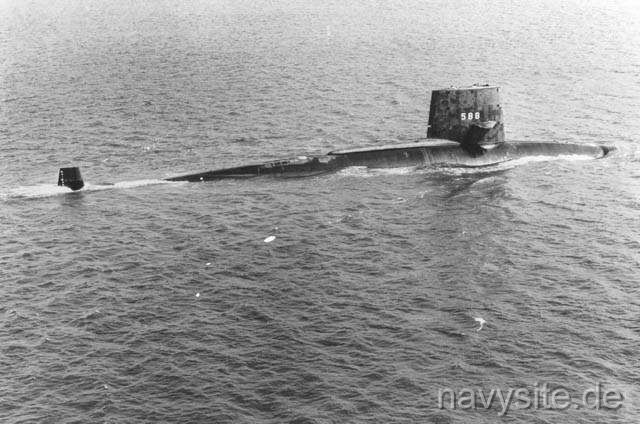
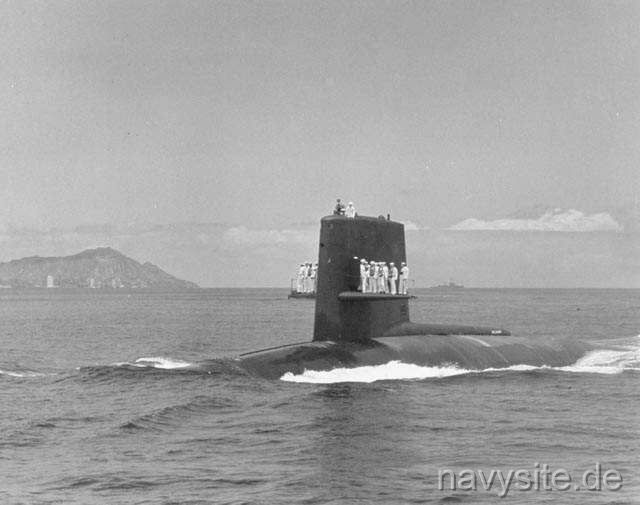
USS SCAMP was the second SKIPJACK - class nuclear-powered attack submarine and the second ship in the Navy to be named after the fish. Both decommissioned and stricken from the Navy list on April 28, 1988, the SCAMP later entered the Navy's Nuclear Powered Ship and Submarine Recycling Program at the Puget Sound Naval Shipyard, Bremerton, Wash., and finished it in September 1991.

General Characteristics:Awarded: July 23, 1957
Keel laid: January 23, 1959
Launched: October 8, 1960
Commissioned: June 5, 1961
Decommissioned: April 28, 1988
Builder: Mare Island Naval Shipyard, Vallejo, Calif.
Propulsion system: one S5W nuclear reactor
Propellers: one
Length: 251.64 feet (76.7 meters)
Beam: 31.5 feet (9.6 meters)
Draft: 27.9 feet (8.5 meters)
Displacement: Surfaced: approx. 2,880 tons     Submerged: approx. 3,500 tons
Speed: Surfaced: approx. 15 knots     Submerged: approx. 30 knots
Armament: six 533 mm torpedo tubes
Crew: 8 Officers, 85 Enlisted


Back to topback to top  go to endgo to the end of the page


Back to topback to top  go to endgo to the end of the page

Crew List:

This section contains the names of sailors who served aboard USS SCAMP. It is no official listing but contains the names of sailors who submitted their information.


back to top  go to the end of the page


Back to topback to top  go to endgo to the end of the page

USS SCAMP History:

USS SCAMP was ordered on July 23, 1957, and laid down on January 23, 1959, at Mare Island Naval Shipyard in Vallejo, California. She was the second ship of the United States Navy to bear the name Scamp, following the World War II submarine USS SCAMP (SS 277), which had been lost in November 1944 while under the command of Commander John C. Hollingsworth. The new submarine belonged to the SKIPJACK-class, a class that combined the teardrop hull form demonstrated by USS ALBACORE (AGSS 569) with nuclear propulsion and the Westinghouse S5W reactor plant. In design and operational concept, SCAMP belonged to the generation of submarines that moved the American attack submarine away from surface-oriented hull forms and toward sustained submerged speed, maneuverability, and long-range Cold War operations. She was completed with a streamlined hull, a single shaft, sail-mounted diving planes, and six bow torpedo tubes.

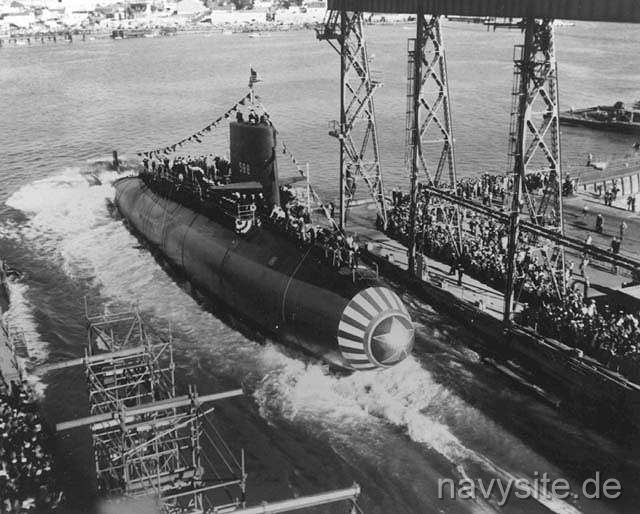
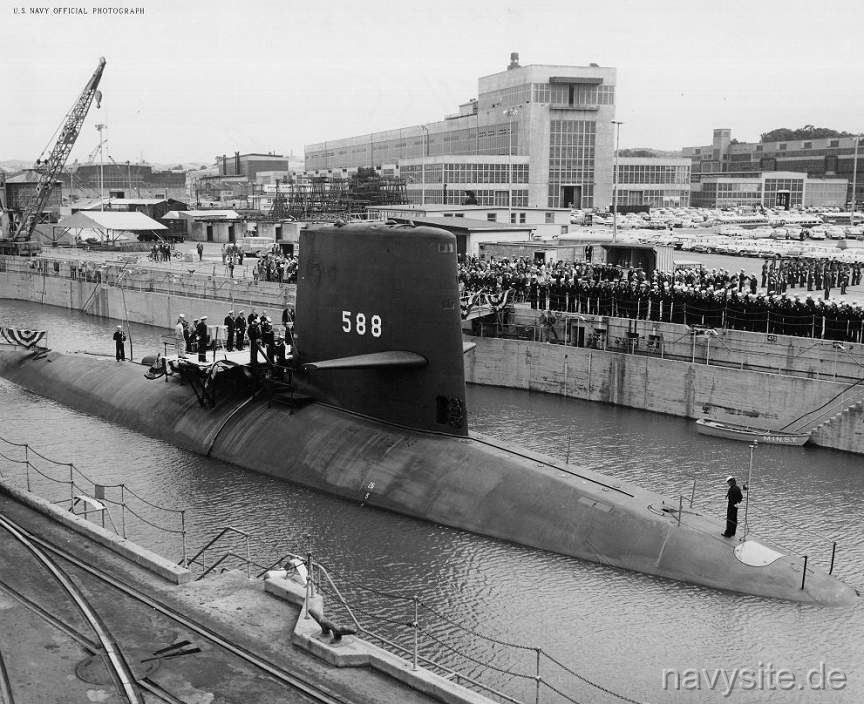
USS SCAMP was launched at Mare Island on October 8, 1960. Her sponsor was Mrs. John C. Hollingsworth, widow of the commanding officer of the wartime USS SCAMP. The launching linked the name of the new nuclear-powered submarine with the earlier GATO-class submarine and her lost crew. After fitting out and final preparations at Mare Island, USS SCAMP was commissioned on June 5, 1961, with Commander Walter N. Dietzen as her first commanding officer. After commissioning, she joined Submarine Squadron Five and was initially assigned to San Diego, California. Her first months in commission were devoted to advanced trials, acceptance work, and training in the Bremerton, San Diego, and Pearl Harbor operating areas. These trials were part of the normal process of bringing a new nuclear submarine into fleet service, but they also served the broader purpose of helping the Navy refine how high-speed nuclear attack submarines could be used in antisubmarine warfare, fleet screening, independent patrol, and tactical development.

After these early operations, SCAMP returned to Vallejo for post-shakedown availability at Mare Island Naval Shipyard. Once that yard period was complete, she carried out final acceptance trials and began local operations out of San Diego. On December 4, 1961, during training off the coast of California, the submarine lost her screw. The casualty deprived her of normal propulsion, and she was towed back to Mare Island by USCGC COMANCHE. The incident interrupted her early fleet work but did not prevent her from entering the normal Pacific Fleet deployment cycle soon afterward.

In April 1962, SCAMP deployed to the western Pacific for the first time. This first western Pacific deployment placed her in the Seventh Fleet operating area at a time when American naval forces were maintaining a continuous Cold War presence in East Asian waters. Nuclear-powered attack submarines were still comparatively new in Pacific operations, and their endurance, submerged speed, and ability to serve as difficult antisubmarine warfare targets made them valuable in fleet training as well as in operational patrols. SCAMP returned to San Diego in July 1962 and then operated locally until September, when she departed on another extended training cruise. She returned again to San Diego and continued local operations into early 1963.

In February 1963, SCAMP entered Mare Island Naval Shipyard for interim drydocking. After the yard period, she returned to the deployment cycle. In April 1963, she again departed for the western Pacific, where she conducted training and operations in the Seventh Fleet area, including activity in the Okinawa operating area. This deployment continued the familiar Pacific Fleet pattern of local upkeep, forward movement through Pearl Harbor, operations with Seventh Fleet forces, and return to the West Coast. SCAMP returned to San Diego in October 1963 and resumed local training and maintenance.

During 1964, SCAMP again followed a cycle of local operations, upkeep, and extended readiness training. From approximately June through September 1964, she operated westward for advanced readiness training. These activities came during a period of increasing American attention to Southeast Asia. The Gulf of Tonkin incident in August 1964 intensified United States naval activity in the western Pacific and gave Seventh Fleet readiness greater urgency.

By 1964 and 1965, SCAMP was alternating between western Pacific deployment work, local San Diego operations, training exercises, and maintenance periods. She later received three campaign stars for Vietnam War service, indicating operational service connected with the conflict. In January 1965, she entered Mare Island Naval Shipyard for a major overhaul. This yard period became a seventeen-month SUBSAFE overhaul. The SUBSAFE program had emerged after the loss of USS THRESHER (SSN 593) in April 1963 and imposed stricter standards for hull integrity, seawater systems, and emergency recovery capability. For early nuclear-powered submarines such as SCAMP, SUBSAFE work was a significant modernization and safety effort, keeping older boats aligned with the Navy's revised submarine-safety standards. During the overhaul, SCAMP was out of the regular deployment cycle while shipyard workers and crew addressed structural, mechanical, and system requirements.

After completing the Mare Island SUBSAFE overhaul in 1966, SCAMP returned to San Diego-area operations and resumed training. She continued local exercises into 1967. On June 28, 1967, she deployed again to the western Pacific. During this deployment, she operated with the Seventh Fleet and conducted operations connected with the Vietnam War period. The deployment ended with her return to San Diego on December 28, 1967.

SCAMP operated out of the San Diego local operating area from January through May 1968. On May 11, 1968, she arrived at Pearl Harbor at the end of an extended training cruise. She returned to San Diego on May 19 and remained there until June 15, when she shifted to San Francisco to enter Mare Island Naval Shipyard for a three-week restricted availability. After completing that short yard period, she returned to San Diego on July 16, 1968, and spent the remainder of the year conducting exercises and training cruises from that port. These activities kept her within the First Fleet training cycle while maintaining readiness for further Pacific deployment.

SCAMP continued stateside duty throughout 1969. She alternated in-port periods with training cruises until early March, when she began pre-overhaul tests in the San Diego operating area. She continued preparing for overhaul and participating in exercises through the year. On November 1, 1969, she entered Puget Sound Naval Shipyard at Bremerton, Washington, for a regular overhaul and reactor refueling. While at Bremerton, SCAMP was assigned that port as her new home port. The overhaul continued through 1970 and was completed in January 1971. This refueling overhaul formed one of the major maintenance points in her career, restoring reactor core life and preparing the submarine for renewed Pacific Fleet operations after several years of intensive service.

Following post-overhaul sea trials in Puget Sound, SCAMP was reassigned back to San Diego as her home port on February 12, 1971. She did not immediately enter San Diego, however, because she first made a voyage to Pearl Harbor. She returned to San Diego on April 16, 1971. During her broader Pacific service period, SCAMP also visited Esquimalt, British Columbia. That port call was significant because visits by nuclear-powered warships could carry diplomatic and public-interest implications, especially in allied countries where nuclear propulsion, nuclear weapons policy, and port safety were subjects of public and governmental attention.

On July 27, 1971, SCAMP deployed again to the western Pacific. She stopped at Pearl Harbor from August 2 to August 13, then continued toward the Philippines and arrived at Subic Bay on August 30. For most of the remainder of 1971, she operated with the Seventh Fleet in Far Eastern waters. Her operations were generally outside the waters off Vietnam, except for a short two-day period on October 8 and October 9. Even when not operating directly off Vietnam, the presence of American submarines in the western Pacific supported the broader Seventh Fleet posture during the late Vietnam War period.

SCAMP returned to San Diego on February 2, 1972. The pause was brief. Following the North Vietnamese Easter Offensive, she redeployed to the Seventh Fleet in May 1972. During that deployment she operated in the South China Sea for much of the summer. The Easter Offensive had intensified the conflict in Vietnam and led to increased American air and naval operations, including renewed emphasis on forces able to support Seventh Fleet presence in the region. SCAMP returned to San Diego on August 1, 1972. Upon arrival, she entered a two-month standdown period followed by more than a month of restricted availability at Puget Sound Naval Shipyard. She departed Puget Sound on November 28, conducted weapons-system accuracy tests, and returned to San Diego on December 11, where she remained for the rest of the year.

SCAMP operated locally around San Diego until March 29, 1973. On that date, under the command of Commander Daniel B. Branch Jr., she departed the West Coast for another deployment to the Far East. She stopped at Pearl Harbor from April 5 to April 10 and then continued to Yokosuka, Japan, arriving there on April 23. From Yokosuka she again operated with the Seventh Fleet. By 1973, the United States was in the process of ending its direct combat role in Vietnam under the Paris Peace Accords, but American naval forces remained active in the western Pacific, maintaining regional presence and readiness. SCAMP continued Seventh Fleet operations until September 1, when she departed Guam for Pearl Harbor. She stopped at Pearl Harbor from September 10 to September 15, then departed for San Diego, arriving on September 21. Upon arrival she entered a period of standdown and upkeep that lasted until November 1, after which she resumed local operations in the San Diego area.

During the early and mid-1970s, SCAMP continued to alternate between local operations, upkeep, Pacific exercises, and maintenance availabilities. Ship material credits her first twelve years of service with nine deployments to the western Pacific and Southeast Asia and approximately 250,000 miles steamed. She also received recognition during this period for sustained operational performance, including the Meritorious Unit Commendation, the Marjorie Sterrett Battleship Fund Award, Fleet Unit Commendations, and multiple Battle Efficiency "E" awards. Such awards reflected performance across readiness, training, engineering, weapons, and operational categories rather than a single event. They also show that SCAMP remained a heavily used and closely evaluated unit within the Pacific submarine force.

After additional Pacific operations, SCAMP underwent an extensive overhaul at Pearl Harbor Naval Shipyard. Work of this kind normally involved hull, mechanical, electrical, reactor-support, sonar, weapons, and habitability maintenance, and in SCAMP's case it kept an early SKIPJACK-class boat in service during a period when newer STURGEON-class and LOS ANGELES-class submarines were entering the fleet.

In July 1976, Commander John F. Groth took command. Under his command, SCAMP deployed to the western Pacific again and returned to San Diego in January 1977. During that deployment and the following operating cycle, she continued the regular work of an attack submarine in the Pacific Fleet: exercises with surface forces, antisubmarine warfare training, tactical development, and deployment readiness. In 1977, SCAMP earned another Battle Efficiency "E", one of the clearest markers of squadron-level performance.

In early 1978, SCAMP participated in RIMPAC 78, a joint New Zealand-Australia-Canada-Japan-United States exercise. RIMPAC exercises were designed to improve multinational interoperability across the Pacific, with a strong emphasis on coordinated maritime operations, antisubmarine warfare, communications, and combined-force procedures. For SCAMP, the exercise placed her in a multinational setting where submarines could train both as blue-force participants and as challenging targets for allied ASW units.

In June 1978, SCAMP began a five-month deployment as part of UNITAS XIX. UNITAS was the long-running annual series of exercises between the United States Navy and South American navies, intended to improve interoperability, antisubmarine warfare skills, and regional maritime cooperation. SCAMP's participation in UNITAS XIX was especially notable because it involved a full circumnavigation of South America, two crossings of the Equator, and two transits of the Panama Canal. The deployment involved exercises with seven South American navies and visits to more than twenty foreign ports, including several first visits by a nuclear-powered submarine. A publicly cataloged Navy photograph places SCAMP in the harbor of Maracaibo, Venezuela, on July 25, 1978, during UNITAS XIX. The deployment ended with a home-port change from San Diego to New London, Connecticut, shifting SCAMP from Pacific Fleet service into Atlantic Fleet operations.

After the UNITAS XIX deployment, SCAMP began her East Coast phase. From September 1979 to May 1981, she underwent a regular overhaul at Norfolk Naval Shipyard under the command of Commander Ralph Schlichter. The overhaul removed her from regular operations for an extended period and prepared her for continued Atlantic Fleet service. After completing the overhaul, SCAMP conducted a four-month deployment on UNITAS XXII. This second UNITAS deployment repeated the circumnavigation of South America, included visits to ten foreign ports in six countries, and added further firsts for a nuclear-powered submarine in South American ports. SCAMP returned to Groton, Connecticut, in December 1981 and resumed tasks for the United States Atlantic Fleet.

By June 1982, Commander Thomas P. Guilfoil had reported to SCAMP as commanding officer. Under Guilfoil, SCAMP continued operating from Groton. In the early 1980s, she alternated local operations with deployments to the North Atlantic and the Mediterranean. From October 1982 to March 1983, she conducted a five-month Mediterranean deployment. The Mediterranean during this period was again an active Cold War theater, with Sixth Fleet operations shaped by Soviet naval presence, NATO responsibilities, tensions in the Middle East, and confrontations involving Libya. By the end of 1983, she had earned her second Battle Efficiency award.

In July 1984, SCAMP participated in UNITAS XXV with South American navies. UNITAS XXV marked a quarter century of the exercise series and reflected the Navy's continuing effort to maintain interoperability with Latin American partners through combined operations, port visits, communications drills, and antisubmarine warfare exercises. Photographs and crew material place SCAMP in the UNITAS XXV context, including a transit of the Panama Canal in 1984 and operations associated with the South American exercise route. Her participation extended her long association with UNITAS, which had already included the major 1978 and 1981 circumnavigations.

During the mid-1980s, SCAMP remained homeported at Groton and continued Atlantic Fleet service. By this time, the SKIPJACK-class was among the oldest nuclear-powered attack submarine classes still active. Newer classes had superior sensors, quieter machinery, and more modern combat systems. SCAMP nevertheless remained useful for training, exercises, and deployments compatible with her capabilities. Her long service record also meant that maintenance and engineering demands were increasingly important in decisions about continued operation.

SCAMP made her final North Atlantic deployment in 1987. On February 24, 1987, while returning toward the United States, she was diverted to assist the Philippine freighter MV BALSA 24, which was sinking in a severe North Atlantic storm. The rescue attempt placed the submarine in hazardous surface conditions. During the operation, SCAMP suffered significant flooding and damage to her sail. Her crew saved one member of the freighter's crew, while eighteen others were lost. The rescue attempt became the last major publicly documented event of SCAMP's active service. The damage sustained during the storm contributed to the decision not to return the aging submarine to long-term operational service. SCAMP later received a Meritorious Unit Commendation connected with the February 24, 1987, rescue effort.

After the 1987 North Atlantic deployment and storm damage, SCAMP moved toward retirement. USS SCAMP was decommissioned and stricken from the Naval Vessel Register on April 28, 1988. Her active service had lasted nearly twenty-seven years. During that career she had served from San Diego, Bremerton, and Groton; completed repeated western Pacific deployments; earned three Vietnam War campaign stars; participated in RIMPAC and multiple UNITAS deployments; circumnavigated South America; operated with both the Seventh Fleet and Atlantic Fleet; and remained in service from the early nuclear-submarine era through the mature Cold War period of the 1980s. After decommissioning, ex-SCAMP entered the Navy's nuclear-powered ship disposal process at Puget Sound Naval Shipyard in Bremerton, Washington.


Back to topback to top  go to endgo to the end of the page


Back to topback to top


Back to Submarines list. Back to ships list. Back to selection page. Back to 1st page.