![]() |
Search the Site with
|
![]() | ![]() |
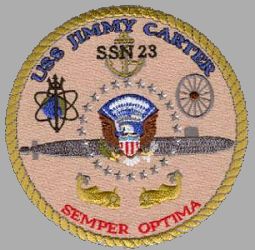
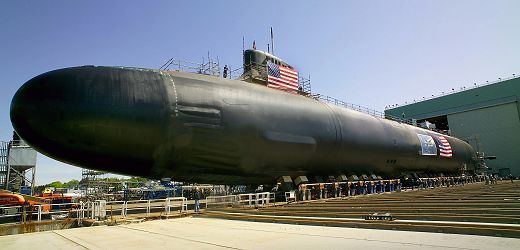
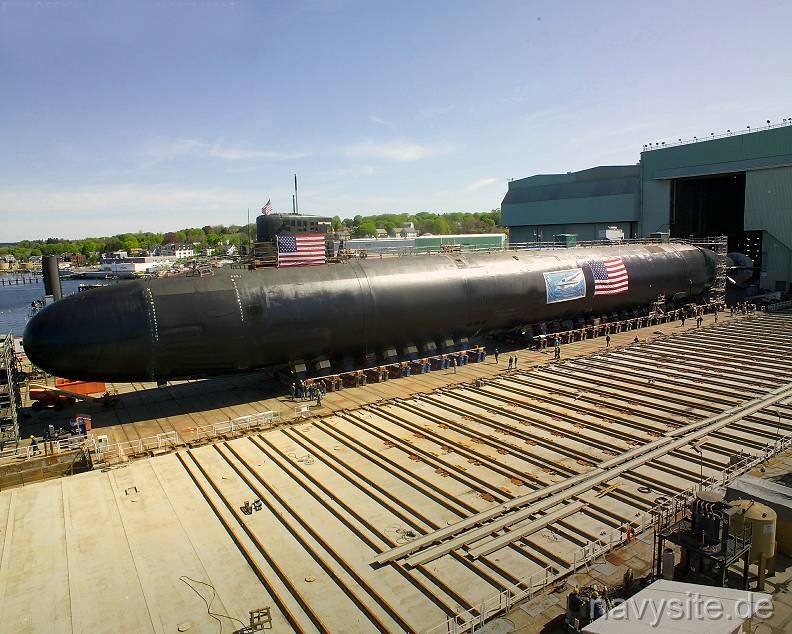
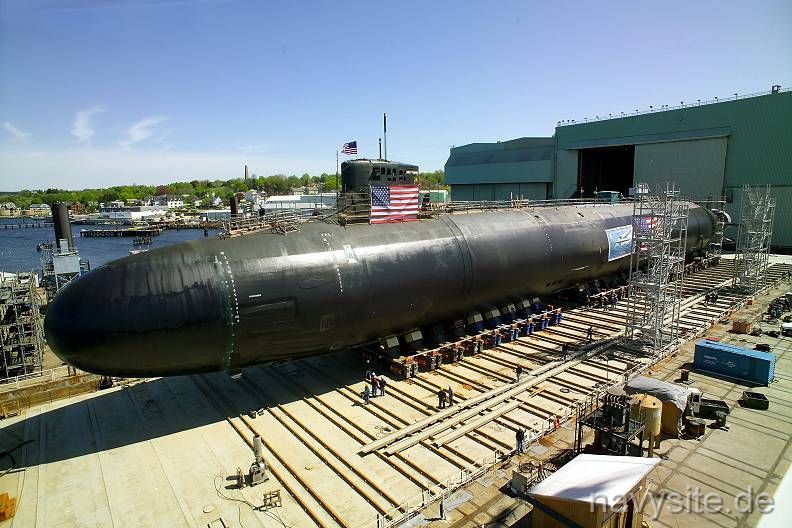
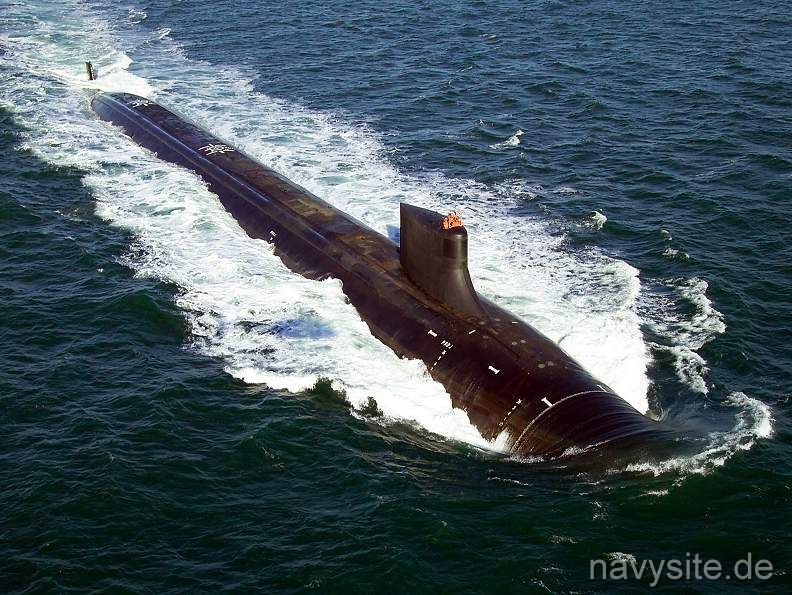
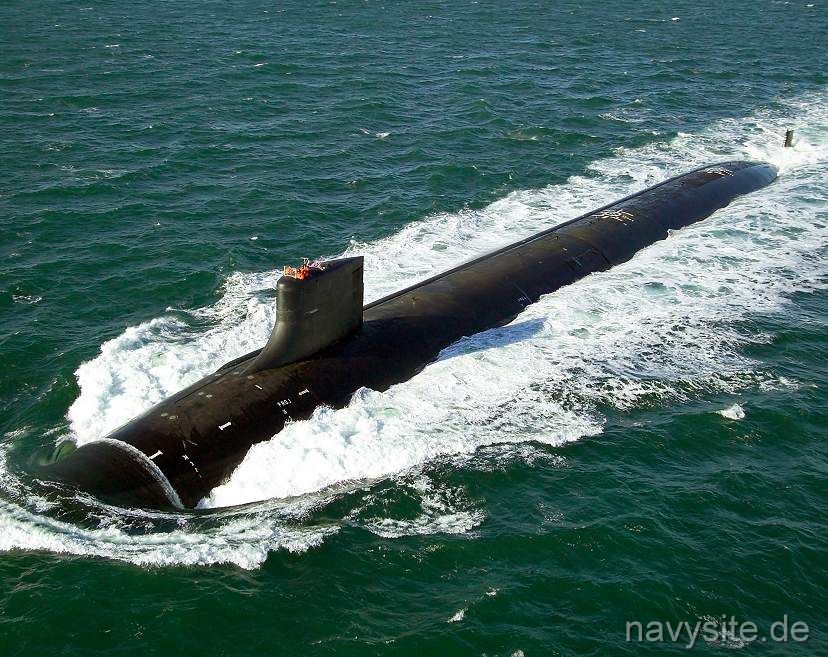
USS JIMMY CARTER is the third and final SEAWOLF - class nuclear-powered attack submarine and the first ship in the Navy to honor the 39th president of the United States and the only U.S. president to qualify in submarines.
As the most advanced submarine in the SEAWOLF - class, the JIMMY CARTER has built-in flexibility and an array of new warfighting features that enable her to prevail in any scenario and against any threat – from beneath Artic ice to shallow water. Differentiating the JIMMY CARTER from all previous undersea vessels is its Multi-Mission Platform (MMP), which includes a 100-foot hull extension to enhance payload capability. The MMP enables JIMMY CARTER to accommodate the advanced technology required to develop and test new generation of weapons, sensors and undersea vehicles for naval special warfare, tactical surveillance and mine-warfare operations.
| General Characteristics: | Awarded: June 29, 1996 |
| Keel laid: 1998 | |
| Launched: May 13, 2004 | |
| Commissioned: February 19, 2005 | |
| Builder: General Dynamics Electric Boat Division, Groton, Conn. | |
| Propulsion system: one nuclear reactor | |
| Propellers: one | |
| Length: 453 feet (138.1 meters) | |
| Beam: 40 feet (12.2 meters) | |
| Draft: 35 feet (10.67 meters) | |
| Displacement: Surfaced: approx. 10,460 tons Submerged: approx. 12,158 tons | |
| Speed: Surfaced: approx. 20 knots Submerged: approx. 35 knots | |
| Armament: | |
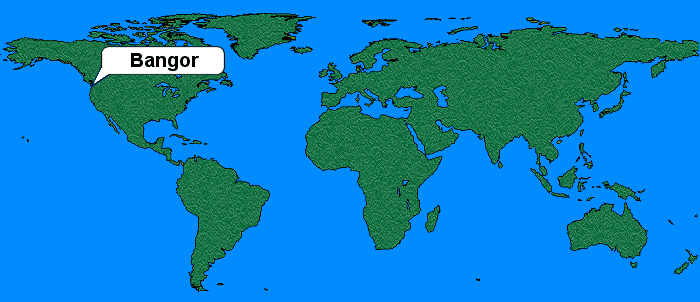
| Homeport: Bangor, Wash. | |
| Crew: 12 Officers, 121 Enlisted |
Crew List:
This section contains the names of sailors who served aboard USS JIMMY CARTER. It is no official listing but contains the names of sailors who submitted their information.
About the Ship's Name:
Jimmy Carter (James Earl Carter, Jr.), thirty-ninth president of the United States, was born October 1, 1924, in Plains, Georgia, and grew up in the nearby community of Archery. His father, James Earl Carter, Sr., was a farmer and businessman; his mother, Lillian Gordy, a registered nurse.
He was educated in the Plains public schools, attended Georgia Southwestern College and the Georgia Institute of Technology, and received a B.S. degree from the U.S. Naval Academy in 1946. In the Navy he became a submariner, rising to the rank of lieutenant. Chosen for the nuclear submarine program, he was assigned to Schenectady, N.Y., where he took graduate work at Union College in reactor technology and nuclear physics, and served as senior officer of the pre-commissioning crew of the SEAWOLF.
On July 7, 1946, he married Rosalynn Smith. When his father died in 1953, he resigned from the Navy and returned to Plains. He and Rosalynn operated Carter's Warehouse, a general-purpose seed and farm supply company. He quickly became a leader of the community. In 1962 he won election to the Georgia Senate. He lost his first gubernatorial campaign in 1966, but won the next election, becoming Georgia's 76th governor on January 12, 1971.
On December 12, 1974, he announced his candidacy for president of the United States. He won his party's nomination on the first ballot at the 1976 Democratic National Convention, and was elected president on November 2, 1976.
Jimmy Carter served as president from January 20, 1977 to January 20, 1981. Noteworthy foreign policy accomplishments of his administration included the Panama Canal treaties, the Camp David Accords, the treaty of peace between Egypt and Israel, the SALT II treaty with the Soviet Union, and the establishment of U.S. diplomatic relations with the People's Republic of China. He championed human rights throughout the world. On the domestic side, the administration's achievements included a comprehensive energy program conducted by a new Department of Energy; deregulation in energy, transportation, communications, and finance; major educational programs under a new Department of Education; and major environmental protection legislation, including the Alaska National Interest Lands Conservation Act.
In 1982, he became University Distinguished Professor at Emory University in Atlanta, Georgia, and founded The Carter Center. Actively guided by President Carter, the nonpartisan and nonprofit Center addresses national and international issues of public policy. Carter Center fellows, associates, and staff join with President Carter in efforts to resolve conflict, promote democracy, protect human rights, and prevent disease and other afflictions. Through the Global 2000 program, the Center advances health and agriculture in the developing world.
The permanent facilities of The Carter Presidential Center were dedicated in October 1986, and include the Jimmy Carter Library and Museum, administered by the National Archives. Also open to visitors is the Jimmy Carter National Historic Site in Plains. President Carter and Rosalynn volunteer for Habitat for Humanity. They have four children and ten grandchildren.
USS JIMMY CARTER History:
USS JIMMY CARTER is the third and final SEAWOLF-class nuclear-powered fast-attack submarine of the US Navy, and from the outset she was conceived as a heavily modified special-mission platform rather than a straightforward copy of her two sisters. The contract to build the boat was awarded to the Electric Boat division of General Dynamics in Groton, Connecticut, on June 29, 1996, during the post-Cold War draw-down in which the original plan for nearly 30 SEAWOLF-class submarines had already been cut to just three hulls. She was named for the 39th President of the United States, Jimmy Carter, a former naval officer and qualified submariner, making her one of very few US Navy vessels - and only the third US submarine - named for a living person at the time of naming.
On December 5, 1998, the keel of JIMMY CARTER was laid at Electric Boat. By then, the Navy was already moving toward a unique configuration for the third SEAWOLF hull. On December 10, 1999, Electric Boat received an $887 million contract modification to alter the design so the submarine could undertake test and development work and "classified missions" of the sort previously carried out by the highly decorated intelligence-collection submarine USS PARCHE (SSN 683). The most visible result of this decision was the insertion of a 100-foot (about 30-meter), 2,500-ton hull section amidships, known as the Multi-Mission Platform (MMP). This module provides an "ocean interface" with large hatches and handling systems for divers, remotely operated vehicles and other special equipment, a reconfigurable internal cargo area, a mission-planning command center and the ability to host a Dry Deck Shelter or Advanced SEAL Delivery System and up to roughly 50 embarked special operations personnel. In later Navy descriptions the MMP is characterized as additional volume and payload capacity for advanced technology used in classified research, development and enhanced warfighting capabilities.
Construction proceeded through the early 2000s. On June 5, 2004, the pre-commissioning unit was christened JIMMY CARTER at Groton, with Rosalynn Carter, the former First Lady, acting as ship's sponsor. The ceremony symbolically linked the submarine's unusual name to its equally unusual mission profile.
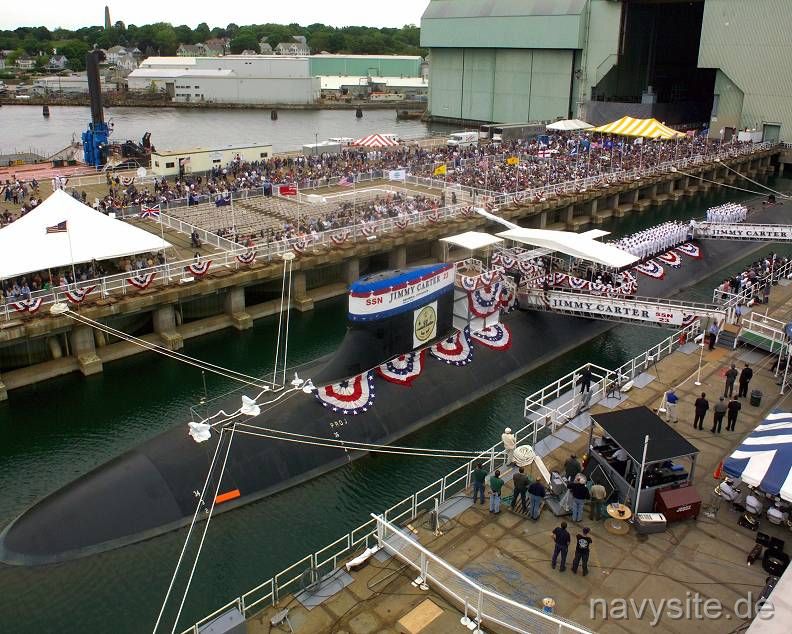
After completing initial pier-side testing, the boat went to sea on November 19, 2004, for her first "alpha" sea trials, the initial open-ocean run designed to test propulsion, basic systems and hull performance. Further "bravo" trials followed, and by December the program had progressed to the point where, on December 22, 2004, Electric Boat formally delivered JIMMY CARTER to the US Navy. Commissioning took place on February 19, 2005, at Naval Submarine Base New London in Groton, Connecticut. The ceremony, held at Pier 17S, marked the last time for the foreseeable future that a new submarine would be commissioned at Groton. The crew manned the ship in front of the namesake and his family. From that day, USS JIMMY CARTER entered the fleet as a fully operational fast-attack submarine, albeit one whose special capabilities and anticipated tasking were already more secretive than those of most attack boats.
Before commissioning, the Navy had decided that JIMMY CARTER would not remain an East Coast boat. On March 7, 2000, while the submarine was still under construction, the Navy publicly confirmed that the specially modified SSN 23 would be homeported at Submarine Base Bangor, Washington, on the Kitsap Peninsula, positioning her close to the Pacific and the then-top-secret predecessor submarine, PARCHE.
After commissioning in early 2005, JIMMY CARTER carried out post-shakedown workups and local operations in the western Atlantic out of New London while the crew gained proficiency on the complex new systems associated with the MMP. In August 2005, the submarine undertook one of the few well-documented public events of her early career. On August 12, 2005, JIMMY CARTER departed Naval Submarine Base Kings Bay, Georgia, for a one-night underway during which former President Jimmy Carter and Rosalynn Carter embarked, standing on the sail as the boat left the base. The short cruise had no disclosed operational purpose beyond symbolically connecting the former president to his namesake vessel and giving him a firsthand look at a modern nuclear submarine. By then, the United States was several years into the post-9/11 counterterrorism campaigns in Afghanistan and Iraq, and fast-attack submarines, including those in the Atlantic, were routinely involved in intelligence gathering and strike support, although any such activities by JIMMY CARTER at that time remain undisclosed.
Later that year, the submarine began her permanent move to the Pacific Northwest. On October 14, 2005, JIMMY CARTER departed New London bound for her new homeport at what had by then become the Bangor annex of Naval Base Kitsap. While running on the surface during this transit she encountered an unusually high wave that caused damage serious enough to require a return to New London for repairs. The issues were corrected quickly, and the submarine set out again on October 15, arriving safely at Naval Base Kitsap-Bangor on the afternoon of November 9, 2005. From that point onward, JIMMY CARTER has been consistently associated with Bangor and the broader Naval Base Kitsap complex.
Once in the Pacific Northwest, JIMMY CARTER settled into the pattern of a new special-mission submarine being integrated into the fleet. On August 16, 2006, she was photographed moored in the Magnetic Silencing Facility at Naval Base Kitsap-Bangor, undergoing work to measure and adjust her magnetic signature. This kind of "deperming" and calibration is routine but particularly important for submarines expected to operate near adversary sensors and in shallow coastal waters. Operationally, the mid-2000s were a period of increasing US focus on the western Pacific and on undersea dominance in the face of a modernizing Chinese navy and a resurgent Russian submarine force, and a heavily modified SEAWOLF-class boat based in the Pacific Northwest fit neatly into that strategic environment, even though details of individual patrols were not made public.
By the late 2000s, JIMMY CARTER was assigned to Submarine Development Squadron 5 (SUBDEVRON 5), a formation that grouped her with USS SEAWOLF (SSN 21) and USS CONNECTICUT (SSN 22). SUBDEVRON 5 is tasked with testing advanced undersea sensors, unmanned vehicles and tactics, including operations in challenging environments such as the Arctic, while also retaining the full combat capability of fast-attack submarines. In this period, one of the boat's commanding officers, Capt. (then Cmdr.) Michael Davies, later recorded that between 2009 and 2012, JIMMY CARTER completed three deployments and a shipyard maintenance period, highlighting a tempo of operations broadly similar to other attack submarines but without the public reporting of port visits and missions that is common for less sensitive platforms.
The maintenance period mentioned in that account aligns with a documented Drydocking Selected Restricted Availability at Puget Sound Naval Shipyard and Intermediate Maintenance Facility in Bremerton in 2010, during which JIMMY CARTER entered dry dock in February and remained in major maintenance until the end of the year. This kind of work focuses on hull, mechanical and electrical systems and, in the case of such a complex platform, also offers opportunities to upgrade mission equipment in the Multi-Mission Platform. After returning to service, the submarine continued deploying from Bangor. Command histories summarized on veteran and deployment tracking sites indicate that in November 2011, JIMMY CARTER conducted a deployment in the Caribbean region, although the specific nature and locations of operations have not been released. Given the broader context of US maritime security concerns in that period, including counter-narcotics and surveillance of maritime approaches, an intelligence-focused submarine operating there would have had many potential taskings, but open sources do not specify what JIMMY CARTER actually did.
In March 2012, command of the submarine passed to Cmdr. Brian Elkowitz, marking the start of a particularly active period for JIMMY CARTER. During Elkowitz's tour, which ran from early 2012 until mid-2015, the submarine completed five missions that were officially described as "vital to national security" and went through a 17-month maintenance period. It was in this timeframe that one of the boat's most discussed but still opaque deployments took place. On January 20, 2013, JIMMY CARTER left her homeport at Bangor. Less than two months later she appeared at Pearl Harbor, Hawaii, for repairs, having completed what her redacted 2013 command history labeled "Mission 7". The unclassified summary described the deployment only in general terms as extremely demanding independent submarine operations conducted under adverse conditions and without external support, carried out in conjunction with a detachment focused on undersea research and development. For this period of operations, JIMMY CARTER and that detachment were awarded a Presidential Unit Citation, a rare decoration that in Navy practice equates to recognizing a unit for heroism under exceptionally difficult and hazardous circumstances, as well as a Navy Unit Commendation. No official account has disclosed where Mission 7 took the submarine or exactly what was done, but within the broader development of US intelligence and undersea infrastructure monitoring - including concerns over foreign undersea cables and strategic chokepoints – the mission clearly carried significant weight inside the Navy.
The long maintenance period referred to during Elkowitz's command corresponds with a Drydocking Phased Maintenance Availability (DPMA) at Puget Sound Naval Shipyard. Navy maintenance documentation for fiscal year 2014 lists USS JIMMY CARTER undergoing a DPMA beginning in June 2013 and extending into late 2013, a phased process in which the ship spent extended time pier-side and in dry dock at Pier 3 in Bremerton for systematic overhaul and modernization. The public deployment chronology that mentions a port call at Pearl Harbor followed by return to Bangor and then mooring at Pier 3 for DPMA is consistent with this timeline, indicating that the boat shifted rapidly from a highly demanding mission to an intensive maintenance and upgrade phase. Although detailed scope is not described in open sources, work of this type typically includes refits to sonar, communications and electronics - systems central to the kind of special intelligence and technology-test missions associated with the Multi-Mission Platform.
Recognition for this period of sustained, largely classified activity came in several forms. By mid-2010s reporting, JIMMY CARTER had been awarded at least two Battle Efficiency Awards ("Battle E") for 2012 and 2013, reflecting superior readiness and performance within her squadron, and, as noted, both a Presidential Unit Citation and a Navy Unit Commendation. The combination of operational awards and maintenance accomplishments underlined that the submarine was not only carrying out sensitive missions but also managing the complex technical demands of her unique configuration.
On May 29, 2015, a high-profile change-of-command ceremony took place at Deterrent Park on Naval Base Kitsap-Bangor. Cmdr. Melvin R. Smith Jr. relieved Cmdr. Brian Elkowitz as commanding officer of JIMMY CARTER. The ceremony was attended by former President Jimmy Carter and Rosalynn Carter, who had previously participated in the boat's christening and commissioning and now returned to mark the transition in leadership of the vessel bearing his name. Public remarks at the event noted that during Elkowitz's tenure, beginning in March 2012, the submarine had completed five significant missions and a major maintenance period, and that the crew had "done things that we can never tell others about", reflecting the continuing secrecy surrounding the boat's deployments.
Following the 2015 change in command, JIMMY CARTER continued to operate from Bangor, with imagery showing the submarine departing Naval Base Kitsap in January 2015 and returning in March, and then again making coastal transits in later years as she left and re-entered Hood Canal.
In October 2017 the Navy announced another change of command: on October 6, at a ceremony held at the Naval Undersea Museum in Keyport, Washington, Cmdr. Edward "Keith" Floyd relieved Cmdr. Melvin Smith as commanding officer. Floyd thus took charge of the submarine during an era when her activities were increasingly associated, at least in public discussion, with undersea intelligence collection and special operations support. One of the few visible signs of JIMMY CARTER's operational pattern emerged in 2017 through Navy photography and subsequent media coverage. On April 14, 2017, the submarine was photographed and filmed transiting the Hood Canal on her way home to Naval Base Kitsap-Bangor, returning from a patrol whose details were not disclosed.
Later that year, on September 11, 2017, the boat again transited Hood Canal toward Bangor; in some of the images from these returns she was seen flying a Jolly Roger - the skull-and-crossbones flag historically associated with pirates but, in submarine tradition, sometimes hoisted to mark a successful patrol or special operation. Contemporary reporting, including accounts in defense and popular-science media, highlighted that JIMMY CARTER had flown this flag at least twice that year, in April and September, and noted that while the exact missions were unknown, the choice to fly the Jolly Roger underscored the crew's perception that they had completed noteworthy operational action. Official Navy statements, however, remained limited to the basic transit captions and did not describe where the submarine had been operating or what she had done.
Behind these brief glimpses, JIMMY CARTER's material condition and advanced systems required periodic deep overhauls. In July 2018, she entered Dry Dock 5 at Puget Sound Naval Shipyard and Intermediate Maintenance Facility for an Extended Docking Selected Restricted Availability (EDSRA), a planned 25-month maintenance and modernization period. Navy and shipyard accounts describe this availability as a major effort, involving extensive work on hull, mechanical and electrical systems, as well as updates to combat systems, sonar and the complex equipment in the Multi-Mission Platform, with shipyard personnel emphasizing that supporting such a unique submarine demanded adaptability and creative engineering approaches. The EDSRA extended into 2020. By mid-year, JIMMY CARTER was undocked and returning to the water for post-availability testing and trials before resuming operational status.
While JIMMY CARTER was in this extended yard period, an unusual personnel event drew brief public attention. In August 2019, Stars and Stripes reported that the executive officer of the submarine, Lt. Cmdr. Jonathan Cebik, had been relieved and administratively reassigned to SUBDEVRON 5 due to a loss of confidence in his personal judgment, with the Navy indicating that questions had arisen about his personal conduct and that an investigation was under way. No connection was made in public reporting between this relief and any specific operations or technical issues on the submarine.
By December 2020, with the extended maintenance completed and the boat back in service, the Navy executed another change of command. On December 18, 2020, during a ceremony at Naval Base Kitsap-Bangor, Cmdr. Benjamin P. Grant relieved Capt. Edward "Keith" Floyd as commanding officer of USS JIMMY CARTER. The official account of the event emphasized again the submarine's status as the last and most advanced of the SEAWOLF-class, but did not elaborate on specific deployments undertaken under Floyd's command.
Under Grant's leadership, JIMMY CARTER returned to the operational cycle of workups and deployments characteristic of a post-EDSRA attack submarine, although, as before, almost all mission details remain classified. On June 9, 2023, yet another change-of-command ceremony was held at Keyport, Washington. In that event, Cmdr. Joseph Campbell relieved Cmdr. Benjamin Grant as commanding officer, with the outgoing CO being awarded the Distinguished Service Medal for his tour. The location of the ceremony at the Naval Undersea Museum, coupled with repeated references to the submarine's role in testing and operating advanced undersea technologies, reinforced the perception of JIMMY CARTER as both an operational asset and a platform for highly specialized missions that blur the line between fleet operations and developmental work.
Maintenance demands did not end with the 2018-2020 EDSRA. In 2024, JIMMY CARTER again entered dry dock at Puget Sound Naval Shipyard, this time in Dry Dock 6, for what Navy reporting and shipyard imagery described as a Docking Continuous Maintenance Availability expected to last several months. A NAVSEA article on the docking emphasized the shipyard's adaptability in supporting a uniquely configured SEAWOLF-class submarine and reiterated that JIMMY CARTER possesses all the capabilities of a standard SEAWOLF plus the additional 100-foot Multi-Mission Platform section used for classified research, development and enhanced warfighting capabilities. As with previous yard periods, details of specific upgrades or changes were not disclosed, but the pattern of recurring significant maintenance interspersed with shadowed deployments is clear.
USS JIMMY CARTER Image Gallery:
![]() | ![]() | ![]() | ![]() | ![]() |
![]() | ![]() |
Back to Submarines list.
Back to ships list.
Back to selection page.
Back to 1st page.