![]() |
Search the Site with
|
![]() | ![]() | ![]() |
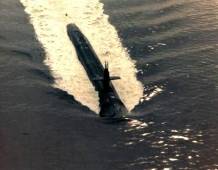
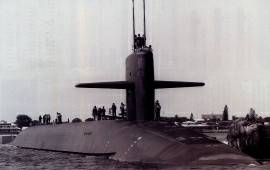
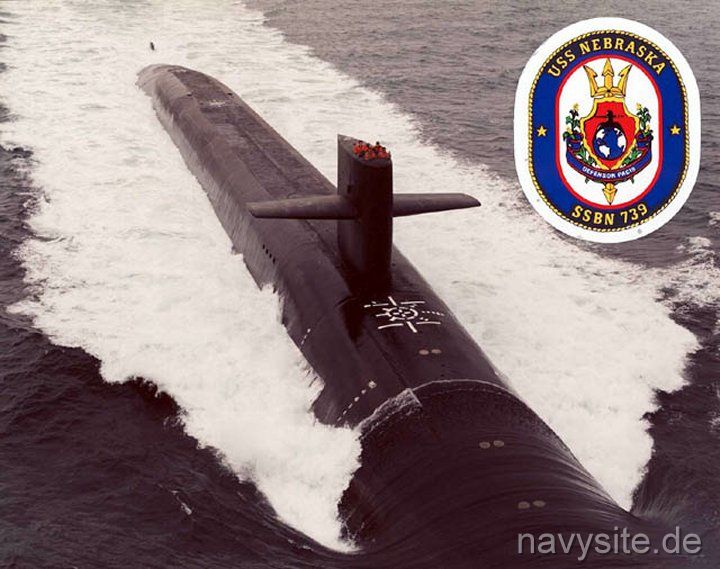
USS NEBRASKA is the 14th ship in the OHIO class and the third U.S. Naval ship to be named in honor of the 37th state of the Union.
| General Characteristics: | Keel Laid: May 26, 1987 |
| Launched: August 15, 1992 | |
| Commissioned: July 10, 1993 | |
| Builder: General Dynamics Electric Boat Division, Groton, Conn. | |
| Propulsion system: one nuclear reactor | |
| Propellers: one | |
| Length: 560 feet (171 meters) | |
| Beam: 42 feet (12.8 meters) | |
| Draft: 36,5 feet (11.1 meters) | |
| Displacement: Surfaced: approx. 16,765 tons Submerged: approx. 18,750 tons | |
| Speed: 20+ knots | |
| Armament: 24 tubes for Trident | |
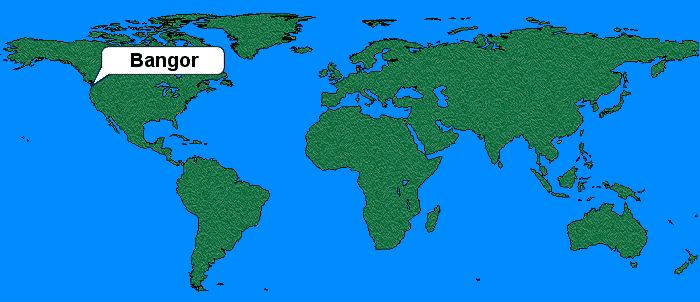
| Homeport: Bangor, WA | |
| Crew: 17 Officers, 15 Chief Petty Officers and 122 Enlisted (2 crews) |
Crew List:
This section contains the names of sailors who served aboard USS NEBRASKA. It is no official listing but contains the names of sailors who submitted their information.
Accidents aboard USS NEBRASKA:
| Date | Where | Events |
|---|---|---|
| September 20, 2008 | off Oahu, Hi. | A sailor is mortally injured in an accident while the NEBRASKA is operating submerged. The petty officer tried to clean spaces in the submarine's aft auxiliary area. He went beyond posted warning signs and worked in dangerous proximity to moving components of the rudder ram. As the NEBRASKA commenced a left turn, the sailor was entangled and pinned in the rudder ram suffering traumatic injuries to his pelvis. Emergency medical treatment was initiated immediately and the sailor was medevaced from the submarine, however, he died before reaching the hospital on board a Coast Guard helicopter. |


USS NEBRASKA History:
USS NEBRASKA was conceived at the end of the Cold War as part of the OHIO-class ballistic-missile submarine program, which was intended to provide the long-range, sea-based leg of the United States nuclear deterrent. The construction contract was awarded to the Electric Boat Division of General Dynamics at Groton, Connecticut, on May 26, 1987, and her keel was laid there on July 6, 1987. Over the next several years, the hull and nuclear propulsion plant were completed and outfitted while the strategic context shifted from late Cold War confrontation to the more uncertain post-Cold War environment in which the United States began to reduce its overall strategic forces but retained the OHIO-class as the core of the submarine-launched ballistic missile force.
The submarine was launched and christened at Groton on August 15, 1992, with Patricia Exon, wife of Nebraska senator J. James Exon, acting as sponsor, formally giving the new ship the name USS NEBRASKA. After fitting-out and dockside tests, NEBRASKA was delivered to the U.S. Navy on June 18, 1993, and commissioned at the Naval Undersea Warfare Center in Groton on July 10, 1993. At commissioning she became the fourteenth OHIO-class SSBN and the second U.S. Navy ship to carry the name, and she was assigned to Submarine Group 10 at Naval Submarine Base Kings Bay, Georgia, the principal East Coast base for TRIDENT-equipped submarines.
From the moment she entered service, NEBRASKA operated with the standard dual-crew system used on U.S. ballistic-missile submarines, with a Blue crew and a Gold crew alternating at sea and in refit to maximize deployed time. During the second half of 1993, her early operations focused on trials of the TRIDENT II (D5) strategic weapon system. On August 20, 1993, while operating on the Eastern Test Range off Cape Canaveral, the Blue crew successfully launched a TRIDENT II D5 missile during a Demonstration and Shakedown Operation (DASO), validating the performance of the new boat and her missile system under operational conditions. On November 18, 1993, the Gold crew conducted a second DASO firing, again launching an unarmed D5 from NEBRASKA on the Eastern Test Range. These two DASO events made NEBRASKA the last new-construction TRIDENT submarine to conduct two separate live-fire shakedown operations and marked the completion of her initial missile-system certification.
With missiles and ship certified, NEBRASKA shifted to operational readiness. On May 28, 1994, she completed her first full strategic loadout of TRIDENT II missiles at Strategic Weapons Facility Atlantic (SWFLANT) at Kings Bay, and on June 26, 1994, she departed on her first strategic deterrent patrol. In August 1994, she completed that patrol, entering the routine but demanding cycle that characterizes SSBN operations: approximately ten-to-eleven weeks submerged on patrol, followed by several weeks in port for maintenance, resupply and crew turnover.
Over the following years, operating from Kings Bay, NEBRASKA conducted repeated deterrent patrols in the Atlantic in support of U.S. Strategic Command, providing an at-sea, survivable nuclear force as arms-control regimes such as START I took effect and the United States reduced other elements of its nuclear arsenal. During this East Coast period, she also became, according to official Navy records, the first OHIO-class submarine to make a port visit in Europe and to call at Halifax, Nova Scotia, reflecting both a rare public appearance for an SSBN and the emphasis on allied reassurance and visibility of strategic assets in the immediate post-Cold-War decade. In 1996, U.S. Strategic Command recognized NEBRASKA's performance by awarding her the Omaha Trophy as the SSBN selected that year for excellence in strategic deterrence.
Missile testing and evaluation remained a recurring part of NEBRASKA's early service. On January 19, 1995, she carried out a Follow-on Commander in Chief Evaluation Test (FCET) from the Eastern Test Range, launching two unarmed TRIDENT II missiles in quick succession to confirm the long-term reliability and accuracy of the D5 system under fleet operating conditions. These tests, together with the DASO firings of 1993, were part of a broader program in which U.S. SSBNs periodically conducted flight tests to demonstrate to national command authorities, and to potential adversaries, that the sea-based deterrent remained effective and dependable. At the same time, NEBRASKA's Blue and Gold crews continued a steady rhythm of patrols from Kings Bay. According to later U.S. Navy summaries, by the time she left the Atlantic in 2004, she had already completed a significant number of patrols, each typically lasting around 77 days at sea followed by about 35 days in port for maintenance and resupply, a pattern consistent with the standard OHIO-class operating model that balanced crew endurance with the need to keep a large portion of the force continuously deployed.
In the early 2000s, as U.S. strategic planners rebalanced nuclear forces between the Atlantic and Pacific in light of post-Cold-War threat assessments and evolving arms-control limits, NEBRASKA was selected for transfer to the Pacific-based SSBN force. On October 1, 2004, she was reassigned from Submarine Group 10 at Kings Bay to Submarine Squadron 17, Submarine Group 9, with a new homeport at Naval Base Kitsap, Bangor, Washington, on the Hood Canal. This move formed part of a broader redistribution that placed more TRIDENT-armed submarines in the Pacific, reflecting the growing importance of Asia-Pacific security dynamics while still maintaining a credible Atlantic-based deterrent through other OHIO-class units. Shortly before and around this transition, NEBRASKA again participated in missile-test activities from the Eastern Test Range. Open launch chronologies attribute to her a two-missile D5 test sequence from Cape Canaveral on February 26, 2004, reinforcing confidence in the D5 system as the class continued to serve well beyond its original design horizon. After the move to Bangor, she joined the group of SSBNs tasked with providing continuous strategic deterrent patrols in the Pacific Ocean, now under Commander, Submarine Force, U.S. Pacific Fleet, and reporting through Submarine Group 9 to U.S. Strategic Command.
Life as a Pacific-based SSBN combined the regularity of the deterrent patrol cycle with occasional high-profile tests and rare port calls. In March 2008, NEBRASKA was photographed off the coast of California as she launched an unarmed TRIDENT II D5 missile during a test associated with a Demonstration and Shakedown Operation, part of the Strategic Systems Programs process of certifying both the ship and her crew after maintenance and modernization work. That launch, like previous and later tests, took place on the Western Test Range off Southern California, far from any potential target areas, and provided data on missile performance and on the ship's ability to execute the complex sequence of pre-launch checks and launch procedures. A similar event followed on March 1, 2011, when imagery again recorded an unarmed D5 taking off from NEBRASKA in the Pacific as part of continued TRIDENT reliability testing. Periodic port calls were extremely limited due to the sensitivity of the SSBN mission and the security and safety requirements associated with nuclear weapons, but NEBRASKA did on occasion appear publicly, particularly in connection with community relations events or maintenance periods in the Puget Sound region.
The intense routine of deterrent patrols occasionally intersected with tragedy. On January 6, 2005, while NEBRASKA was in port at Naval Base Kitsap, Machinist's Mate 3rd Class Aaron Scrimiger died by suicide in machinery spaces on board the submarine, an incident later cited in Navy and veterans' publications summarizing non-combat submarine casualties. On September 20, 2008, during submerged operations off Oahu, Hawaii, Machinist's Mate 3rd Class (SS) Michael Gentile was fatally injured when he went beyond posted warning signs into the vicinity of the rudder-ram mechanism. As the ship commenced a turn, he was pinned by the moving machinery and later died despite emergency treatment and evacuation by helicopter. Investigative reporting at the time emphasized that the accident did not damage the ship or compromise her mission but led to renewed attention to procedural compliance around high-energy mechanical systems. A third fatality occurred on April 19, 2010, when Machinist's Mate Fireman William Mack, aged 21, was found dead in his berthing space while NEBRASKA was at sea on a strategic deterrent patrol that had begun when she left Bangor on March 18. The submarine surfaced off Hawaii to allow agents of the Naval Criminal Investigative Service to embark and conduct an investigation. NEBRASKA then rendezvoused with another submarine to transfer Mack's remains and the investigators before resuming her patrol with the Gold crew. Together, these three deaths over a five-year span were widely discussed within the submarine community and in local media, highlighting the stresses of extended deployments and the importance of both mental-health support and strict adherence to safety procedures in the confined environment of a nuclear submarine.
Despite these incidents, NEBRASKA continued to perform her primary mission. By November 2013, according to publicly released figures, she had completed 62 strategic deterrent patrols in her first 20 years of service, operating with the alternating Blue and Gold crews on the typical pattern of roughly 77 days at sea followed by around 35 days alongside for refit and crew turnover. In late 2013, she completed an unusually long patrol, lasting 116 days, that was described in open sources as unprecedented for the OHIO-class at that time and that contributed to her being awarded the Battle Efficiency Award ("Battle E") for Submarine Squadron 17. Official Navy summaries later noted that NEBRASKA received the Battle E in both 2010 and 2011 as well, recognizing sustained tactical readiness, material condition, training and performance across inspections and operations compared with her squadron peers. As the United States decided to extend the life of the OHIO-class SSBNs from an initial 30-year plan to about 42 years in order to bridge the gap until the arrival of the new COLUMBIA-class, NEBRASKA was scheduled for a mid-life Engineered Refueling Overhaul (ERO) to refuel her reactor and modernize major systems. Around 2013, she was administratively shifted to Submarine Squadron 19 for this shipyard period at Puget Sound Naval Shipyard and Intermediate Maintenance Facility in Bremerton, Washington.
NEBRASKA then spent approximately 41 months in ERO at Puget Sound Naval Shipyard, where her reactor plant was refueled and extensive work was carried out on propulsion, electrical, weapons, navigation, and habitability systems. The overhaul, completed in the second half of the 2010s, was designed to extend the submarine's operational life by about two decades, allowing her to remain in the fleet alongside other OHIO-class boats until their planned replacement by COLUMBIA-class SSBNs in the 2030s and 2040s. Following completion of the ERO, the Blue and Gold crews conducted a series of post-shipyard certifications. These included a command-and-control exercise to demonstrate the ability to execute nuclear-deterrent tasking, a Demonstration and Shakedown Operation that tested the full strategic weapons system, and a nuclear weapons acceptance inspection. During DASO-28, held off the coast of Southern California, NEBRASKA successfully launched two unarmed TRIDENT II D5 missiles as part of certifying both the ship and crew for a return to deterrent patrols and gathering data on the performance of the life-extended D5 missiles.
In parallel with these technical milestones, NEBRASKA briefly became more visible to the public. In February 2018, following the DASO off Southern California, she conducted a "tiger cruise" during which family members and guests embarked in San Diego and rode the submarine north to Naval Base Kitsap-Bangor, offering a rare opportunity for civilians to experience life aboard an SSBN under closely controlled conditions. On June 6, 2013, shortly before entering the ERO but while still in full operational service, she had been photographed returning to Bangor at the end of a deterrent patrol, a scene later echoed in July 2018 when she completed her first post-overhaul strategic patrol. On July 12, 2018, the Blue crew returned NEBRASKA to Naval Base Kitsap-Bangor from that patrol, described officially as the first strategic deterrent mission NEBRASKA had conducted since 2013. U.S. Strategic Command and Submarine Group 9 emphasized that, by then, NEBRASKA had completed 63 deterrent patrols since commissioning and that her successful return to service after the long ERO was an important element in maintaining a continuous and credible sea-based nuclear deterrent while the future COLUMBIA-class remained under construction.
After reentering the deterrent force, NEBRASKA continued both routine patrols and high-visibility test operations. On March 26, 2018, in the context of DASO-28 and the certification sequence described above, she launched two unarmed TRIDENT II D5 missiles from the Pacific off Southern California. The following year, in early September 2019, NEBRASKA conducted one of the most closely watched U.S. SSBN test events of recent decades: over the nights of September 4 and September 6, 2019, operating again off the Southern California coast, she launched four unarmed TRIDENT II D5LE (life-extended) missiles as part of a Commander Evaluation Test. The U.S. Navy and U.S. Strategic Command highlighted that these four launches brought the total number of successful D5 test flights to 176 and formed part of the program to validate the extended-life version of TRIDENT II, intended to remain in service through the late 2040s on both OHIO-class and future COLUMBIA-class submarines. Although officials stressed that these flights were long-planned and not linked to any specific international crisis, they took place against a background of renewed great-power competition and public debate over nuclear modernization, drawing significant media attention to NEBRASKA's role as a test platform as well as an operational deterrent asset.
The submarine and her crews also received institutional recognition in this period. In June 2020, Commander, U.S. Pacific Fleet named the Gold crew of USS NEBRASKA winner of the Arleigh Burke Fleet Trophy for 2019, an award given annually to the ship or aviation squadron that has achieved the greatest improvement in battle efficiency over the previous year. Navy announcements accompanying the award noted NEBRASKA's earlier Omaha Trophy recognition and her two Battle E awards, underlining a record of consistent performance over decades despite the inherent challenges of SSBN operations.
Change-of-command ceremonies punctuated this continuity. On November 25, 2020, a DVIDS-reported ceremony marked the arrival of a new commanding officer for NEBRASKA's Gold crew, and on January 21, 2021 a similar event took place for the Blue crew. In each case, official biographies and press releases repeated key points of the boat's history, including her commissioning in Groton, her early East Coast service, her status as the first OHIO-class submarine to visit Europe and Halifax, Nova Scotia, and her long record of deterrent patrols. On June 21, 2023 another change-of-command ceremony for the Gold crew again brought NEBRASKA briefly into public view, even as day-to-day operations remained largely out of sight by design.
Into the 2020s, USS NEBRASKA has continued to operate from Naval Base Kitsap-Bangor under Submarine Squadron 17 and Submarine Group 9 as one of eight OHIO-class SSBNs based there. With her reactor refueled and major systems modernized during the ERO, she is planned to remain in service for roughly four decades from her commissioning date, carrying up to 20 TRIDENT II D5 missiles rather than the original 24 as part of arms-control-driven force-structure changes and maintaining a continuous schedule of Blue-crew and Gold-crew patrols in the Pacific Ocean.
USS NEBRASKA Image Gallery:
![]() | ![]() | ![]() | ![]() |
Back to Ballistic Submarines list.
Back to ships list.
Back to selection page.
Back to 1st page.