Search the Site with 
General Characteristics Crew List Memorabilia Accidents aboard the Ship History to end of page

USS Kentucky (SSBN 737)


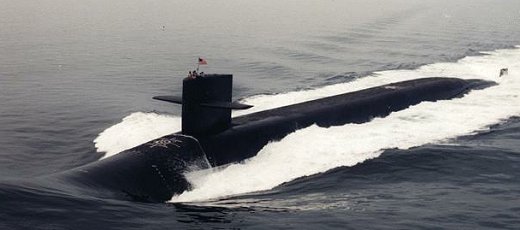
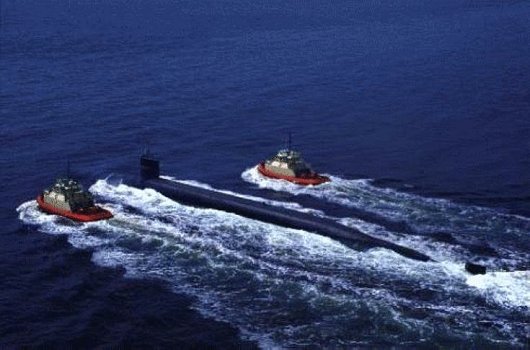
USS KENTUCKY is the third U.S. Naval vessel to be named in honor of the Bluegrass state, and the twelfth Trident submarine commissioned.

General Characteristics:Keel Laid: December 18, 1987
Launched: August 11, 1990
Commissioned: July 13, 1991
Builder: General Dynamics Electric Boat Division, Groton, Conn.
Propulsion system: one nuclear reactor
Propellers: one
Length: 560 feet (171 meters)
Beam: 42 feet (12.8 meters)
Draft: 36,5 feet (11.1 meters)
Displacement: Surfaced: approx. 16,765 tons   Submerged: approx. 18,750 tons
Speed: 20+ knots
Armament: 24 tubes for Trident I and II, Mk-48 torpedoes, four torpedo tubes
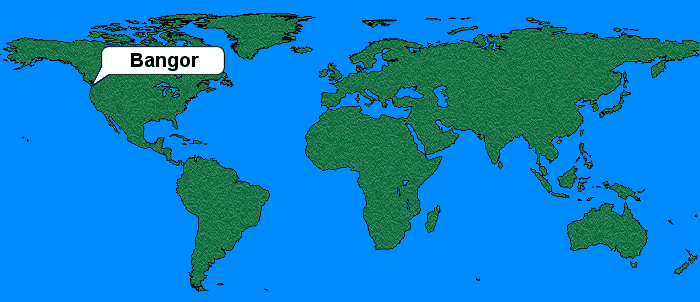
Homeport: Bangor, Wash.
Crew: 17 Officers, 15 Chief Petty Officers and 122 Enlisted (2 crews)


Back to topback to top  go to endgo to the end of the page


Back to topback to top  go to endgo to the end of the page

Crew List:

This section contains the names of sailors who served aboard USS KENTUCKY. It is no official listing but contains the names of sailors who submitted their information.


back to top  go to the end of the page


Back to topback to top  go to endgo to the end of the page

Accidents aboard USS KENTUCKY:

DateWhereEvents
March 19, 1998off Long Island, NYUSS KENTUCKY collided with USS SAN JUAN (SSN 751). At the moment of collision the USS KENTUCKY was at the surface, and the USS SAN JUAN was submerged. According to US Navy official data, the submarines suffered minor damage and returned to Groton naval base for extensive checks. There were no casualties.


Back to topback to top  go to endgo to the end of the page

USS KENTUCKY History:

USS KENTUCKY is an OHIO-class fleet ballistic-missile submarine of the United States Navy and has served since the end of the Cold War as part of the seaborne leg of the U.S. nuclear deterrent. The contract to build USS KENTUCKY was awarded on August 13, 1985 to the Electric Boat division of General Dynamics in Groton, Connecticut, in the final phase of the Cold War as the U.S. was completing the OHIO-class program and transitioning from older Poseidon and Trident I missile systems to the longer-ranged Trident II D5. Her keel was laid at Groton on December 18, 1987. KENTUCKY was launched on August 11, 1990, sponsored by Carolyn Pennebaker Hopkins, who famously broke not a bottle of champagne but a specially prepared mix of Kentucky bourbon and champagne over the bow, underscoring her state namesake. The submarine was completed and delivered in mid-1991 and commissioned at Groton on July 13, 1991, with Captain Michael G. Riegel in command of the Blue Crew and Captain Joseph Henry in command of the Gold Crew.

Immediately after commissioning, KENTUCKY entered the typical OHIO-class sequence of trials and weapons tests required to certify a new ballistic-missile submarine. Operating from the East Coast under Strategic Weapons Facility Atlantic at Kings Bay, Georgia, she participated in Demonstration and Shakedown Operations (DASO) with both crews. On August 30, 1991, the Blue Crew launched a Trident II D5 missile from the Eastern Test Range off Cape Canaveral as part of DASO-7, validating the performance of the new boat's strategic weapons system under operational conditions. On November 4, 1991, the Gold Crew carried out a second D5 test launch, DASO-8, from the same range, demonstrating that both crews and the ship's systems met the standards for entering the operational deterrent force. On September 3, 1992, KENTUCKY was used for a Commander-in-Chief evaluation test, firing two Trident II D5 missiles from the Eastern Test Range, further confirming the reliability and accuracy of the D5 system at the beginning of its service life.

With these tests completed, USS KENTUCKY loaded her full complement of Trident II D5 missiles at Kings Bay and began regular strategic deterrent patrols in the Atlantic in the early 1990s. Open sources do not provide a patrol-by-patrol account, and the precise patrol areas remain classified, but like her sister ships she alternated Blue and Gold crews on long submerged deployments, typically lasting several months, interspersed with refit and training periods at Naval Submarine Base Kings Bay. These operations took place against the backdrop of the end of the Cold War, the implementation of the START I Treaty, and a substantial reduction in the overall U.S. nuclear arsenal, even as the share of warheads deployed at sea on ballistic-missile submarines remained high.

A major public incident in the submarine's early career occurred on March 19, 1998. That morning, while USS KENTUCKY was operating on the surface about 125 miles off Long Island, New York, she was struck by the attack submarine USS SAN JUAN (SSN 751), which was submerged and conducting training in the same area. Contemporary reporting noted that the collision occurred at about 9:30 a.m. and was described by officials as a "minor bump", but it nonetheless involved two nuclear-powered submarines, one of them a ballistic-missile boat on the U.S. East Coast. No injuries were reported. Subsequent accounts state that KENTUCKY suffered damage to her rudder or stern section, while SAN JUAN's forward ballast tank was ruptured. Both submarines remained afloat, and SAN JUAN was able to surface and return to port under her own power. The incident highlighted the risks inherent in intensive anti-submarine warfare training near busy coastal waters and became a frequently cited example in later analyses of nuclear-armed vessels operating at sea.

Through the late 1990s and into the early 2000s, USS KENTUCKY continued her pattern of Atlantic strategic deterrent patrols, while the U.S. Navy was reshaping the OHIO-class force under post-Cold War arms-control agreements and national nuclear posture reviews. During this period, the submarine's crews began to receive formal recognition for their performance in areas visible to the public. In 2001 and 2002 the Gold Crew was awarded first place in the Captain Edward F. Ney Memorial Award competition for submarine afloat galleys in the United States Atlantic Fleet, reflecting consistently high marks in inspections and evaluations of food service during deployments; the Gold Crew received an honorable mention in the same program in 2007.

A major structural change in KENTUCKY's career came in 2002, when she was reassigned from the Atlantic to the Pacific ballistic-missile submarine force. As part of a broader rebalancing that shifted some OHIO-class SSBNs from Kings Bay to Naval Base Kitsap-Bangor in Washington to cover Pacific and Asian contingencies, USS KENTUCKY departed Kings Bay on a strategic deterrent patrol on August 25, 2002. The transit patrol lasted about seventy days. Upon completion she arrived at Bangor and established her new homeport there. From that point forward, KENTUCKY operated under Strategic Weapons Facility Pacific (SWFPAC), conducting deterrent patrols in the Pacific Ocean while continuing the Blue/Gold crew cycle.

In the mid-2000s, KENTUCKY's overall operational performance in the Pacific was recognized with several major fleet awards. Her crews earned the Battle Efficiency Award ("Battle E") in 2006 and again in 2009, marking the boat as one of the top performers among ballistic-missile submarines in readiness, tactical proficiency, and material condition during those competitive cycles. In 2009, the Blue and Gold crews together were selected to receive the Omaha Trophy in the ballistic-missile submarine category from U.S. Strategic Command. The Omaha Trophy is awarded annually to units judged to have provided outstanding support to U.S. strategic deterrence missions. KENTUCKY's selection indicates that her patrol performance, inspection results, safety record, and other evaluated factors collectively placed her at the top of the SSBN force that year.

Around this same time, KENTUCKY became somewhat more visible to the public. The submarine appeared in television programming such as the History Channel series "Modern Marvels" in 2010 and in an episode of "Mega Meals" in 2011, in segments focusing on nuclear submarines and the logistical challenge of feeding a crew at sea for extended periods. Such appearances offered rare controlled glimpses into aspects of life on board a ballistic-missile submarine, though they avoided operational details.

On October 12, 2011, while operating near the Strait of Juan de Fuca between Vancouver Island and the U.S. state of Washington, USS KENTUCKY was involved in a serious near-collision with the roll-on/roll-off cargo vessel MV MIDNIGHT SUN, operated by Totem Ocean. According to later reports, KENTUCKY was at periscope depth, with only her periscope visible above the surface, when her commanding officer ordered a course change without adequately checking for surface traffic. The submarine's new course was blocked by MIDNIGHT SUN, an approximately 839-foot freighter running between Tacoma and Anchorage. The presence of the merchant vessel was only recognized when KENTUCKY was contacted by another ship. Both KENTUCKY and MIDNIGHT SUN took action to avoid impact, coming within roughly 800 meters of one another before their bows swung clear. The incident, which occurred in busy coastal waters near British Columbia, prompted a Navy investigation and ultimately contributed to the relief of KENTUCKY's commanding officer, emphasizing again the navigational challenges of operating a low-profile submarine near commercial traffic even in peacetime.

In January 2012, USS KENTUCKY entered an Engineered Refueling Overhaul (ERO) at Puget Sound Naval Shipyard and Intermediate Maintenance Facility in Bremerton, Washington. An ERO is a major mid-life availability in which the submarine's nuclear reactor is refueled and the ship undergoes extensive maintenance and modernization. For KENTUCKY, the ERO lasted on the order of 39-40 months and was intended to extend her service life by approximately twenty years, into the 2030s, in line with the broader plan to keep selected OHIO-class boats in service until their eventual replacement by the COLUMBIA-class SSBNs. Sea trials at the end of the overhaul, including a period of post-refit testing completed around April 16, 2015, checked the propulsion plant, navigation, and combat systems as the submarine returned to the operational fleet.

In November 2015, KENTUCKY's strategic weapons system returned to the spotlight. On November 7, 2015, operating in the Pacific Test Range off the coast of Southern California, she launched an unarmed Trident II D5 missile as part of a Demonstration and Shakedown Operation known as DASO-26. The test was conducted by the U.S. Navy's Strategic Systems Programs to verify the readiness of the submarine's crew and missile system after the long ERO. The bright plume of the missile's ascent in the evening sky was widely photographed and caused a rash of reports and social-media speculation about a "mystery light" or unidentified flying object over the U.S. West Coast before officials confirmed it was a Trident test from an OHIO-class SSBN. Two days later, on November 9, 2015, KENTUCKY supported a second Trident II D5 launch in the same test series, the 157th successful test flight of the D5 missile, observed in part by members of Congress and the commander of U.S. Strategic Command, who embarked to witness the demonstration of the strategic deterrent at sea.

On March 13, 2016, USS KENTUCKY departed Naval Base Kitsap-Bangor for her first strategic deterrent mission since 2011, officially marking her return to operational patrols after the ERO. Navy statements at the time emphasized that the overhaul would allow the submarine to remain in service for about two more decades and that her renewed presence on patrol contributed to maintaining a continuous at-sea deterrent posture. From 2016 onward she resumed the typical OHIO-class pattern of alternating Blue and Gold crews on extended submerged patrols from Bangor, now in a global context defined by the New START Treaty, an increased focus on Pacific and Indo-Pacific security, and continuing modernization efforts in both the U.S. and Russian strategic forces.

In the late 2010s and early 2020s, KENTUCKY continued to serve quietly as part of the Pacific SSBN squadron. Publicly available information does not list each patrol, but U.S. Strategic Command and Navy sources consistently describe OHIO-class ballistic-missile submarines like KENTUCKY as the most survivable leg of the U.S. nuclear triad, maintaining a near-continuous presence at sea with nuclear-armed Trident II D5 missiles embarked. Her post-overhaul operations thus consisted of recurring periods on patrol under U.S. Strategic Command tasking, interleaved with refits and training at Bangor and work with Strategic Weapons Facility Pacific, in line with the broader deterrent mission.

One of the most visible moments in the submarine's recent history came in 2023 and was tied directly to regional security developments in Northeast Asia. Following the April 2023 "Washington Declaration" between the United States and the Republic of Korea, which committed Washington to more visible deployments of U.S. strategic assets to reassure South Korea in the face of North Korean missile and nuclear activity, USS KENTUCKY conducted a rare foreign port visit. On July 18, 2023, she arrived at Busan Naval Base in South Korea, the first visit of a U.S. ballistic-missile submarine to a South Korean port in more than forty years. Just days earlier, another OHIO-class SSBN, USS TENNESSEE (SSBN 734), had visited His Majesty's Naval Base Clyde in Scotland, illustrating a broader strategy of occasionally making the normally unseen SSBN force publicly visible to allies and partners. During the Busan visit, South Korean president Yoon Suk Yeol and first lady Kim Keon-hee toured USS KENTUCKY, and the commander of the ROK-U.S. Combined Forces Command described the submarine as a key element of extended deterrence, framing the port call as evidence of an "ironclad" U.S. commitment to South Korea's defense.

As of the mid-2020s, USS KENTUCKY remains in active service, homeported at Naval Base Kitsap-Bangor.


Back to topback to top  go to endgo to the end of the page


Back to topback to top


Back to Ballistic Submarines list. Back to ships list. Back to selection page. Back to 1st page.