
Search the Site with

|
Search the Site with
|
 General Characteristics Crew List Memorabilia About the Ship's Coat of Arms About the Ship's Name History Homeports of USS Bulkeley Construction Gallery Patch Gallery Image Gallery to end of page
 | 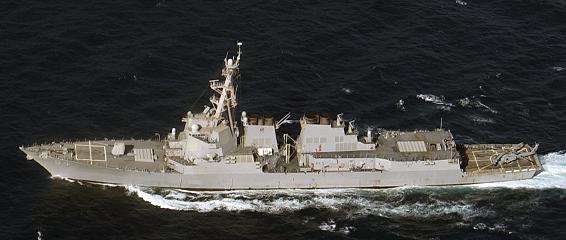 |
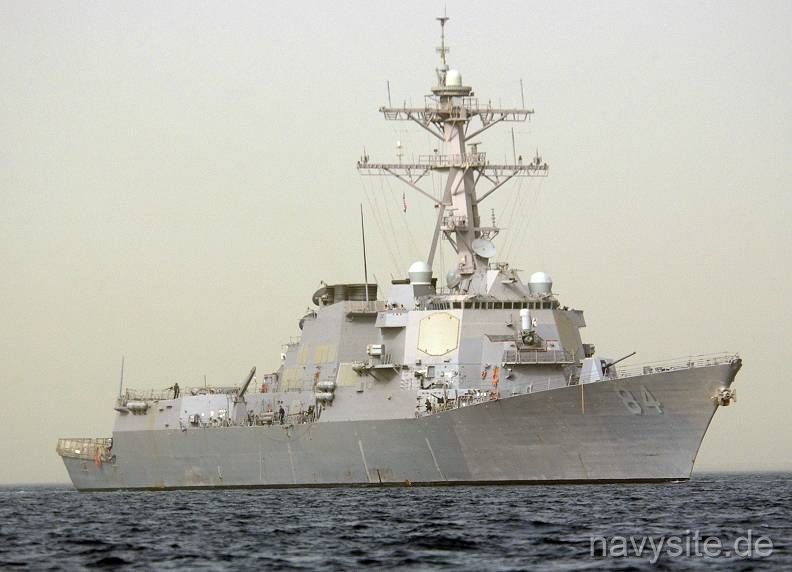
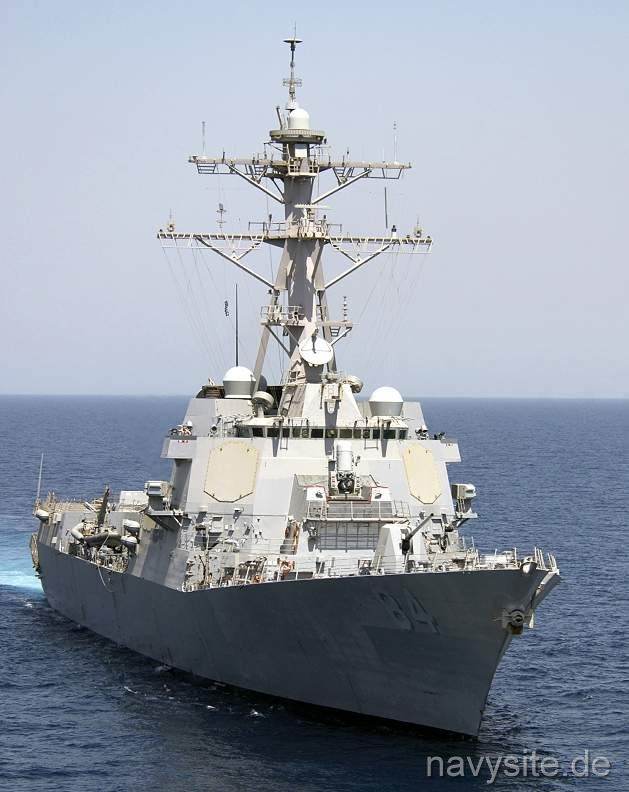
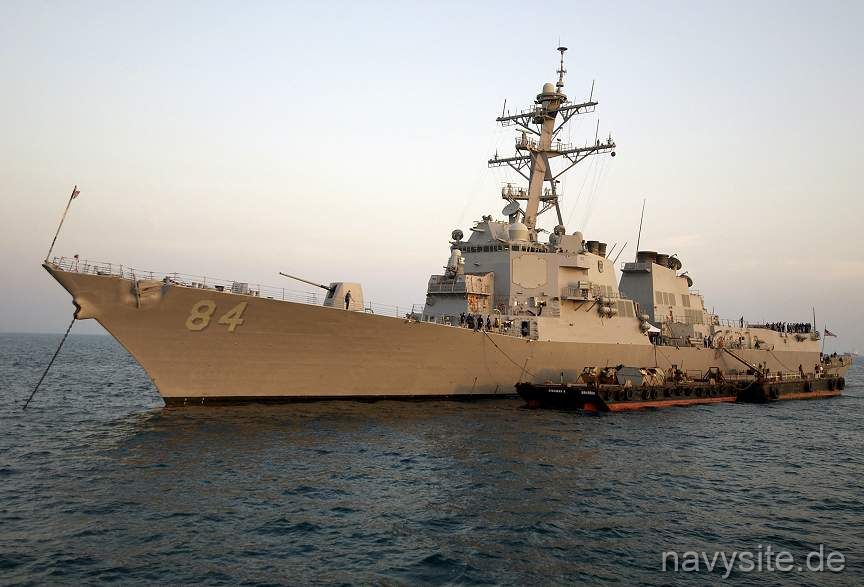
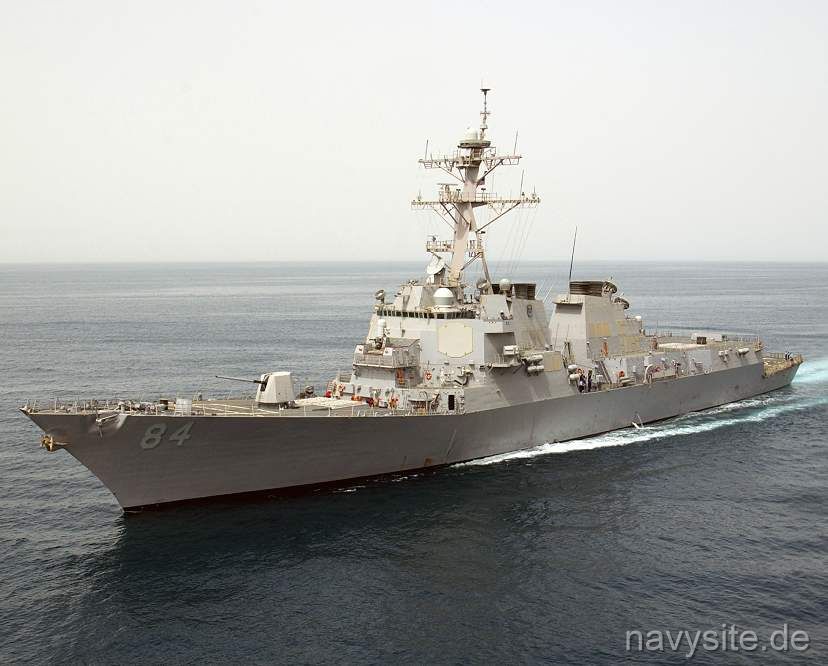
USS BULKELEY is the 34th ARLEIGH BURKE - class guided missile destroyer and the first ship in the Navy named after Vice Adm. John Duncan Bulkeley.
| General Characteristics: | Awarded: June 20, 1996 |
| Keel laid: May 10, 1999 | |
| Christened: June 24, 2000 | |
| Commissioned: December 8, 2001 | |
| Builder: Ingalls Shipbuilding, Pascagoula, Miss. | |
| Propulsion system: four General Electric LM 2500 gas turbine engines | |
| Propellers: two | |
| Length: 508,5 feet (155 meters) | |
| Beam: 67 feet (20.4 meters) | |
| Draft: 30,5 feet (9.3 meters) | |
| Displacement: approx. 9,200 tons full load | |
| Speed: 32 knots | |
| Aircraft: two | |
| Armament: one Mk-45 5"/54 caliber lightweight gun, two Mk-41 VLS for Standard missiles and Tomahawk ASM/LAM, one 20mm Phalanx CIWS, one SeaRAM, two Mk-32 triple torpedo tubes for Mk-50 and Mk-46 torpedoes, two Mk 38 Mod 2 25mm machine gun systems | |
| Homeport: Rota, Spain | |
| Crew: approx. 320 |
 back to top go to the end of the pageback to top go to the end of the page
Crew List:
This section contains the names of sailors who served aboard USS BULKELEY. It is no official listing but contains the names of sailors who submitted their information.
back to top go to the end of the pageback to top go to the end of the pageAbout the Ship's Coat of Arms:
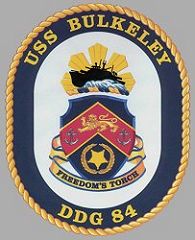
The Shield:
The shield, reflecting the power of the Aegis Weapons System, is Navy blue and gold, the colors traditionally associated with the US Navy symbolizing the sea and excellence. The inverted star at the base of the shield recalls the Medal of Honor presented to Admiral Bulkeley by President Franklin Delano Roosevelt for his dynamic forcefulness and daring during the defense of the Phillipines. The gold laurel wreath represents honor and high achievement, the hallmarks of USS BULKELEY. The red chevron, from the family coat of arms, is emblematic of the valor and sacrifice displayed by Admiral Bulkeley while leading a flotilla of PT boats and minesweepers along Utah Beach before assualt troops stormed ashore at Normandy. The lion alludes to the heritage of Normandy and embodies courage and strength.
The Crest:
A WW II PT Boat surrounded by the Philippine sun serves to honor Admiral Bulkeley's role in the Pacific including his daring rescue of General MacArthur and President Quezon of the Philippines from Corregidor.
back to top go to the end of the pageAbout the Ship's Name:
USS BULKELEY is named in honor of the late Navy Vice Adm. John Duncan Bulkeley, (1911-1996). Bulkeley was the recipient of the Medal of Honor, Navy Cross, and numerous other decorations for heroic actions during World War II. While in command of Motor Torpedo Boat (MTB) Squadrons Three and Seven during the defense of the Philippines, Bulkeley evacuated Army Gen. Douglas MacArthur and President Quezon of the Philippines, and destroyed several Japanese planes, surface combatants, and merchant ships. As commander, MTB Squadron 102, he supported the Normandy and Southern France invasions. Following the war, he became president of the Board of Inspection and Survey, where he continued to serve upon transfer to the retired list on Jan. 1, 1974.
back to top go to the end of the page
USS BULKELEY History:
USS BULKELEY was built at Ingalls Shipbuilding in Pascagoula, laid down on May 10, 1999, christened on June 24, 2000, and commissioned at the INTREPID Sea, Air & Space Museum in New York on December 8, 2001, before shifting to her first Atlantic Fleet homeport at Norfolk for shakedown and combat-systems qualification through late 2001 and 2002.
In 2003, she completed workups and joined routine Mediterranean/Red Sea transits as the fleet surged for operations tied to OEF/OIF, alternating escort drills, maritime interception certifications, and strike-group screens. 2004 kept the ship on the Atlantic training-and-certification rhythm with periodic port logistics and NATO integration calls that set conditions for a higher operational tempo the following years. In 2005, she continued East Coast exercises and pre-deployment maintenance, closing the year at high readiness.
During 2006, BULKELEY deployed with the IWO JIMA (LHD 7) Expeditionary Strike Group during the Lebanon crisis, part of the Navy-Marine Corps effort that enabled the evacuation of nearly 15,000 U.S. citizens as the Eastern Mediterranean suddenly became the focus of a large non-combatant evacuation operation. The ESG posture mixed presence, convoy control, and logistics seaspace management in a congested theater.
In 2007, she returned to the Atlantic training cycle, completed inspections and certifications, and embarked for a standard Sixth Fleet presence period. 2008 put the destroyer on a seam between anti-terror and maritime-security missions as piracy rose in the western Indian Ocean. Through late September 2008 into early 2009, she helped monitor the hijacked arms freighter MV FAINA off Hobyo, Somalia, a high-profile case that drew a multinational cordon and foreshadowed the counter-piracy construct that matured the next two years.
In 2010, BULKELEY toggled between Atlantic upkeep and forward tasking, rehearsing visit-board-search-seizure (VBSS) procedures and combined operations with allies. By February 5, 2011, she was assigned to Combined Task Force 151 when her boarding team - supported by an SH-60 - freed the Bahamian-flagged GUANABARA after a pirate attack in the North Arabian Sea, detaining four suspects and underscoring how destroyers provided the afloat node for coalition interdictions. Later that year she remained in the Arabian Sea/Red Sea seam, contributing to sea-lane security as regional upheavals stressed chokepoints.
In 2012, the ship reset in Norfolk and rejoined carrier integration. From July 22, 2013 through April 18, 2014, she deployed with HARRY S. TRUMAN (CVN 75) across the Mediterranean and into the Arabian Sea, cycling through port visits that included Marseille, Jebel Ali, Bahrain (Hidd) and Palma de Mallorca while the strike group supported operations linked to regional stability and maritime security on either side of Suez.
In 2015, BULKELEY again sortied with TRUMAN CSG on November 16, and by January 2016, was operating in the Gulf of Oman. On January 15, 2016, the crew rendered aid to a disabled fishing skiff before the strike group's eight-month cruise concluded on July 13, 2016, a deployment recognized across CSG-8 with a Meritorious Unit Commendation for sustained combat operations in support of the campaign against ISIS.
Across 2017 and 2018, the destroyer alternated maintenance, basic-to-advanced phases, and Atlantic/European sorties as the Navy reset deployment lengths and composition, then in 2019, she returned to Sixth-Fleet waters for a summer patrol that included high-latitude transits and Danish Straits routing en route to Baltic and North Sea events.
In 2020, she completed sustainment and local operations while the fleet adapted to COVID protocols. 2021 brought preparations for a deep modernization period. Leadership turnover and an extended availability framed 2022, when - after the relief of the commanding officer and command master chief in June - BULKELEY completed modernization and departed Norfolk for a homeport shift to Naval Station Rota, arriving August 17, 2022, as part of the Forward-Deployed Naval Forces Europe rotation.
In 2023, the ship settled into the FDNF-E pattern of multi-month Sixth Fleet patrols, NATO exercises, and Black Sea/Baltic/High-North engagement windows as policy and access permitted. 2024 saw continued patrols and senior leadership engagement in theater, with Sixth Fleet highlighting BULKELEY's role and tempo during forward operations and port periods.
In 2025, BULKELEY remained Rota-based and embarked on a late-summer Northern European sequence: she arrived Rostock, Germany, on August 27, 2025, for a scheduled port visit, then shifted into the Northern Coasts 2025 multinational exercise in the Baltic Sea in early September, conducting advanced maneuvers alongside NATO partners.
back to top go to the end of the pageHomeports of USS BULKELEY:
| Period | Homeport |
|---|---|
| commissioned at New York City, NY. | |
| 2001 - 2022 | Norfolk, Va. |
| 2022 - present | Rota, Spain |
back to top go to the end of the page
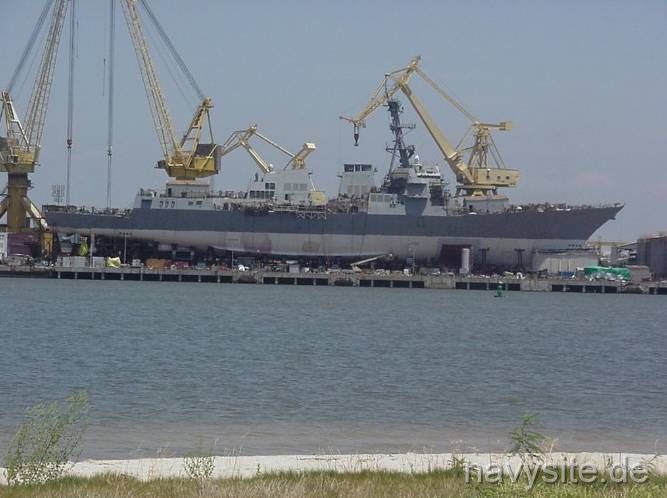
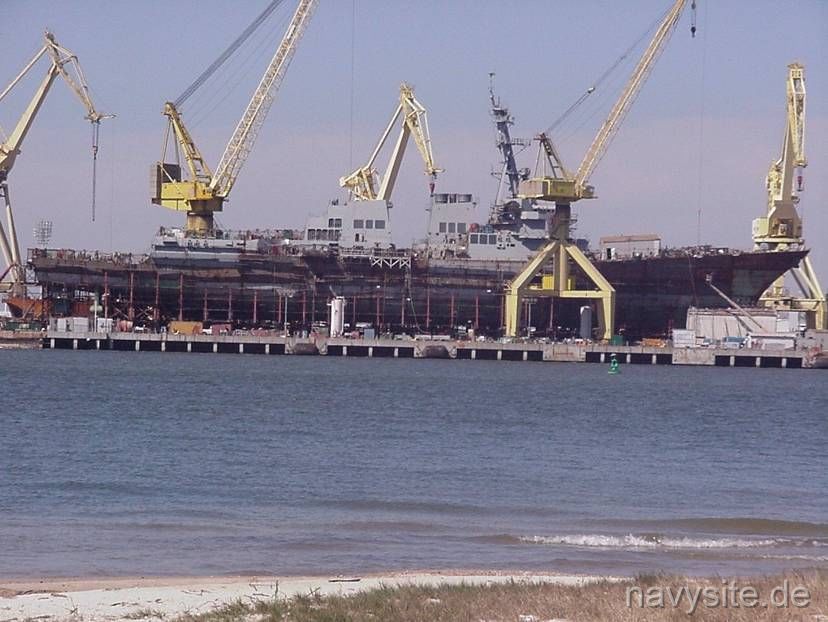
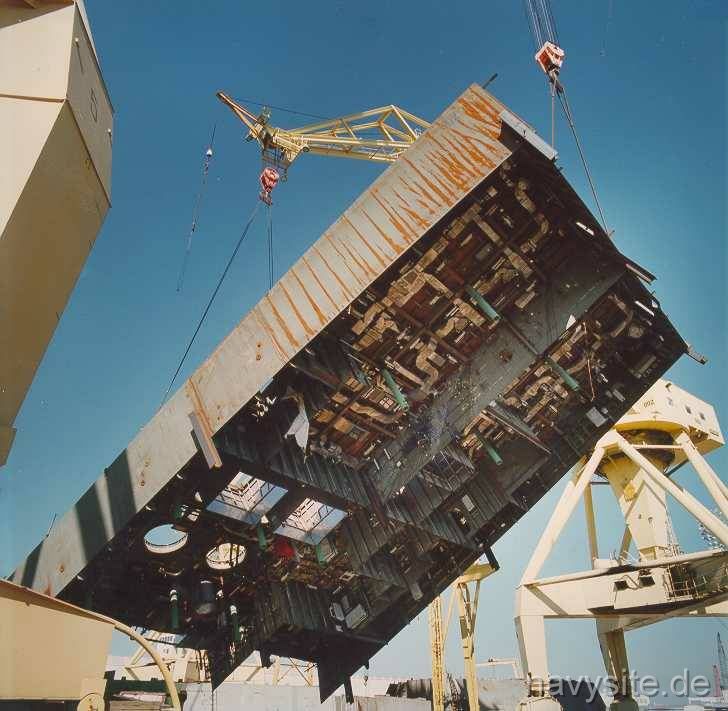
USS BULKELEY Construction Gallery:
 |  |  |
back to top go to the end of the page
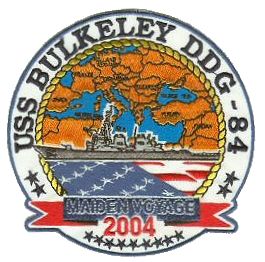
USS BULKELEY Patch Gallery:
 |
back to top go to the end of the page
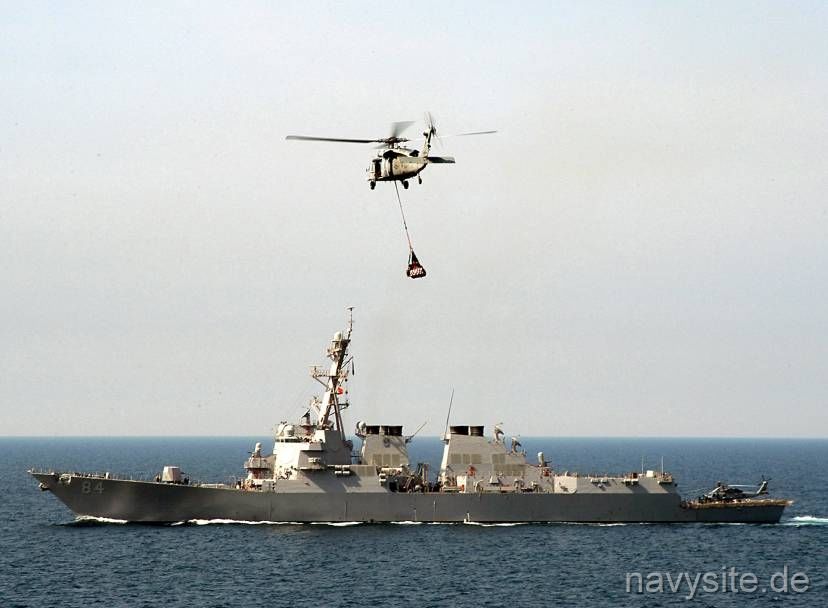
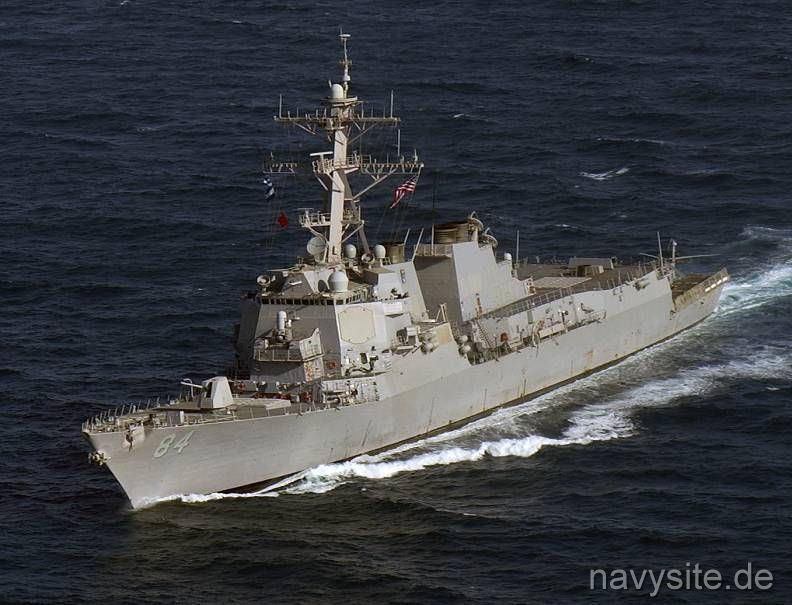
USS BULKELEY Image Gallery:
 |  |  |  |  |
 |  |  |
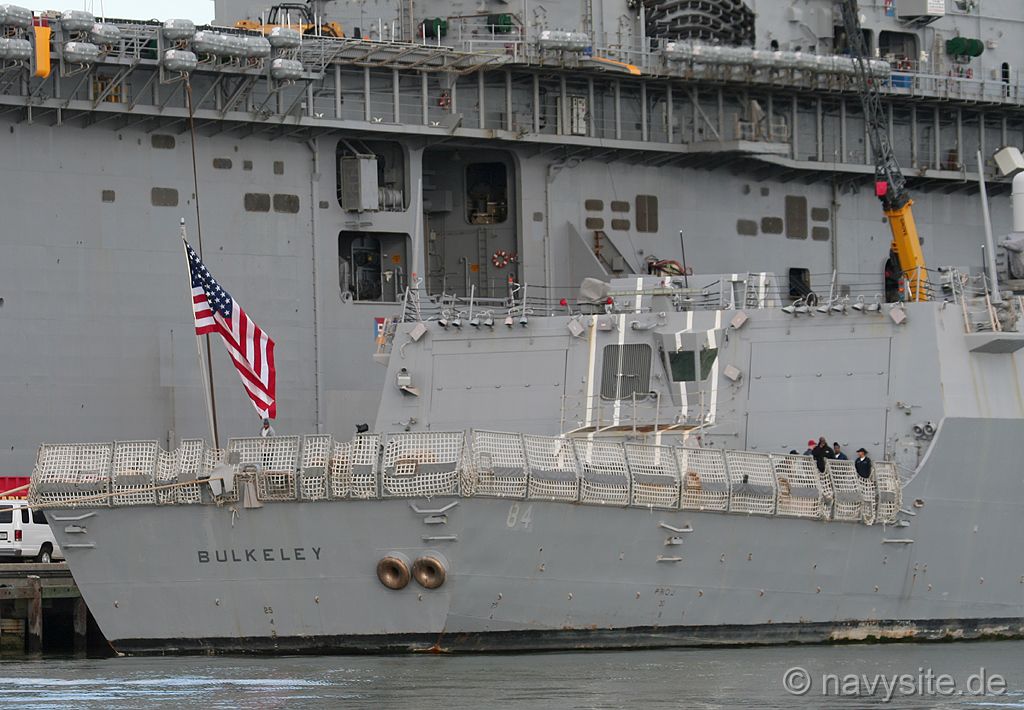
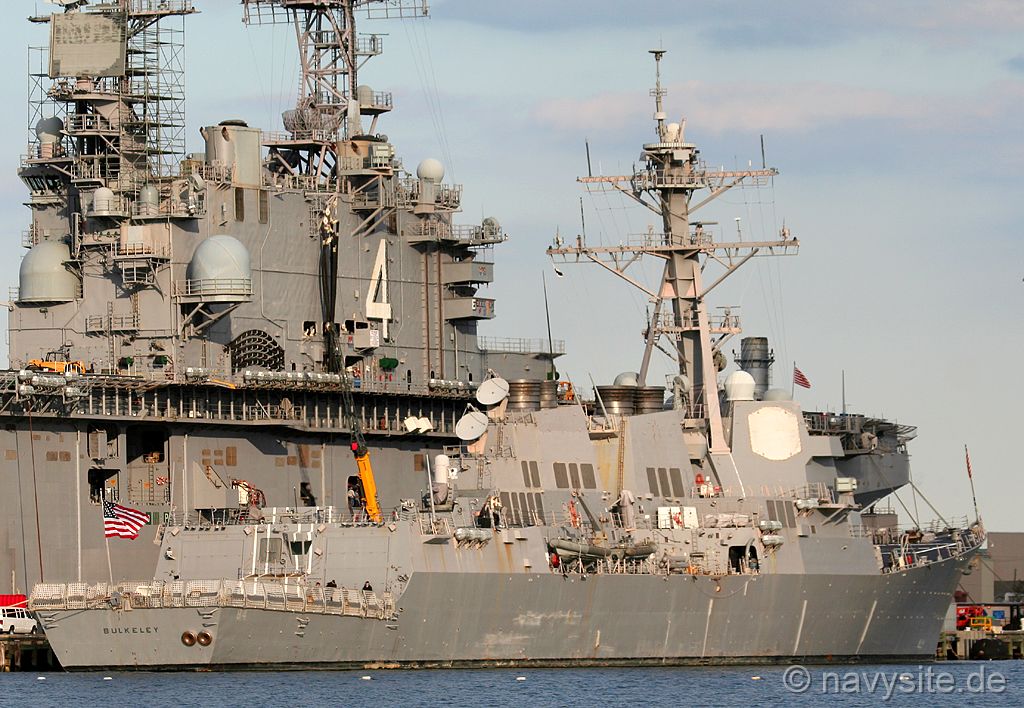
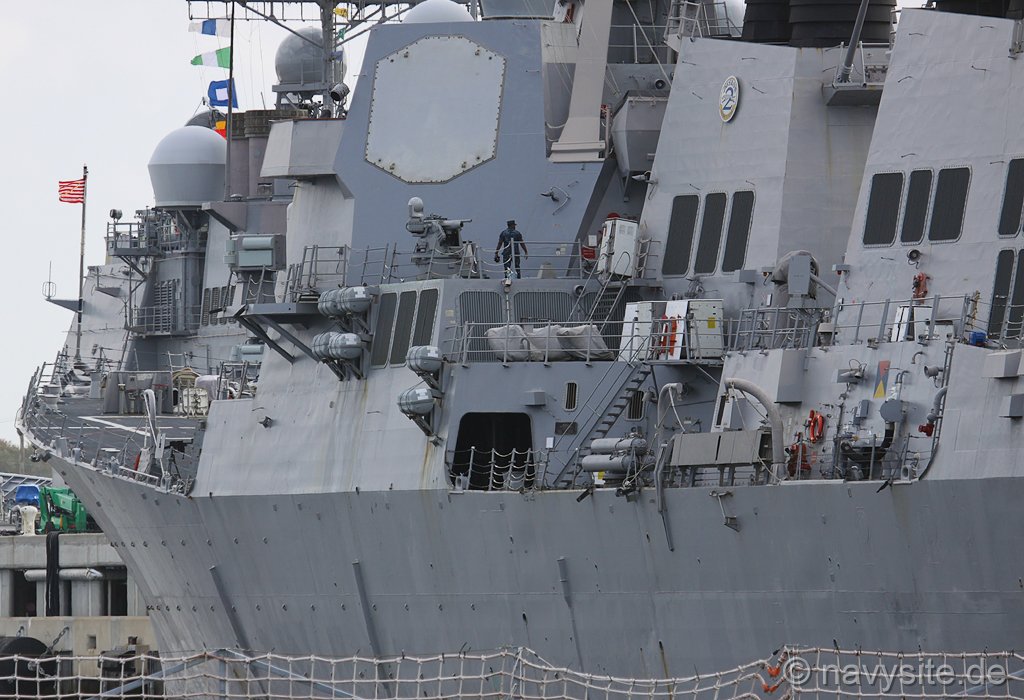
The photos below were taken by me and show the BULKELEY at Naval Base Norfolk, Va., on November 9, 2008.
 |  |  |
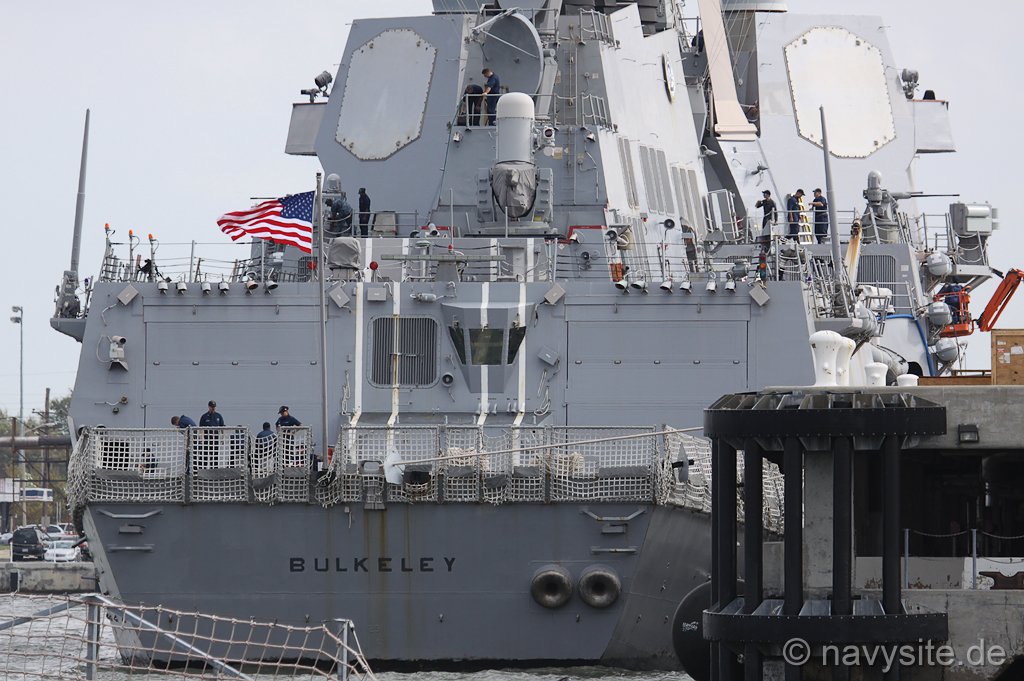
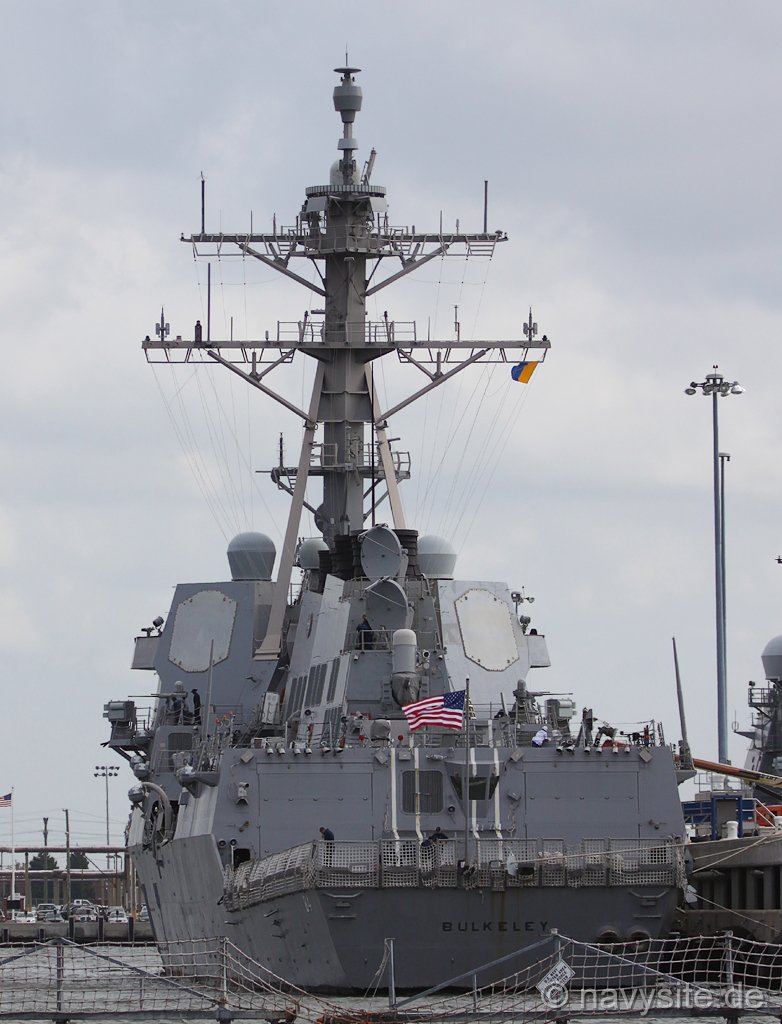
The photos below were taken by me and show the BULKELEY at Naval Base Norfolk, Va., on October 27, 2010.
 |  |  |
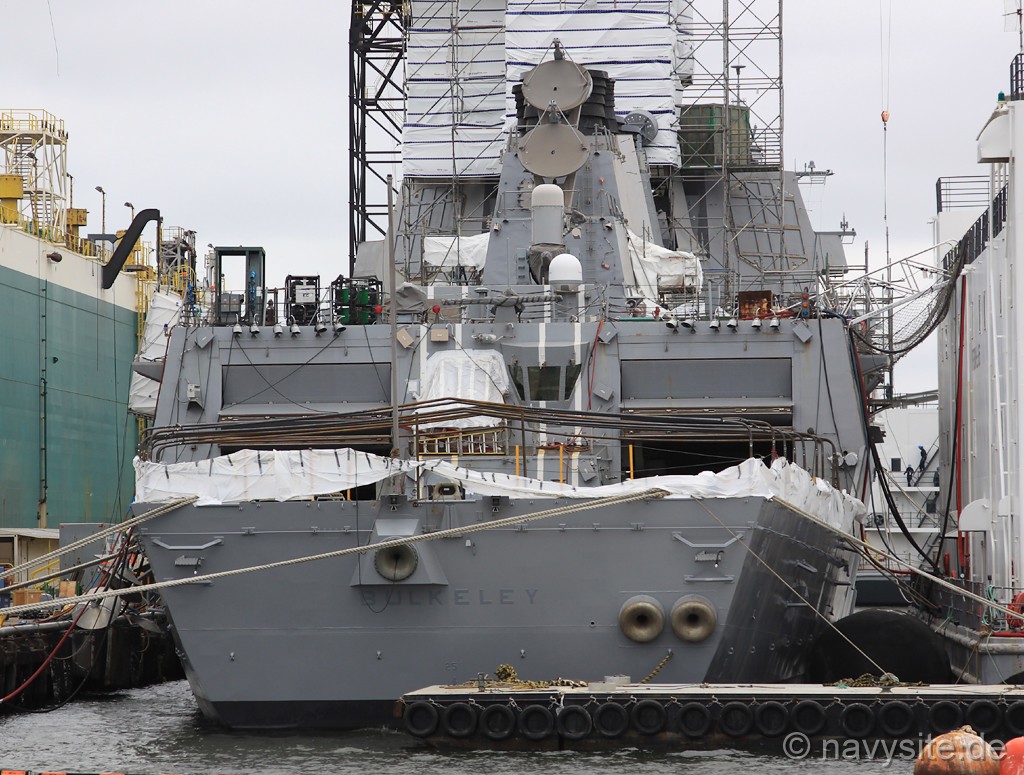
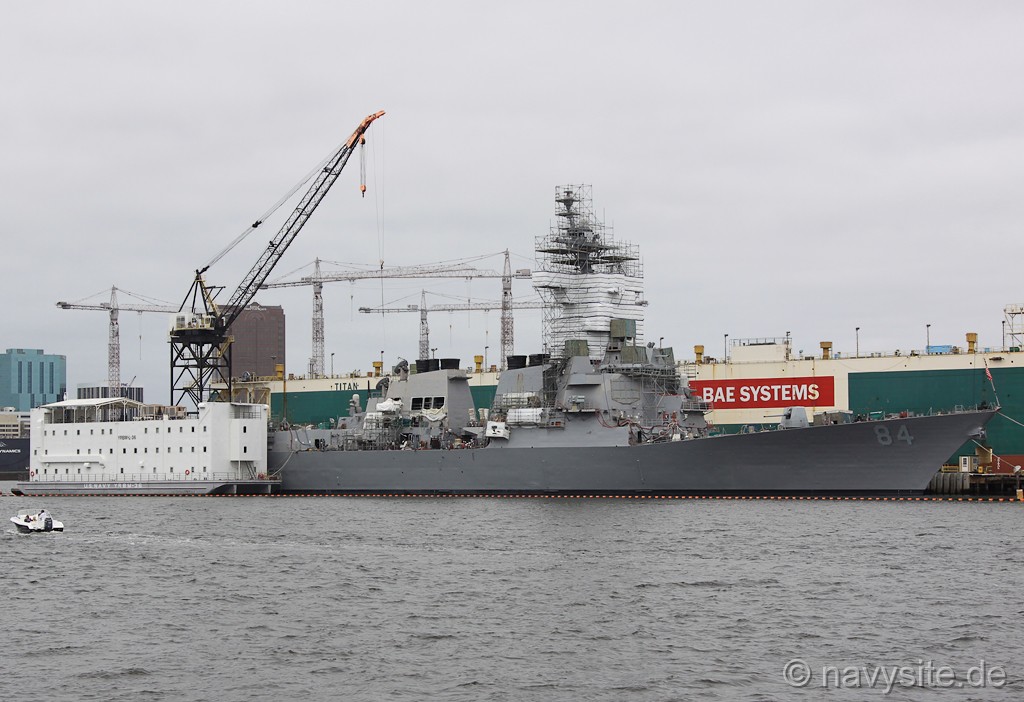
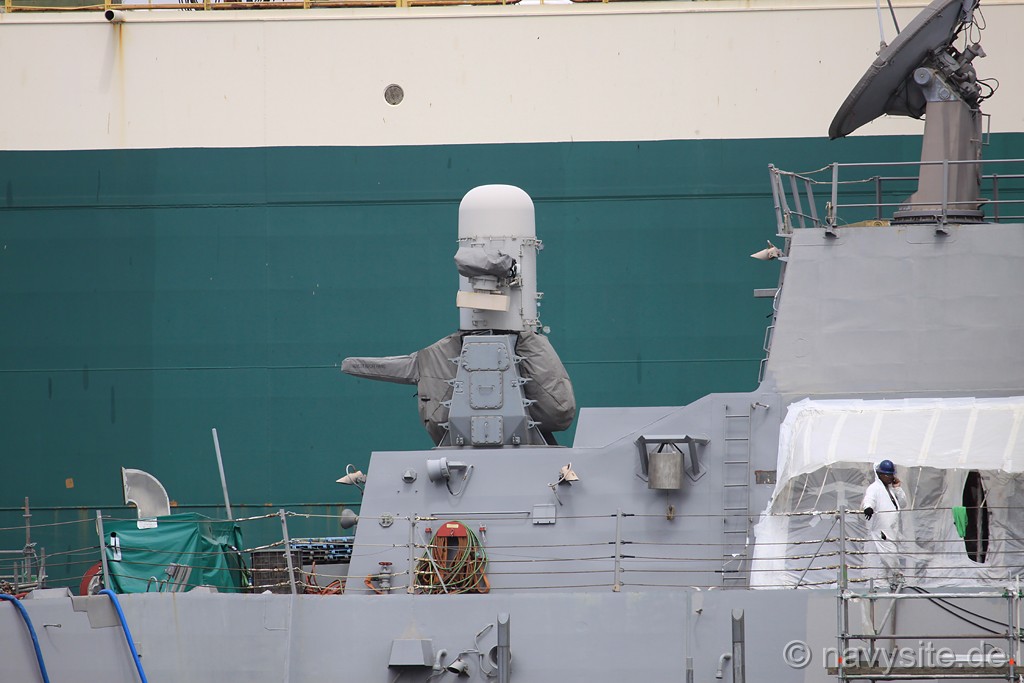
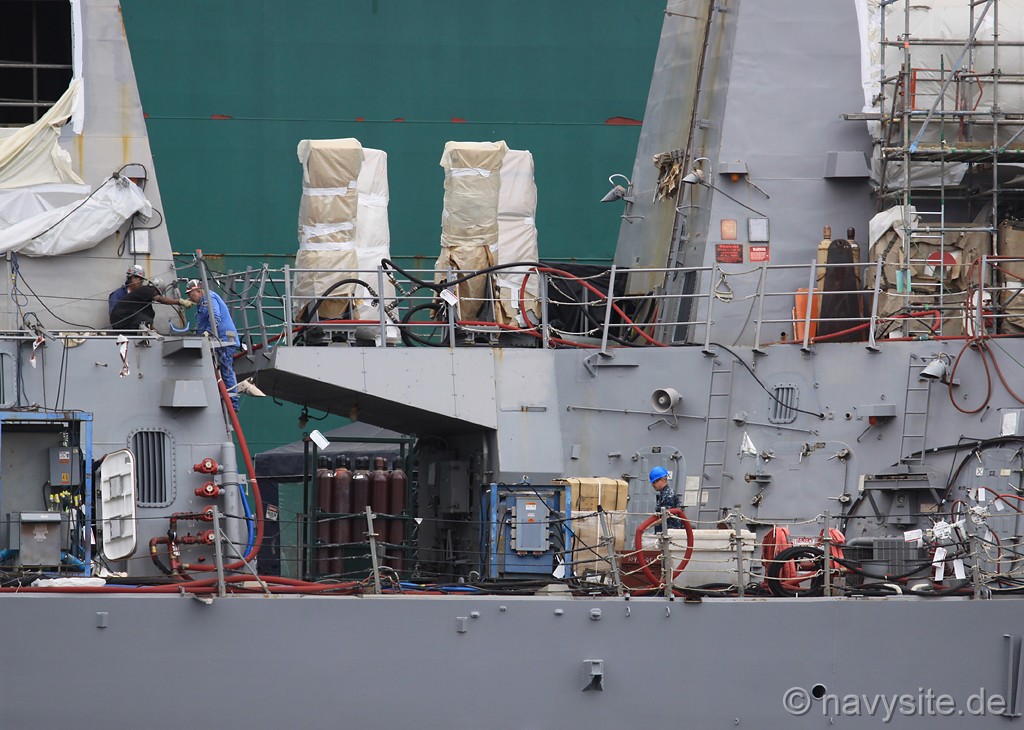
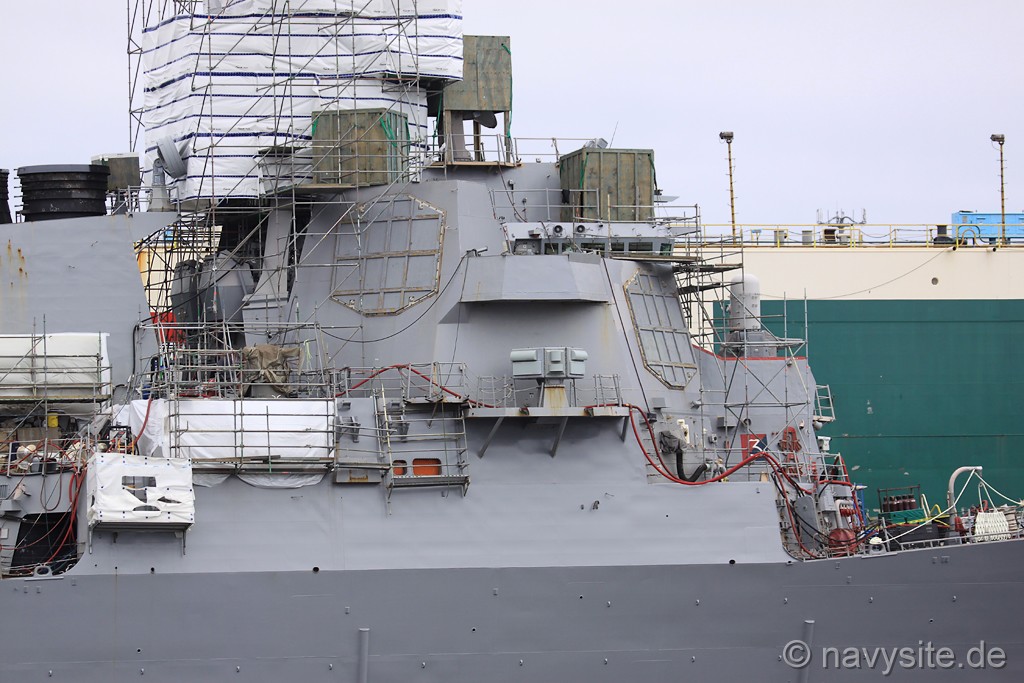
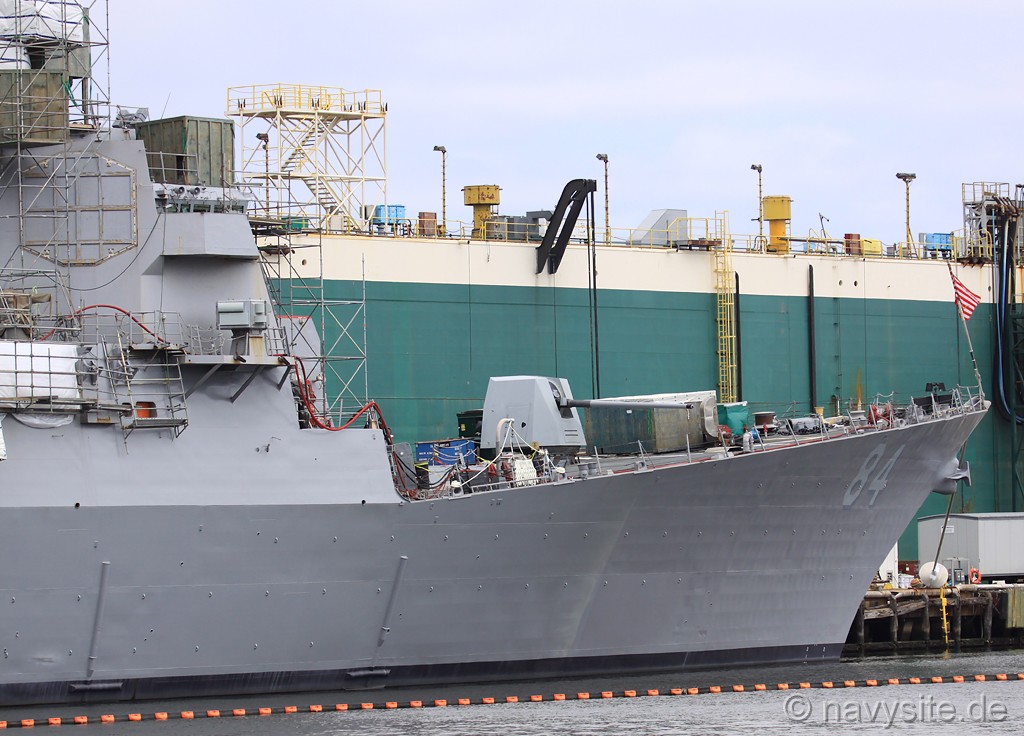
The photos below were taken by me and show the BULKELEY undergoing repairs and modernization as part of the DDG Modernization (DDG MOD) upgrade at BAE Systems Norfolk Ship Repair facility in Norfolk, Va. The BULKELEY entered dry-dock on January 30, 2012 - along with her sistership MASON (DDG 87) - in the first ever tandem dry-docking of two US Navy Aegis guided missile destroyers. The TITAN is the largest floating dry-dock on the East Coast, measuring 950 feet long and 160 feet wide, with a lift capacity of 52,000 tons. The photos were taken on May 6, 2012.
 |  |  |  |  |
 |  |  |  |
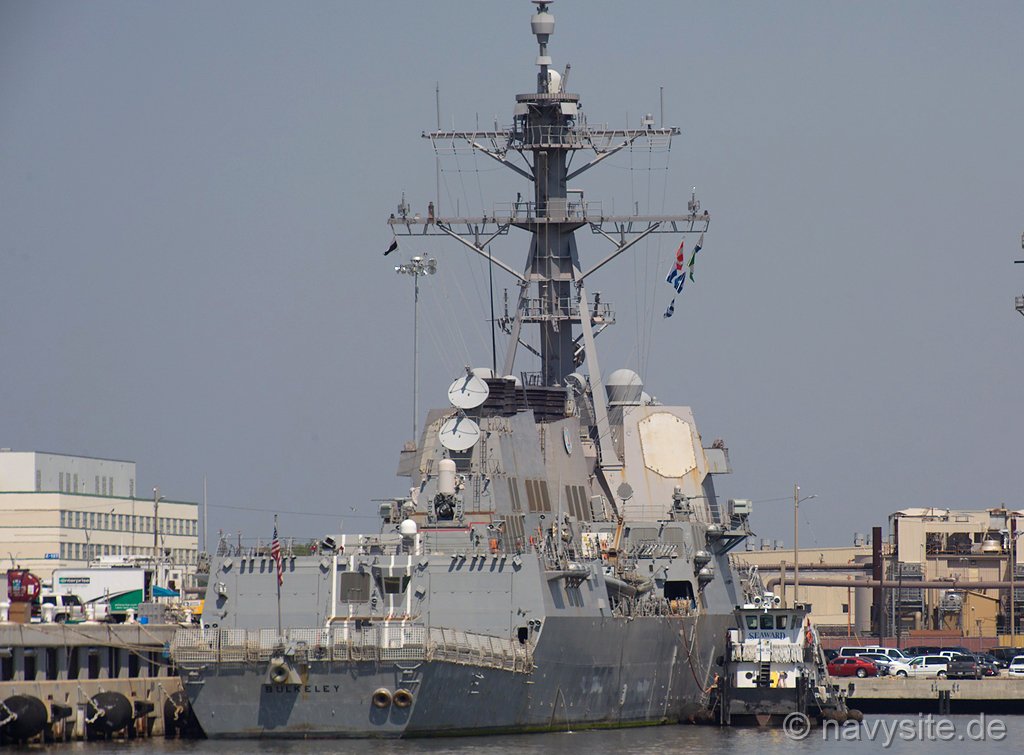
The photos below were taken by Michael Jenning and show the BULKELEY at Naval Base Norfolk, Va., on May 8, 2014.
 | 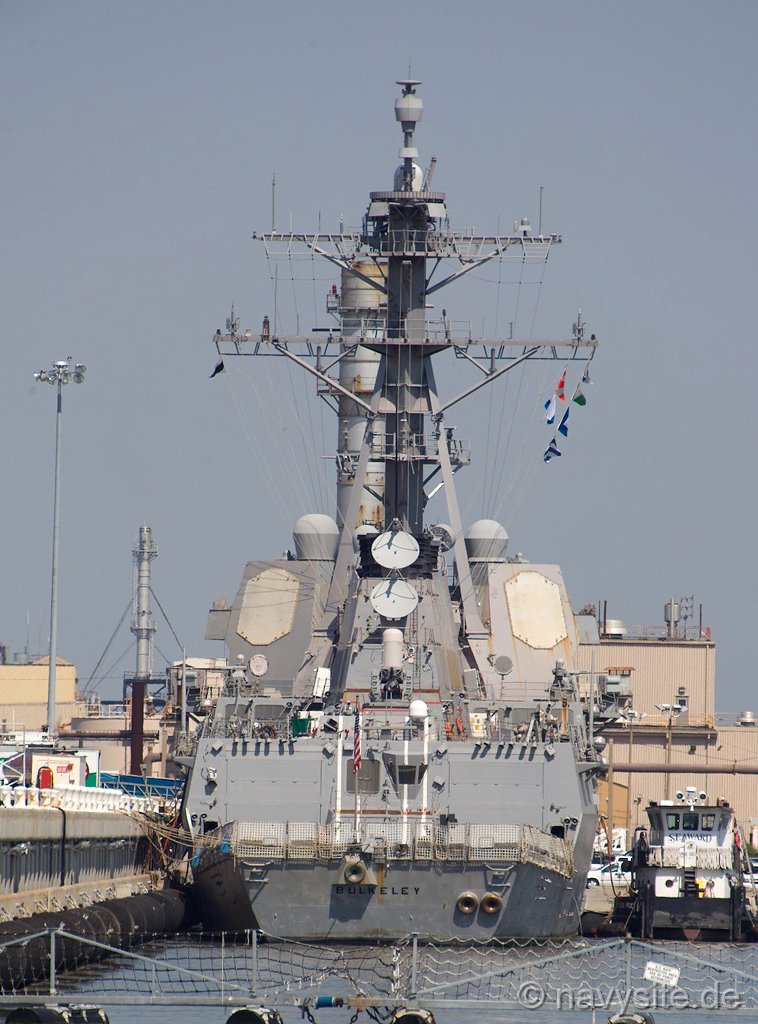 |
The photo below was taken by Michael Jenning and shows the BULKELEY at Naval Base Norfolk, Va., on October 23, 2014.
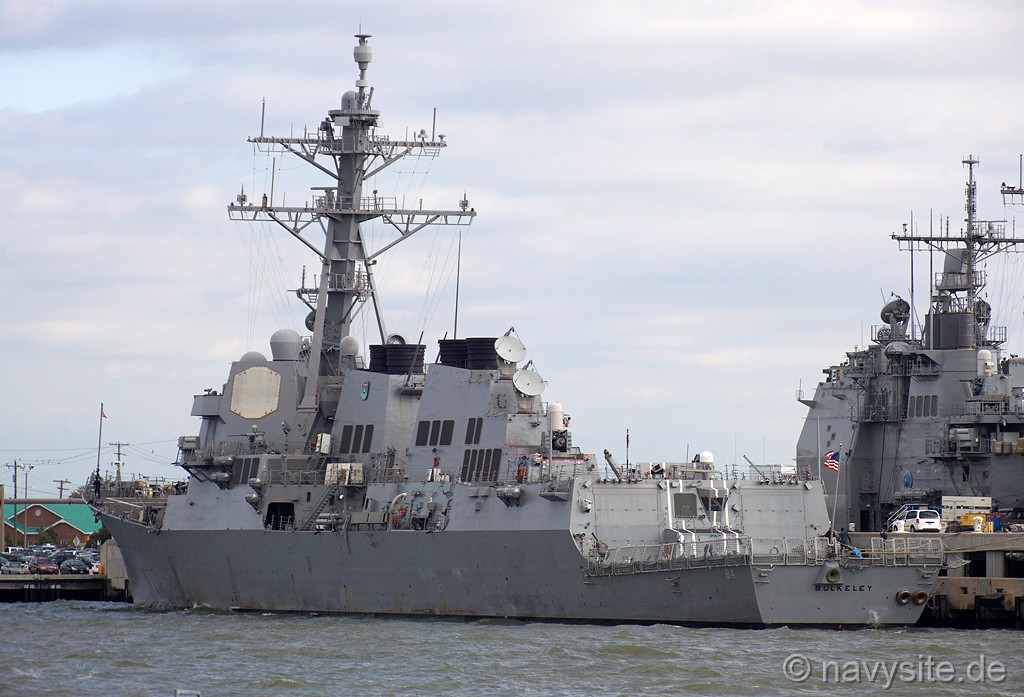 |
The photos below were taken by Michael Jenning and show the BULKELEY at Naval Base Norfolk, Va., on October 6, 2015.
 | 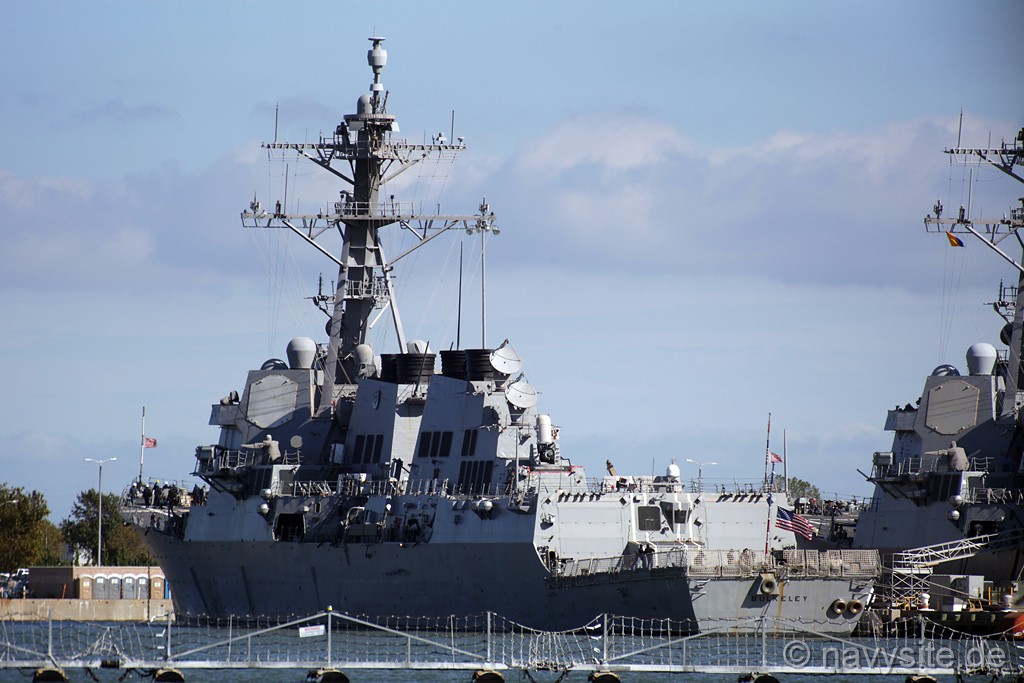 |
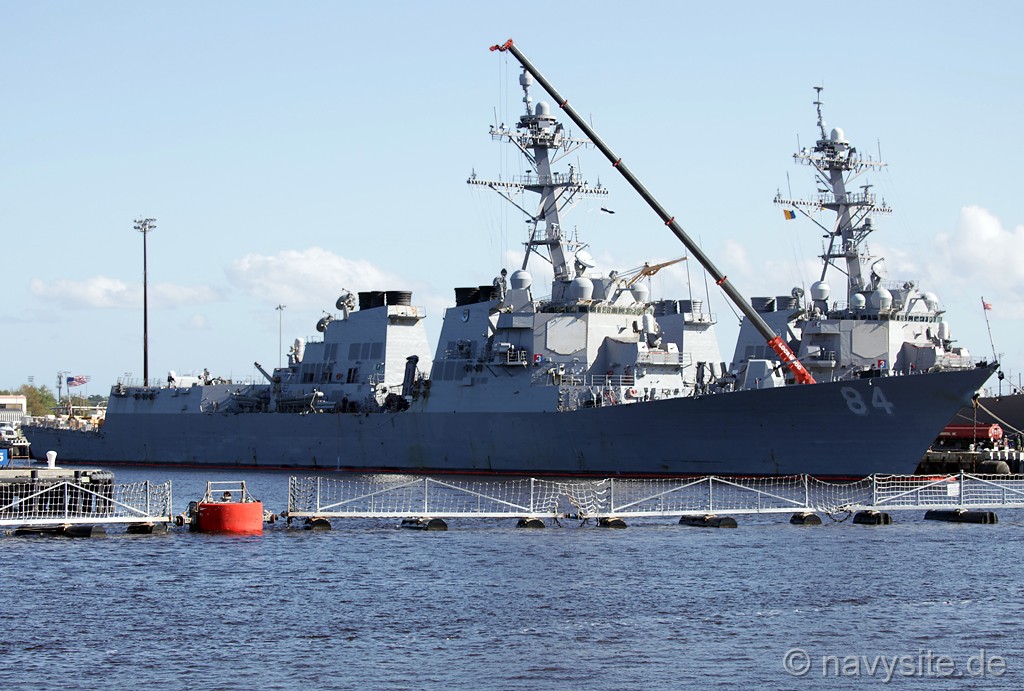
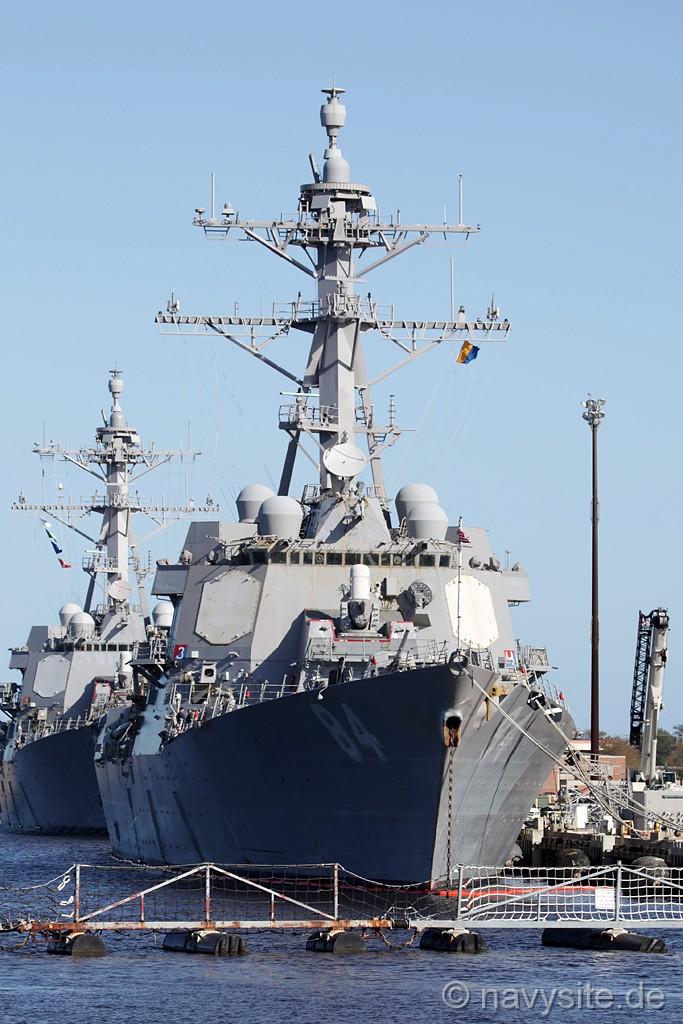
The photos below were taken by Michael Jenning and show the BULKELEY at Naval Base Norfolk, Va., on October 12, 2016. Note the crane removing the starboard SLQ-32. The portside SLQ-32 is already gone. This is probably done in preparation for BULKELEY's upcoming Selected Restricted Availability (SRA).
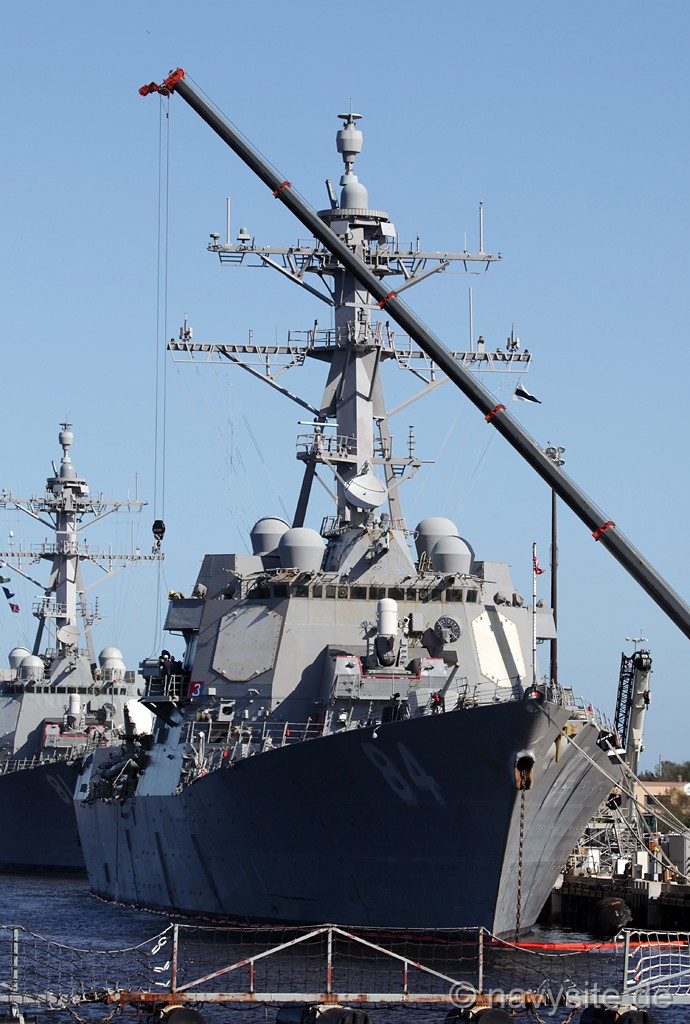 |  |  |
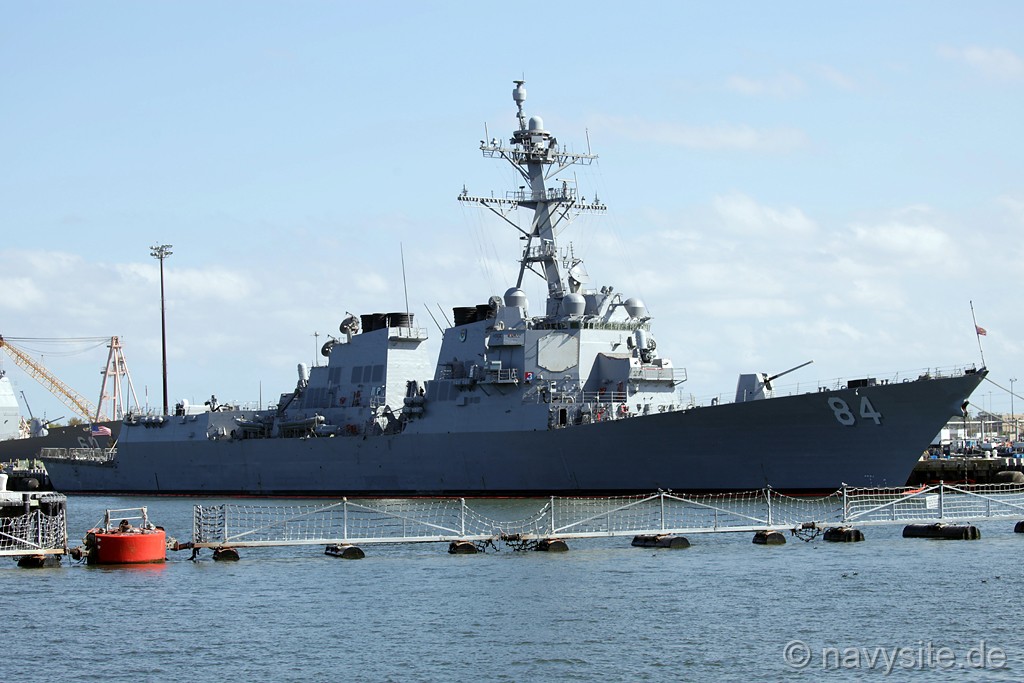
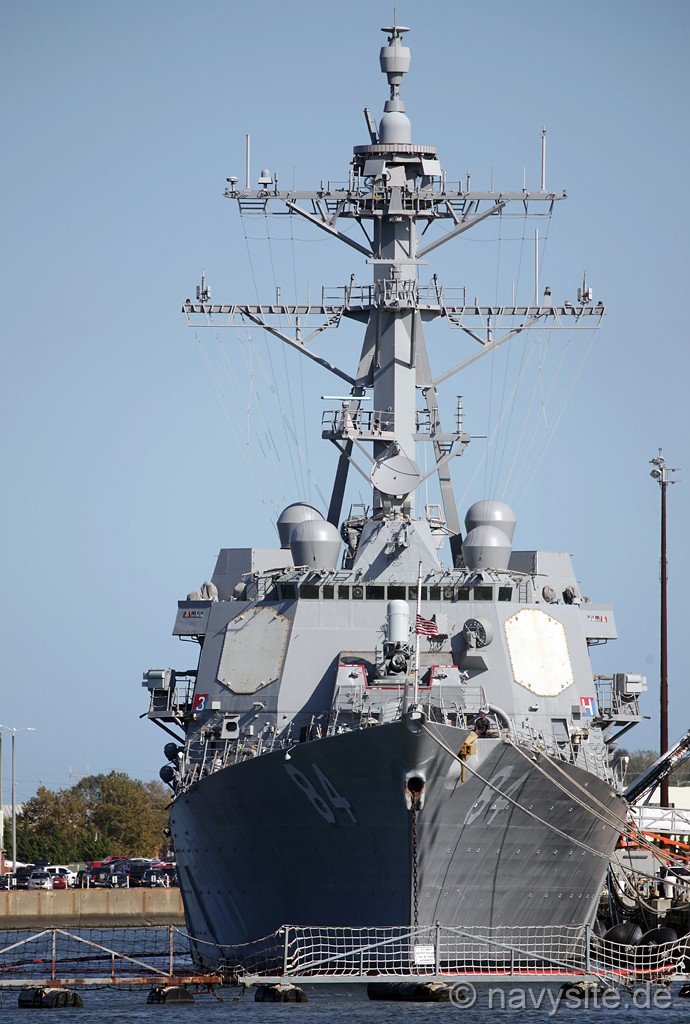
The photos below were taken by Michael Jenning and show the BULKELEY at Naval Base Norfolk, Va., on October 4, 2017.
 |  |  |
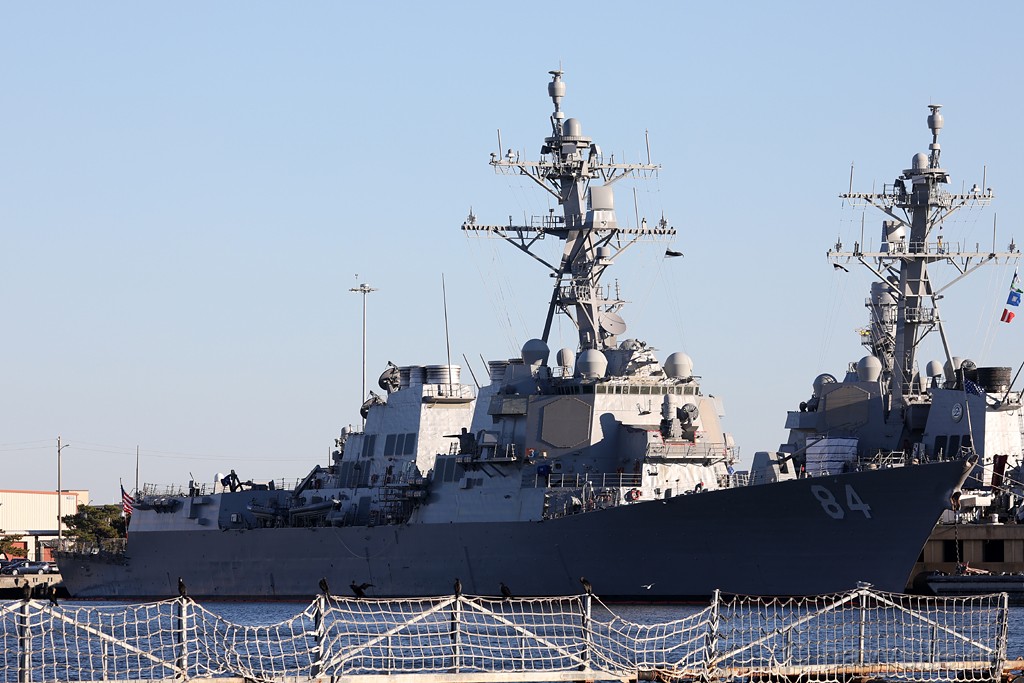
The photo below was taken by Michael Jenning and shows the BULKELEY at Naval Base Norfolk, Va., on December 26, 2021.
 |
back to top Back to Destroyers list. Back to ships list. Back to selection page. Back to 1st page.