Search the Site with 
General Characteristics Crew List Memorabilia Cruise Books About the Ship's Coat of Arms USS Barry History Homeports of USS Barry About the Name "BARRY" Image Gallery to end of page
USS Barry (DDG 52)

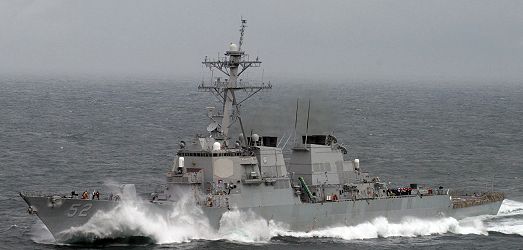
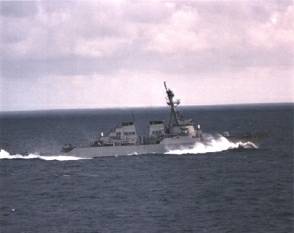
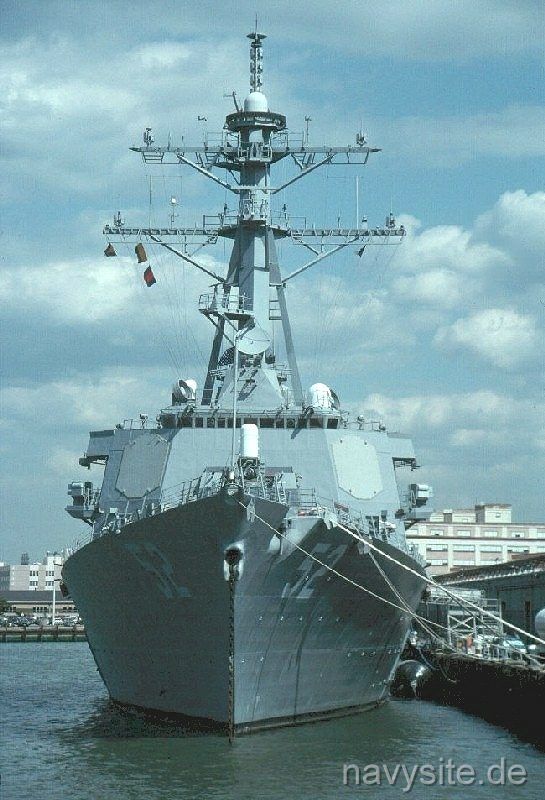
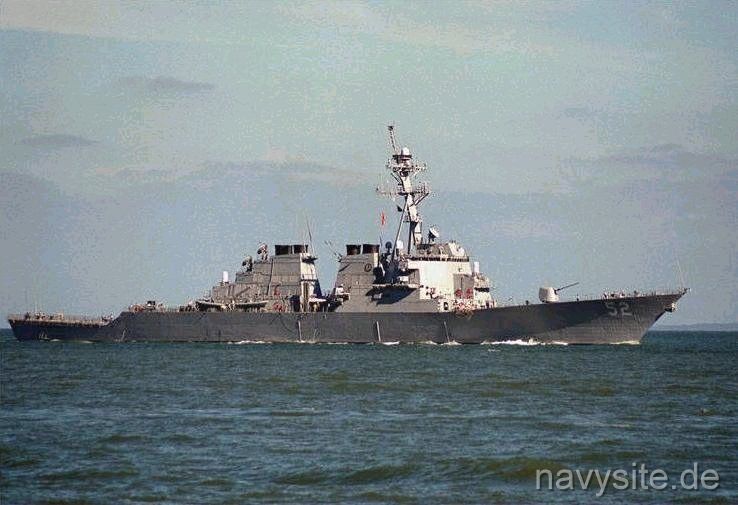
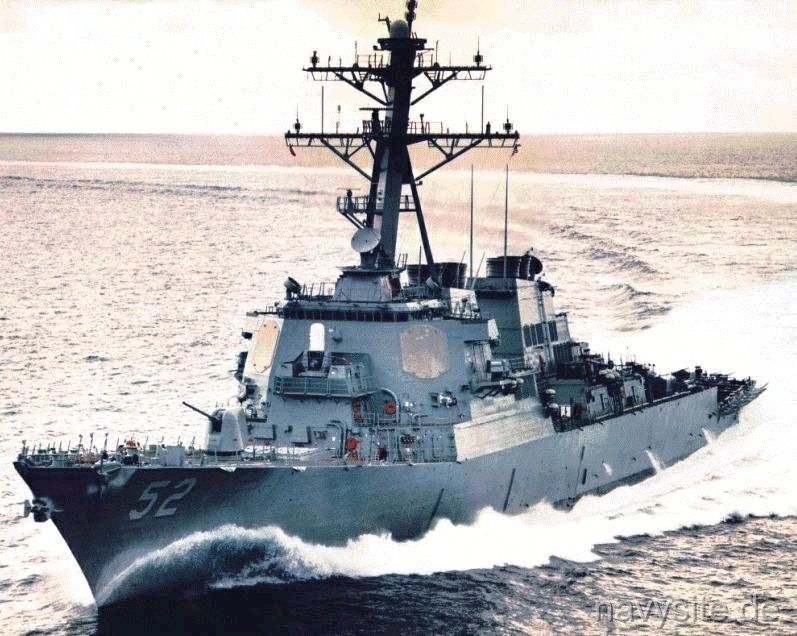
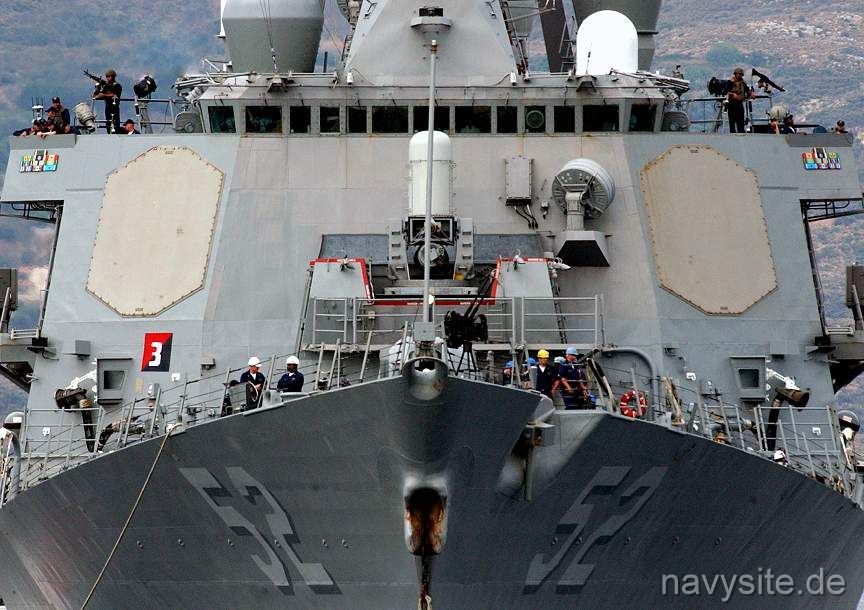
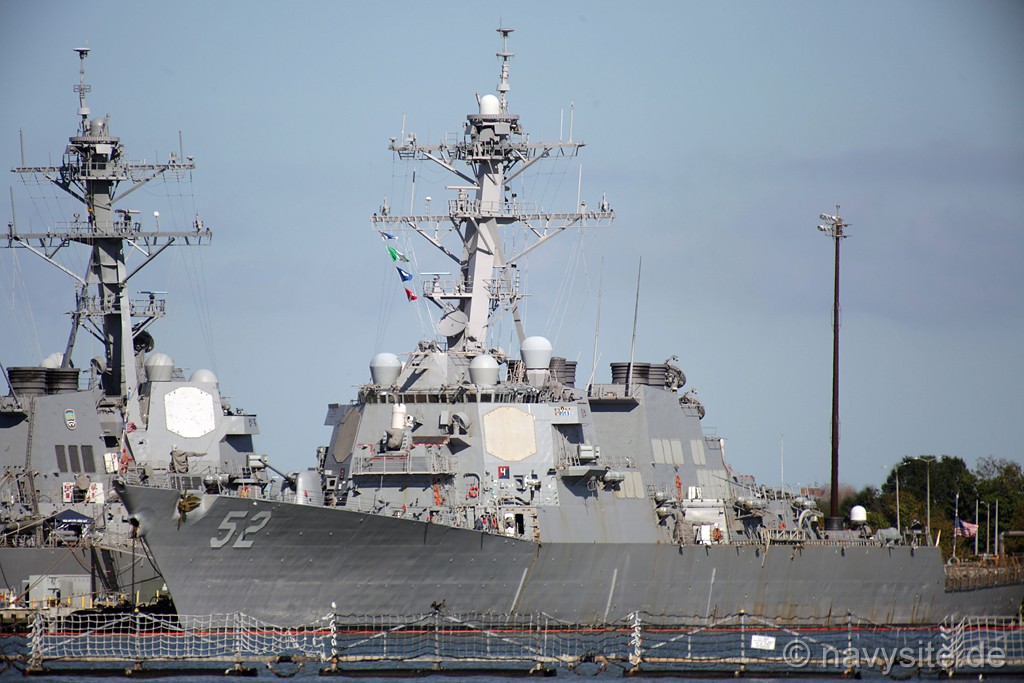
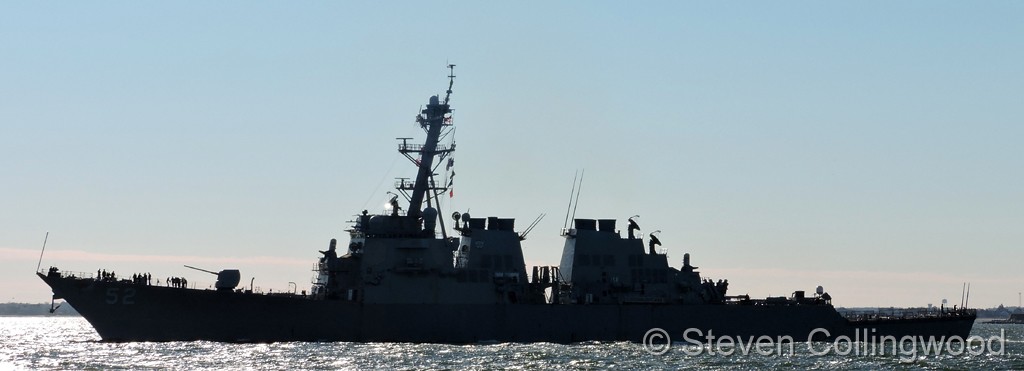
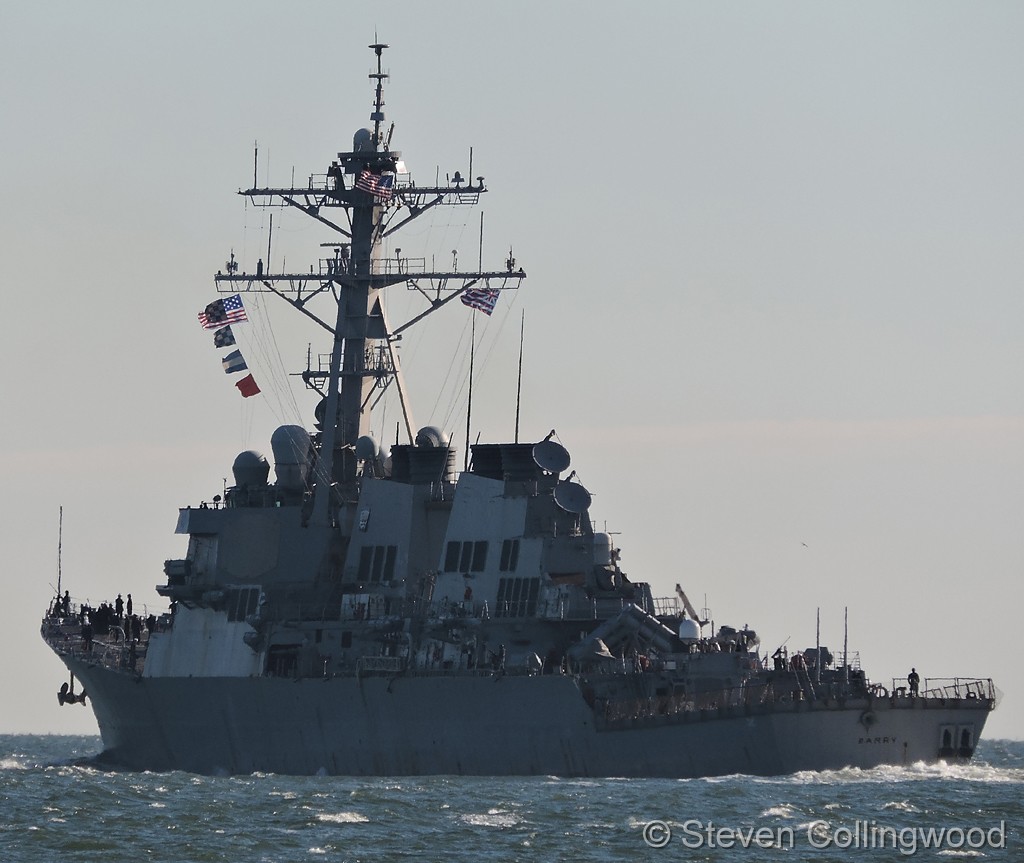
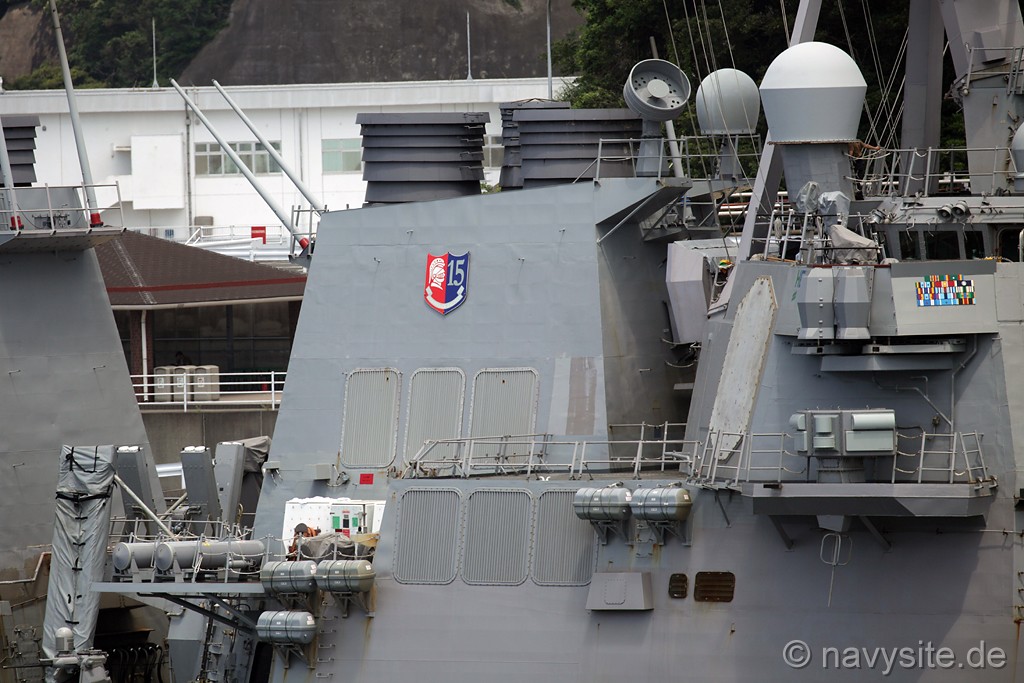
Propelled by powerful, quick response gas turbine (jet) engines to speeds in excess of 30 knots, USS BARRY is a diverse and extremely capable ARLEIGH BURKE - class AEGIS Guided Missile Destroyer. USS BARRY is the fourth ship in the Navy to bear the name. After being homeported in Norfolk, Va., for more than 25 years, the BARRY headed for Japan in January 2016. After a crew swap with USS LASSEN (DDG 82) at San Diego, Calif., she arrived at her new homeport Yokosuka, Japan, on March 14, 2016. BARRY remained forward-deployed for seven years until she shifted her homeport to Naval Station Everett, Wash. in March 2023.

General Characteristics:Keel Laid: March 13, 1989
Launched: May 10, 1991
Commissioned: Dec 12, 1992
Builder: Ingalls Shipbuilding, West Bank, Pascagoula, Miss
Propulsion system: four General Electric LM 2500 gas turbine engines
Propellers: two
Blades on each Propeller: five
Length: 505,25 feet (154 meters)
Beam: 67 feet (20.4 meters)
Draft: 30,5 feet (9.3 meters)
Displacement: approx. 8.300 tons full load
Speed: 30+ knots
Aircraft: None. But LAMPS 3 electronics installed on landing deck for coordinated DDG/helicopter ASW operations.
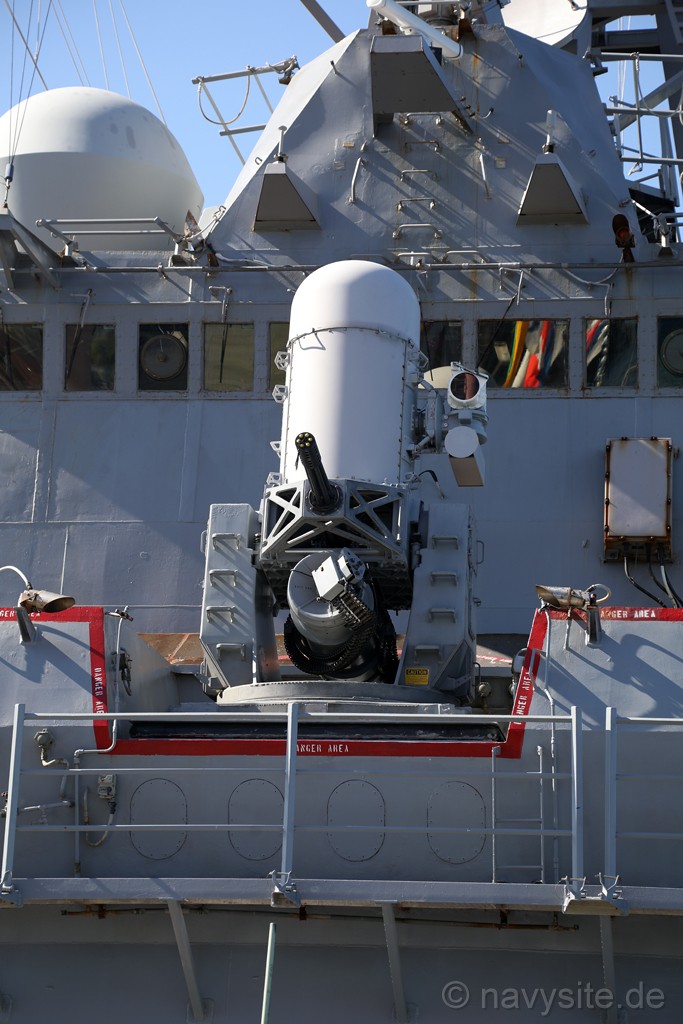
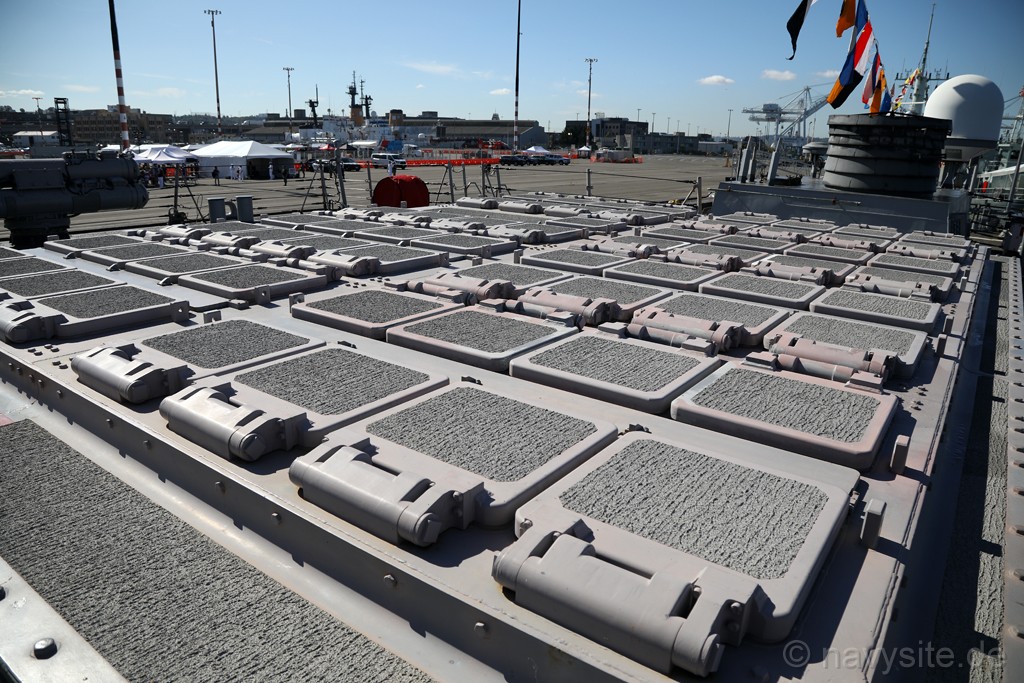
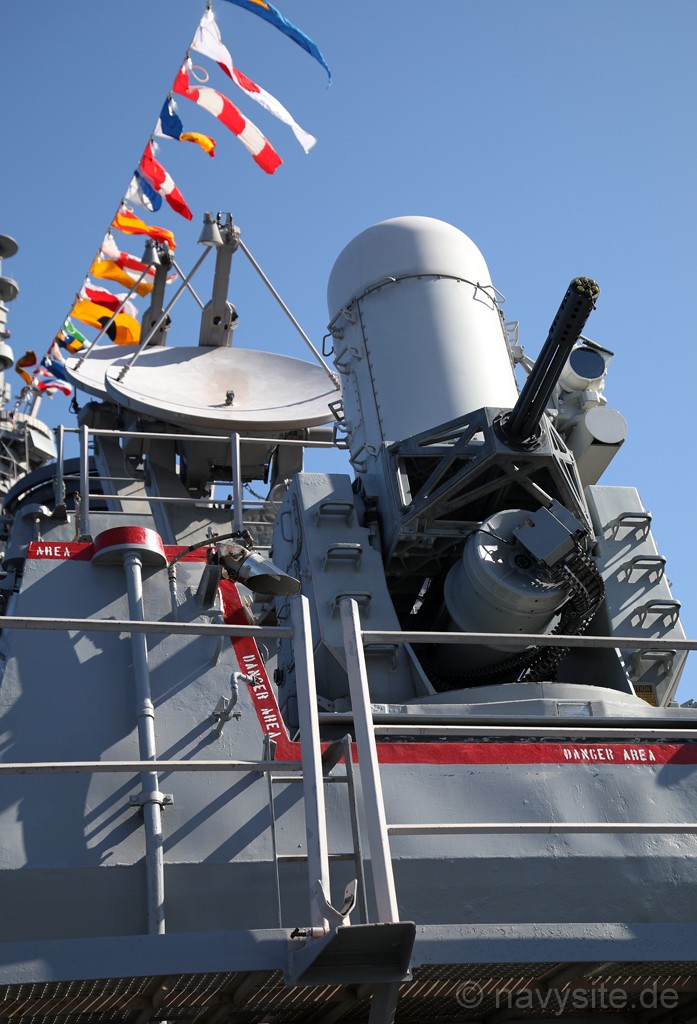
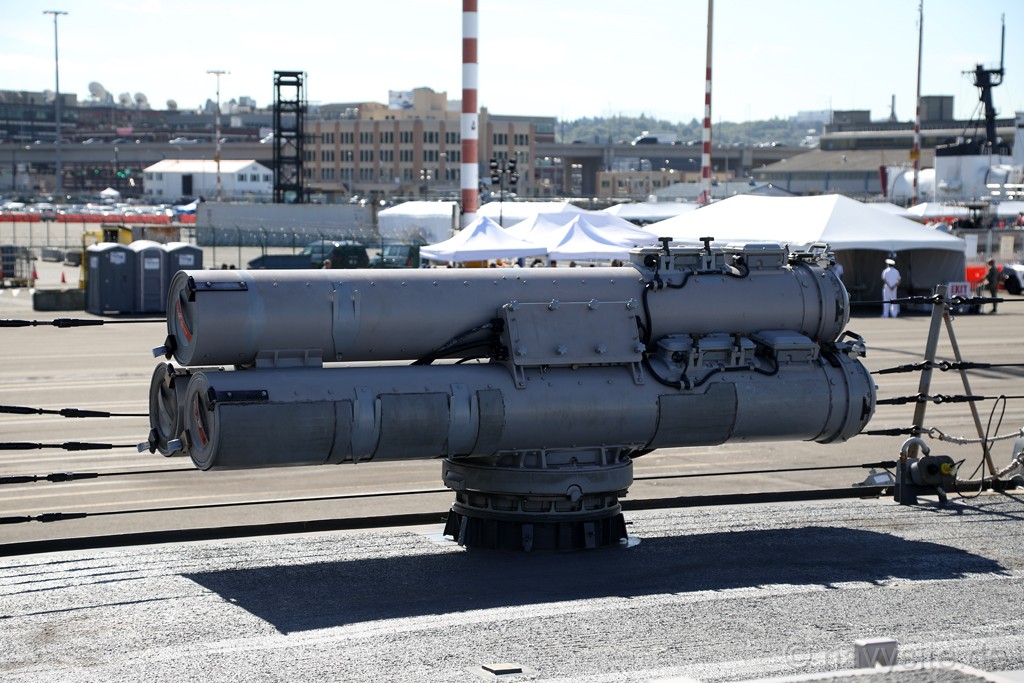
Armament: two MK 41 VLS for Standard missiles, Tomahawk; Harpoon missile launchers, one Mk 45 5-inch/54 caliber lightweight gun, two Phalanx CIWS, Mk 46 torpedoes (from two triple tube mounts), two Mk 38 Mod 2 25mm machine gun systems
Homeport: Everett, Wash.
Crew: 23 Officers, 24 Chief Petty Officers and 291 Enlisted


Back to topback to top  go to endgo to the end of the page


Back to topback to top  go to endgo to the end of the page

Crew List:

This section contains the names of sailors who served aboard USS BARRY. It is no official listing but contains the names of sailors who submitted their information.


back to top  go to the end of the page


Back to topback to top  go to endgo to the end of the page

USS BARRY Cruise Books:


Back to topback to top  go to endgo to the end of the page


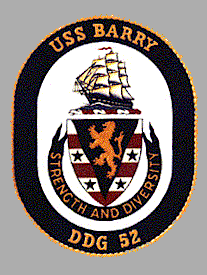
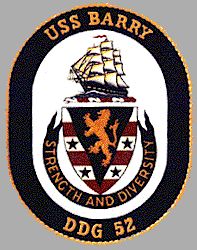
About the Ship's Coat of Arms:

The Shield:

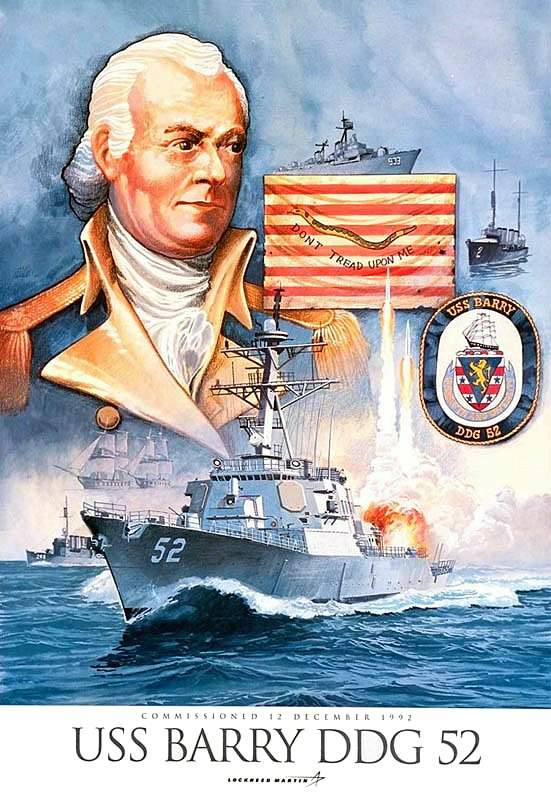
Red, white, and blue are our national colors. The field of bars, adapted from the BARRY coat of arms, is a reference to Captain John Barry for whom the ship is named. The stars recall the four battle stars awarded to the second BARRY in World War II, and represent all four ships to bear the name BARRY. The wavy pile represents the US Navy fleet in which Captain Barry held the first commission. The lion simbolizes courage and strength. Gold stands for excellence; red and white for courage and integrity respectfully.

The Crest:

The frigate UNITED STATES symbolizes the unbroken tradition of patriotism, valor, fidelity, and ability from our Navy's beginning to the present, and represents the maritime imperative of our Country. It also honors the heritage of the three previous ships to bear the name BARRY. The stars and bars together symbolize the United States and refer further to Captain Barry's ship of that name.


Back to topback to top  go to endgo to the end of the page

History of USS BARRY:

USS BARRY is a Flight I Arleigh Burke-class guided-missile destroyer built by Ingalls Shipbuilding at Pascagoula, Mississippi. Her keel was laid on 26 February 1990; she was launched on 10 May 1991, christened on 8 June 1991, and commissioned on 12 December 1992 at Naval Station Pascagoula. BARRY first arrived at her operational homeport of Norfolk, Virginia, on 18 December 1992. She completed post-delivery testing and Combat Systems Ship Qualification Trials during 1993 and underwent a post-shakedown availability at Ingalls in mid-1993. In November-December 1993 BARRY was assigned to Operation Support Democracy off Haiti, enforcing the United Nations embargo.

BARRY completed a combat systems assessment in January-March 1994 and departed Norfolk on 20 May for her first Mediterranean deployment with the GEORGE WASHINGTON (CVN 73) battle group. Early June commitments included mooring at Portsmouth, U.K., for D-Day 50th anniversary events (2-5 June) and participation off Normandy on 6 June. Following western Mediterranean operations and maintenance at Toulon, France, later in June, BARRY entered the Adriatic and served multiple periods as "Red Crown" (airspace control) for NATO operations over Bosnia from July through late September. On 7 October BARRY was directed to the Persian Gulf during the Iraq-Kuwait crisis (Operation Vigilant Warrior), transited the Suez Canal, and conducted Gulf operations through November. She returned to Norfolk on 17 November 1994.

From January-March 1995 BARRY completed a Selected Restricted Availability at Moon Engineering, Portsmouth, Virginia. She conducted local operations and training into late spring with a short underway period that included port calls at Nassau, Bahamas (18-20 May), anchorage off Annapolis for Commissioning Week (26-31 May), and Baltimore (31 May-2 June). Workups and Atlantic operations continued through the remainder of the year.

After pre-deployment workups in early 1996, BARRY entered Sixth Fleet waters in late spring. Port visits included Limassol, Cyprus (16-20 May), Rhodes, Greece (21-28 May), and Souda Bay, Crete (15-16 June). She conducted exercises and routine operations in the central and eastern Mediterranean and returned to Norfolk later that year.

BARRY departed Norfolk on 15 November 1997 for a Middle East Force deployment. She visited Las Palmas, Canary Islands (23-25 November), then proceeded to the eastern Mediterranean. On 19 December she put in to Souda Bay. In the new year BARRY called at Haifa, Israel (1 January 1998), transited the Suez Canal (3 January), and operated in the Red Sea and Gulf of Aden with a logistics stop at Djibouti (7 January). In the Arabian Gulf she conducted maritime security operations with a liberty call at Jebel Ali, UAE (23-26 January), before continuing Fifth Fleet tasks and eventually returning to the Atlantic.

BARRY alternated maintenance, training, and Atlantic/Mediterranean tasking between 1999 and 2003. Following the terrorist attacks in New York City and Washington, DC., on September 11, 2001, the commanding officer and the crew of USS BARRY requested the flag of the FDNY to be flown as battle ensign on their ship to commemorate the heroic work of the firemen in New York City. In 2002 she earned a Meritorious Unit Commendation for deployment performance (April-September).

BARRY deployed with Carrier Strike Group 10 centered on USS HARRY S. TRUMAN (CVN 75), getting underway on 13 October 2004. She transited the Mediterranean and Suez Canal, supported maritime security operations and Operation Iraqi Freedom in the Persian Gulf, and concluded direct support on 19 March 2005. The strike group paused at Portsmouth, U.K., in early April 2005 en route home. BARRY returned to Norfolk on 18 April 2005.

In May-November 2006 BARRY conducted an independent deployment to West Africa and the Mediterranean, including theater security cooperation events. In July she was reassigned to Joint Task Force Lebanon for the U.S. Department of State non-combatant evacuation operation. BARRY, with other U.S. naval units, escorted chartered vessels evacuating U.S. citizens from Beirut to Cyprus between 19-26 July 2006.

BARRY participated in NATO's Joint Warrior 08-1 Exercise in April-May 2008, then deployed with Standing NATO Maritime Group Two from August 2008. Port calls included Souda Bay, Crete, on 7 November 2008. In early 2009 BARRY visited Valletta, Malta (4-9 January) for events marking the 100th anniversary of the Great White Fleet's 1909 call at Malta.

Tasked to the Mediterranean in March 2011, BARRY took part in Operation Odyssey Dawn. On 19 March she launched Tomahawk Land-Attack Missiles against Libyan air-defense targets during the opening strikes. The crew later received recognition for the operation's milestone 2,000th combat Tomahawk launch (ceremony held 5 August 2011 at Norfolk).

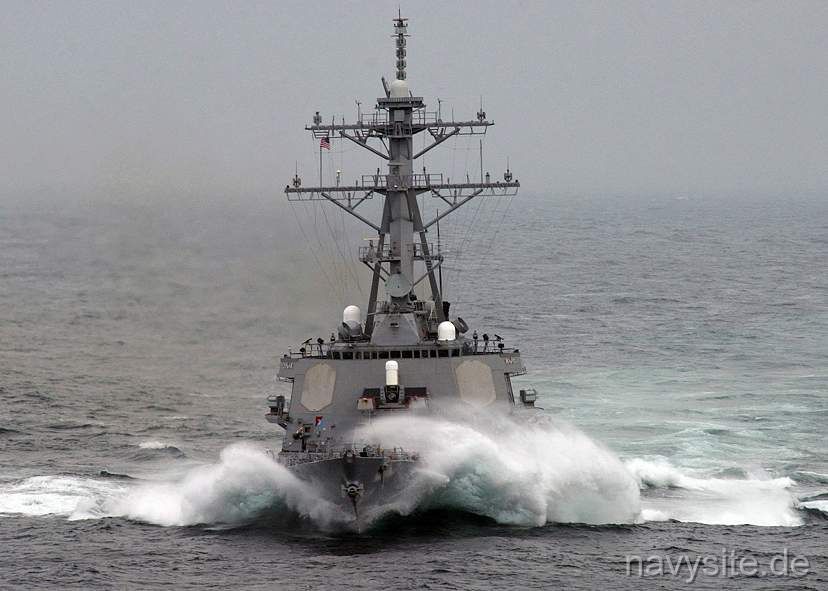
USS BARRY spent much of 2012 close to home preparing for the next Mediterranean ballistic-missile-defense rotation. After completing the basic training phase late in the year under a new commanding officer, she also sortied with other Atlantic Fleet units ahead of Hurricane Sandy, punching through the storm's outer bands as the Hampton Roads waterfront cleared to sea on 26-29 October 2012. The sortie reflected standard fleet hurricane procedures but was notable for the heavy weather BARRY encountered on departure.

On 7 February 2013, BARRY got underway from Naval Station Norfolk for U.S. Sixth Fleet, formally tasked to a ballistic-missile-defense deployment in the Eastern Mediterranean. Early in the patrol she called at Souda Bay, Crete, on 29 April 2013, and again on 22 May 2013. Her movements that spring also included port visits to Limassol, Cyprus, and Rhodes, Greece, and maintenance time in Naples, Italy - typical liberty and logistics hubs for destroyers riding Sixth Fleet's BMD stations. Through late summer, she alternated presence in the Levant with exercises and short logistics calls around the Aegean and Ionian Seas. In late August 2013, as Western governments weighed limited strikes in response to the Ghouta chemical-weapons attacks, BARRY joined fellow ARLEIGH BURKE destroyers USS MAHAN (DDG 72), USS RAMAGE (DDG 61), USS GRAVELY (DDG 107) and later USS STOUT (DDG 55) in the Eastern Mediterranean as the sea-based Tomahawk element of potential options. While no U.S. strike followed, the destroyers' posture and the diplomacy that ensued framed the disposition of Syria's declared chemical-weapons program that autumn. BARRY concluded the cruise with additional logistics stops - again including Souda Bay in early November - before returning to the United States.

In 2014, BARRY remained stateside through the spring following her return, cycling through maintenance and training. A change of command on 25 April 2014 marked the handover after her long 2013 employment, and the ship's schedule centered on workups and local operations that set the stage for the coming shift to forward deployment.

In 2015, BARRY devoted substantial time to high-visibility engagement on the U.S. East Coast while completing modernization and swap preparations. She entered New York Harbor on 20 May 2015 for Fleet Week New York, mooring at Sullivan's Pier in Staten Island and spending the week open to the public between demonstrations and ship-to-shore outreach. The Fleet Week period capped an East Coast presence phase before the destroyer's transfer to the Pacific.

On 12 January 2016, BARRY departed Norfolk for the long transit and "hull-swap" with USS LASSEN (DDG 82), arriving to the Forward-Deployed Naval Forces-Japan (FDNF-J) waterfront at Yokosuka on 14 March 2016. During the shift she carried across the results of her mid-life modernization - most visibly the Aegis Baseline 9 combat system - then began Seventh Fleet patrol work with DESTROYER SQUADRON 15 and CARRIER STRIKE GROUP 5 centered on USS RONALD REAGAN (CVN 76). That first year saw a familiar Western Pacific pattern: underway periods in the Philippine Sea and East China Sea, a logistics/maintenance stop in Sasebo in late June and early July, a September call at Guam, and October engagements around the Korean Peninsula including a Busan port visit alongside ROK Navy partners. These ops combined theater presence with allied exercising at a time of rising North Korean missile activity and persistent East China Sea tensions.

Through 2017, BARRY operated widely across the Western Pacific with RONALD REAGAN and the DESRON 15 surface force. In late May and June she joined dual-carrier operations in the Western Pacific as RONALD REAGAN and USS CARL VINSON (CVN 70) aggregated air wings and escorts - RONALD REAGAN with USS SHILOH (CG 67) and destroyers BARRY, JOHN S. MCCAIN (DDG 56), MCCAMPBELL (DDG 85) and MUSTIN (DDG 89), and VINSON with USS LAKE CHAMPLAIN, USS WAYNE E. MEYER (DDG 108) and USS MICHAEL MURPHY (DDG 112) - demonstrating large-deck coordination amid North Korean ballistic-missile testing. In July, the ship participated in the Australia-hosted exercise season and made a port call at Brisbane around 23-28 July during the broader Talisman Sabre period. In early August BARRY visited Honiara, Guadalcanal (4-9 August) to mark the 75th anniversary of the 1942-43 campaign, a notable Seventh Fleet remembrance and outreach event.

After a high-tempo year, BARRY entered an extended Docking Selected Restricted Availability at Ship Repair Facility Yokosuka beginning 13 November 2017. The ship refloated from dry dock and completed the DSRA on 3 December 2018. That yard period refreshed hull, machinery and combat systems for the next employment cycle while she maintained her FDNF-J posture pier-side at Yokosuka.

In 2019, BARRY returned to routine Seventh Fleet patrols from Yokosuka, conducting at-sea periods in the Philippine Sea, East China Sea and Sea of Japan with refueling and logistics punctuated by short in-port periods. Early in the year, senior Republic of Korea officials visited the destroyer at Yokosuka - one of several allied interface moments that reflected the trilateral U.S.-Japan-ROK focus on regional missile defense and maritime security.

The operational pace in 2020 was intense. BARRY conducted at least four Taiwan Strait transits - 10 April, 24 April, 14 October and 22 November - each publicized as routine passages through international waters under international law. Between those passages, she joined major combined exercises and presence operations across the South and East China Seas and the wider Philippine Sea, sailing more than 65,000 nautical miles and taking part in eight multinational events through the year, including the bilateral KEEN SWORD series with the Japan Maritime Self-Defense Force in late October. Her cumulative performance earned the ship two of the Pacific Fleet's top readiness honors: the 2020 Anti-Submarine Warfare "Bloodhound" Award as the Pacific Fleet's top ASW surface combatant and, command-wide, the 2020 Battle Effectiveness "Battle E". The Spokane Trophy for combat readiness - another major Pacific award - rounded out a year that highlighted both operational tempo and technical proficiency.

In 2021, BARRY kept up the pattern of combined exercises and high-end presence, including a documented Taiwan Strait transit on 17 September that marked the Navy's ninth such transit of that waterway for the year. The ship's schedule continued to center on joint and allied integration across the First and Second Island Chains while maintaining missile-defense and sea-control competencies with CTF-71/DESRON 15.

During 2022, BARRY was a named element of CARRIER STRIKE GROUP 5 with RONALD REAGAN and USS CHANCELLORSVILLE (CG 62), operating with fellow DESRON 15 destroyer USS BENFOLD (DDG 65). The strike group departed Yokosuka on 12 September 2022, worked the Philippine Sea and South China Sea, and made a rare allied port call at Busan, Republic of Korea, on 23 September before visiting Manila on 14-18 October. The strike group's deployment closed out with a return to Yokosuka on 16 December 2022, capping another Seventh Fleet cruise against the backdrop of North Korean missile testing and persistent East and South China Sea frictions.

BARRY began 2023 by departing Yokosuka on 17 February for a scheduled homeport shift after nearly seven years forward-deployed. Following a final at-sea period and a trilateral ballistic-missile-defense exercise in the Sea of Japan on 22 February with JS ATAGO (DDG 177) and ROKS SEJONG THE GREAT (DDG 991), she crossed the Pacific and arrived at her new homeport, Naval Station Everett, Washington, on 17 March 2023. Later that summer the destroyer took part in Seattle Fleet Week public events, visible in waterfront imagery as she transitioned to a CONUS sustainment routine.

In 2024, the Navy awarded Vigor Marine in Seattle a fiscal-year 2024 dry-docking availability for BARRY, a package with options valued up to about $211 million. The ship shifted a short distance from Everett to Vigor's Harbor Island facility in Seattle to enter a 16-month Drydocking Selected Restricted Availability beginning in early 2024. Vigor and Navy releases indicated BARRY would remain in dry dock and then alongside at Harbor Island through approximately spring 2025 for hull, machinery, combat-system maintenance and modernization. By 2025, BARRY remained in the Seattle yard period, with public statements anticipating completion in spring 2025 and a subsequent return to daily operations out of Everett. Local coverage and Navy community updates kept the Pacific Northwest apprised of the destroyer's status as she prepared to rejoin Pacific Fleet underway schedules following DSRA completion.


Back to topback to top  go to endgo to the end of the page

Homeports of USS BARRY:

PeriodHomeport
commissioned at Pascagoula, Miss.
1992 - 2016Norfolk, Va.
2016 - 2023Yokosuka, Japan
2023 - presentEverett, Wash.


Back to topback to top  go to endgo to the end of the page


About the Ship's Name, about Captain John Barry:

Born in County Wexford, Ireland, in 1745, John Barry was appointed a Captain in the Continental Navy December 7, 1775. He commanded LEXINGTON and ALLIANCE during the Revolutionary War. He was seriously wounded May 29, 1781, while in command of ALLIANCE during her capture of the British ships HMS ATLANTA and HMS TRESPASSY. Appointed Senior Captain upon the establishment of the US Navy subsequent to the ratification of the US Constitution in 1788, Captain Barry commanded the frigate UNITED STATES in the Quasi-War with France. Commodore Barry died on September 13, 1803, at Strawberry Hill near Philadelphia, PA. He was buried in St. Mary's Cemetery in Philidelphia, PA. Commodore Barry was honored by the United States Congress in 1906, when a statue was commissioned and later placed in Lafayette Park, Washington, D.C., and honored again some fifty years later when President Eisenhower ordered a statue of Commodore Barry to be presented on behalf of the people of the United States to the people of Ireland at County Wexford, Ireland. On August 21, 1981, President Ronald Reagan designated September 13, 1981 as Commodore John Barry Day, a tribute to one of the earliest and greatest American Patriots. Three other ships have been named in honor of this naval hero.

Back to topback to top  go to endgo to the end of the page


Back to topback to top  go to endgo to the end of the page


The photo below was taken by Karl-Heinz Ahles and shows USS BARRY at Naval Base Norfolk, Va, on May 11, 1999.
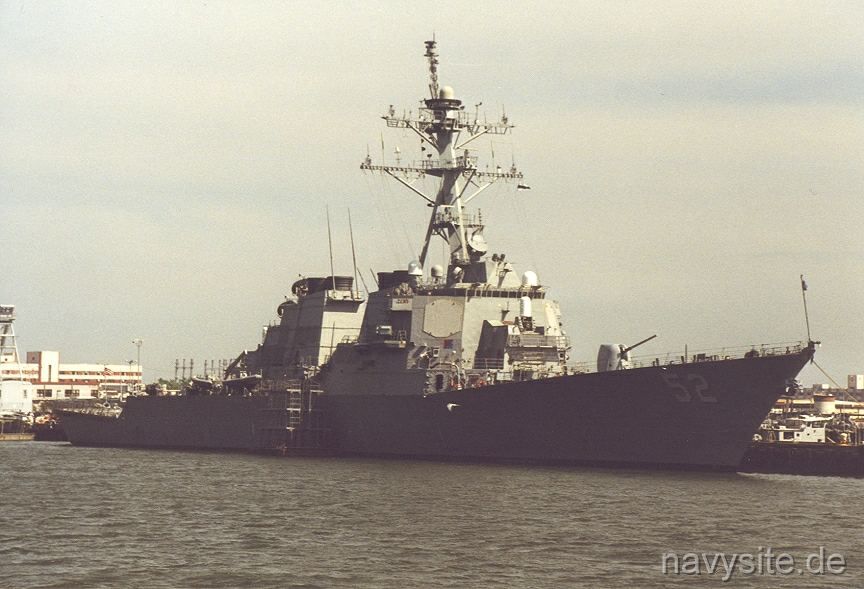


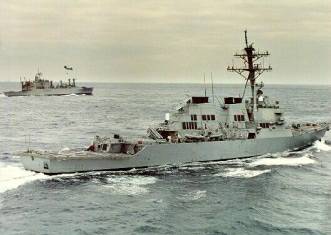
The photos below were taken by Brian Barton when USS BARRY was inport Norfolk, Va, on July 23, 2002. The ship in the background is the USS ARTHUR W. RADFORD (DD 968) leaving on its 2002 deployment to the Mediterranean and Arabian Gulf.


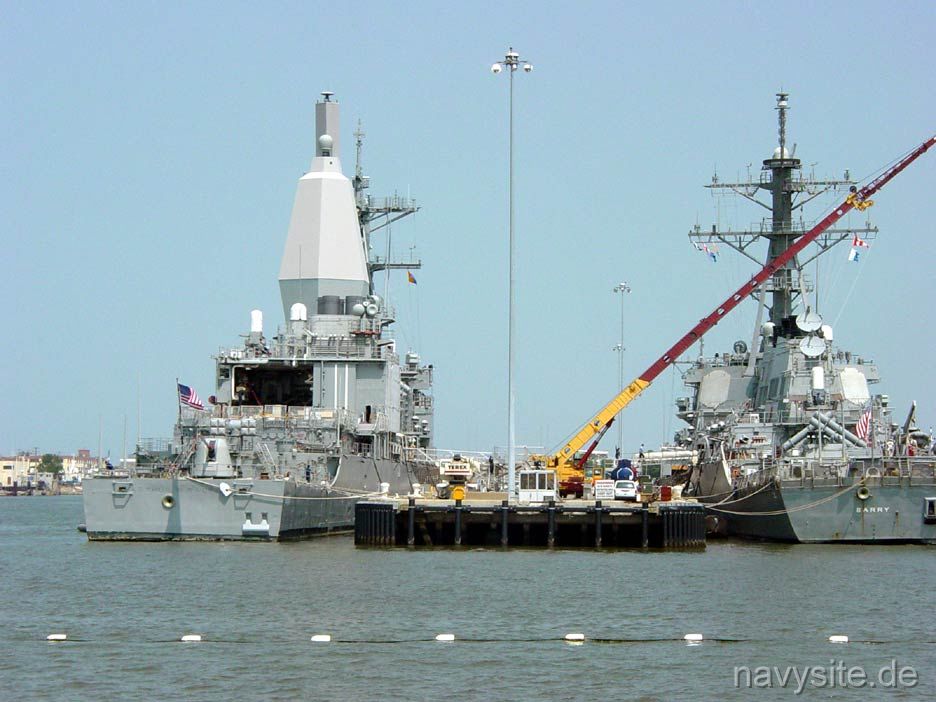
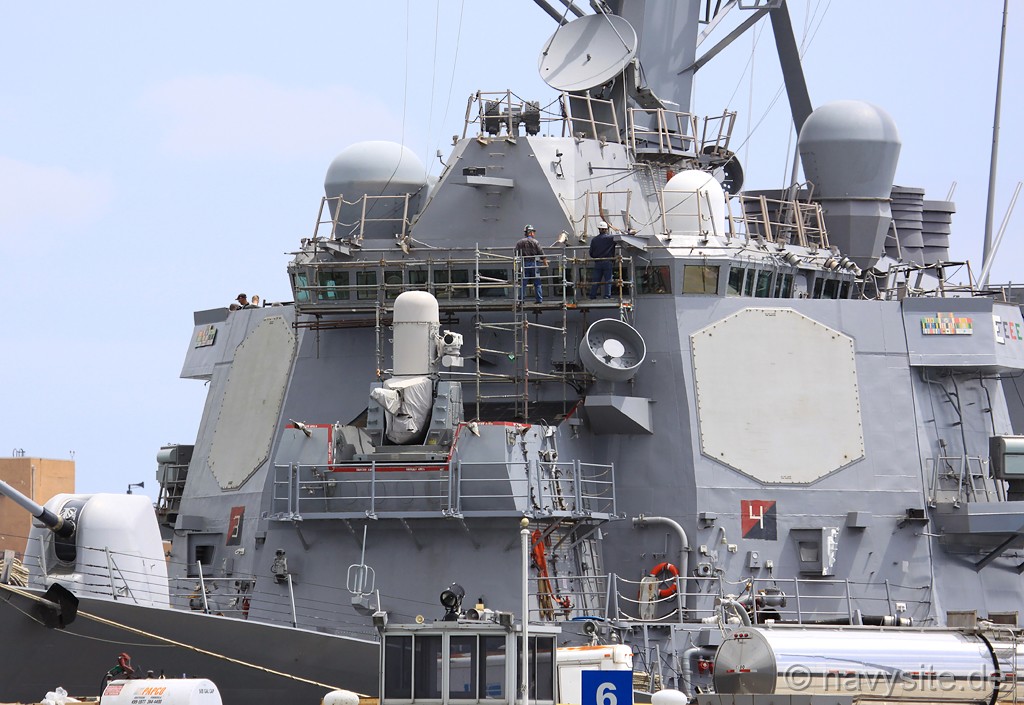
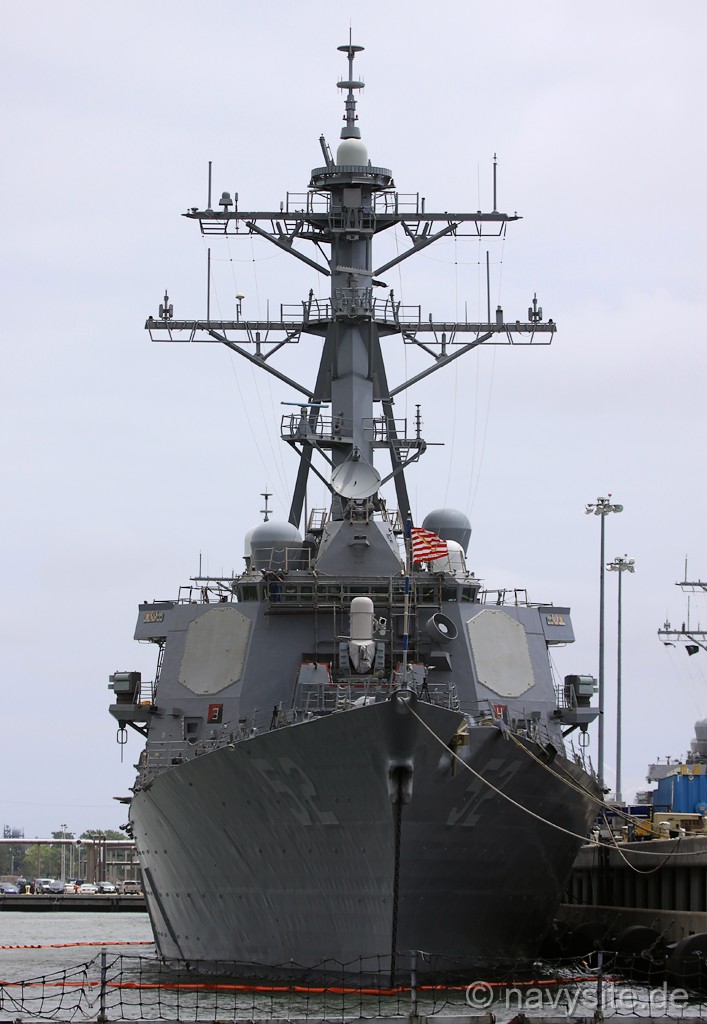
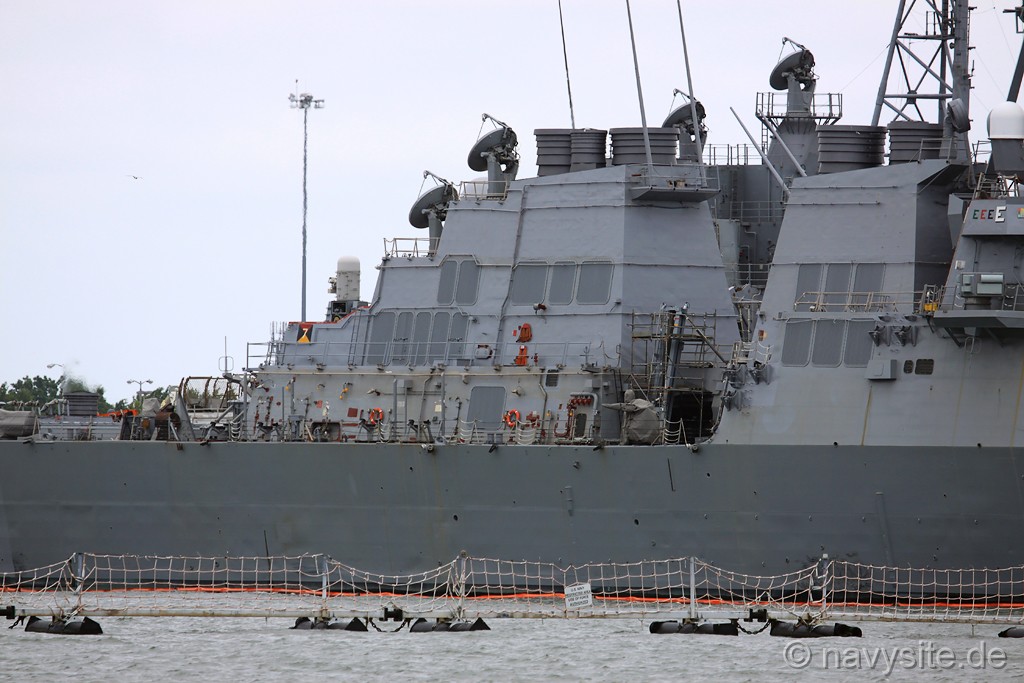
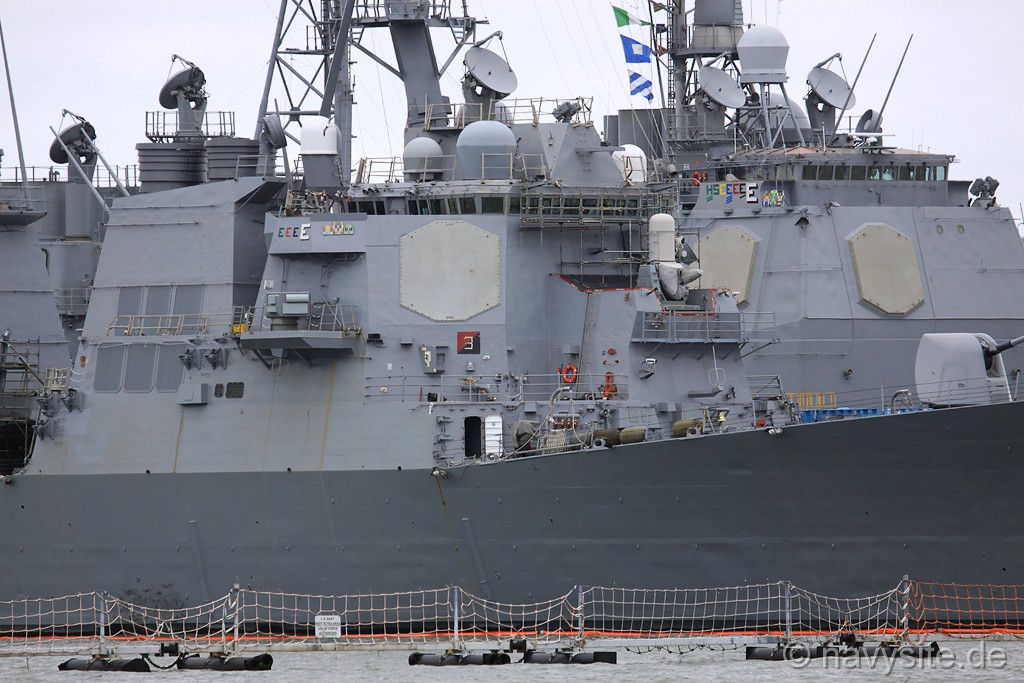
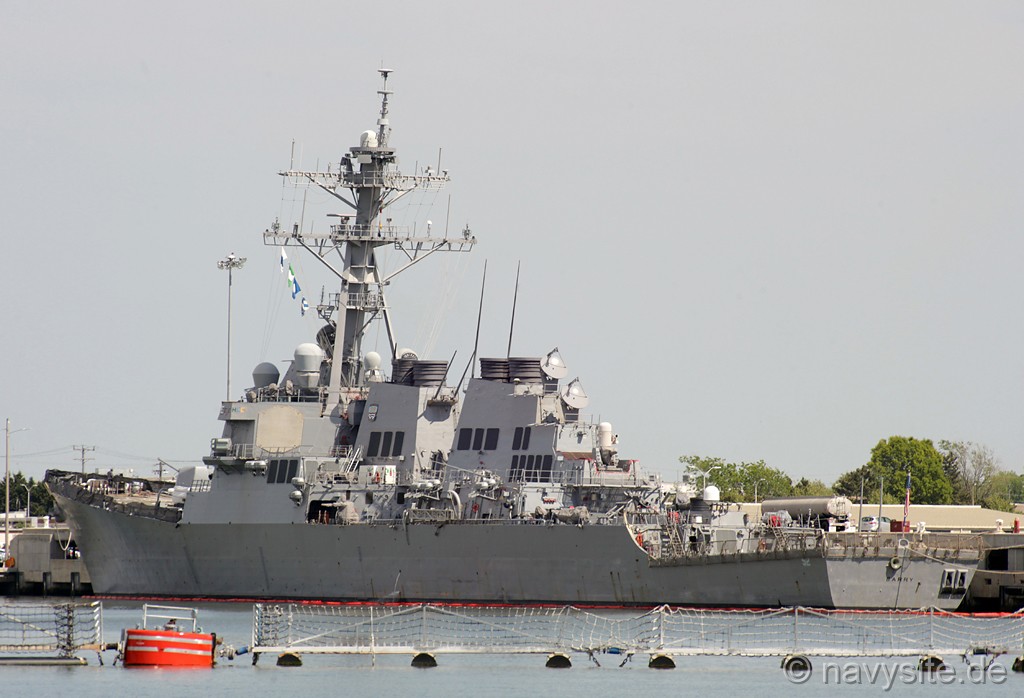
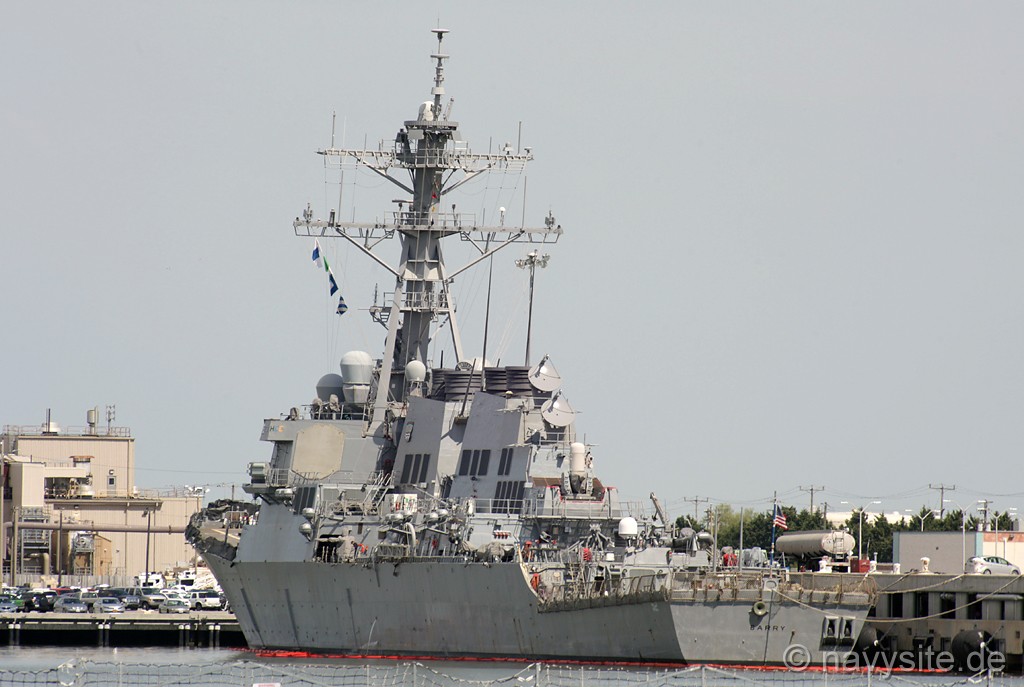
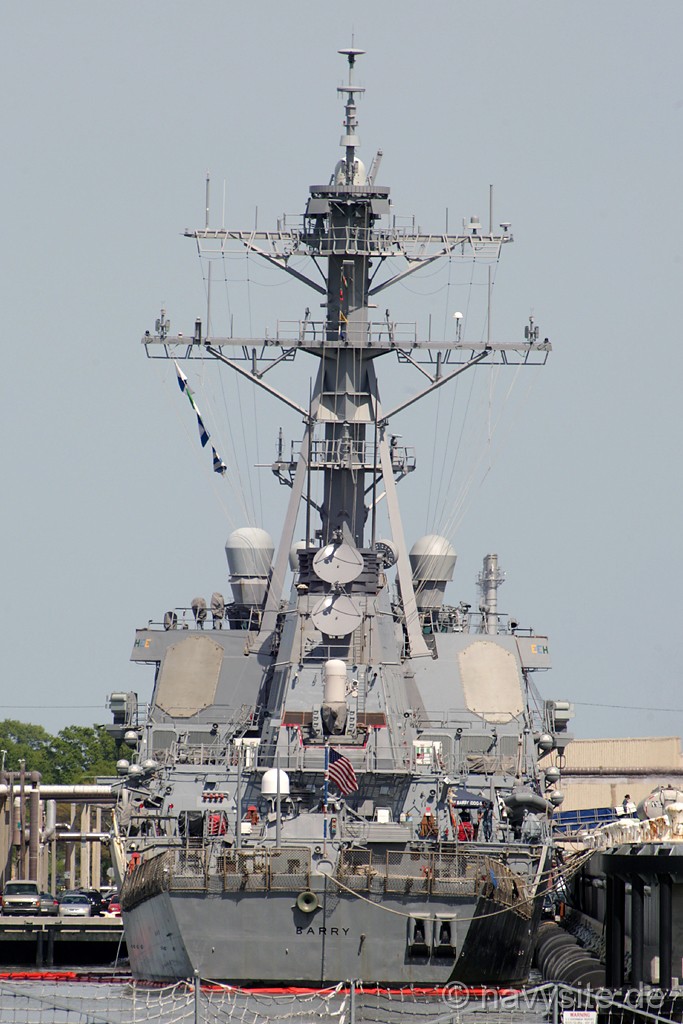
The photos below were taken by me and show the BARRY at Naval Base Norfolk, Va., on May 6, 2012.
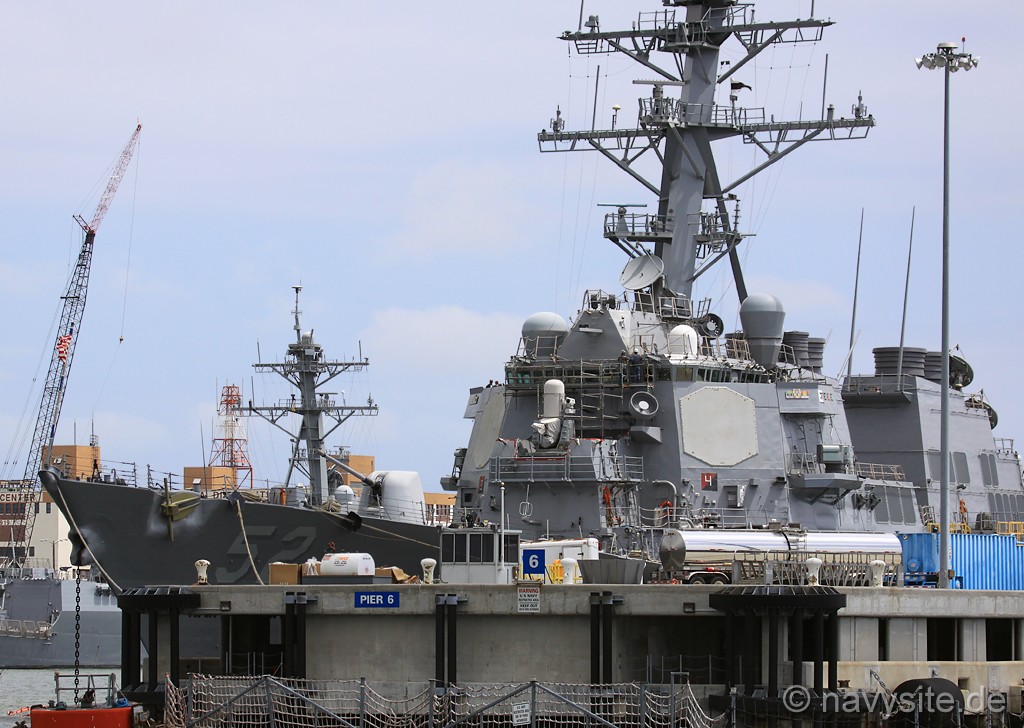


The photos below were taken by Michael Jenning and show the BARRY at Naval Base Norfolk, Va., on April 29, 2015.
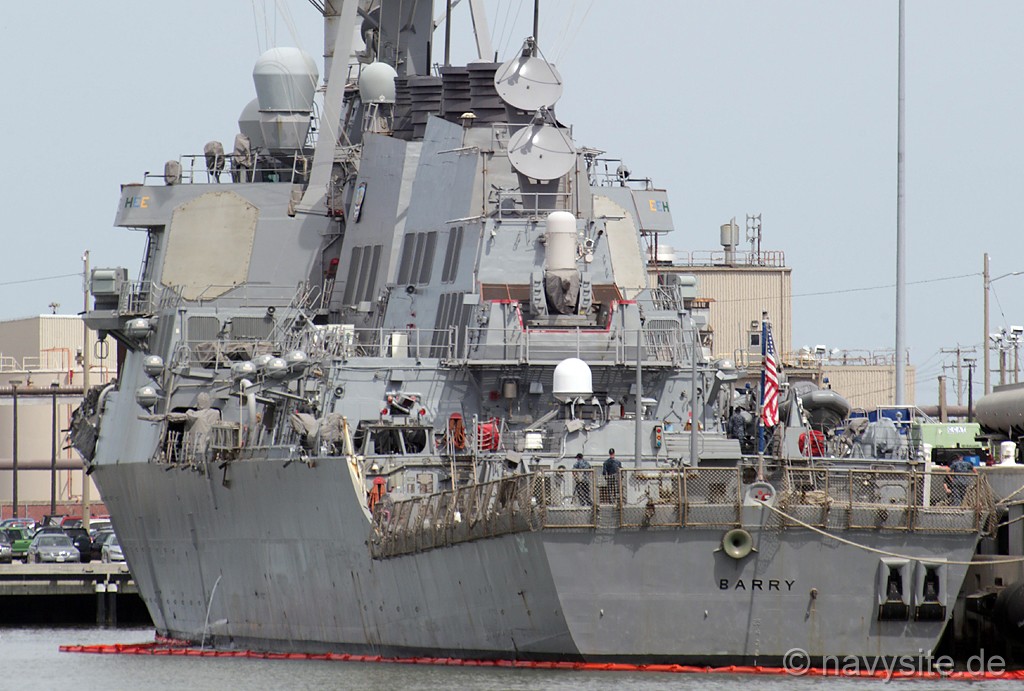


The photos below were taken by Michael Jenning and show the BARRY at Naval Base Norfolk, Va., on October 6, 2015.


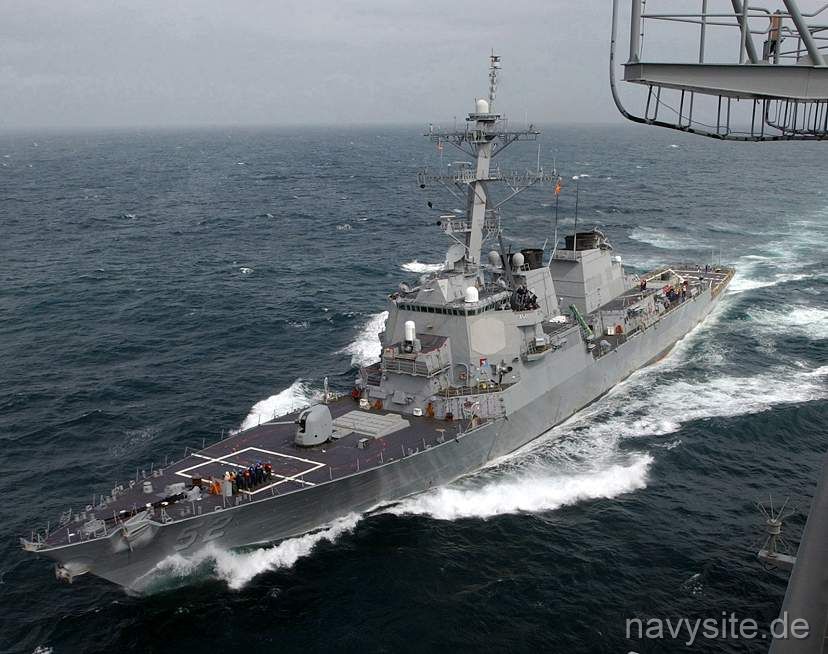
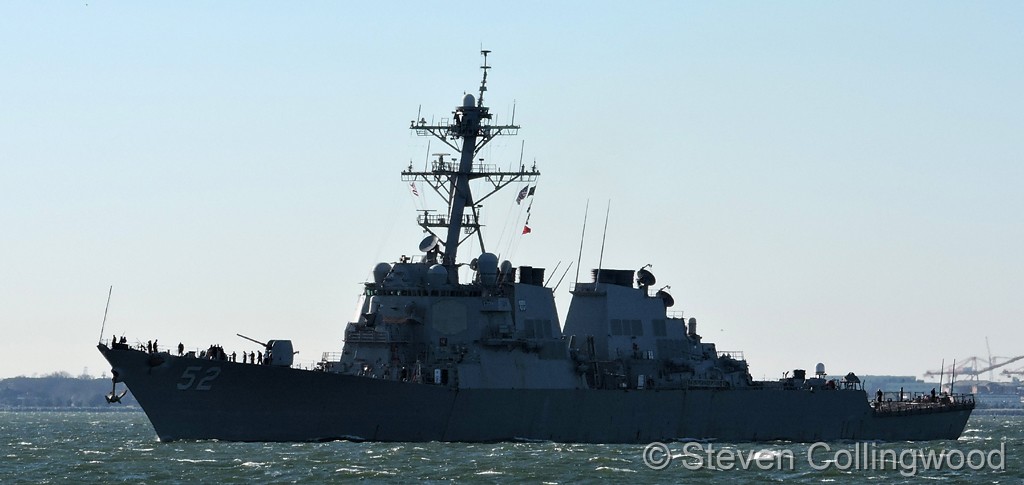
The photos below were taken by Steven Collingwood and show the BARRY leaving Naval Base Norfolk, Va., for the long journey to her new homeport of Yokosuka, Japan, on January 12, 2016. BARRY arrived at Yokosuka on March 14, 2016.


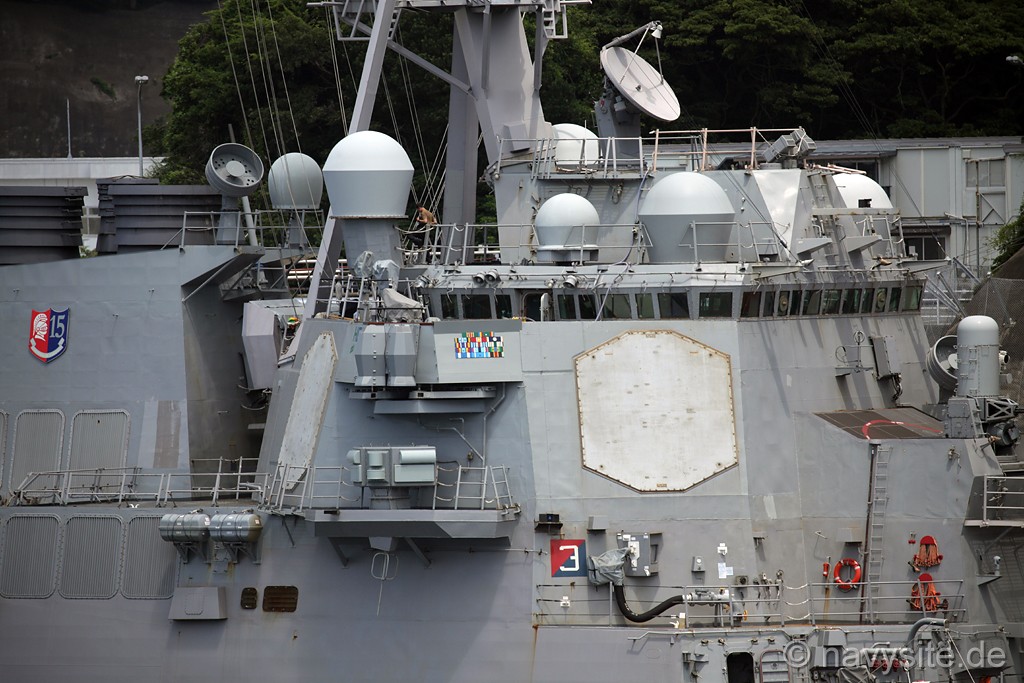
The photos below were taken by Michael Jenning and show the BARRY at Yokosuka, Japan, on August 3, 2019.


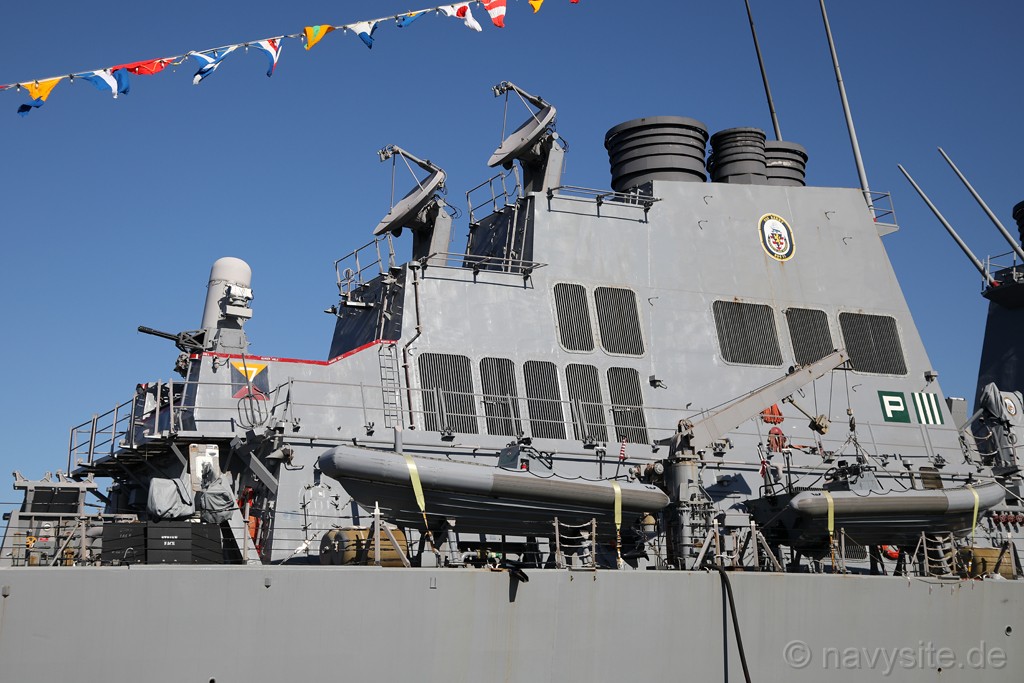
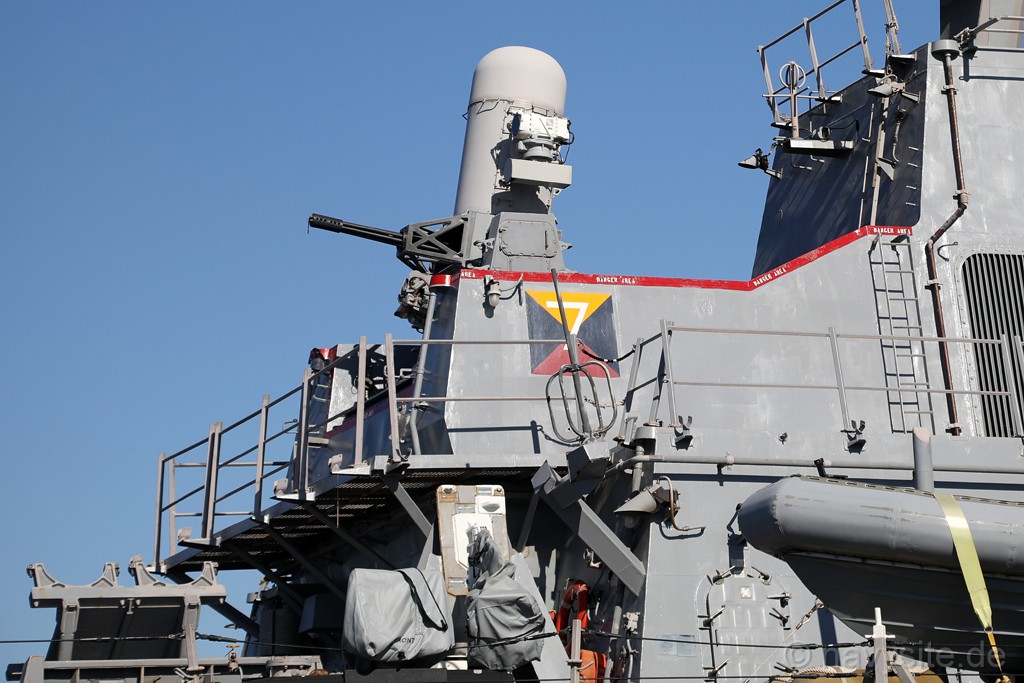
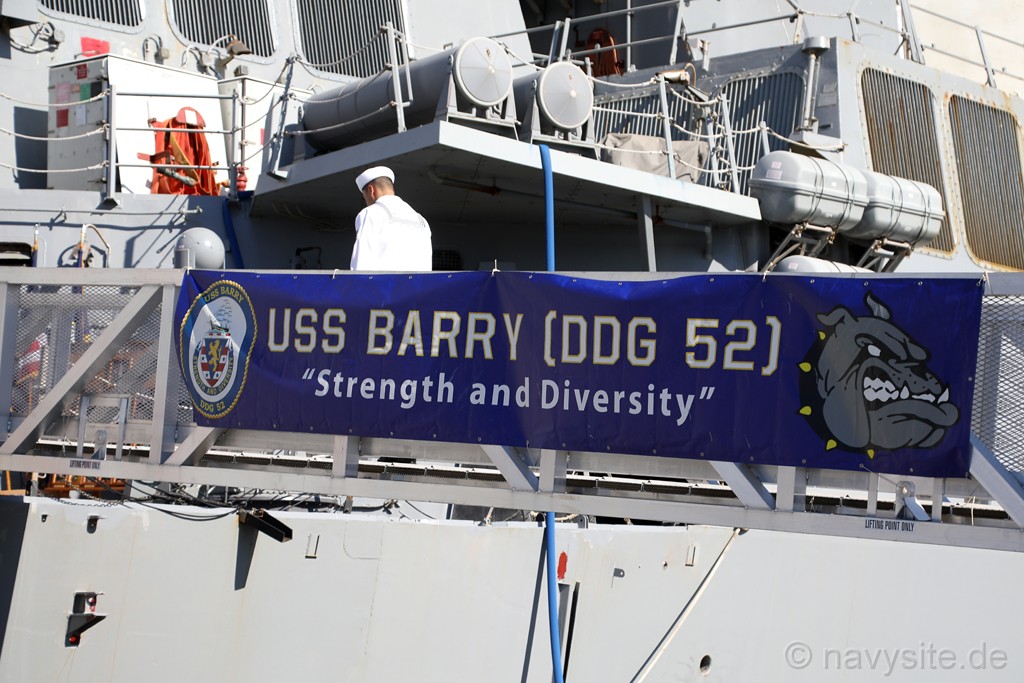
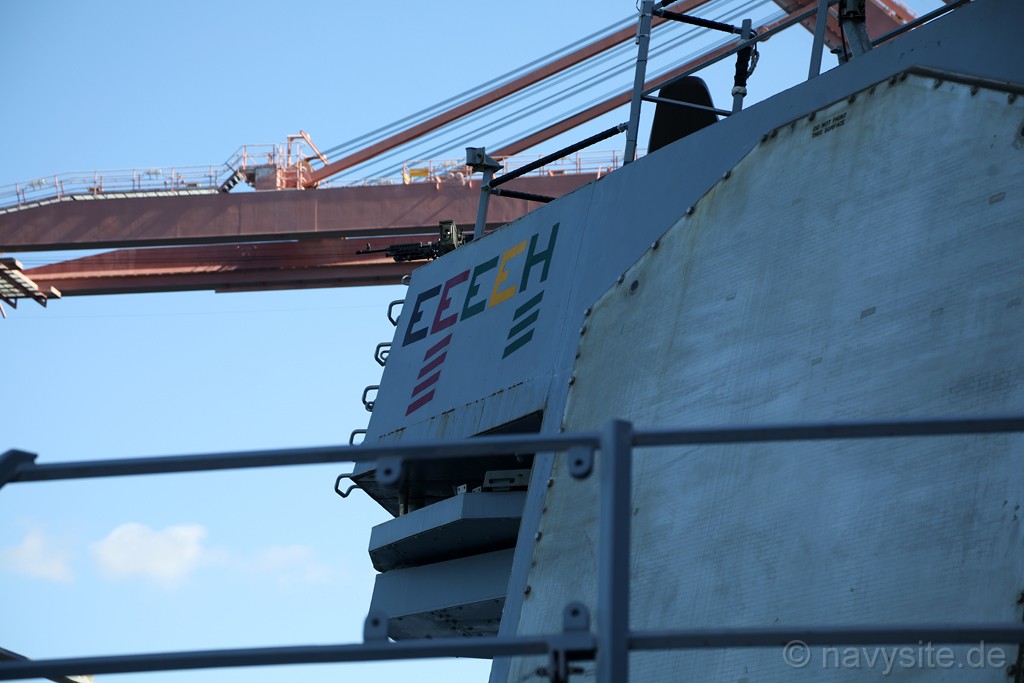
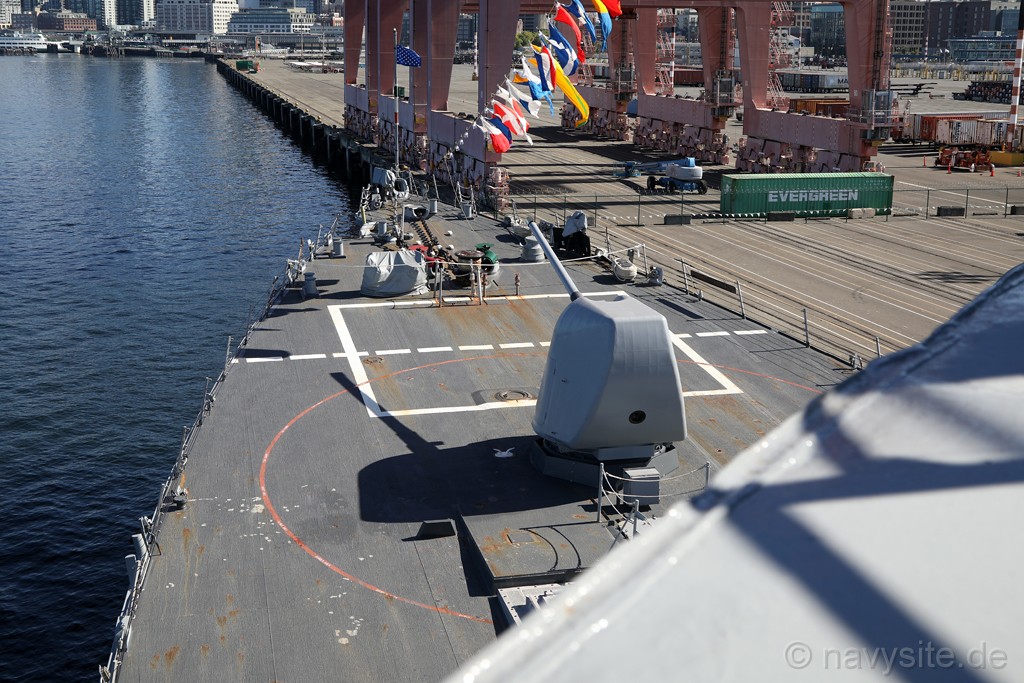
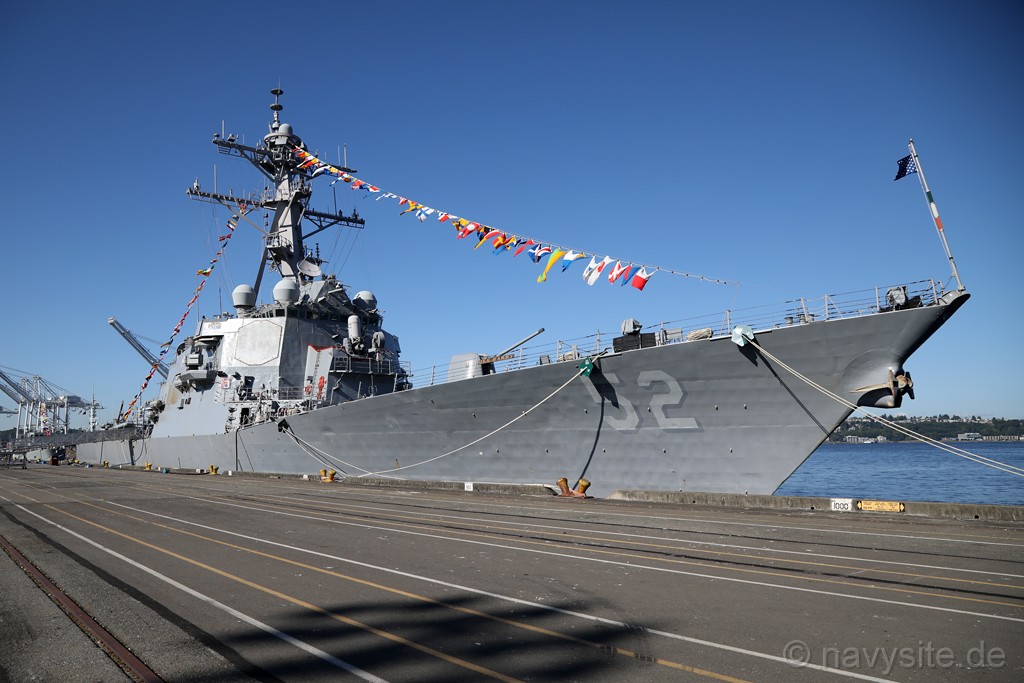
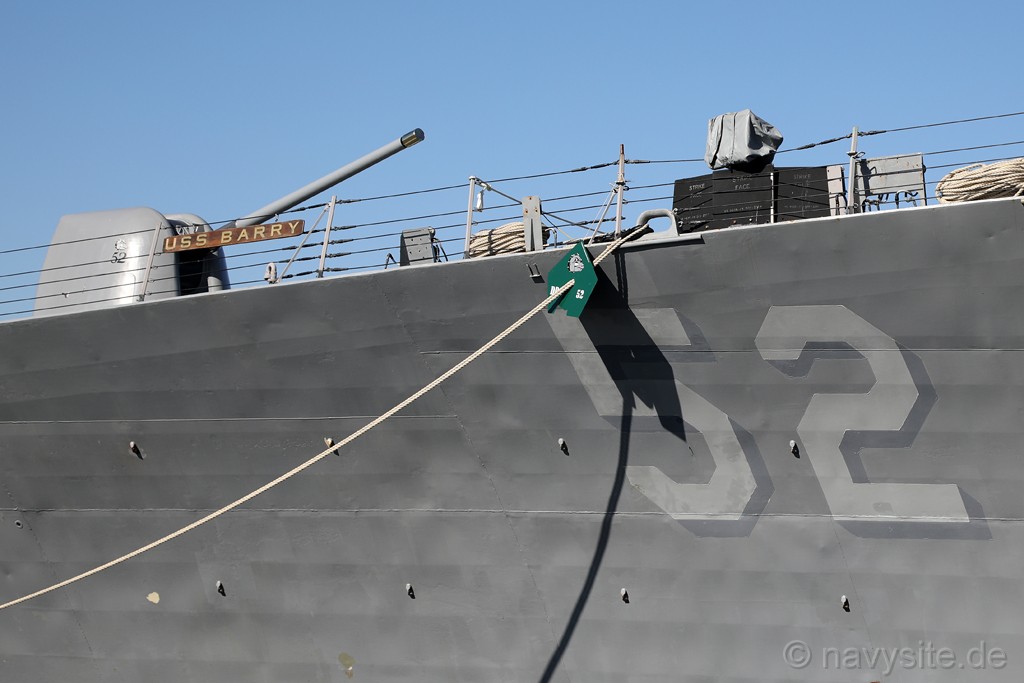
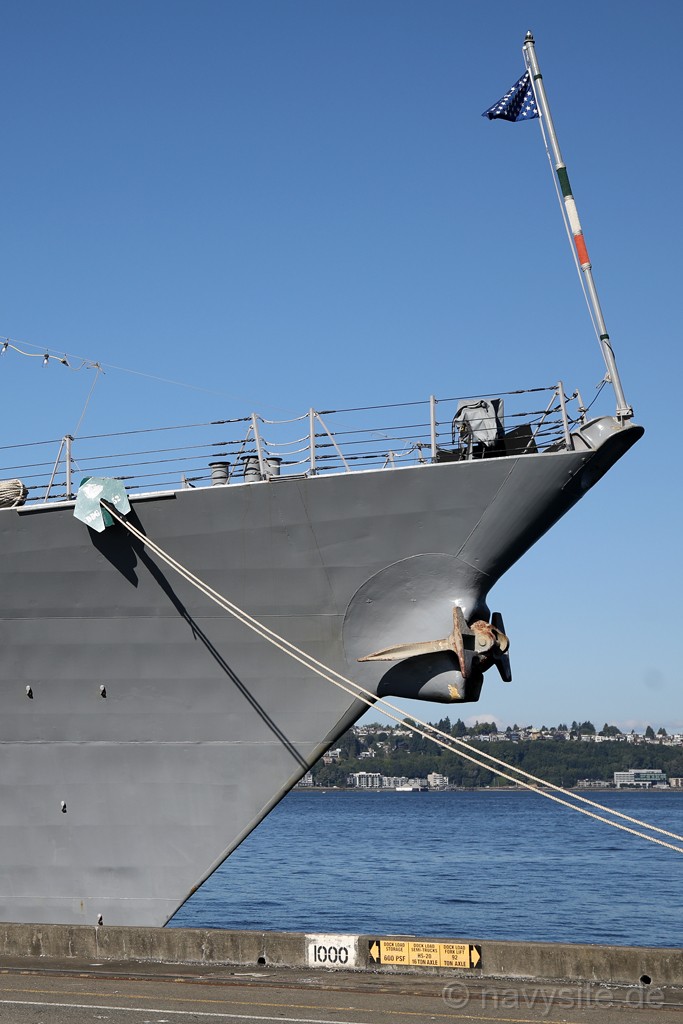
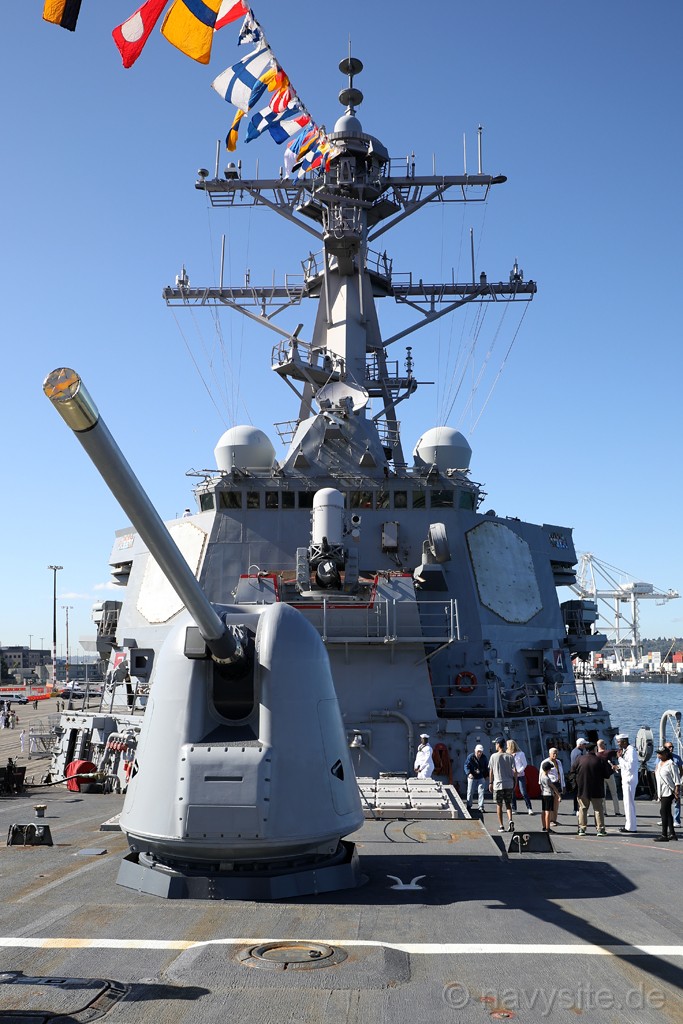
The photos below were taken by Michael Jenning on August 3, 2023, and show USS BARRY (DDG 52) during Seafair Seattle.
Click here for more Photos.


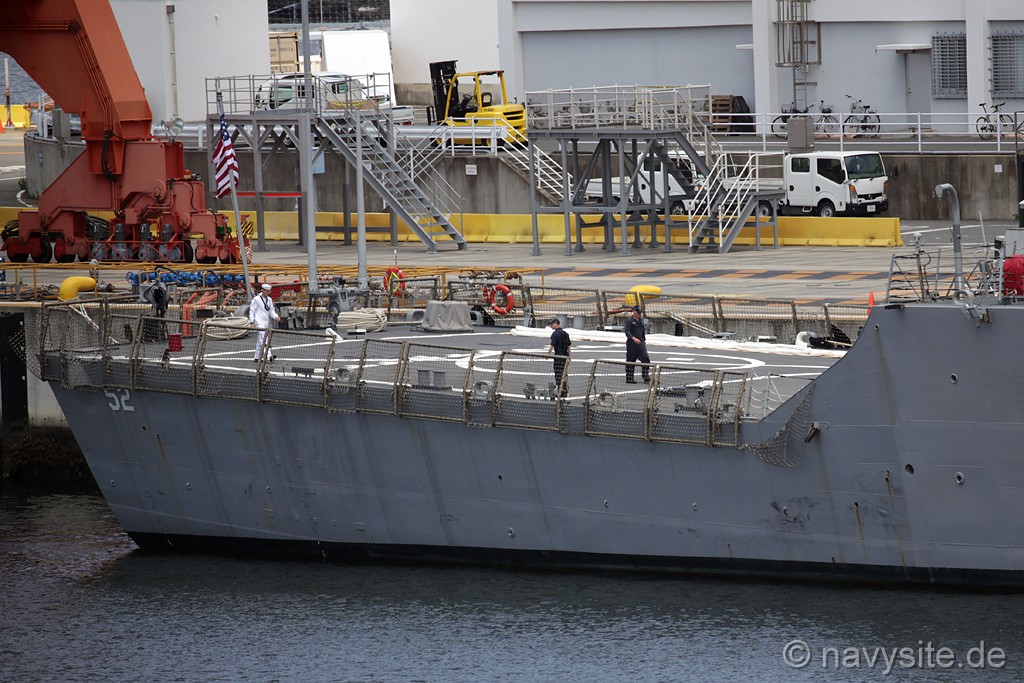
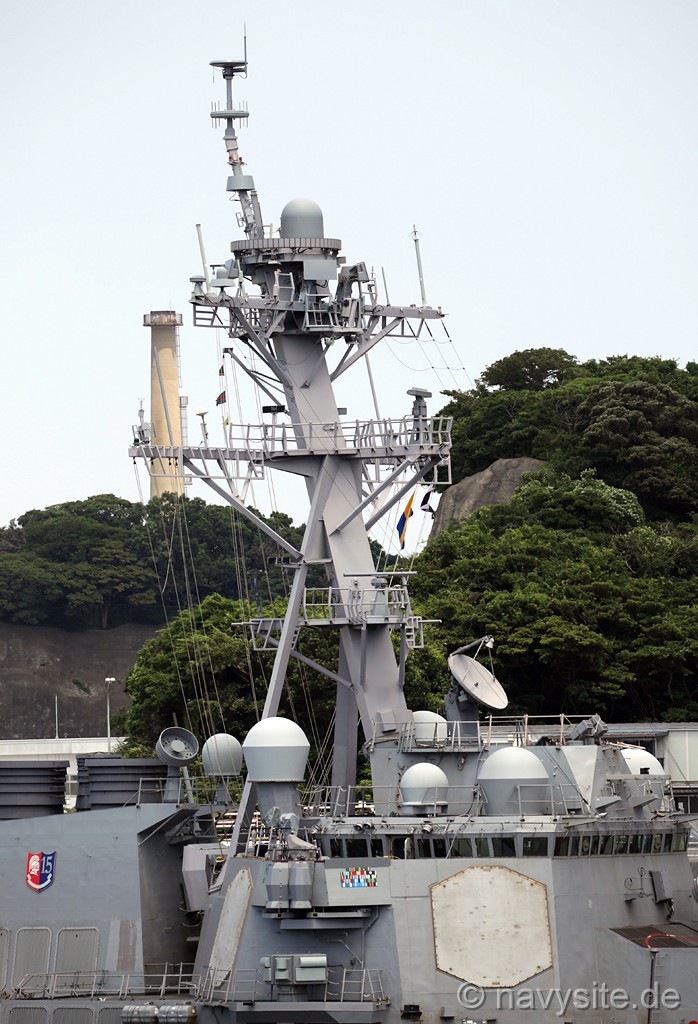
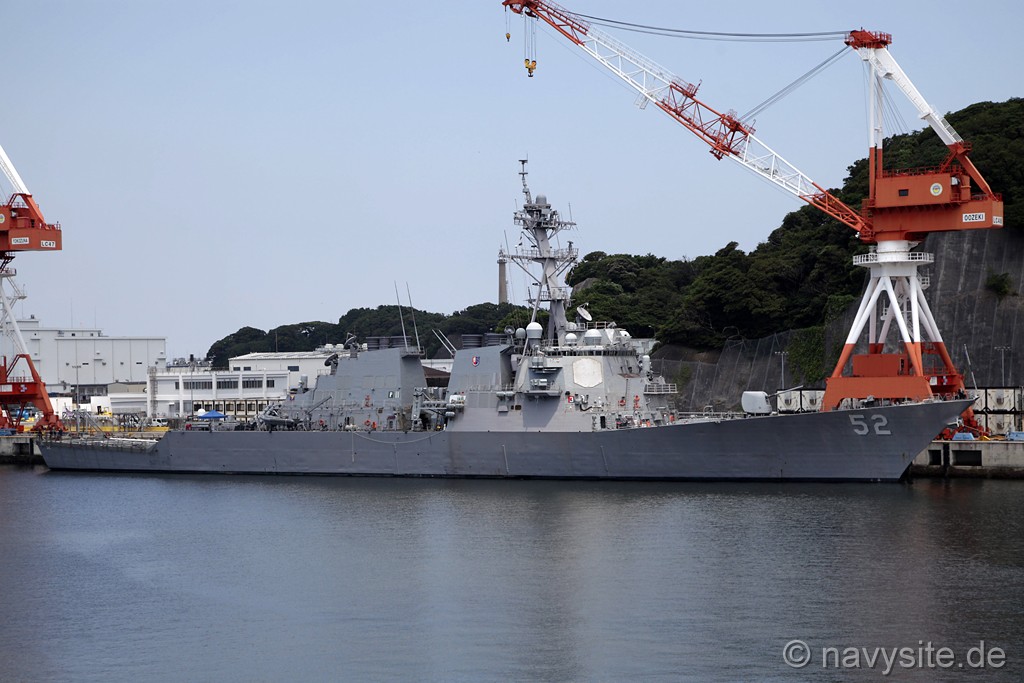
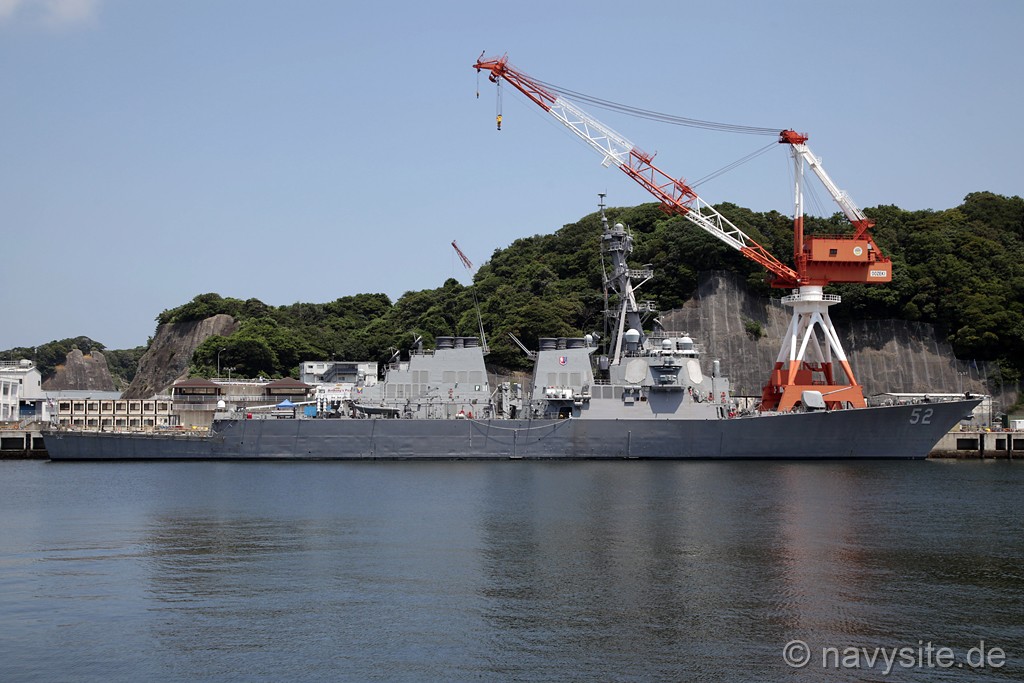
The photos below were taken by me and show USS BARRY at the Vigor Shipyards, Seattle, Wash., undergoing a Drydocking Selected Restricted Availability (DSRA) on July 15, 2024.


Back to Destroyers list. Back to ships list. Back to selection page. Back to 1st page.