
Search the Site with

|
Search the Site with
|
 General Characteristics Crew List Memorabilia About the Ship's Coat of Arms About the Ship's Name Image Gallery to end of page
 | 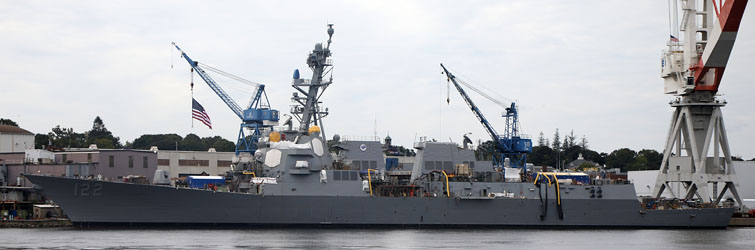 |
USS JOHN BASILONE is one of the ARLEIGH BURKE Flight IIA guided missile destroyers and the second ship in the Navy named after USMC gunnery sergeant John Basilone who received the Navy Cross and the Medal of Honor for his service in World War II.
| General Characteristics: | Awarded: June 3, 2013 |
| Keel laid: January 25, 2020 | |
| Launched: June 12, 2022 | |
| Commissioned: November 9, 2024 | |
| Builder: Bath Iron Works, Bath, Maine | |
| Propulsion system: four General Electric LM 2500 gas turbine engines | |
| Propellers: two | |
| Length: 508,5 feet (155 meters) | |
| Beam: 67 feet (20.4 meters) | |
| Draft: 30.5 feet (9.3 meters) | |
| Displacement: approx. 9,200 tons full load | |
| Speed: 32 knots | |
| Aircraft: two | |
| Armament: one | |
| Homeport: Mayport, Fla. | |
| Crew: approx. 320 |
 back to top go to the end of the pageback to top go to the end of the page
Crew List:
This section contains the names of sailors who served aboard USS JOHN BASILONE. It is no official listing but contains the names of sailors who submitted their information.
back to top go to the end of the pageback to top go to the end of the pageAbout the Ship's Coat of Arms:
The Shield:
The shape of the shield is the same shape used on the previous USS BASILONE (DD 824) seal, highlighting the history and lineage of John Basilone's namesake in the Navy. Red, white, and blue are the National colors. The Blue Diamond shape in center and Southern Cross configuration of the stars is a reference to the insignia for the 1st Marine Division, the division in which Gunnery Sergeant John Basilone gallantly served during World War II. The crossed water-cooled Browning M1917s denote Basilone's role as a machine gunner. Behind the diamond, a faint starburst can be seen, alluding to an explosion. Surrounding the blast is a red border consisting of many small ridges, which are reminiscent of machine gun belt-fed ammunition, further alluding to his service as a machine gunner.
The Crest:
The wreath adopts the first-named metal and color from the shield and blazon. The colors—blue and white—also represent the ribbon colors of the Navy Cross, awarded posthumously to Gunnery Sergeant Basilone for extraordinary heroism during the Battle of Iwo Jima. Emerging from the wreath is a body of water characterizing the area of battle for the USS JOHN BASILONE. The two palm branches refer to the vegetation of Guadalcanal and reference Basilone's heroic service in defense of Henderson Field. Emphasizing that he served proudly as a Marine, the World War II era Marine Corps emblem sits between the palms. Above all, the Medal of Honor ribbon denotes Gunnery Sergeant Basilone's exceptional valor in action against enemy forces during the Battle of Guadalcanal, which resulted in him receiving America's most prestigious military decoration.
The Supporters:
The Navy officer sword and enlisted cutlass symbolize the cooperation and teamwork between the leadership and crew of USS JOHN BASILONE. The sprigs of laurel refer to excellence and achievement, two concepts that readily apply to the legacy of Gunnery Sergeant John Basilone and serve as inspiration to the crew of USS JOHN BASILONE. The scroll bears the inscription "HONOR LOYALTY SACRIFICE", the ship's motto. These words characterize the life and service of Gunnery Sergeant Basilone and honor his legacy.
back to top go to the end of the pageAbout the Ship's Name:
 John Basilone was born on 4 November 1916 in Buffalo, N.Y., and attended St. Bernard parochial school in Raritan, N.J. He then served in the Army for three years between 1936 and 1939, about 26 months of which he spent in the Philippines, before enlisting in the Marine Corps on 11 July 1940. Exempted from boot camp because of his Army service, he served successively with Marine Corps units at Quantico, Va.; Guantanamo Bay, Cuba; Parris Island, S.C; and New River, N.C.; while advancing steadily in rank at the same time, achieving the rank of corporal on 15 May 1941 and of sergeant on 23 January 1942. Sgt. Basilone transferred to the Pacific in 1942 and was posted to the 1st Battalion, 7th Marines, with which unit he went ashore at Guadalcanal on 17 September 1942 to help bolster the defenses of the beachhead established there just over a month before.
About five weeks later, on the night of 24-25 October, Sgt. Basilone found himself in the midst of one of the fiercest fights of the Guadalcanal campaign. His unit, commanded by Col. Lewis B. "Chesty" Puller, was deployed thinly along what came to be known as "Coffin Corner" on the left flank of the defensive perimeter around Henderson Field after the 2nd Battalion, 7th Marines, had been withdrawn to help repulse surprise enemy attacks on the perimeter's right flank. Basilone had charge of two heavy weapons sections with a pair of Browning .50-caliber water-cooled machine guns in each when the Japanese hurled heavy attacks on his portion of the defense line just after 2200.
Soon, a runner reported the two guns on his right to be out of action, and Sgt. Basilone quickly grabbed one of the nearby machineguns and took it to the endangered spot. After getting that weapon into action, he then went to work to get one of the other two guns back in action. Once that job was done, he spent the rest of the night working both guns, firing first one and then the other as enemy charges threatened to overrun his position from different directions. Sgt. Basilone kept this up, stopping only briefly a couple of hours before dawn to make a dangerous dash through enemy-infiltrated terrain to get more ammunition. After the battle, regimental staff members counted nearly 1,000 dead Japanese around Basilone's position. For his "...extraordinary heroism and conspicuous gallantry in action...." in the defense of Henderson Field, Sgt. Basilone was awarded the Medal of Honor.
Later promoted to the rank of gunnery sergeant, Basilone returned to the United States where he underwent additional training in preparation for further service in the Pacific. He served successively at Camp Elliot near San Diego, at the Washington (D.C.) Navy Yard, and at Camp Pendleton near Oceanside, Calif. From the lasted-named base, he ultimately shipped out to take part in the invasion of Iwo Jima. Gy. Sgt. Basilone was killed in action during the initial assault on that Japanese-held island on 19 February 1945.
back to top go to the end of the pageUSS JOHN BASILONE Image Gallery:
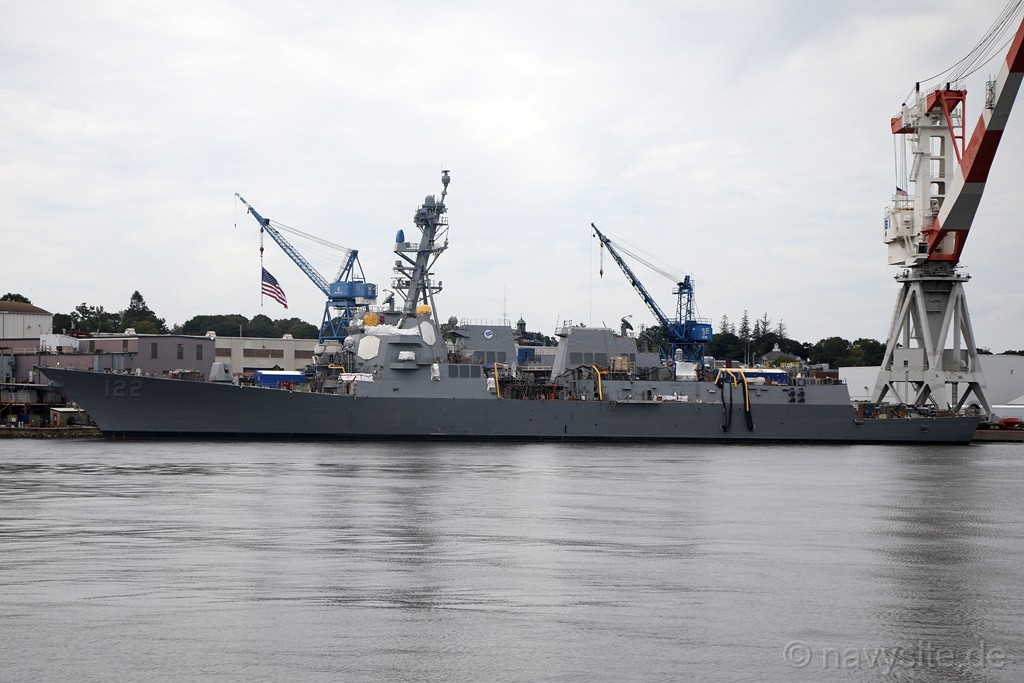
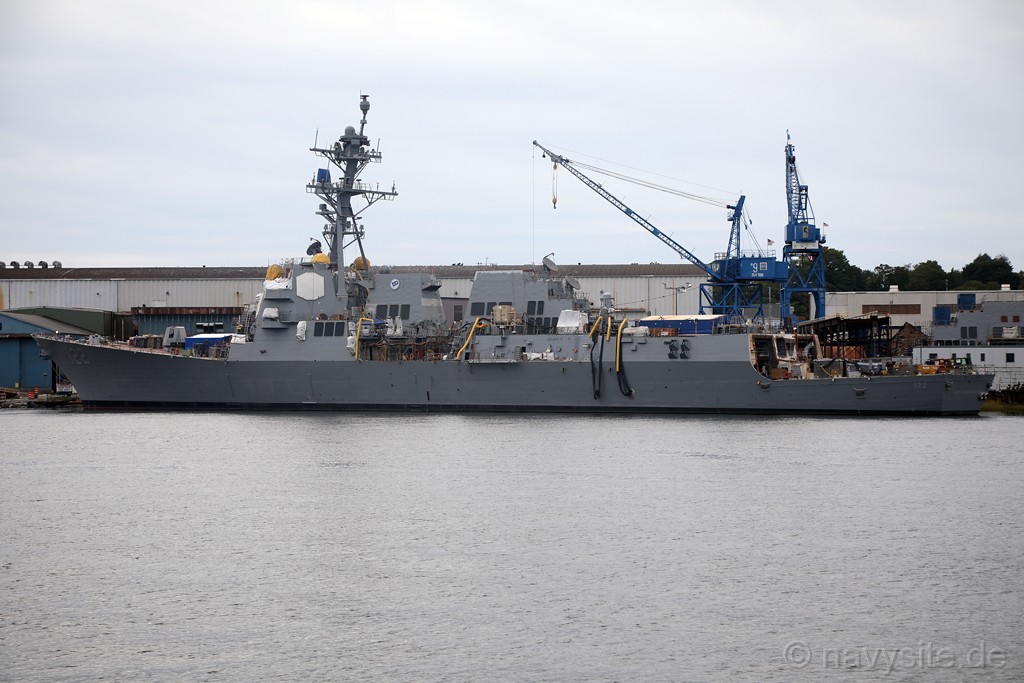
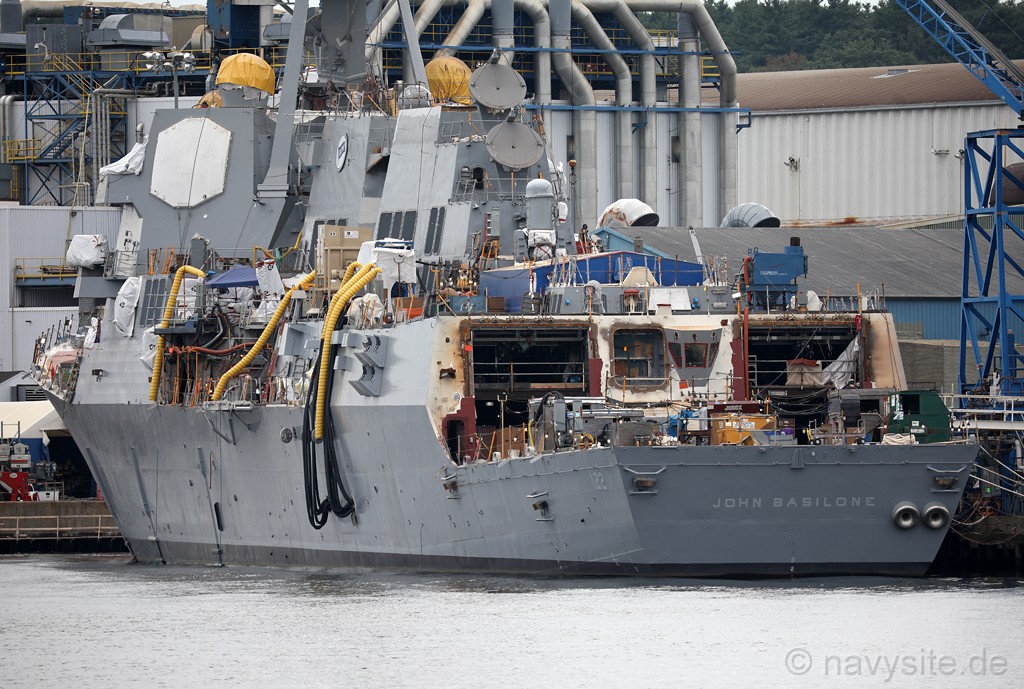
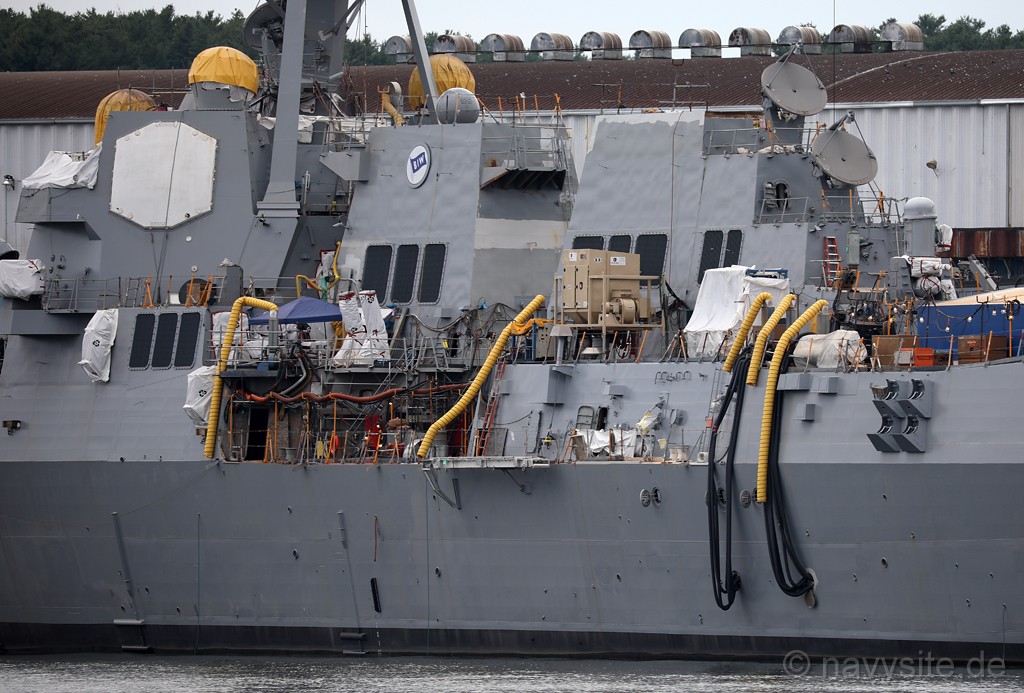
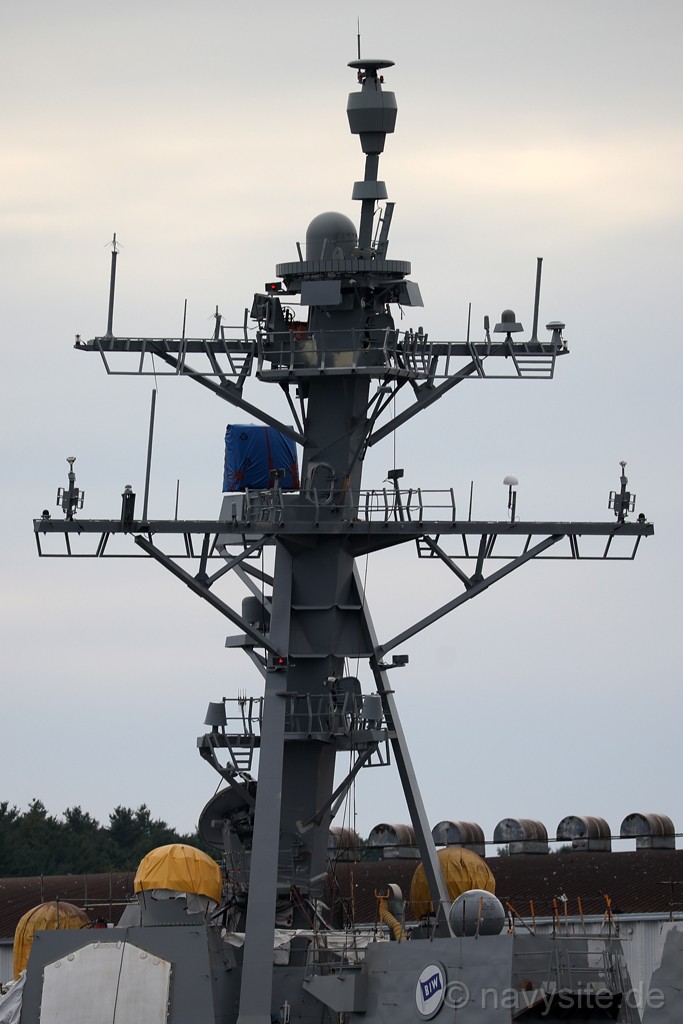
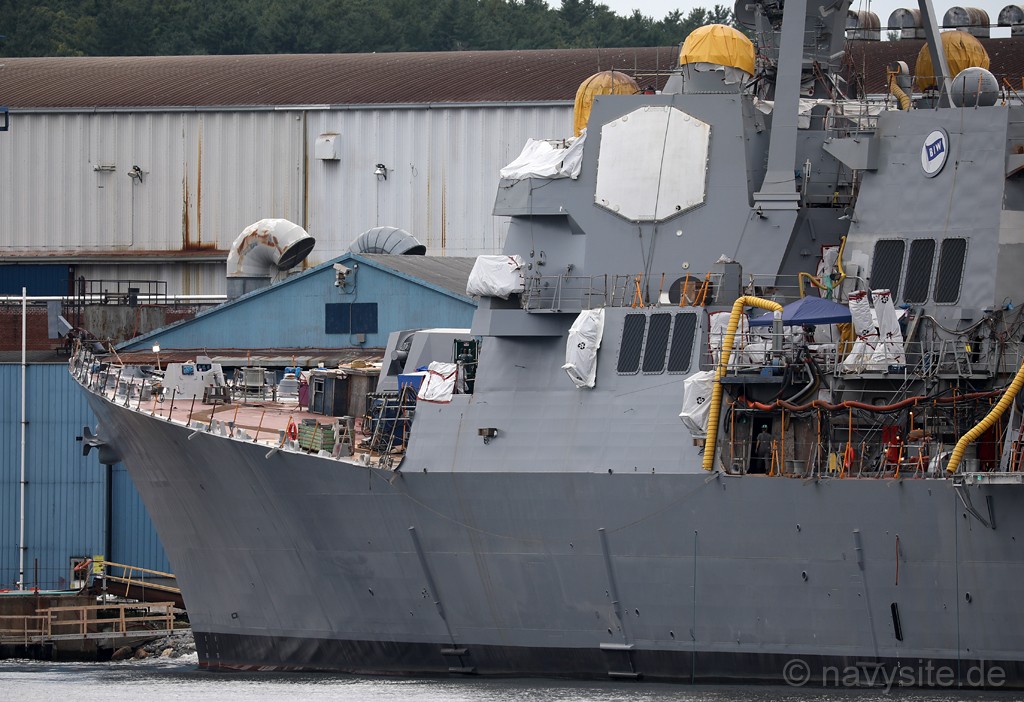
The photos below were taken by Michael Jenning and show the JOHN BASILONE under construction at Bath Iron Works in Maine on September 11, 2022.
 |  |  |  |  |
 |  |  |  |  |
The photos below were taken by Michael Jenning and show the JOHN BASILONE under construction at Bath Iron Works in Maine on October 6, 2024.
 |  |  |  |  |
 |  |  |  |  |
 |  |
back to top Back to Destroyers list. Back to ships list. Back to selection page. Back to 1st page.