
Search the Site with

|
Search the Site with
|
 General Characteristics Crew List Memorabilia About the Ship's Name Accidents aboard the Ship About the Ship's Coat of Arms Image Gallery to end of page
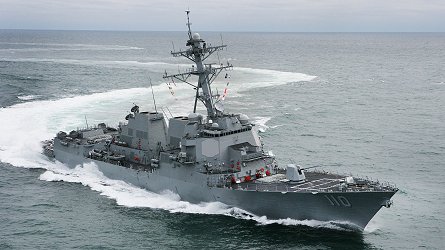 |  |
USS WILLIAM P. LAWRENCE is one of the Flight IIA ARLEIGH BURKE - class of Aegis guided missile destroyers and the first ship in the Navy named after Vice Admiral William P. Lawrence.
| General Characteristics: | Awarded: September 13, 2002 |
| Keel laid: September 16, 2008 | |
| Launched: December 15, 2009 | |
| Commissioned: May 19, 2011 | |
| Builder: Northrop Grumman Ship Systems' Ingalls Operations, Pascagoula, Miss. | |
| Propulsion system: four General Electric LM 2500 gas turbine engines | |
| Propellers: two | |
| Length: 508,5 feet (155 meters) | |
| Beam: 67 feet (20.4 meters) | |
| Draft: 30,5 feet (9.3 meters) | |
| Displacement: approx. 9,200 tons full load | |
| Speed: 32 knots | |
| Aircraft: two | |
| Armament: one | |
| Homeport: Pearl Harbor, Hi. | |
| Crew: approx. 320 |
 back to top go to the end of the pageback to top go to the end of the page
Crew List:
This section contains the names of sailors who served aboard USS WILLIAM P. LAWRENCE. It is no official listing but contains the names of sailors who submitted their information.
back to top go to the end of the pageback to top go to the end of the pageAbout the Ship's Name:
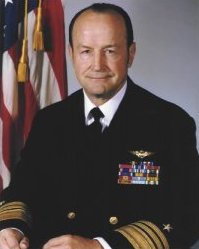 VADM William Porter Lawrence was born in Nashville TN on January 13, 1930. As a boy in Nashville, he graduated first in his high school class and was President of the Student Body. He was ranking officer in the ROTC, all-city in football, all-state in basketball, member of the state championship basketball team and state Boys Tennis champion. He was a recipient of the William Hume award, given by the Superintendent of City Schools to the high school football player, “most outstanding in scholarship, leadership, sportsmanship and value to his team.” He attended the U. S. Naval Academy, where he played three varsity sports and ranked 8 out of 725 academically, graduating “with distinction” in 1951. He also served as Class President, Commander of the Brigade of Midshipmen, and led the establishment of the present-day Brigade Honor Concept, a key element in Midshipmen moral development.
Upon receipt of his Naval Aviator Wings in Pensacola, FL, in November 1952, he was assigned to Fighter Squadron 193 at the Naval Air Station Moffett Field, CA, during the Korean War, and deployed twice to the Far East aboard the aircraft carrier USS ORISKANY (CV 34). He next attended the Naval Aviation Safety School at the University of Southern California, and the U. S. Naval Test Pilot School at the Naval Air Test Center, Patuxent River, MD, where he graduated number one in his class. Subsequently, he served as a test pilot in the Flight Test Division and as an instructor on the Test Pilot School staff. While a test pilot in 1958, he became the first Naval Aviator to fly twice the speed of sound in a Navy airplane, the F8U Crusader III. In 1959 he was a Navy nominee for the initial astronaut selection and was among the final 32 candidates for the Project Mercury program, being disqualified for a minor physical defect.
Lawrence, as a Lieutenant, served as Personal aide to RADM Thomas H. Moorer, USN, Commander Carrier Division Six, aboard the aircraft carrier USS SARATOGA (CV 60), deploying to the Mediterranean and North Atlantic. He next served as Assistant Operations Officer of Fighter Squadron 101, Naval Air Station, Oceana, VA, responsible for the introduction of the new F4H Phantom jet to the fleet, followed by a tour as Navigator of the gun cruiser USS NEWPORT NEWS (CA 148).
Next assigned as Maintenance Officer to Fighter Squadron 14 at Naval Air Station, Cecil Field, FL, he deployed to the Mediterranean aboard the aircraft carrier USS FRANKLIN D. ROOSEVELT (CV 42). He next served as Executive Assistant to General Paul D. Adams, USA, Commander-in-Chief U.S. Strike Command, headquartered at MacDill Air Force Base, FL.
VADM Lawrence made combat deployments to Vietnam aboard the aircraft carriers USS RANGER (CV 61) and USS CONSTELLATION (CV 64). While Commanding Officer of Fighter Squadron 143, he was shot down over North Vietnam in June 1967 and held as a Prisoner of War until March 1973. He was awarded the Distinguished Service Medal, the country’s third highest military award, for his inspirational leadership of fellow POWs while under constant pressure and mistreatment from his captors.
After repatriation and convalescence at the Naval Hospital Memphis, TN, he attended the National War College, where he was designated a distinguished graduate. During the same period, he pursued a course of study at George Washington University, leading to the award of a master’s degree in international affairs in July 1974.
After promotion to Rear Admiral in July 1974, VADM Lawrence served as Commander Light Attack Wing, U.S. Pacific Fleet at the Naval Air Station, Lemoore, CA. Subsequently, he served as the Director, Aviation Programs Division and Assistant Deputy Chief of Naval Operations (Air Warfare) in the Pentagon. He became Superintendent, U.S. Naval Academy on 28 August, 1978 and promoted to Vice Admiral on 1 August 1980. VADM Lawrence assumed command of the U.S. Third Fleet in September 1981, the Fleet which Admiral Halsey commanded in World War II. In 1983, while COMTHIRDFLT, he won the Hawaii Armed Forces singles tennis championship in the seniors division (over 45).
On 28 September 1983, he became the Deputy Chief of Naval Operations (Manpower, Personnel and Training)/Chief of Naval Personnel, responsible for formulating and executing Navy policies on personnel and training matters. During his period, VADM Lawrence was dubbed by the men and women in the fleet as the “Sailor’s Admiral.”
He retired from active duty on 1 February 1986 and subsequently occupied the Chair of Naval Leadership at the Naval Academy until 1994, and served as the President of the Association of Naval Aviation from 1991 to 1994. He was a Visiting Professional Scholar at the Freedom Forum First Amendment Center at Vanderbilt University, conducting research and preparing a report on the relationship between the military and the U.S. news media.
VADM Lawrence died December 2, 2005. His military decorations include: Distinguished Service Medal (4 awards), Silver Star (3 awards), Legion of Merit, Distinguished Flying Cross, Bronze Star with Combat V, Purple Heart (2 awards), Air Medal (3 awards), Joint Service Commendation Medal, and Navy Commendation with Combat V (2 awards), Combat Action Ribbon, Navy Unit Commendation (with silver star), POW Medal, National Defense Service Medal (with bronze star), Korean Service Medal, Vietnam Service Medal (three bronze stars), Republic of Vietnam Gallantry Cross Unit Citation, United Nations Service Medal and Republic of Vietnam Campaign Medal.
back to top go to the end of the page
Accidents aboard USS WILLIAM P. LAWRENCE:
| Date | Where | Events |
|---|---|---|
| September 22, 2013 | central Red Sea | An MH-60S helicopter assigned to HSC-6 embarked aboard USS NIMITZ (CVN 68) rolls off the flight deck of USS WILLIAM P. LAWRENCE after significant ship roll. The helicopter had landed on the WILLIAM P. LAWRENCE to disembark three passengers. Shortly after they had left the helicopter it crashed killing both pilots - Lt. Cmdr. Landon L. Jones and CWO3 Jonathon S. Gibson. An investigation later founds out that the cause of the accident was a combination of heavy seas and a turn by the ship made at top speed which caused a wave to wash over the flight deck. |
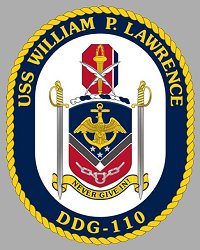
back to top go to the end of the pageAbout the Ship's Coat of Arms:
The Shield:
Dark blue is the color traditionally associated with the Navy, representing the sea. The dark gray split chevron on the white chevron alludes to VADM Lawrence’s mission to lead a flak suppression section during a raid in North Vietnam. Upon taking enemy fire, his aircraft tail section separated, forcing him to eject, where he became a prisoner in Hanoi, illustrated by the shackbolt. The six chain links indicate the years spent as a prisoner of war. The anchor denotes naval strength. The golden eagle highlights VADM Lawrence as a man of courage to resist his captors, while suffering torture and beatings. The combination of the eagle and anchor symbolize the VADM’s career as a Naval aviator, suggesting his service as a test pilot, becoming the first to fly twice the speed of sound and final candidate for the Mercury space program. The stars represent VADM Lawrence’s strength of character, implying the award of two Bronze stars and the Purple Heart. The three silver stars represent the highest rank achieved, command of the 3rd Fleet as well as the three Silver Stars awarded for exceptional heroism.
The Crest:
The Aegis shield emphasizes the modern weaponry and the ARLEIGH BURKE class to which the ship belongs. The shield reflects the colors of the Tennessee state flag, the birthplace of VADM Lawrence. The golden enflamed torch represents achievement and enlightenment when VADM Lawrence created the Midshipmen honor concept, as the President of his class at United States Naval Academy in 1950 and his remarkable performance as a scholar/athlete. The quills pens allude to knowledge, signifying his appointment as Superintendent of the Naval Academy and the poem which he mentally composed while in solitary confinement as a prisoner of war which was adopted as the Tennessee state poem in 1973.
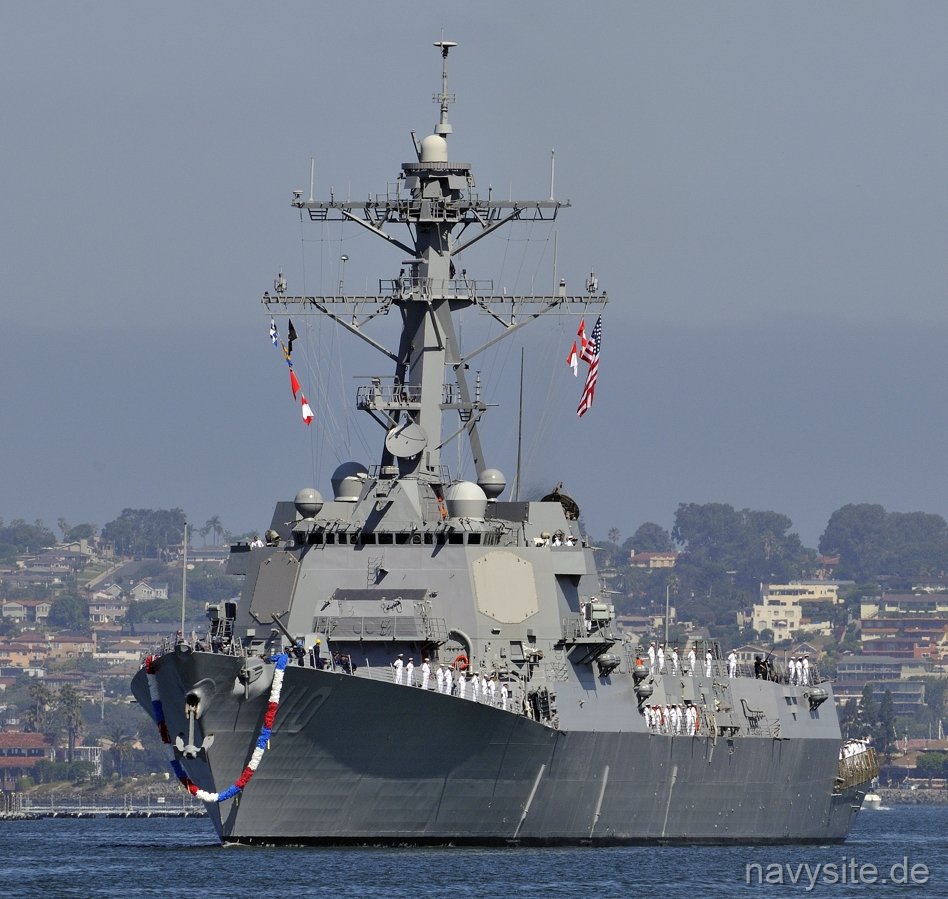
back to top go to the end of the pageUSS WILLIAM P. LAWRENCE Image Gallery:
 | 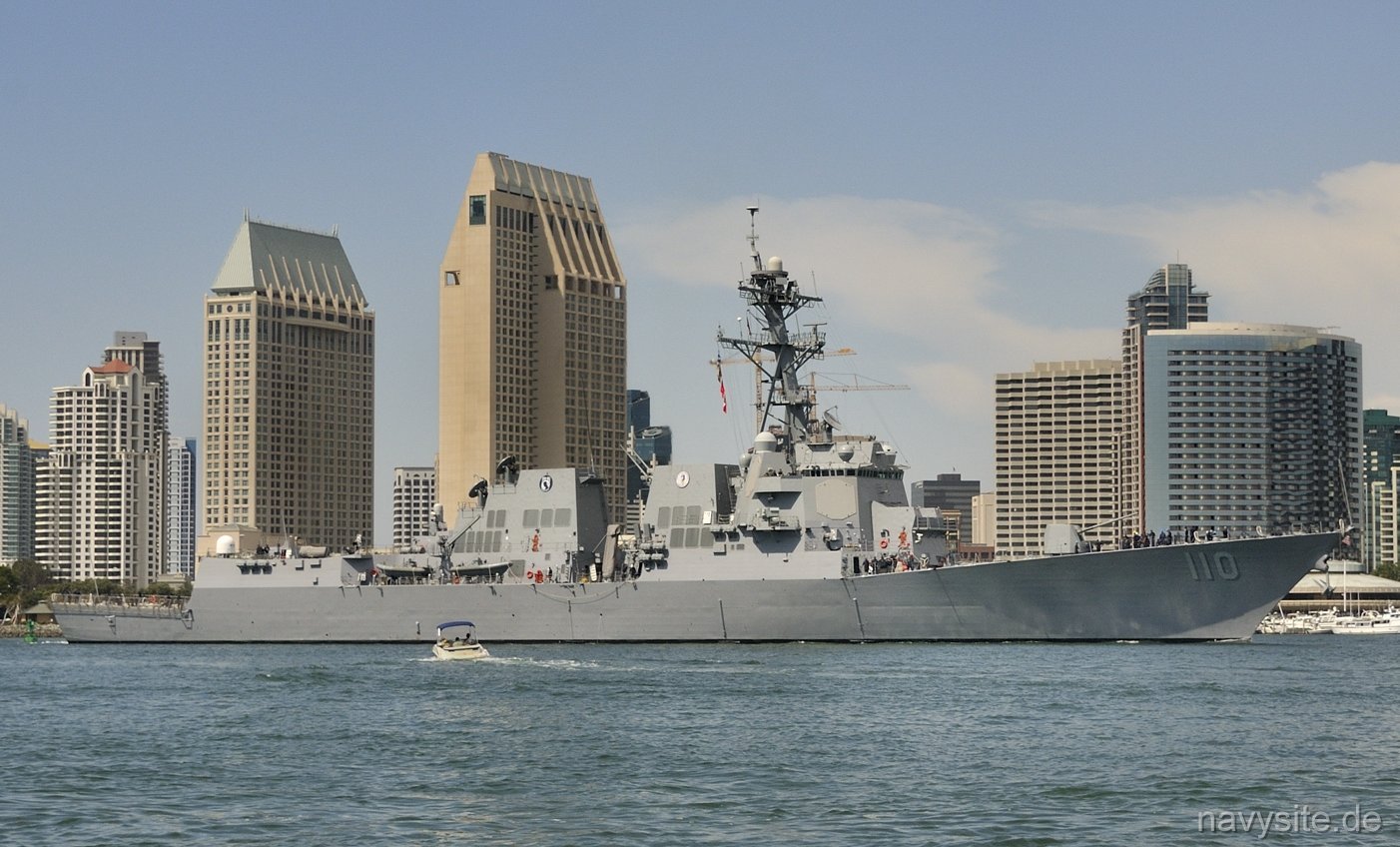 |
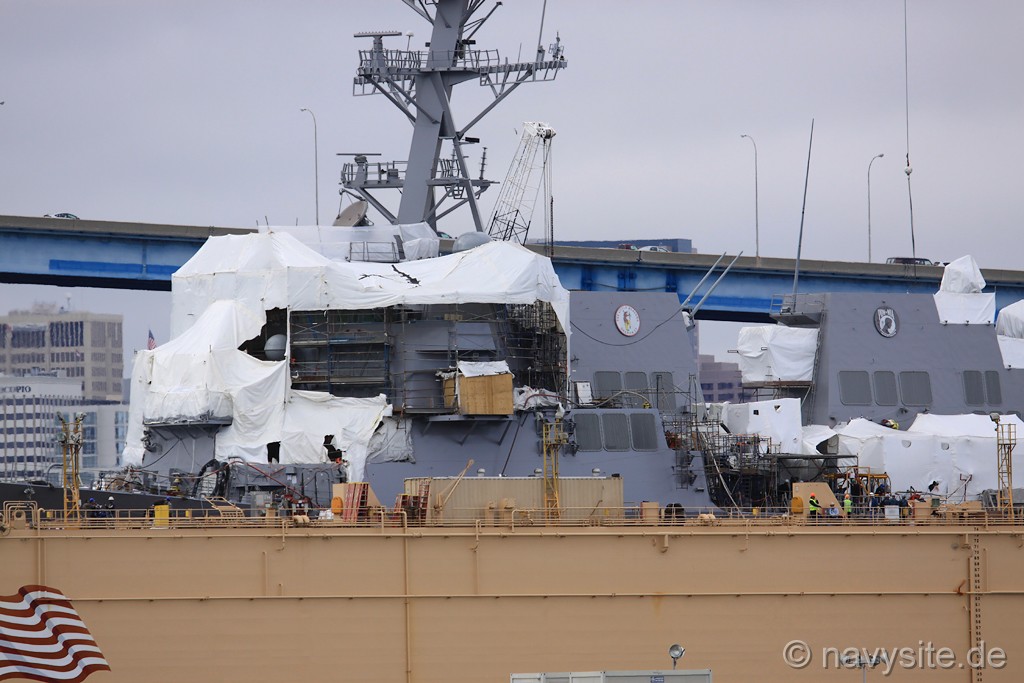
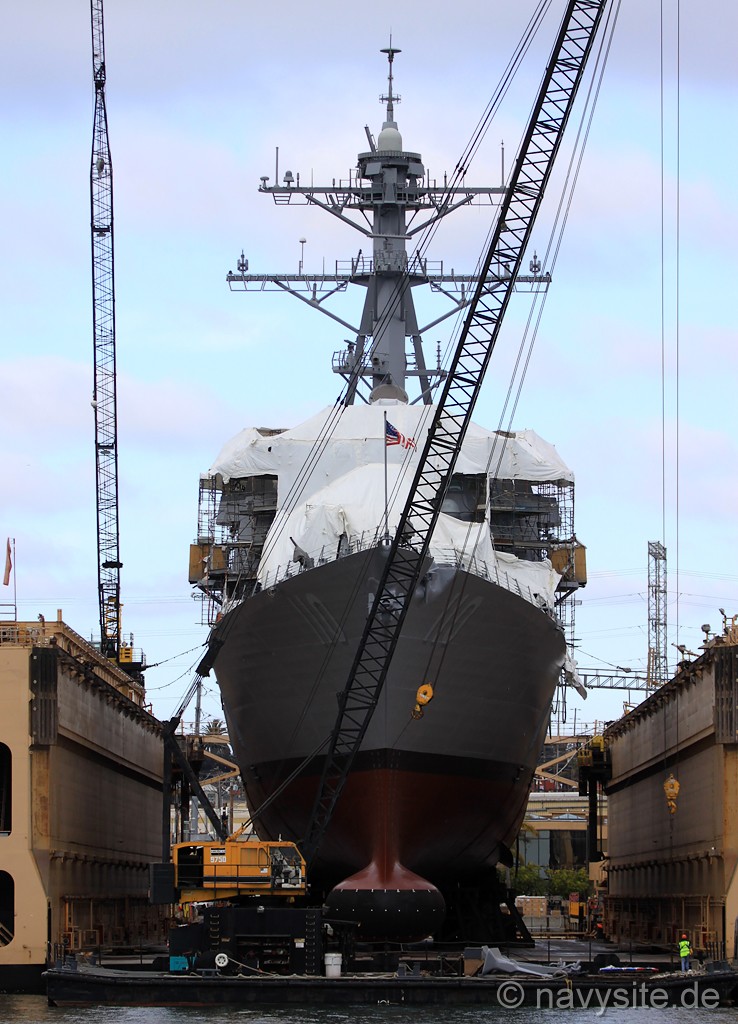
The photos below were taken by me and show the WILLIAM P. LAWRENCE drydocked at BAE Systems Ship Repair in San Diego, Calif., on March 15, 2012.
 |  |
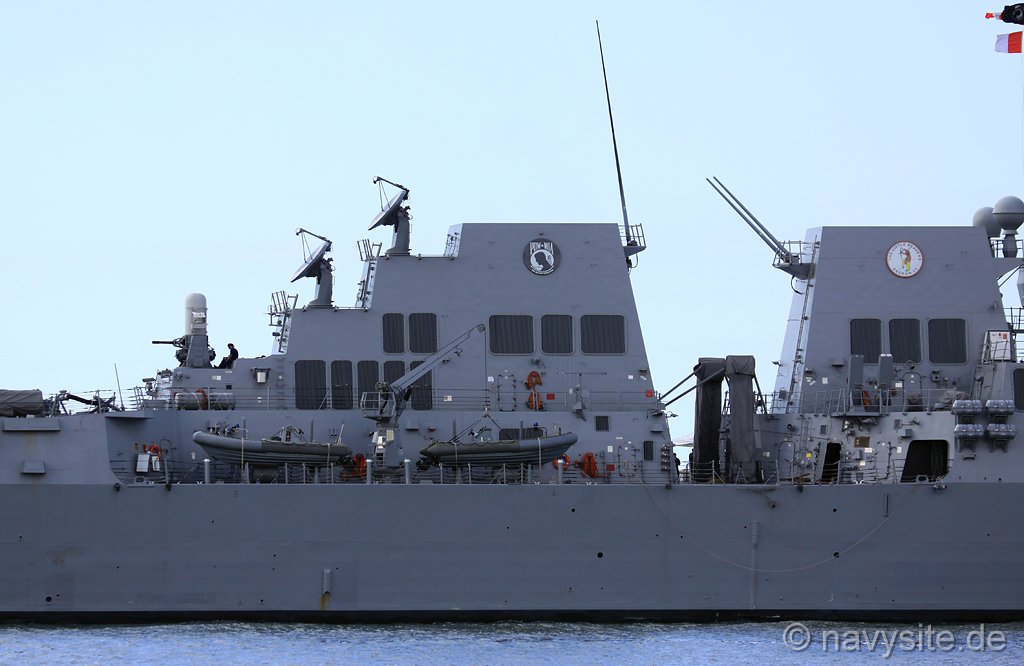
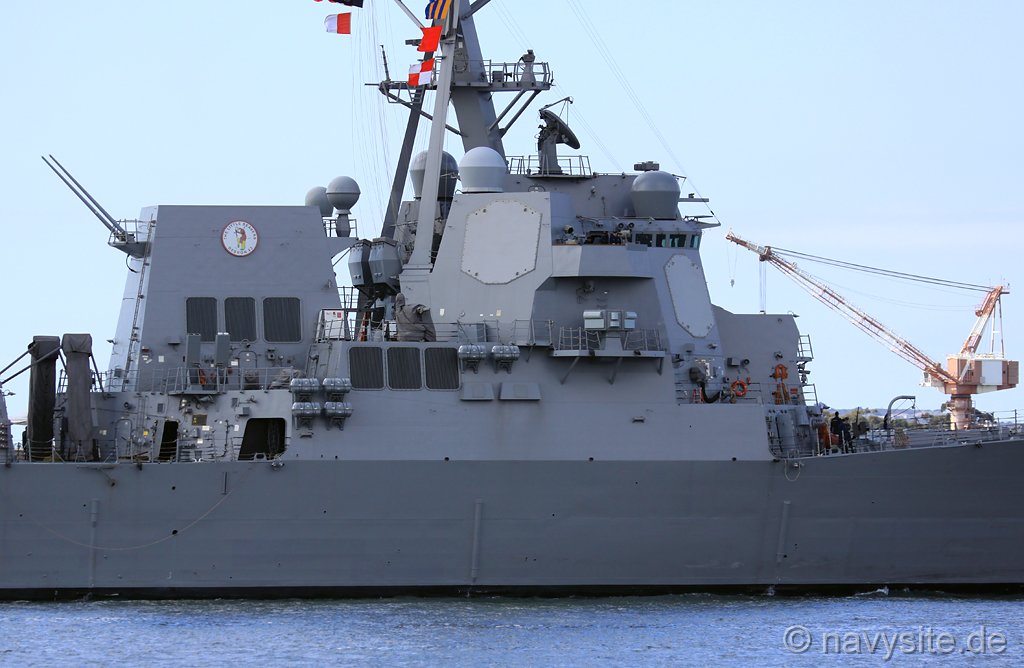
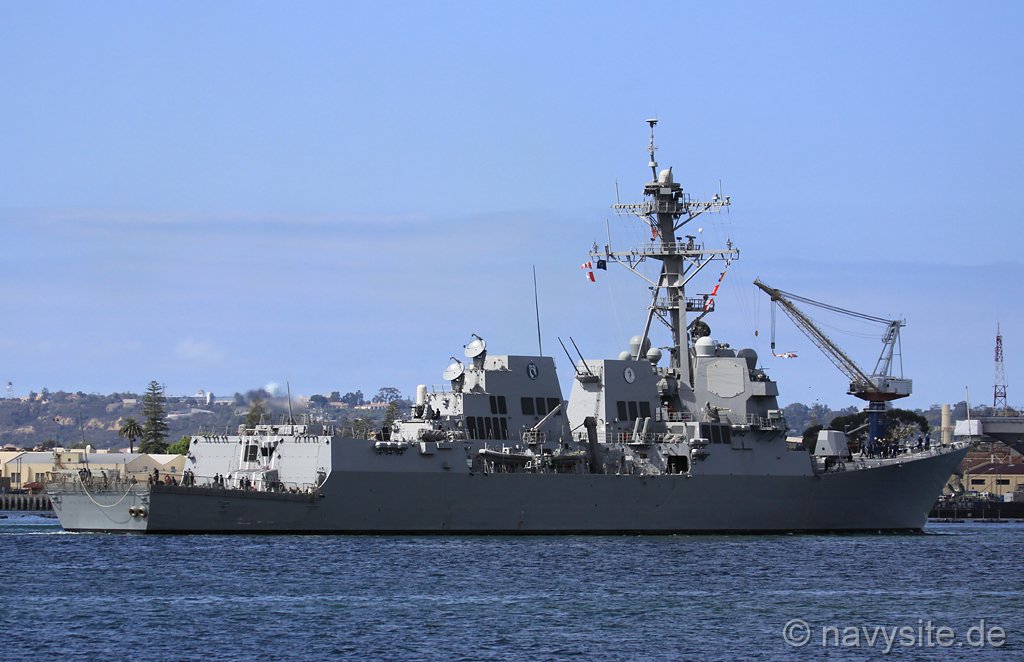
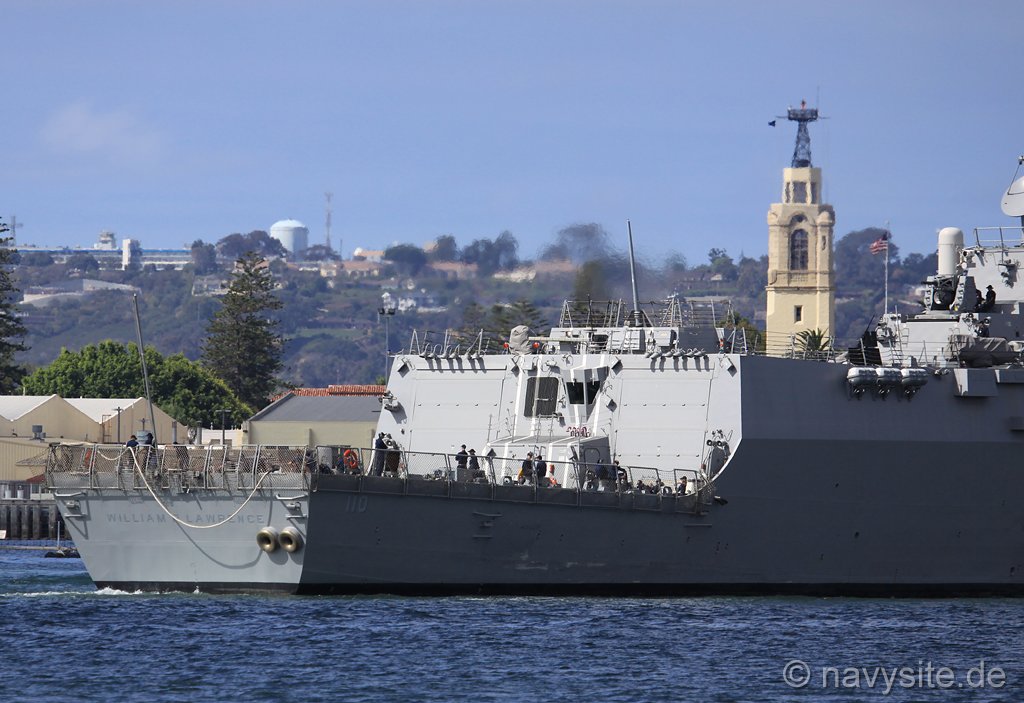
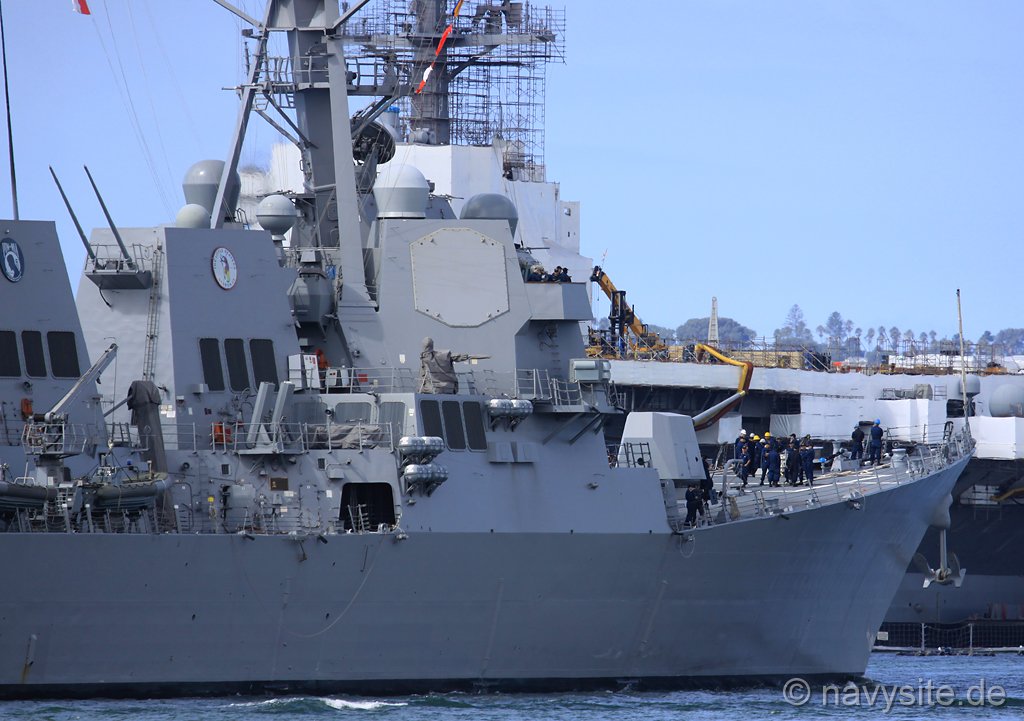
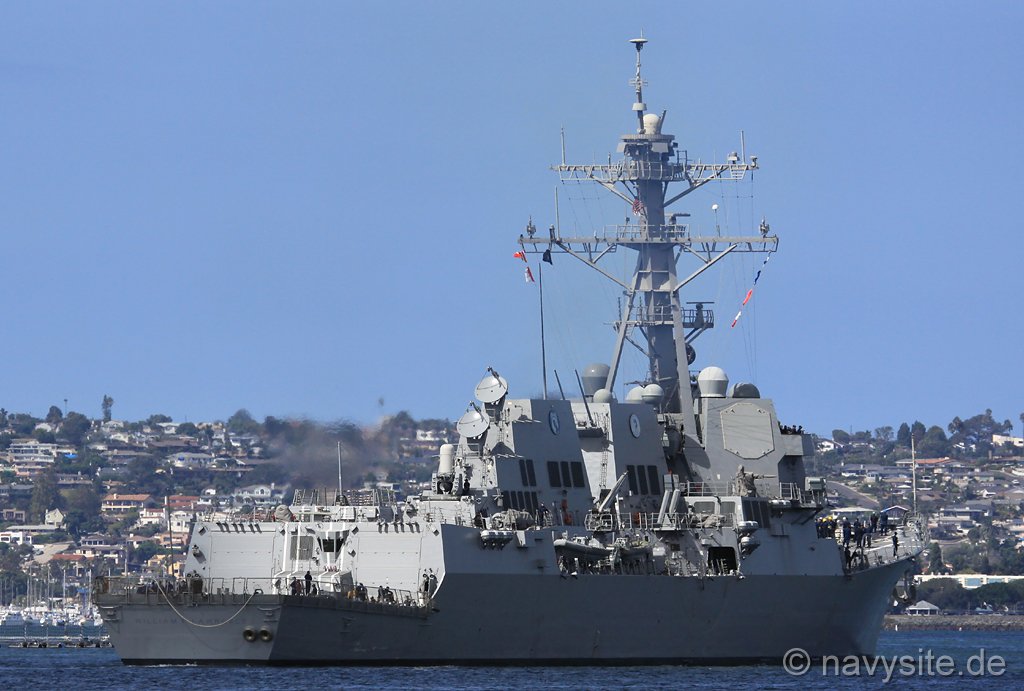
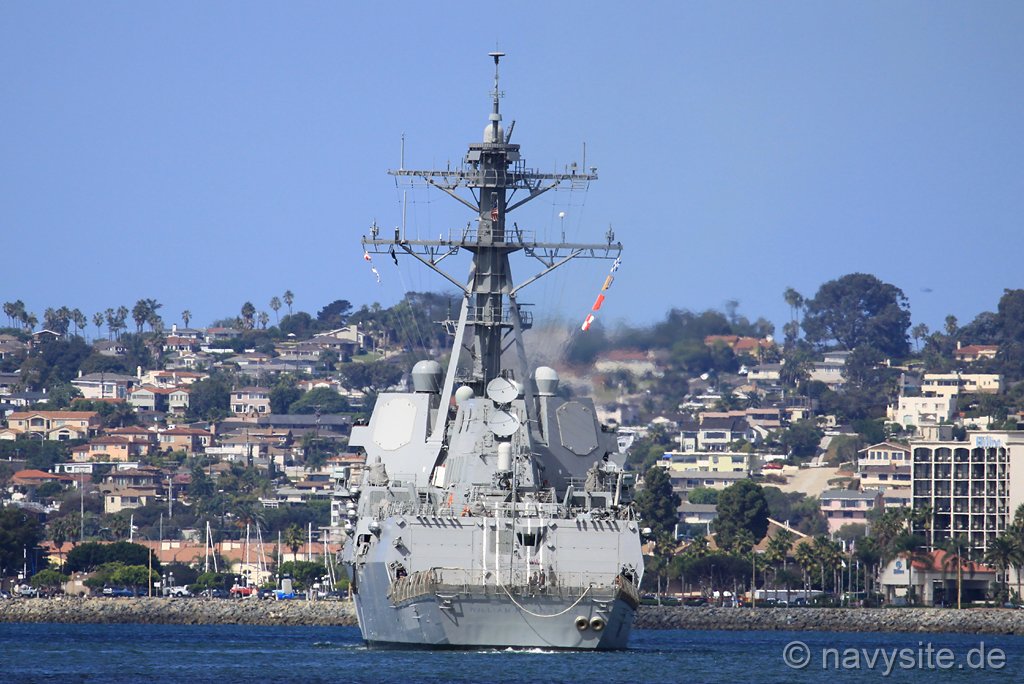
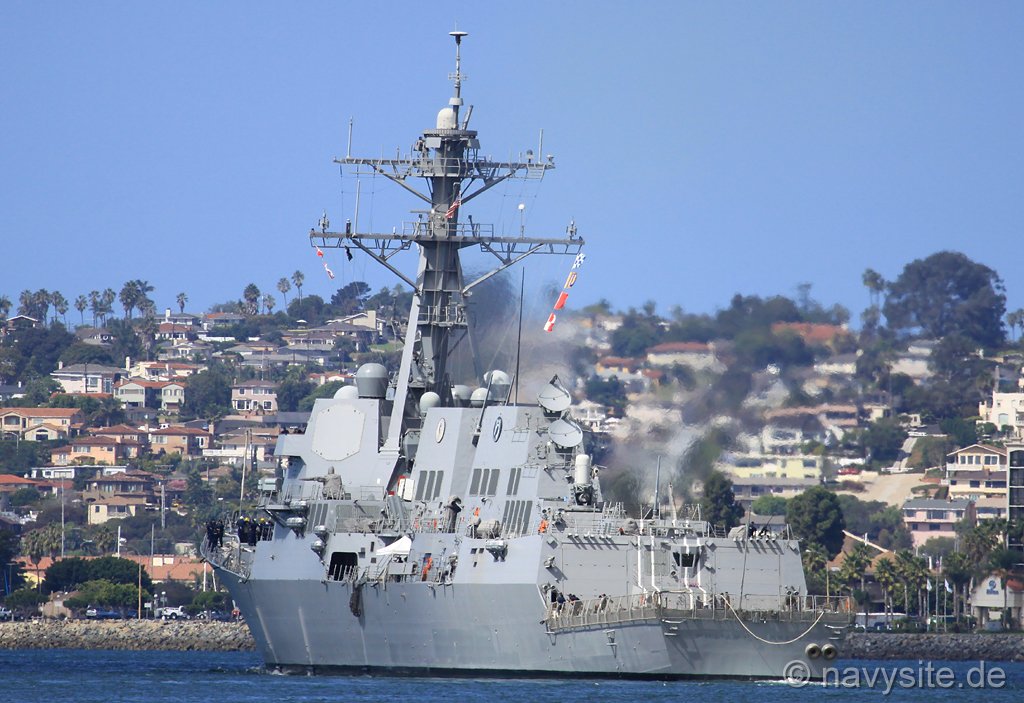
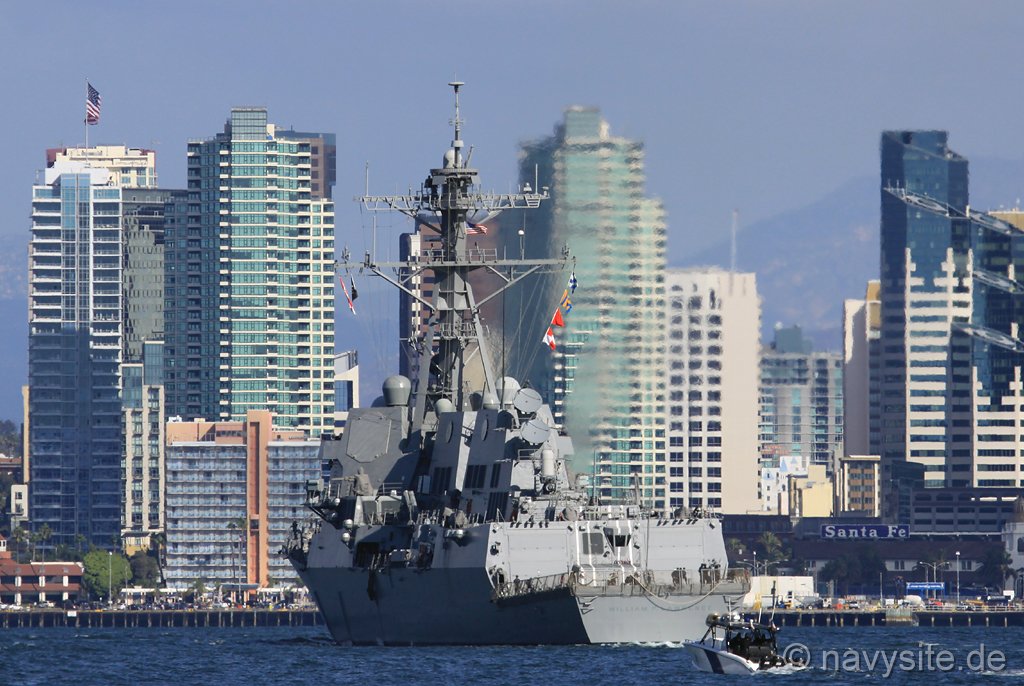
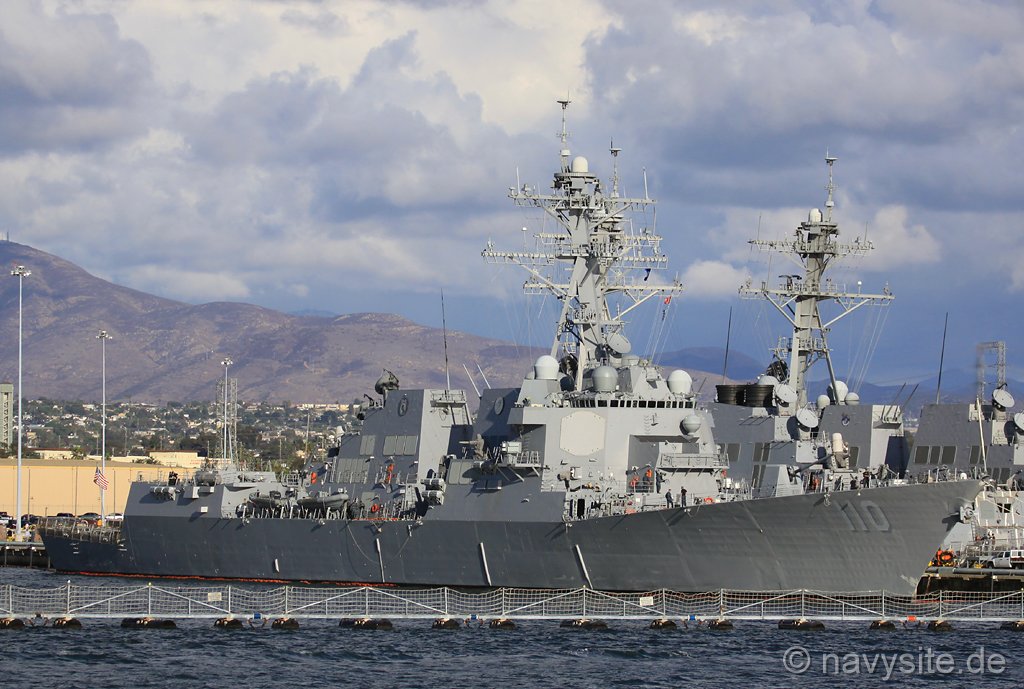
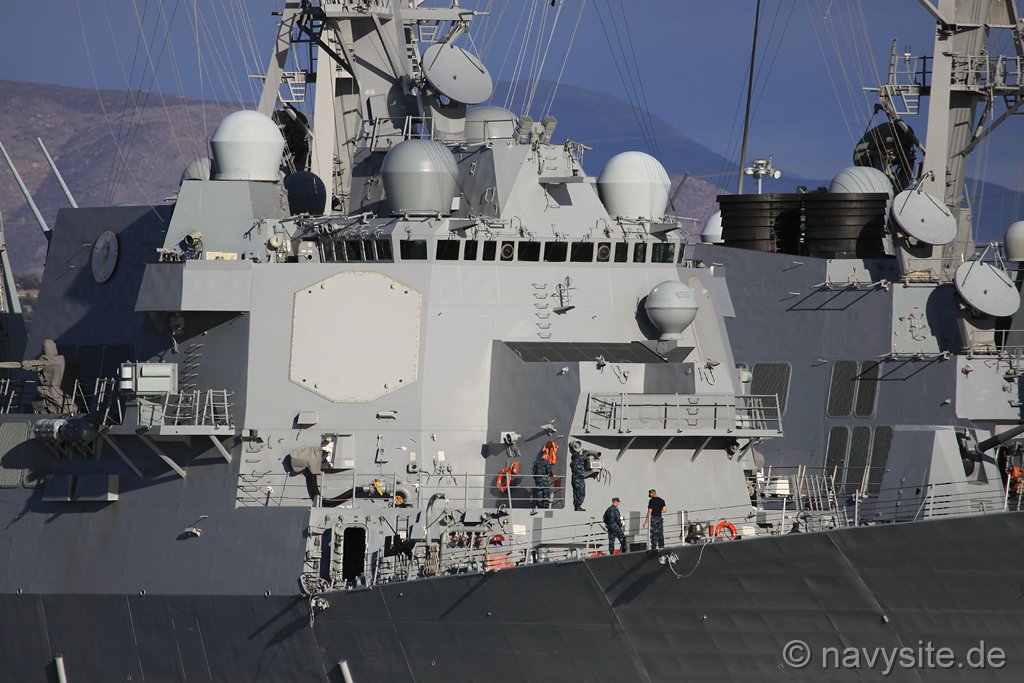
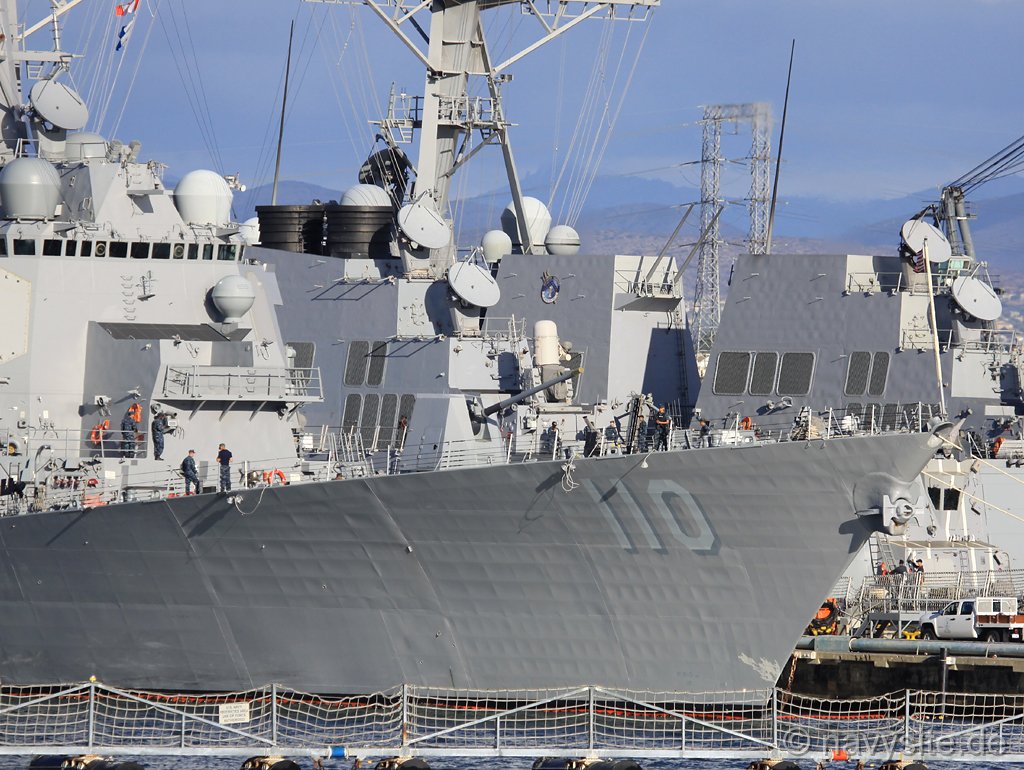
The photos below were all taken by me. The first photos show the WILLIAM P. LAWRENCE departing San Diego, Calif., on October 10, 2012, and arriving back in town after roughly 4 hours. The last photos show the destroyer moored at the Naval Base in San Diego on October 11.
 |  |  |  |  |
 |  |  |  |  |
 |  |  |
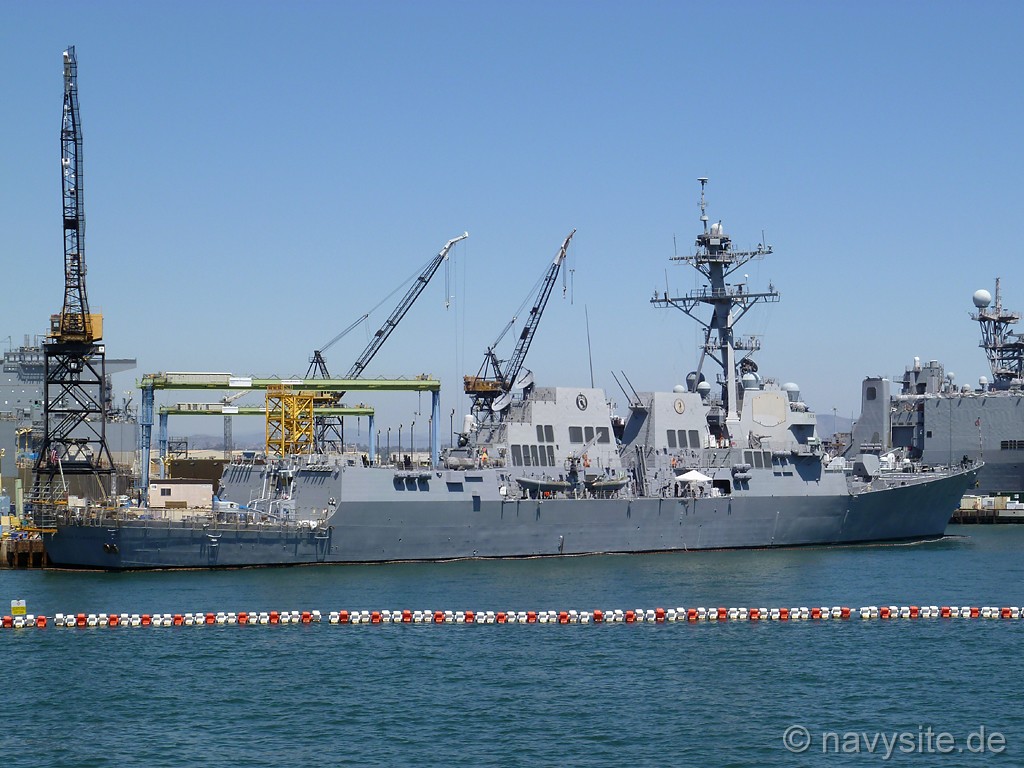
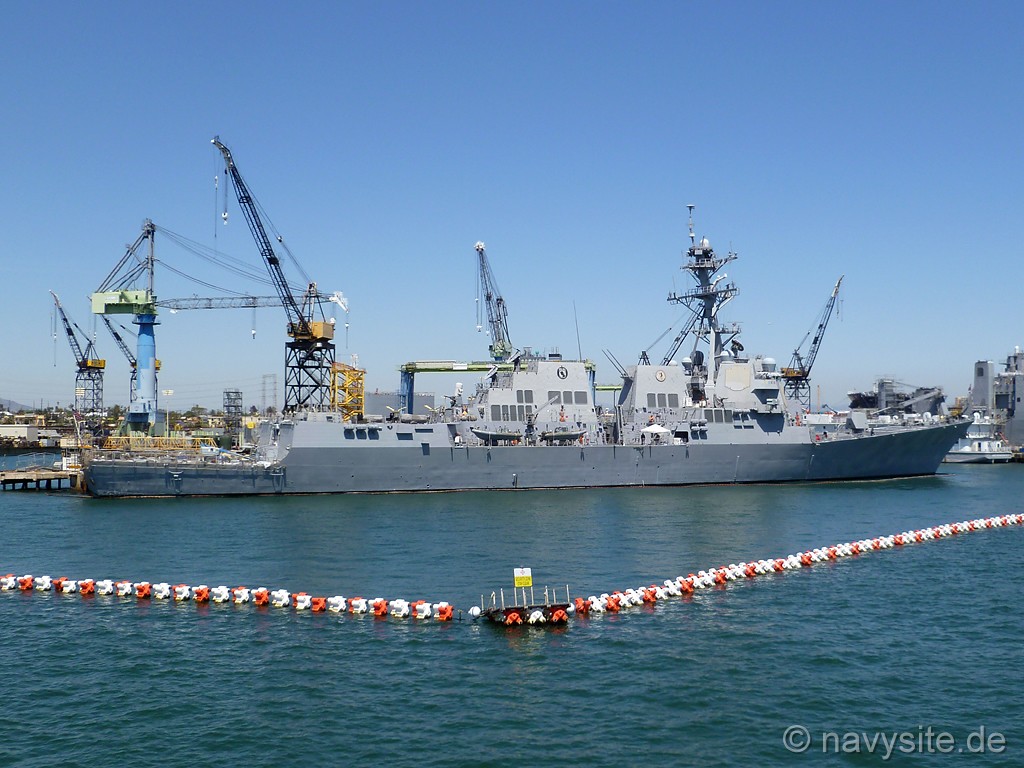
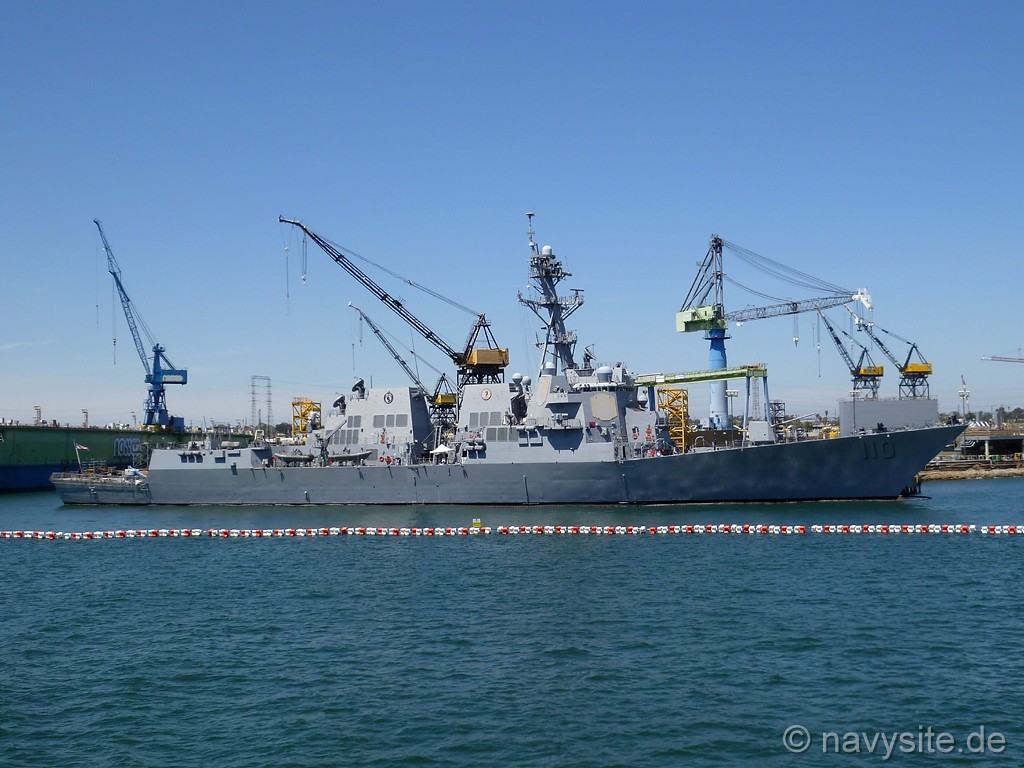
The photos below were taken by Lydia Perz and show the WILLIAM P. LAWRENCE undergoing a two-month Selected Restricted Availability (SRA) at NASSCO shipyard at San Diego, Calif. The photos were taken on May 3, 2014.
 |  |  |
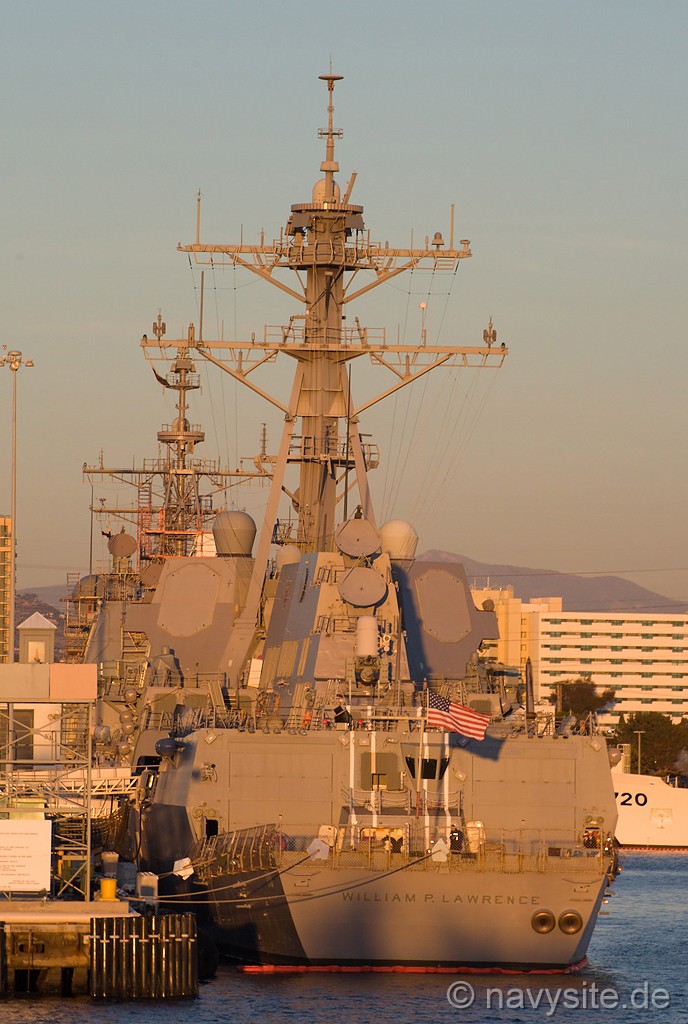
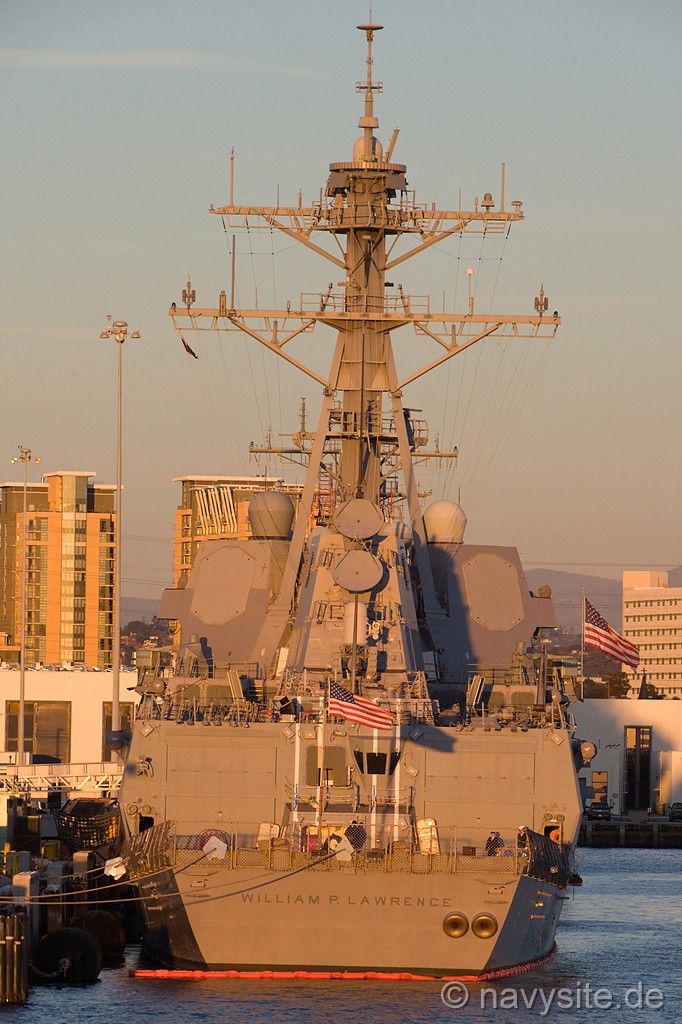
The photos below were taken by Michael Jenning and show the WILLIAM P. LAWRENCE at Naval Base San Diego, Calif., on December 27, 2014.
 |  |  |  |
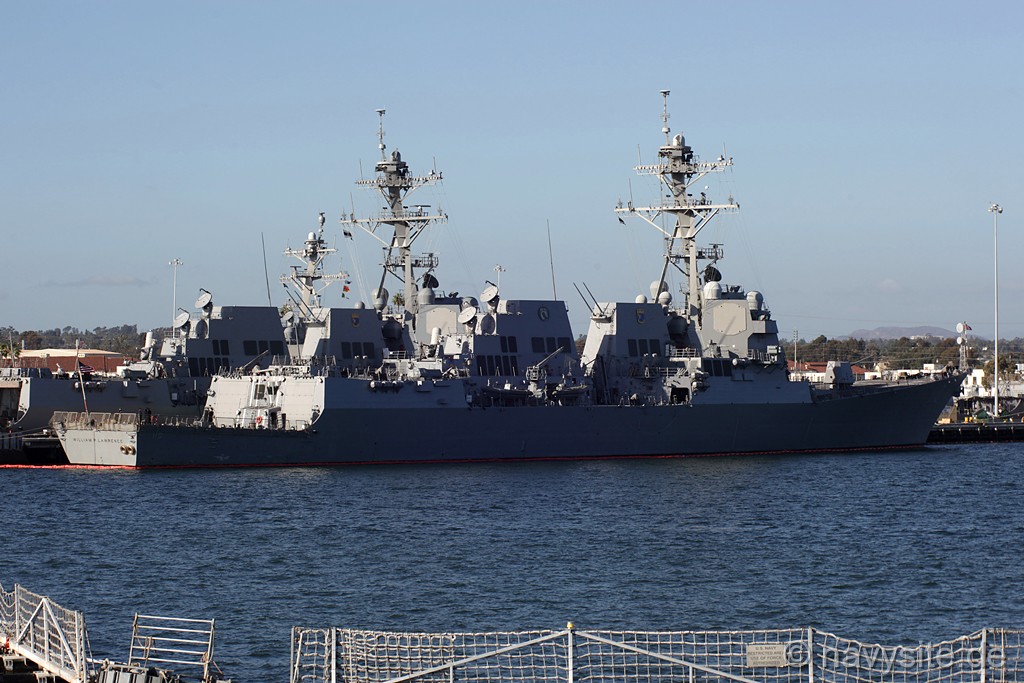
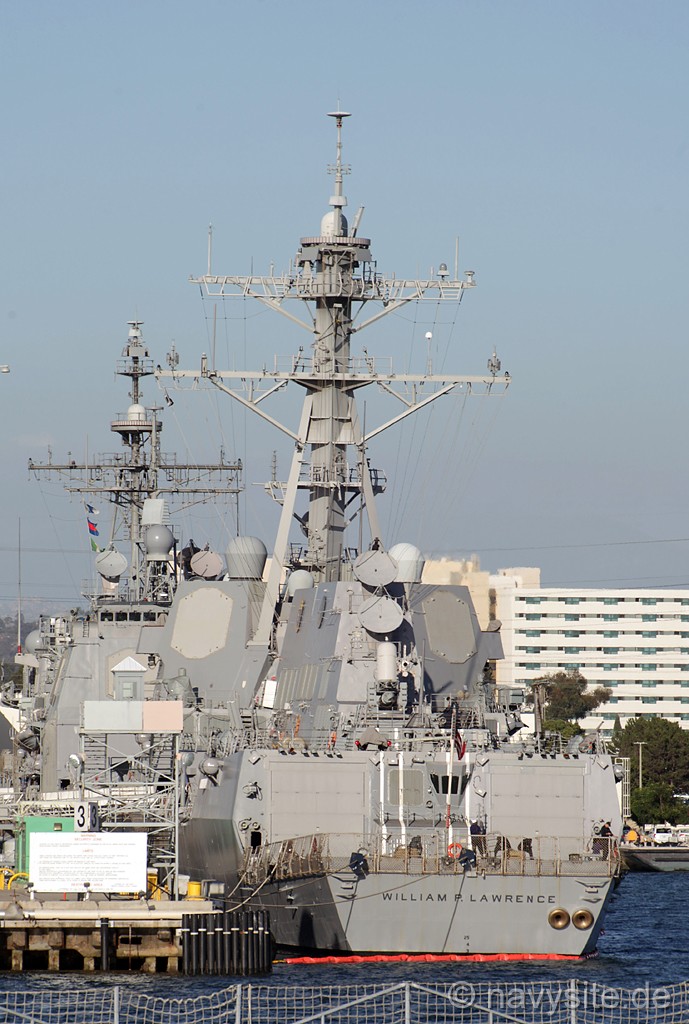
The photos below were taken by Michael Jenning and show the WILLIAM P. LAWRENCE at Naval Base San Diego, Calif., on October 2, 2015.
 |  |
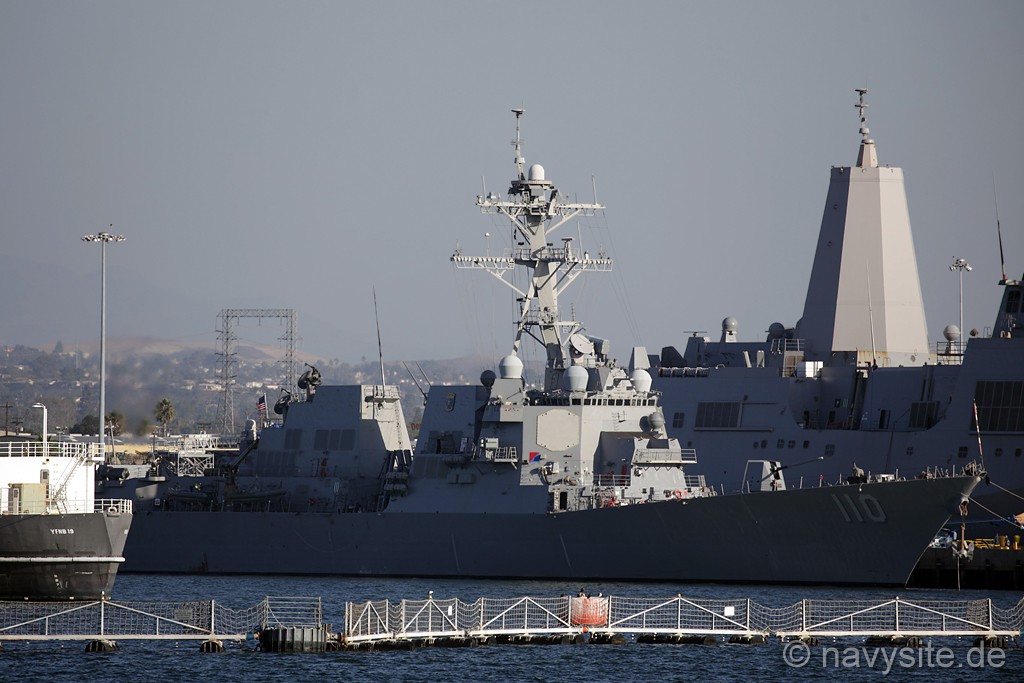
The photo below was taken by Michael Jenning and shows the WILLIAM P. LAWRENCE at Naval Base San Diego, Calif., on October 6, 2016.
 |
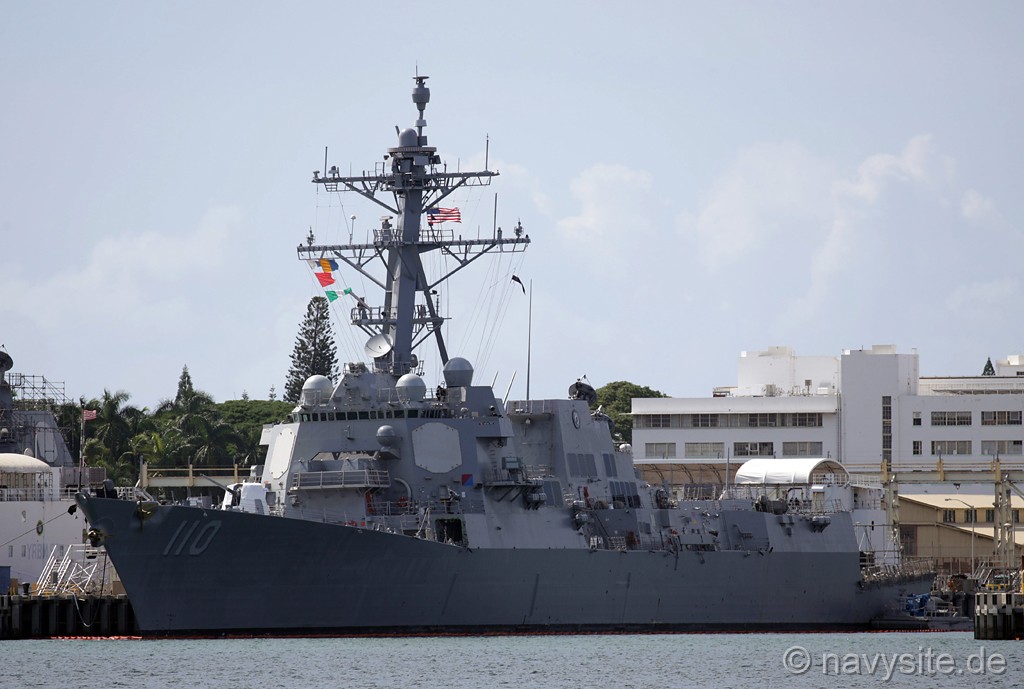
The photo below was taken by Michael Jenning and shows the WILLIAM P. LAWRENCE at Naval Base Pearl Harbor, Hi., on October 14, 2017.
 |
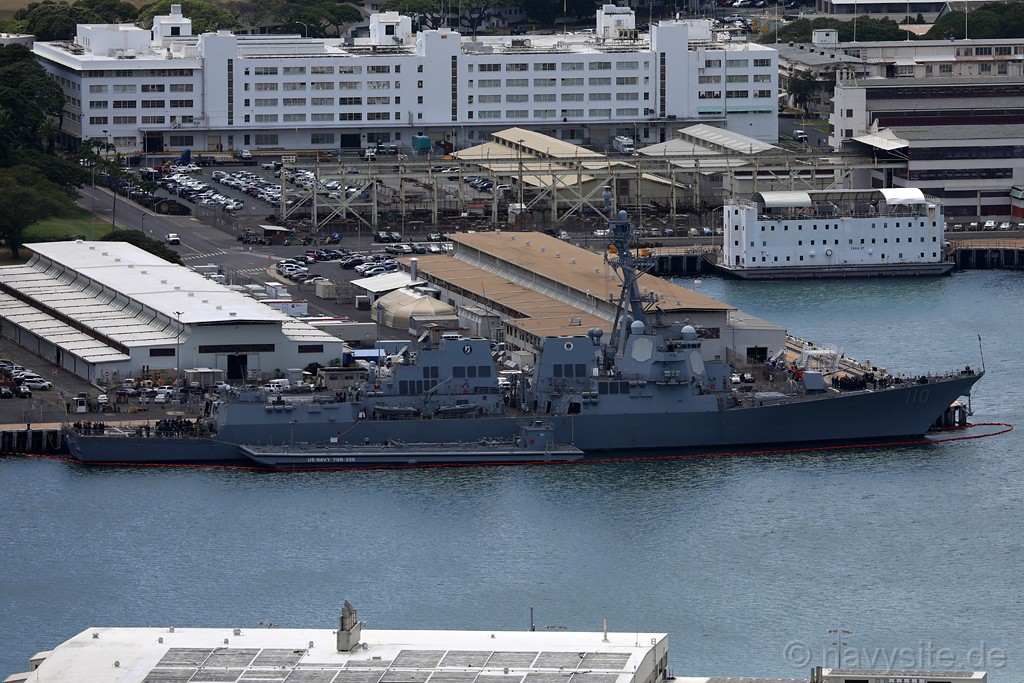
The photo below was taken by Sebastian Thoma and shows the WILLIAM P. LAWRENCE at Naval Base Pearl Harbor, Hi., on March 18, 2022.
 |
back to top Back to Destroyers list. Back to ships list. Back to selection page. Back to 1st page.