
Search the Site with

|
Search the Site with
|
 General Characteristics Crew List Memorabilia About the Ship's Name History Homeports of USS Zumwalt Image Gallery to end of page
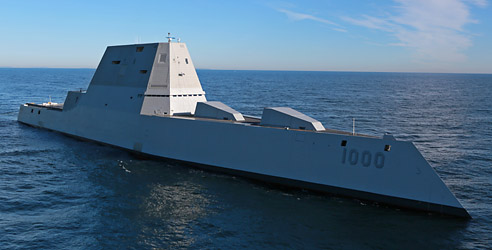 |  | 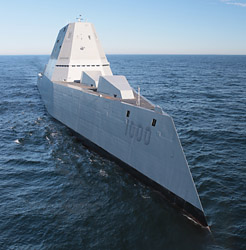 |
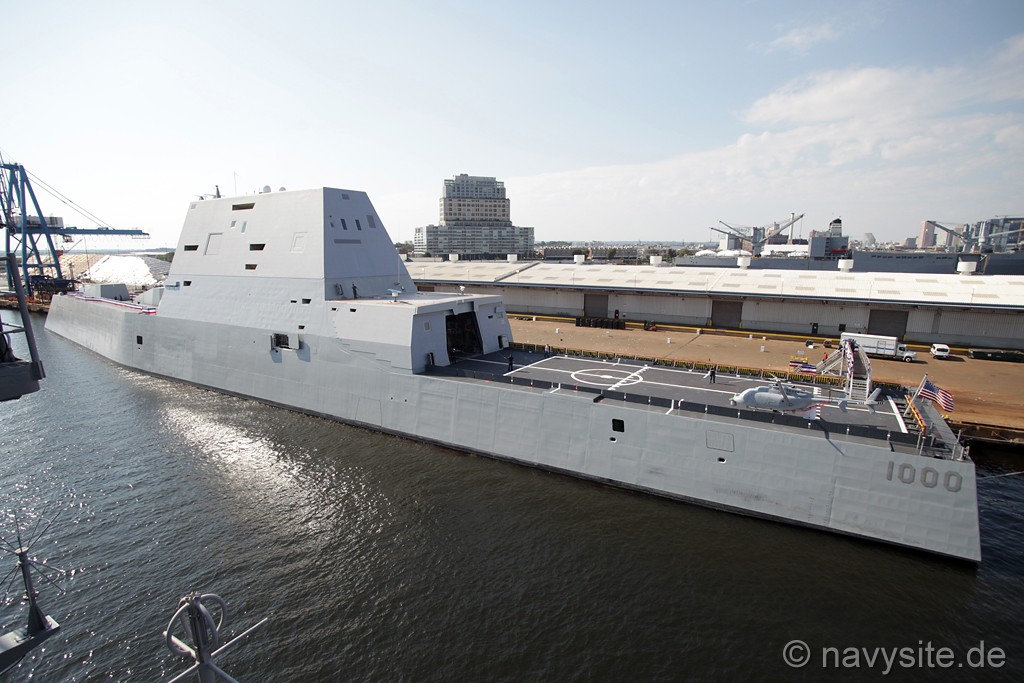
USS ZUMWALT is the first of three guided missile destroyers newly developed for the US Navy. These ships are multi-mission ships with the focus on land attack. Their unique design aims on a low radar profile. The ZUMWALT is the frist ship in the Navy to bear the name. At a cost of more than $4 billion per unit, these ships were designed around their two Advanced Gun Systems (AGS) using Long Range Land Attack Projectile (LRLAP) ammunition. The problem: the AGS can only fire LRLAP ammunition and after the Navy's decision to build only three ZUMWALT-class ships, the cost for a single round of the new LRLAP went up to $800,000 to $1 million. As a consequence, the Navy halted its procurement of the LRLAP in November 2016, leaving the AGS unusable due to the lack of ammunition.
| General Characteristics: | Awarded: February 14, 2008 |
| Keel laid: November 17, 2011 | |
| Launched: October 28, 2013 | |
| Commissioned: October 15, 2016 | |
| Builder: Bath Iron Works, Bath, Maine | |
| Propulsion system: two Rolls-Royce Marine Trent-30 gas turbines, two Rolls-Royce RR4500 gas turbine generator sets, two 34,6 MW Advanced Induction Motors | |
| Propellers: two | |
| Length: 600 feet (182.9 meters) | |
| Beam: 80.7 feet (24.6 meters) | |
| Draft: 27.6 feet (8.4 meters) | |
| Displacement: 14,564 tons | |
| Speed: 30+ knots | |
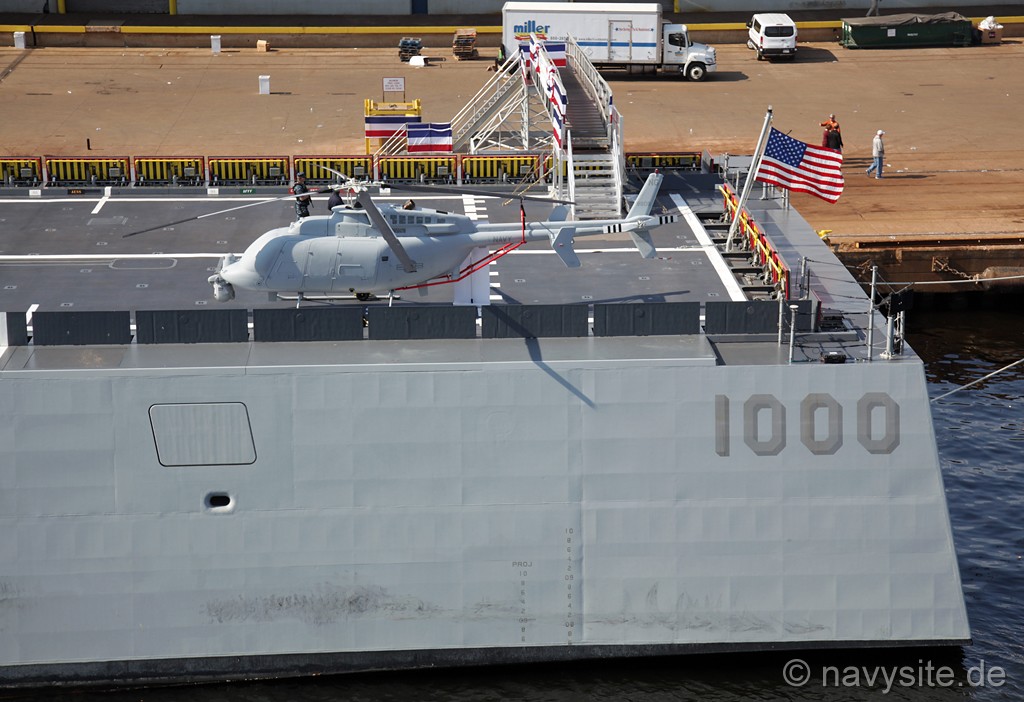
| Aircraft: two SH-60 helicopters or one MH-60 helicopter or three MQ-3 Fire Scout Drones | |
| Armament: 20 Mk-57 VLS modules (with four cells each), two 155mm Advanced Gun Systems, two Mk-46 30mm guns | |
| Crew: 175 including aviation detachment | |
| Homeport: Pascagoula, MS. |
 back to top go to the end of the pageback to top go to the end of the page
Crew List:
This section contains the names of sailors who served aboard USS ZUMWALT. It is no official listing but contains the names of sailors who submitted their information.
back to top go to the end of the pageback to top go to the end of the pageAbout the Ship's Namesake:
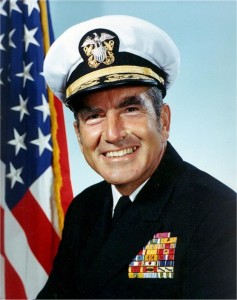 Elmo Russell Zumwalt, Jr., was born in San Francisco, California, on 29 November 1920, son of Dr. E. H. Zumwalt and Dr. Frances Zumwalt. He attended Tulare (California) Union High School, where he was an Eagle Scout and Class Valedictorian and the Rutherford Preparatory School, at Long Beach, California, before his appointment to the U. S. Naval Academy, Annapolis, Maryland, from his native state in 1939. As a Midshipman who was President of the Trident Society, Vice President of the Quarterback Society, twice winner of the June Week Public Speaking Contest (1940, 1941), Company Commander in 1941 and Regimental Three Striper in 1942, and participated in intercollegiate debating. Graduated with distinction and commissioned Ensign on 19 June 1942, with the Class of 1943, he subsequently progressed to the rank of Admiral, to date from 1 July 1970.
Following graduation from the Naval Academy in June 1942, he joined the destroyer USS PHELPS (DD 360), and in August 1943 was detached for instruction in the Operational Training Command, Pacific, at San Francisco, California. In January 1944 he reported on board the USS ROBINSON (DD 562), and for "heroic service as Evaluator in the Combat Information Center... (of that destroyer), in action against enemy Japanese battleships during the Battle for Leyte Gulf, 25 October 1944.. ." he was awarded the Bronze Star with Combat "V." The citation further states:
"During a torpedo attack on enemy battleships, Lieutenant Zumwalt furnished information indispensable to the success of the attack..."
After the cessation of hostilities in August 1945, until December 8th of that year, he commanded (as prize crew officer) HIMJS ATAKA, a 1200-ton Japanese river gunboat with two hundred officers and men. In that capacity he took the first ship since the outbreak of World War II, flying the United States flag, up the Whangpoo River to Shanghai. There they helped to restore order and assisted in disarming the Japanese.
He next served as Executive Officer of the destroyer USS SAUFLEY (DD 465), and in March 1946 was transferred to the destroyer USS ZELLARS (DD 777), as Executive Officer and Navigator. In January 1948 he was assigned to the Naval Reserve Officers Training Corps Unit of the University of North Carolina at Chapel Hill, where he remained until June 1950. That month he assumed command of USS TILLS, in commission in reserve status. That destroyer escort was placed in full active commission at Charleston Naval Shipyard on 21 November 1950, and he continued to command her until March 1951, when he joined the battleship USS WISCONSIN (BB 64) as Navigator.
"For meritorious service as Navigator of USS WISCONSIN during combat operations against enemy North Korean and Chinese Communist forces in the Korean Theater from 23 November 1951 to 30 March 1952..." he received a Letter of Commendation, with Ribbon and Combat "V," from Commander Seventh Fleet. The letter continues: "As Navigator his competence and untiring diligence in assuring safe navigation of the ship enabled the commanding officer to devote the greater part of his attention to planning and gunfire Operations. His performance of duty was consistently Superior in bringing the ship through dangerously mined and restricted waters, frequently under adverse conditions and poor visibility. He assisted in the planning of the combat operations... (and) piloted WISCONSIN into the closest possible inshore positions in which maximum effect could be obtained by gunfire..."
Detached from USS WISCONSIN in June 1952, he attended the Naval War College, Newport, Rhode Island, and in June 1953 reported as Head of the Shore and Overseas Bases Section, Bureau of Naval Personnel, Navy Department, Washington, D. C. He also served as Officer and Enlisted Requirements Officer and as Action Officer on Medicare Legislation. Completing that tour of duty in July 1955, he assumed command of the destroyer USS ARNOLD J. ISBELL (DD 869), participating in two deployments to the Seventh Fleet. In this assignment he was commended by the Commander, Cruiser-Destroyer Forces, U. S. Pacific Fleet for winning the Battle Efficiency Competition for his ship and for winning Excellence Awards in Engineering, Gunnery, Antisubmarine Warfare, and Operations. In July 1957 he returned to the Bureau of Naval Personnel for further duty. In December 1957 he was transferred to the Office of the Assistant Secretary of the Navy (Personnel and Reserve Forces), and served as Special Assistant for Naval Personnel until November 1958, then as Special Assistant and Naval Aide until August 1959.
Ordered to the first ship built from the keel up as a guided missile ship, USS DEWEY (DLG 14), building at the Bath (Maine) Iron Works, he assumed command of that guided missile frigate at her commissioning in December 1959, and commanded her until June 1961. During this period of his command, DEWEY earned the Excellence Award in Engineering, Supply, Weapons, and was runner-up in the Battle Efficiency Competition. He was a student at the National War College, Washington, D. C., during the 1961-1962 class year. In June he was assigned to the Office of the Assistant Secretary of Defense (International Security Affairs), Washington, D. C., where he served first as Desk Officer for France, Spain and Portugal, then as Director of Arms Control and Contingency Planning for Cuba. From December 1963 until 21 June 1965 he served as Executive Assistant and Senior Aide to the Honorable Paul H. Nitze, Secretary of the Navy. For duty in his tour in the offices of the Secretary of Defense and the Secretary of the Navy, he was awarded the Legion of Merit.
After his selection for the rank of Rear Admiral, he assumed command in July 1965 of Cruiser-Destroyer Flotilla Seven. "For exceptionally meritorious service..." in that capacity, he was awarded a Gold Star in lieu of a Second Legion of Merit. In August 1966 he became Director of the Chief of Naval Operations Systems Analysis Group, Washington, D. C., and for "exceptionally meritorious service... as Director, Systems Analysis Division, Office of the Chief of Naval Operations, Deputy Scientific Officer to the Center for Naval Analyses, during the period from August 1966 to August 1968..." he was awarded the Distinguished Service Medal. The citation further states in part:
"Rear Admiral Zumwalt, by direction of the Chief of Naval Operations, established the Systems Analysis Division and rapidly developed it into a highly effective, responsive organization. Under his leadership, the division has assisted in generating within the Navy a better understanding of requirements, problems and a more effective presentation of those requirements in major program areas which will strongly influence the combat capabilities of U. S. Naval Forces through the next generation. (He) has displayed exceptional acumen, integrity, tact and diplomacy as personal representative of the Chief of Naval Operations, not only in dealings within the Department of Defense, but also in testifying before Congressional Committees. Among the major analyses completed under his direct supervision were the major Fleet Escort, Antisubmarine Warfare Force Level, Tactical Air, Surface-to-Surface Missile, and War-at-Sea Studies. Additionally, under Rear Admiral Zumwalt's guidance, the Center for Naval Analyses has been restructured, and its methodologies clearly defined with such precision as to ensure that completed studies will reflect thoroughness, comprehensiveness and accuracy when subjected to closest scrutiny..."
In September 1968 he became Commander Naval Forces, Vietnam and Chief of the Naval Advisory Group, U. S. Military Assistance Command, Vietnam. President Richard M. Nixon nominated him as Chief of Naval Operations on 14 April 1970. Upon being relieved as Commander Naval Forces, Vietnam, on 15 May 1970, he was awarded a Gold Star in lieu of a second Distinguished Service Medal for exceptionally meritorious service. He assumed command as Chief of Naval Operations on 1 July 1970 and retired from that position on 1 July 1974. In 1976, he unsuccessfully ran as a Democratic candidate for the Senate from Virginia. Later he held the presidency of the American Medical Building Corporation in Milwaukee, Wisconsin.
Admiral Zumwalt died on 2 January 2000 at the Duke University Medical Center in Durham, NC. His home was in Arlington, Virginia. He was married to the former Mouza Coutelais-du-Roche of Harbin, Manchuria, and they had two sons, Elmo R. Zumwalt III, who died of cancer in 1988, and James Gregory Zumwalt, and two daughters, Ann F. Zumwalt Coppola and Mouza C. Zumwalt-Weathers. He was also survived by six grandchildren.
back to top go to the end of the pageUSS ZUMWALT History:
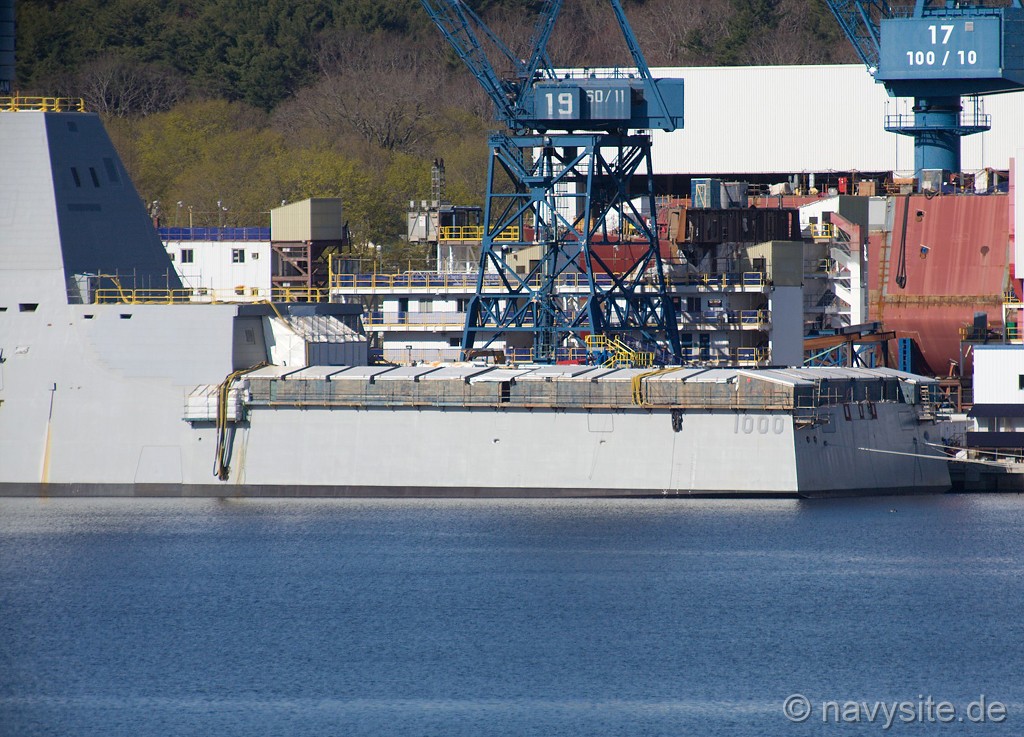
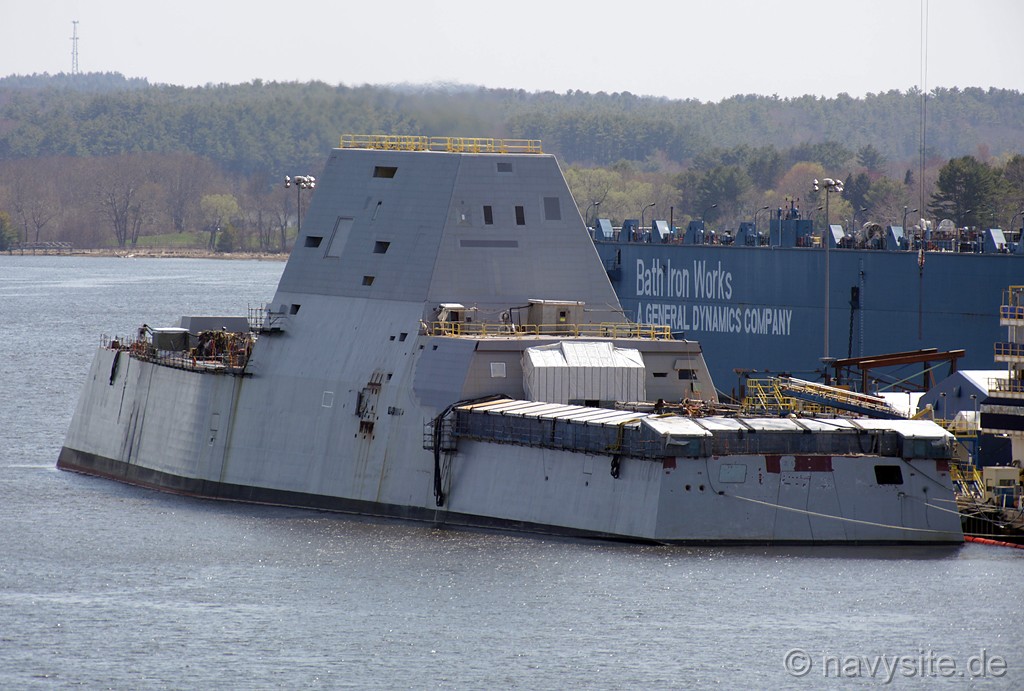
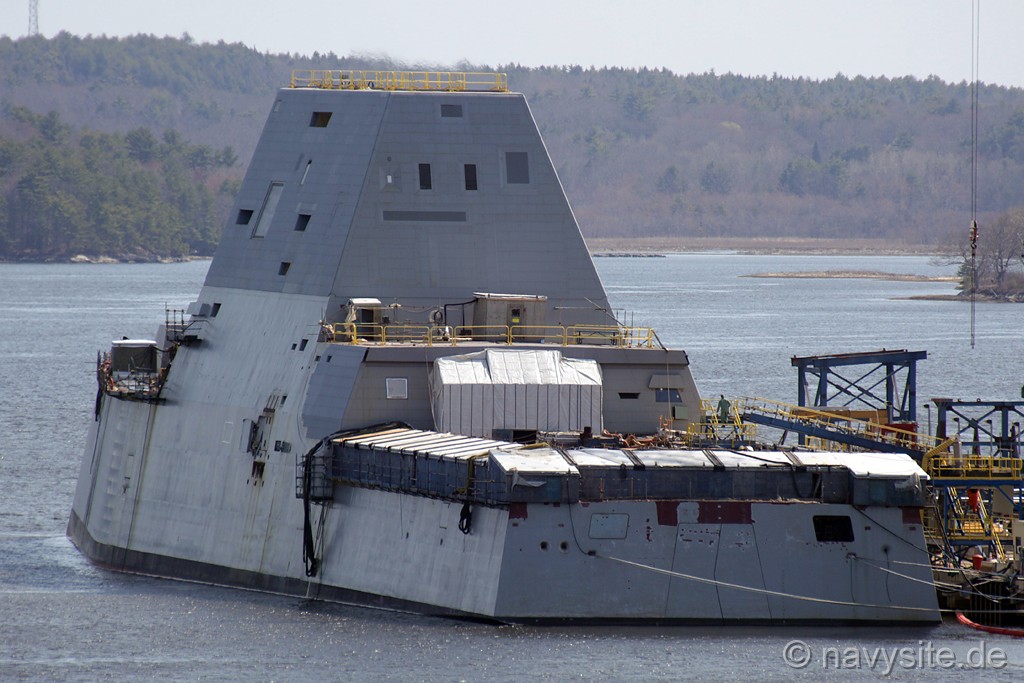
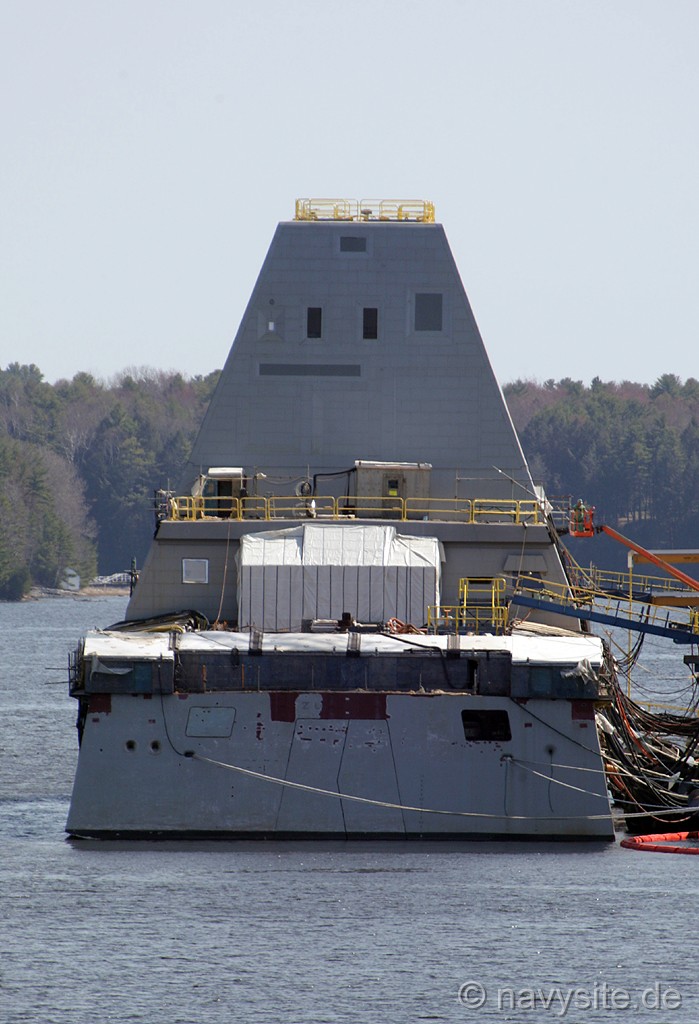
USS ZUMWALT began as a "clean sheet" land-attack destroyer for 21st-century surface warfare. Construction of the lead ship started at General Dynamics Bath Iron Works (BIW), Bath, Maine, in early 2009, with modular hull sections, the Integrated Power System, and the distinctive tumblehome form entering fabrication as design matured. In 2010, the yard continued hull and machinery outfitting while vendors advanced major government-furnished equipment - SPY-3 radar arrays, the Total Ship Computing Environment, and the Advanced Gun System (AGS) - all queued for later installation. By 2011, the build reached its first ceremonial milestone: the keel-laying marked the formal start of assembly on November 17, 2011, as longitudinal modules came together on BIW's Land Level Transfer Facility ahead of launch preparations.
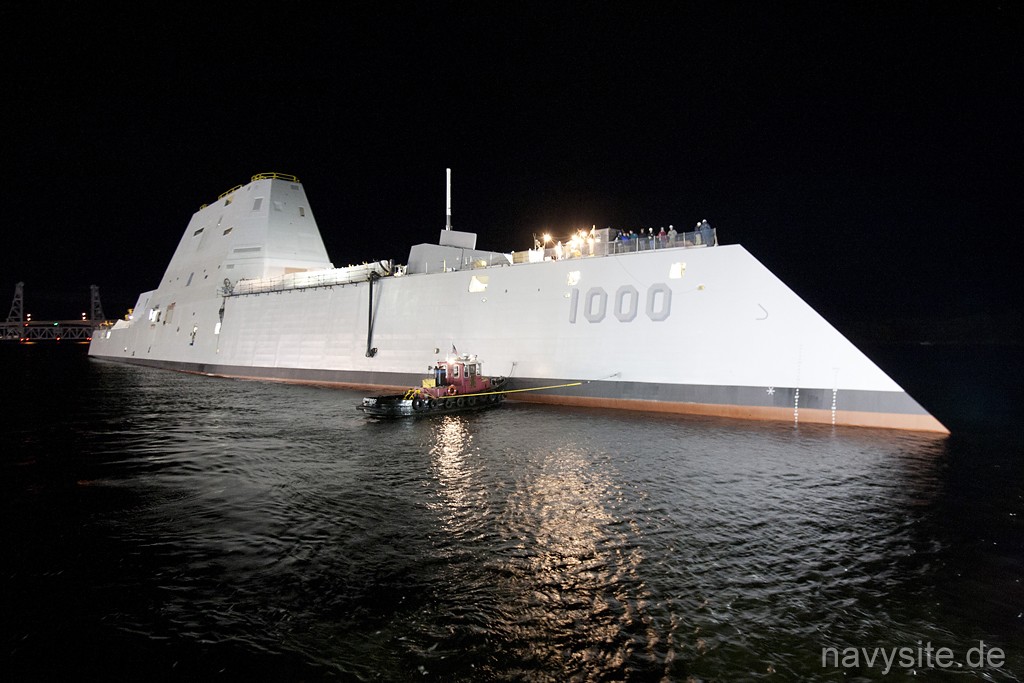
In 2012, BIW's integration teams pressed on with hull, mechanical, and electrical (HM&E) fit-out, aligning the IPS gas-turbine generators with the ship's advanced induction motors while the deckhouse, mast arrays, and mission systems foundations were prepared. 2013 brought the transition from land to water: ZUMWALT was launched at Bath on October 28, 2013, beginning the multi-year sequence of pier-side activation and test.
Christening followed in spring 2014 with the sponsor's ceremony at Bath as crews continued waterfront activation of propulsion and control systems. The yard and ship's company progressively "lit off" plant equipment, energizing the IPS and ship service networks to support at-sea trials. In late 2015, the destroyer put to sea for the first time to conduct builder's trials in the Gulf of Maine beginning December 7. Those initial runs proved propulsion, steering, and basic navigation and led to corrections and retests before the Navy's formal acceptance trials in 2016. The Board of Inspection and Survey completed acceptance trials in April 2016 off New England, clearing the way for HM&E delivery to the Navy on May 20, 2016, under the class's split-delivery plan.
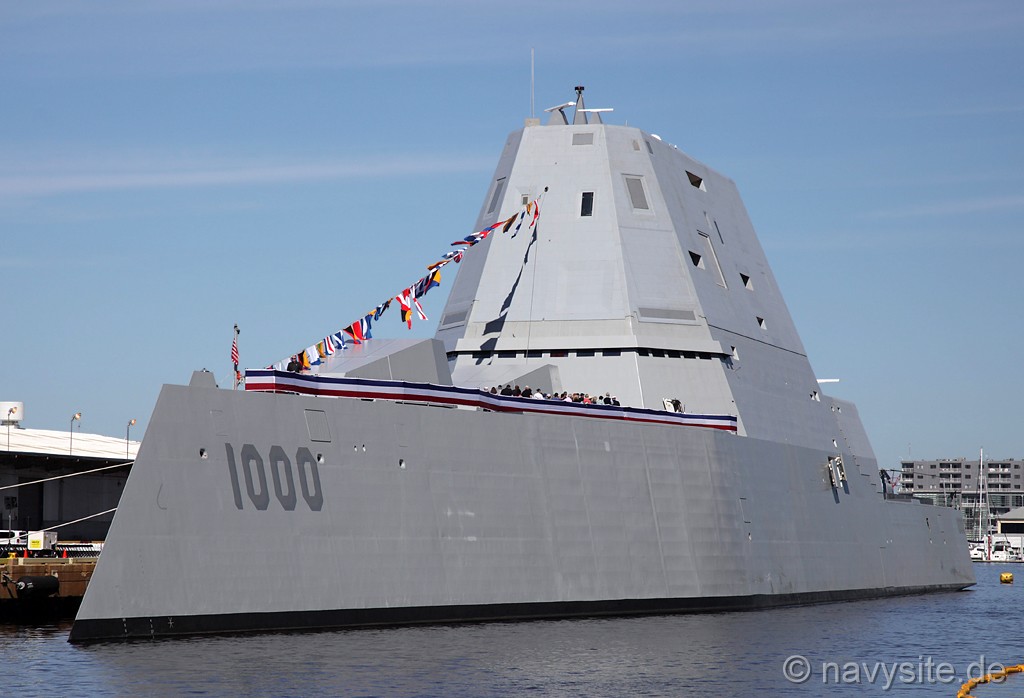
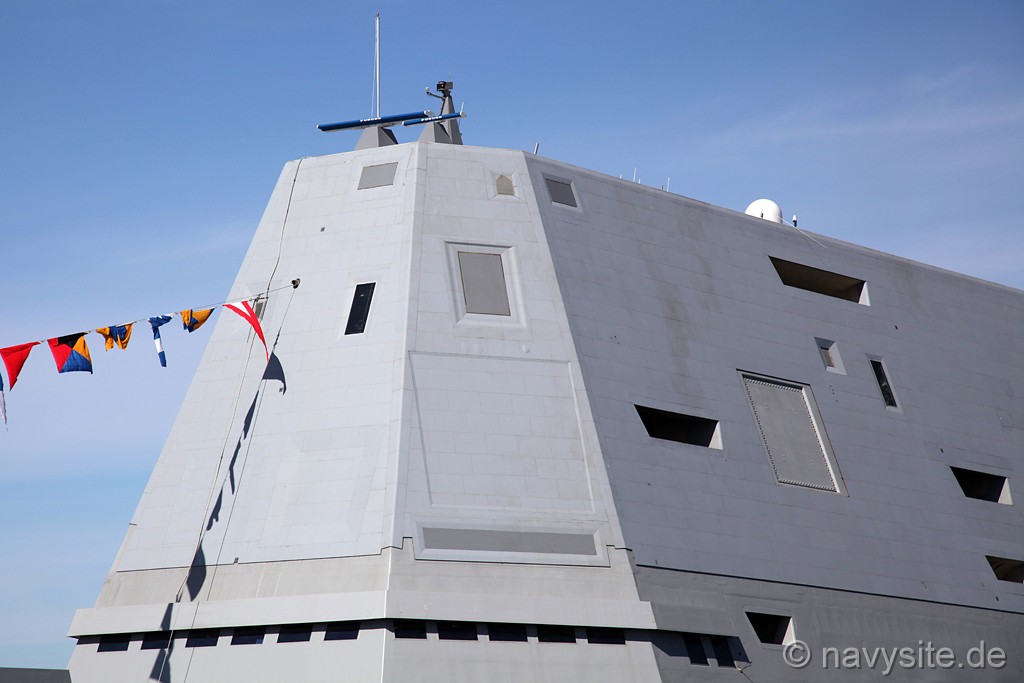
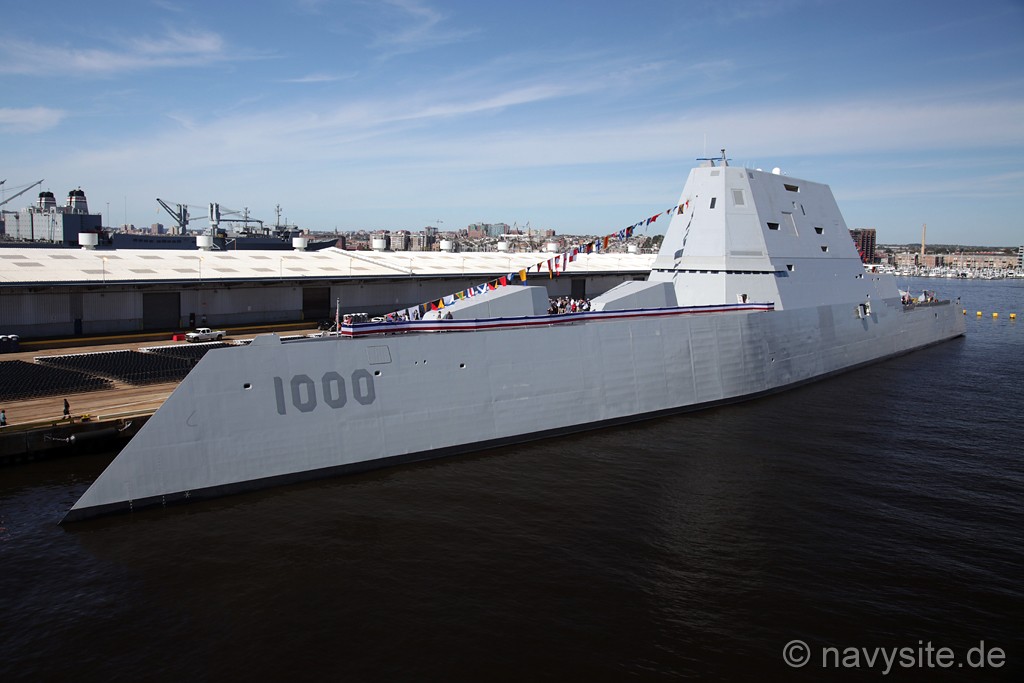
In September 2016, the new destroyer departed Bath for Norfolk to stage for commissioning and, after weather-related schedule adjustments, continued to Baltimore for the Fleet Week Maryland events. ZUMWALT commissioned at North Locust Point on October 15, 2016, then got underway to begin the transit to her homeport of San Diego for the lengthy Combat Systems Activation that would follow. During the inter-ocean passage an engineering casualty on November 21, 2016, while negotiating the Panama Canal forced the ship to secure propulsion and accept tug assistance. Repairs alongside at Balboa corrected lube-oil cooler failures on the advanced induction motors. After systems checks, ZUMWALT resumed the voyage and arrived at Naval Base San Diego on December 8, 2016, to start post-delivery work.
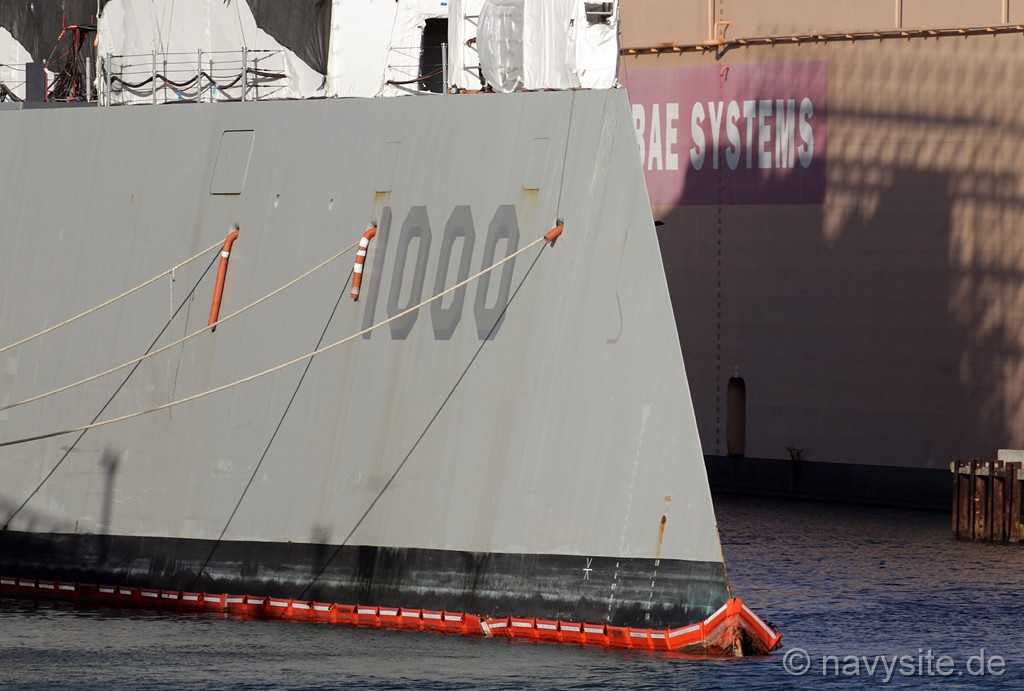
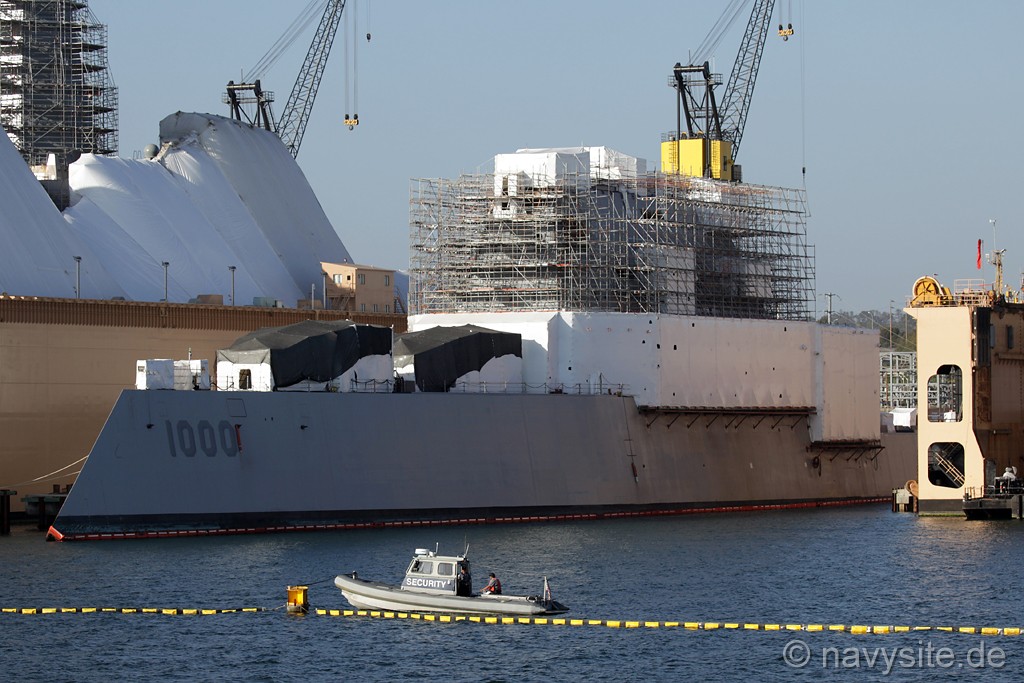
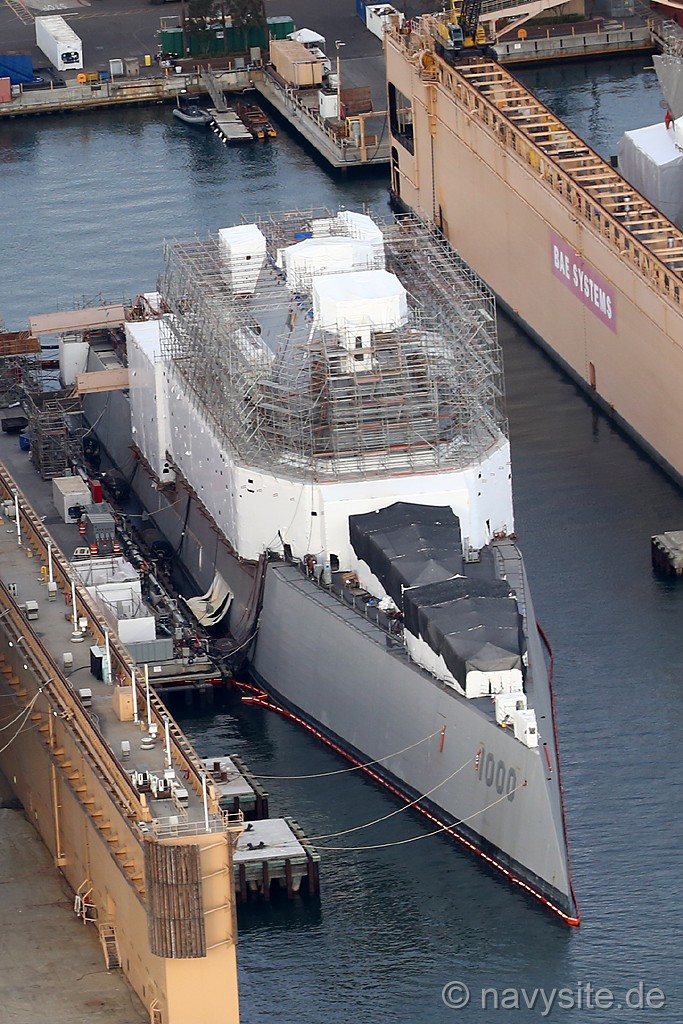
In 2017, the ship entered a formal Post-Shakedown/Combat Systems availability at BAE Systems, San Diego, to complete installation, alignment, and activation of the mission suite - sensors, communications, decoy and electronic-warfare gear, and the Mk 57 vertical launch system. That November, following a Navy review triggered in part by the unaffordable LRLAP ammunition for AGS, the service redefined the class's primary role from naval surface fire support to offensive surface strike, a shift that reframed subsequent testing and modernization. The availability wound up in early 2018, when the destroyer transitioned into combat system test events at sea, gradually expanding air-defense and strike-warfare trials on local ranges.
With the waterfront activation largely behind it, ZUMWALT executed its first operational period at sea beginning March 8, 2019. The ship cleared San Diego and headed north, calling at Esquimalt, British Columbia, on March 11 during a phase of tasking with U.S. 3rd Fleet. Later that month, ZUMWALT berthed at Ketchikan, Alaska, on March 23 for logistics and outreach while crews worked in heavy-weather shiphandling and stability drills in the Gulf of Alaska. In early April, the ship reached Pearl Harbor, marking the class's first-ever visit to Hawaii, before returning to Southern California to continue work-ups. These early forays balanced basic operations with systems growth, familiarizing watch teams with the ship's low-observable handling and IPS characteristics while rehearsing standard maritime tasks in the Northeast Pacific.
The extended Combat Systems Activation concluded with a major program milestone in 2020: on April 24, 2020, the Navy accepted final delivery of ZUMWALT, transitioning her into the follow-on phase of developmental and integrated at-sea testing as a fleet unit. Through the remainder of 2020, the crew and test community executed increasingly complex events in the Southern California operations area and at the Point Mugu Sea Range to characterize the combat system under realistic conditions.
In 2021, the destroyer continued the steady cadence of test and fleet integration while the crew rotated - among the year's administrative anchors was a change of command at Naval Base San Diego on November 24. The test program kept pressure on air-defense, strike, and command-and-control threads to ready the platform for its first sustained employment in the Western Pacific.
That step came in 2022. In mid-April, ZUMWALT executed a live-fire series at the Point Mugu Sea Range, engaging air targets with SM-2 and ESSM Blk 1 during final air-defense testing, then completed pre-deployment work-ups and headed west under U.S. 7th Fleet. The destroyer made its first port call in Guam in September and, after operations under Commander, Task Force 71/Destroyer Squadron 15, continued on to Yokosuka for an October 8, 2022, visit - its first time in Japan and the farthest the ship had operated from San Diego to date. U.S. Pacific Fleet later characterized the three-month Western Pacific period as an initial employment to gauge the class's reliability and to exercise basic fleet operations with forward forces and regional partners at a time of heightened maritime competition in the Indo-Pacific. ZUMWALT wrapped up the period and returned to the U.S. West Coast before year's end.
By 2023, the Navy's refocus of the class on long-range surface strike had matured into a concrete modernization plan: removal of the two AGS mounts to make room for launchers for the Conventional Prompt Strike (CPS) hypersonic weapon. Over the summer, ZUMWALT prepared to shift homeport for that availability. A maintenance issue briefly delayed departure from San Diego in late July. The destroyer got back underway on August 3 to continue to its new worksite at HII's Ingalls Shipbuilding, Pascagoula, Mississippi.
In 2024, Ingalls executed the heavy industrial work package: de-integrating the guns, altering internal structures, and installing the new CPS launcher modules and associated systems. On December 6, 2024, the ship undocked, moving pierside to begin the pier-phase of activation and testing following the hypersonic-related alterations. That undocking marked the visible transition from structural changes to combat-system integration and set up the test program for the new strike capability.
During 2025, the Navy advanced the CPS program's sea-based launch approach in parallel with ZUMWALT's post-availability activation in Pascagoula. In May, the Department of the Navy announced a successful end-to-end flight test of the common All-Up-Round using the cold-gas ejection method intended for shipborne fielding. Program officials and congressional reporting subsequently aligned on a notional path to begin shipboard CPS testing on ZUMWALT later in the decade, with planning factors around 2027 as the fleet, industry, and the test enterprise synchronize missile-system maturity with the ship's modernization and follow-on trials. Through 2025, the destroyer's crew, yard, and program office focused on completing pier-side activation, combat-system regression testing, and preparations for sea trials to validate the post-modernization combat suite and to open the envelope for the new surface-strike mission.
back to top go to the end of the pageHomeports of USS ZUMWALT:
| Period | Homeport |
|---|---|
| commissioned at Baltimore, Md. | |
| 2016 - 2023 | San Diego, Calif. |
| 2023 - present | Pascagoula, Miss. |
back to top go to the end of the pageUSS ZUMWALT Image Gallery:
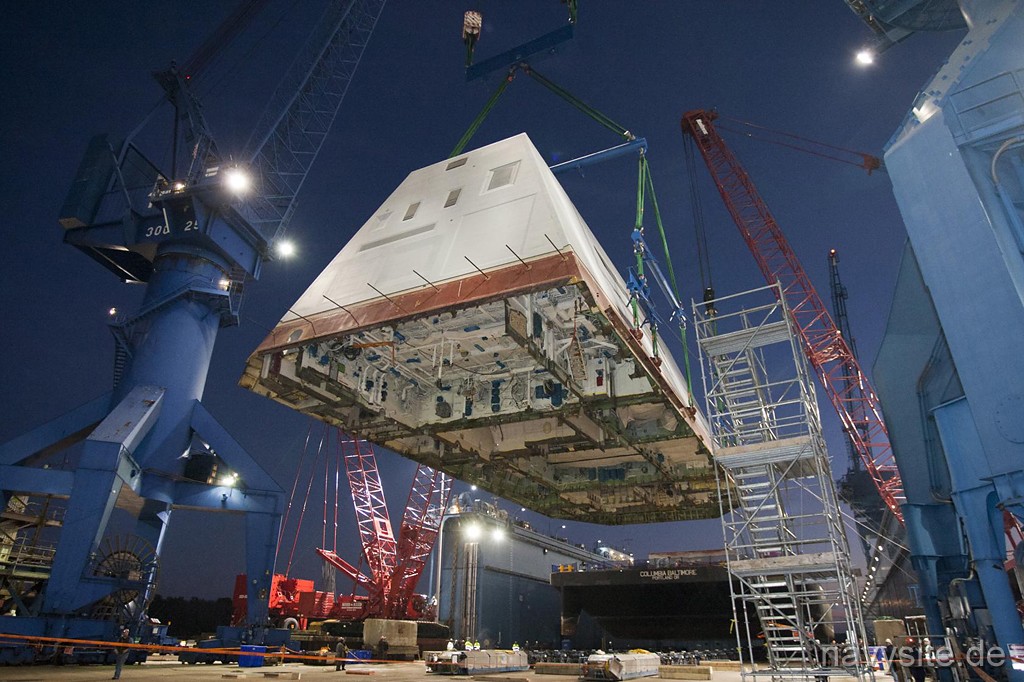 | 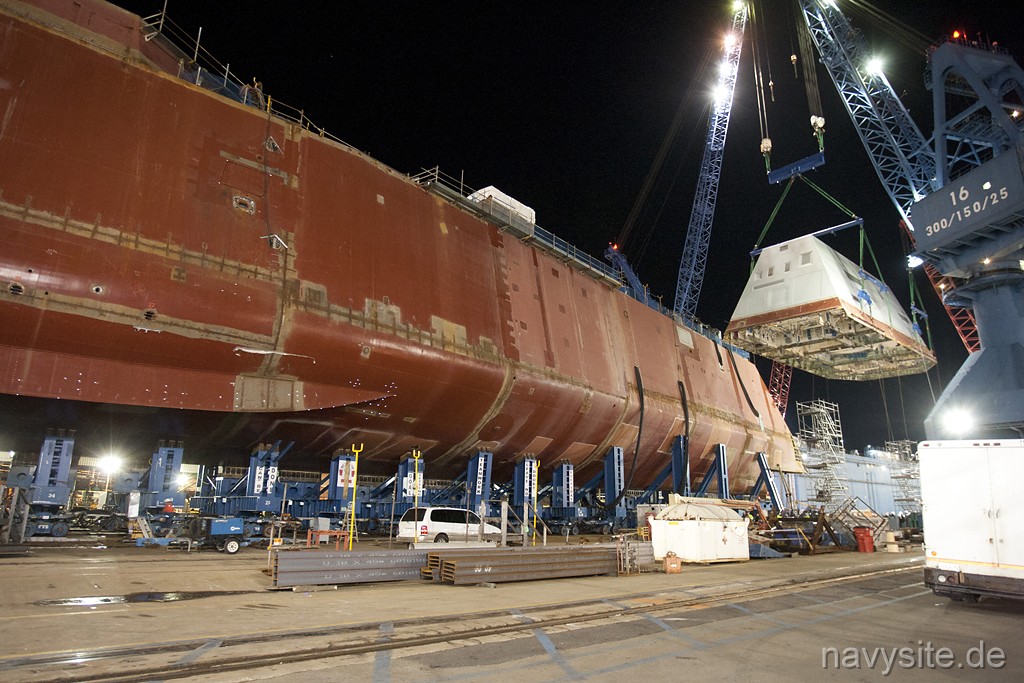 |  |  |
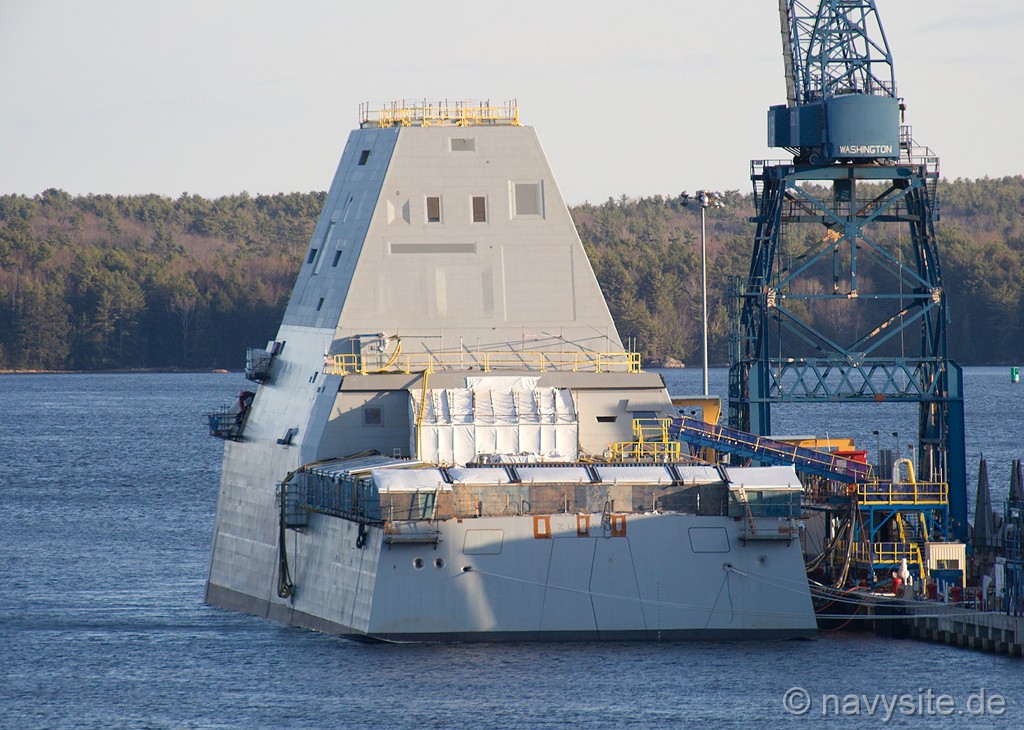
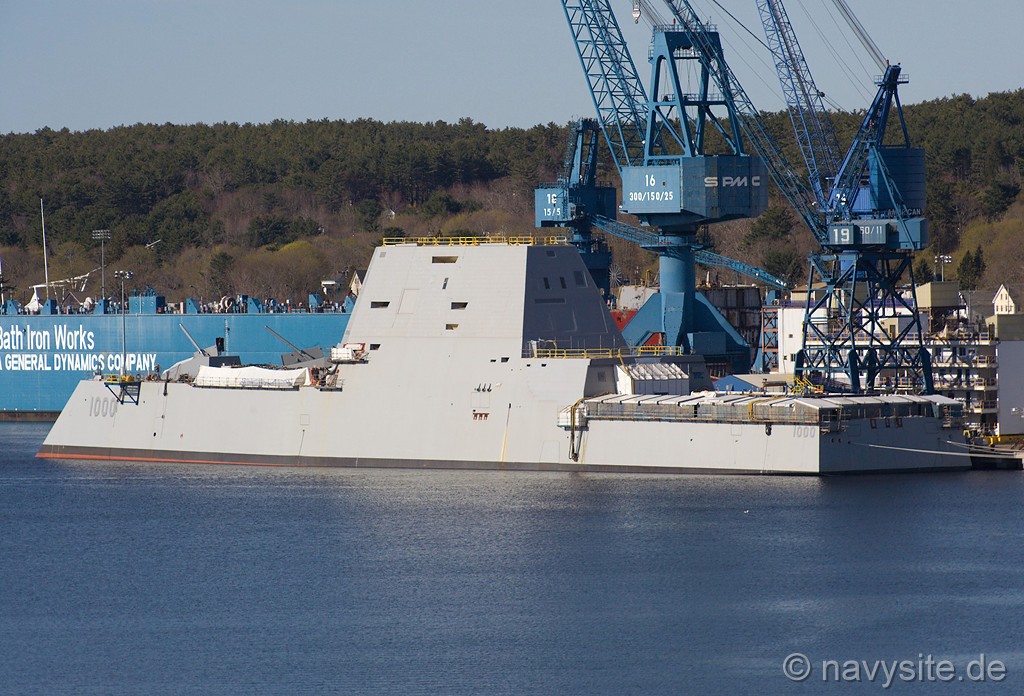
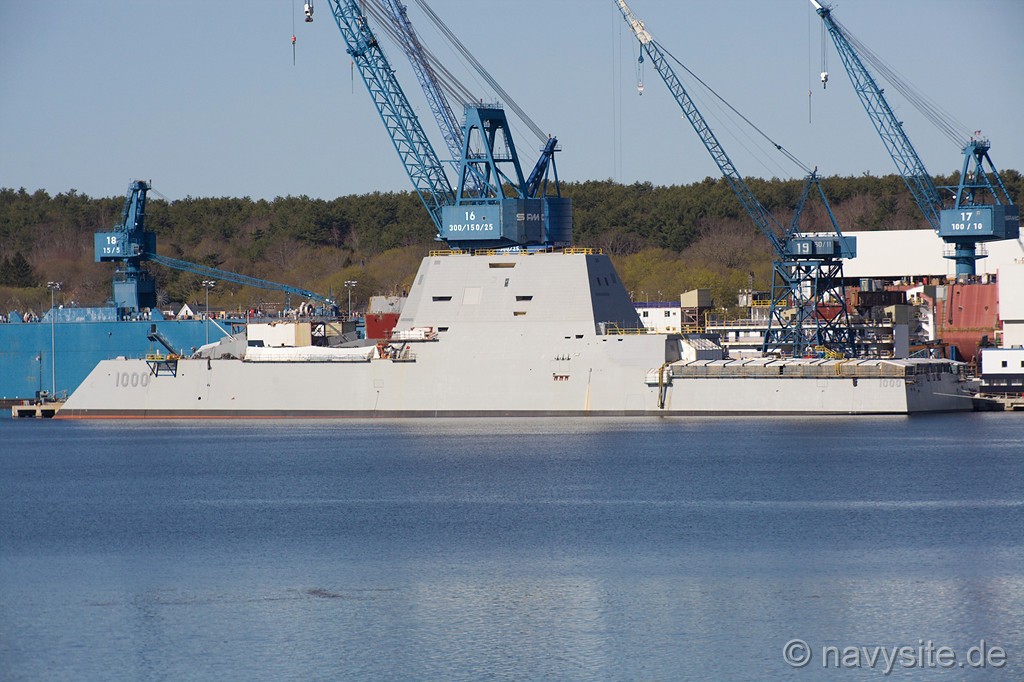
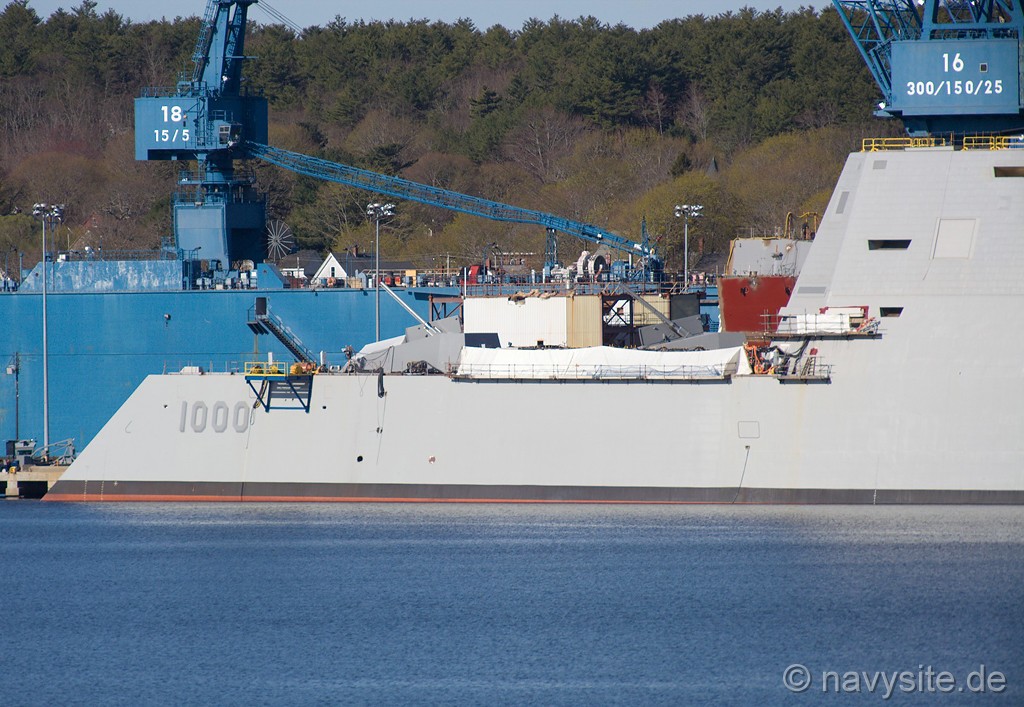
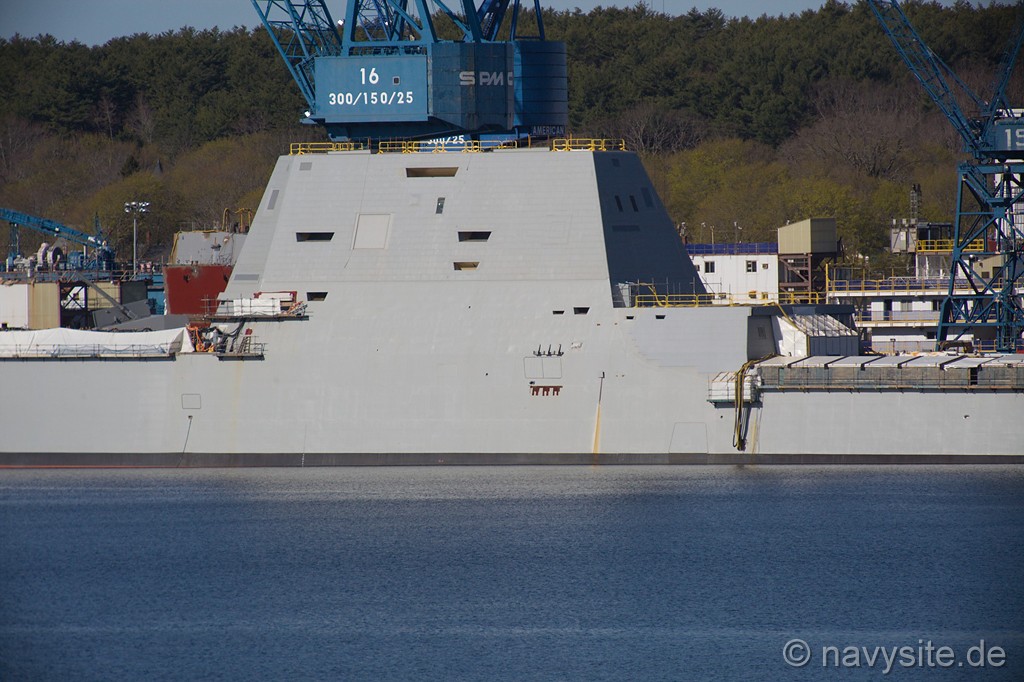
The photos below were taken by Michael Jenning and show the ZUMWALT under construction at Bath Iron Works in Maine on May 7, 2014.
 |  |  |  |  |
 |
The photos below were taken by Michael Jenning and show the ZUMWALT under construction at Bath Iron Works in Maine on May 4, 2015.
 |  |  |
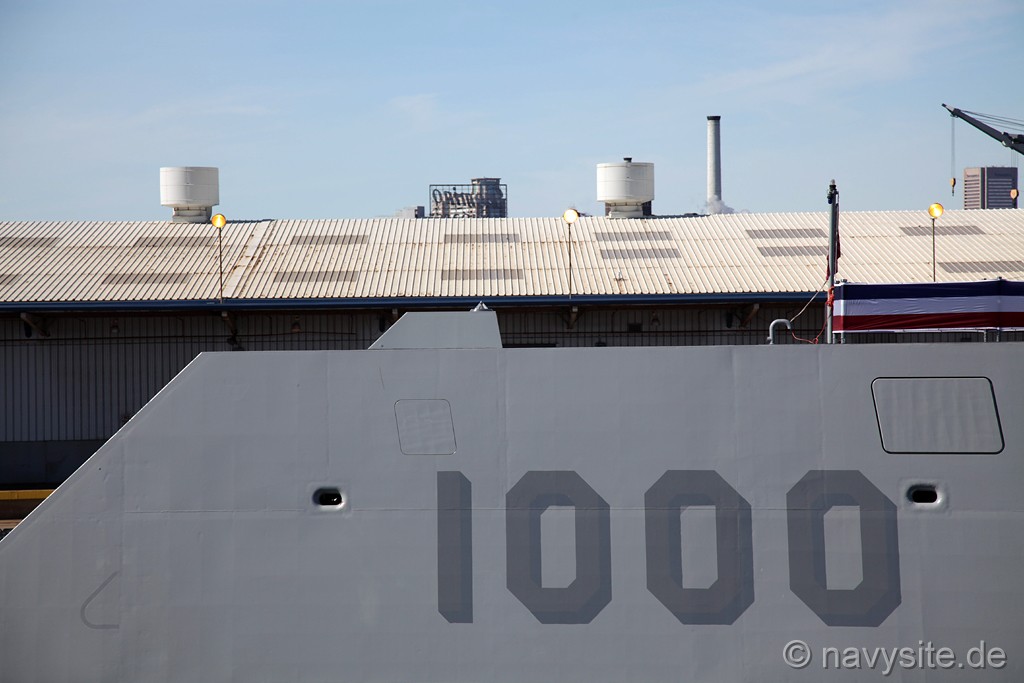
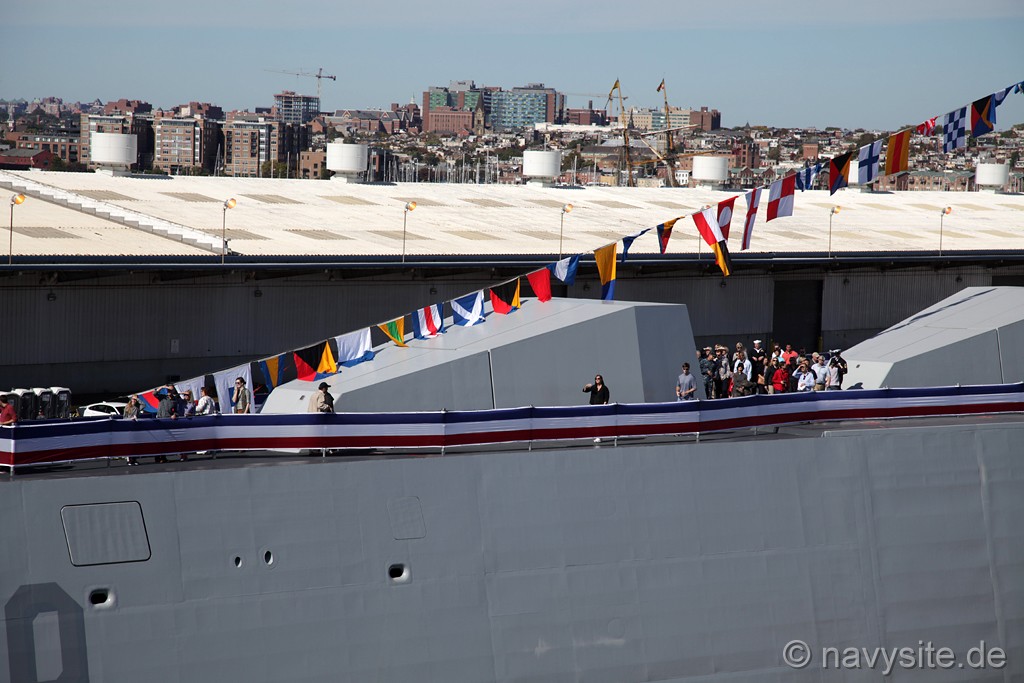
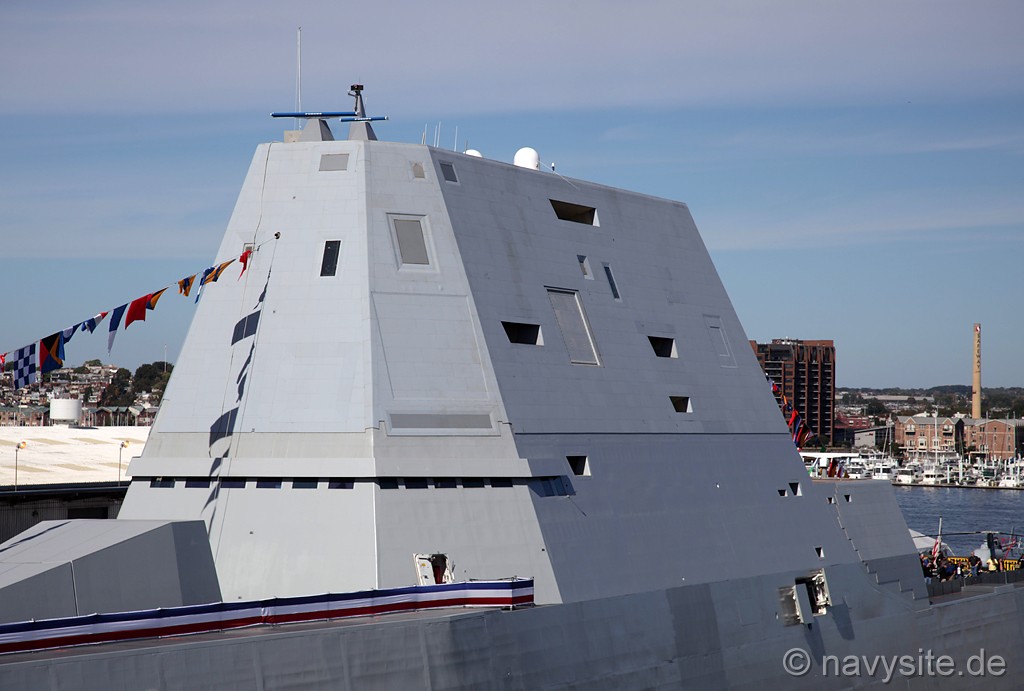
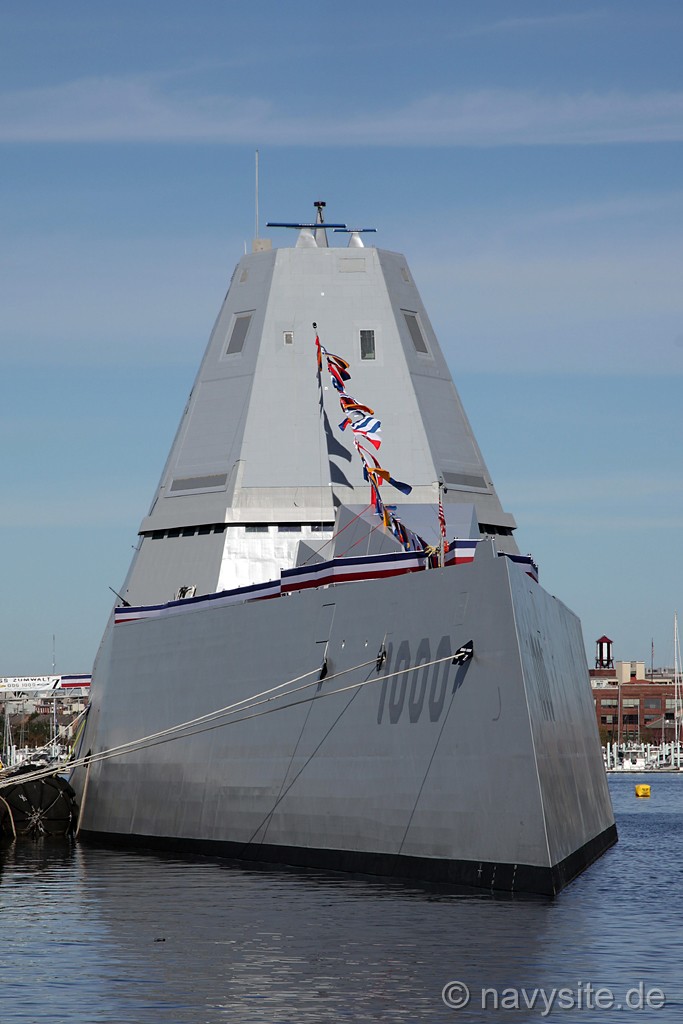
The photos below were taken by Michael Jenning and show the ZUMWALT at Pier 4 in the port of Baltimore, Md., on October 14, 2016 - one day prior to her commissioning.
 |  |  |  |  |
 |  |
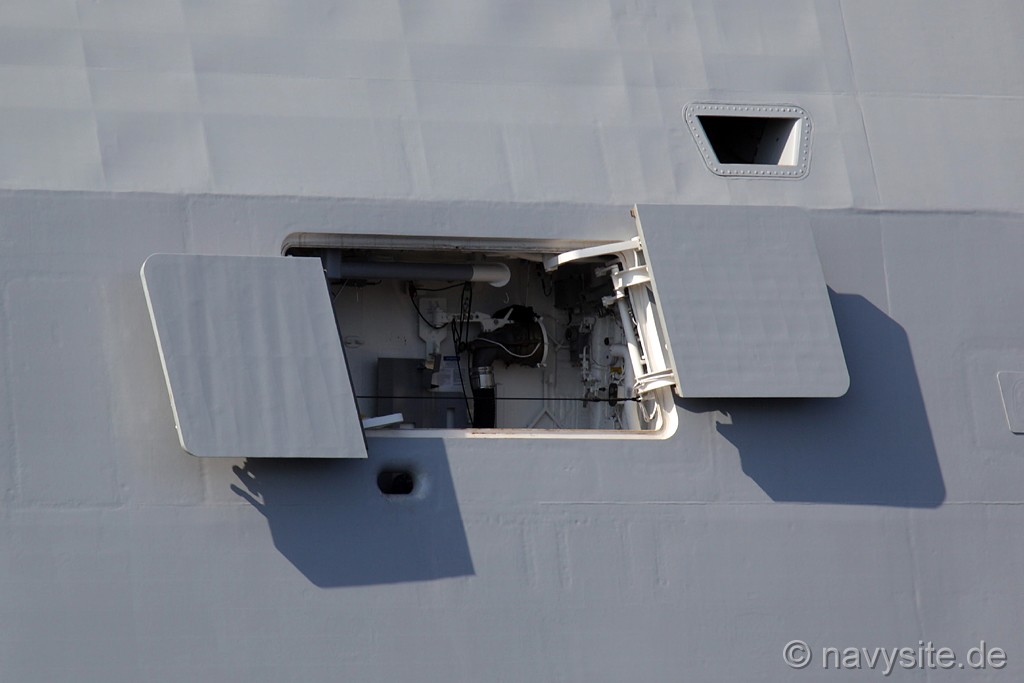
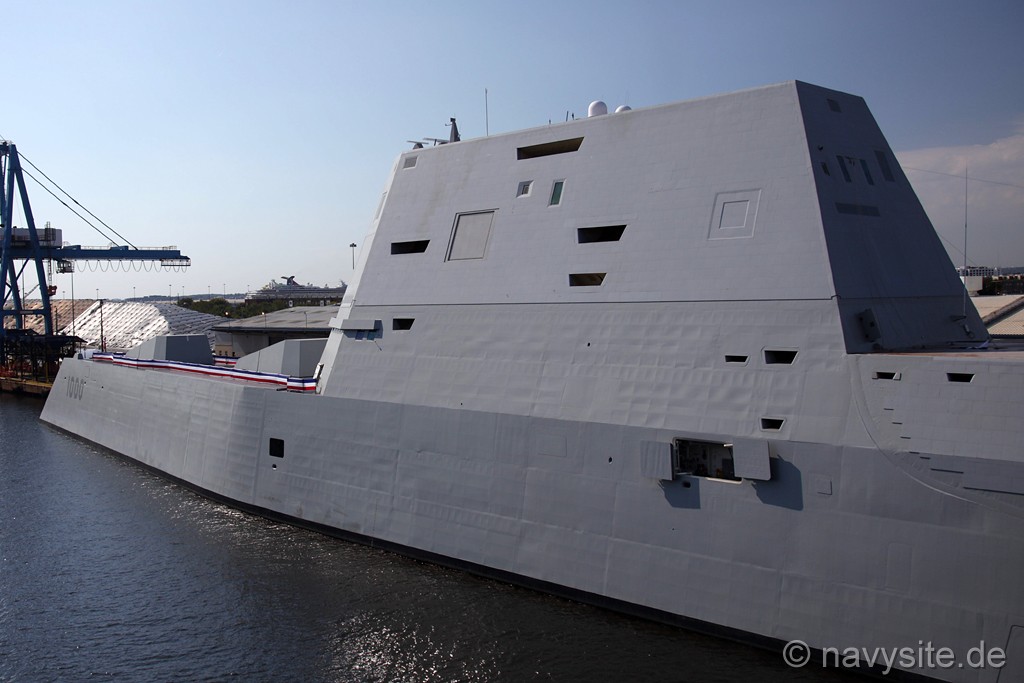
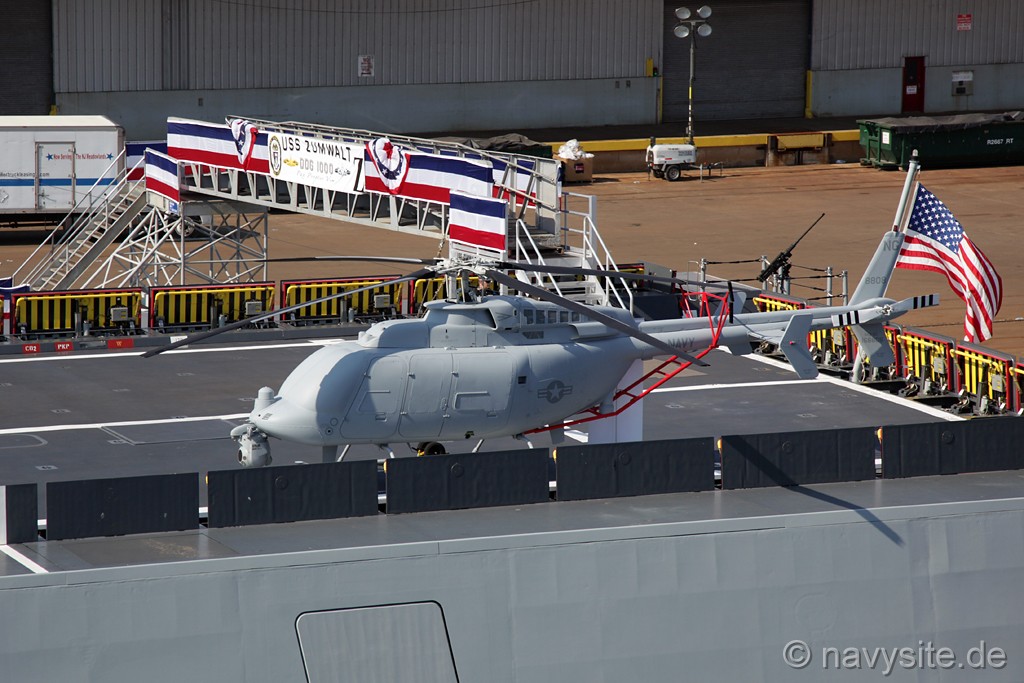
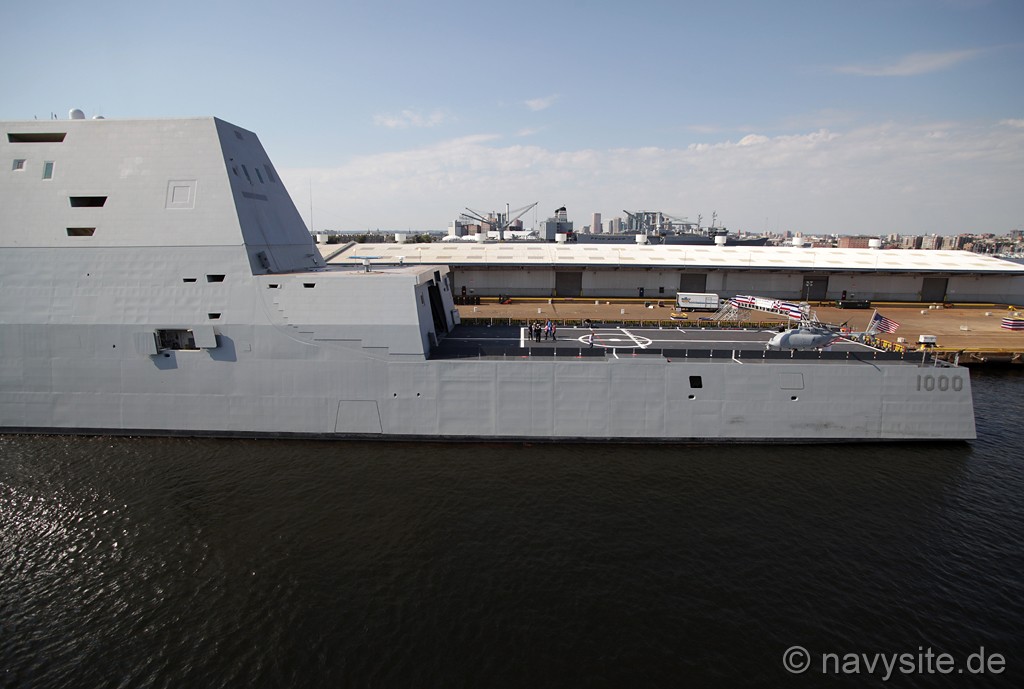
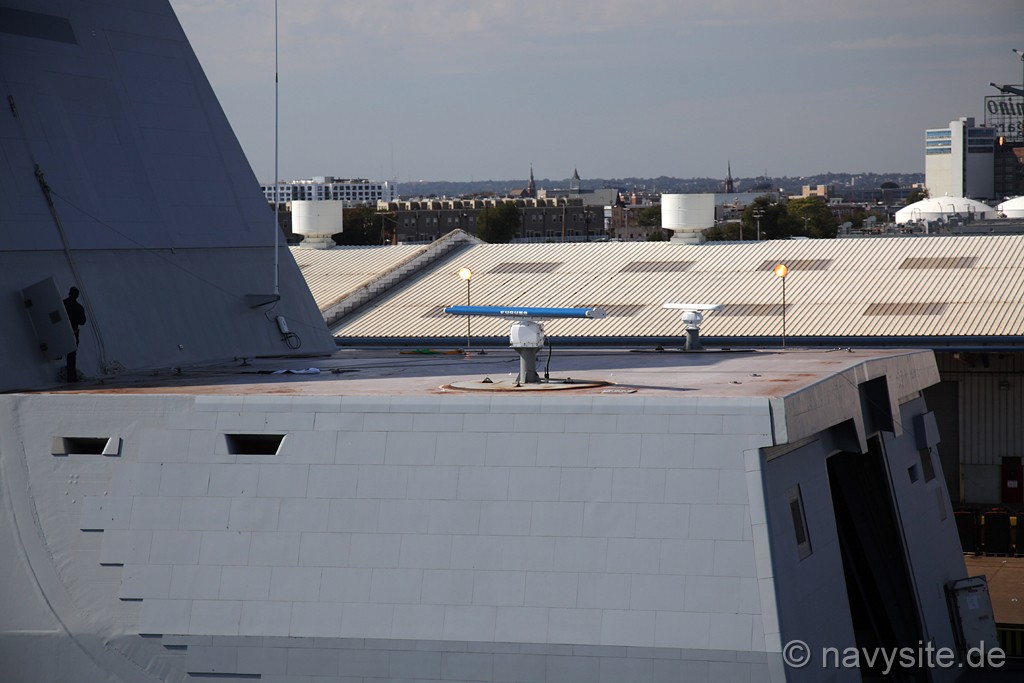
The photos below were taken by Michael Jenning and show USS ZUMWALT at Baltimore, Md., on October 16, 2016 - one day after commissioning.
 |  |
 |
 |  |
 |  |
 |
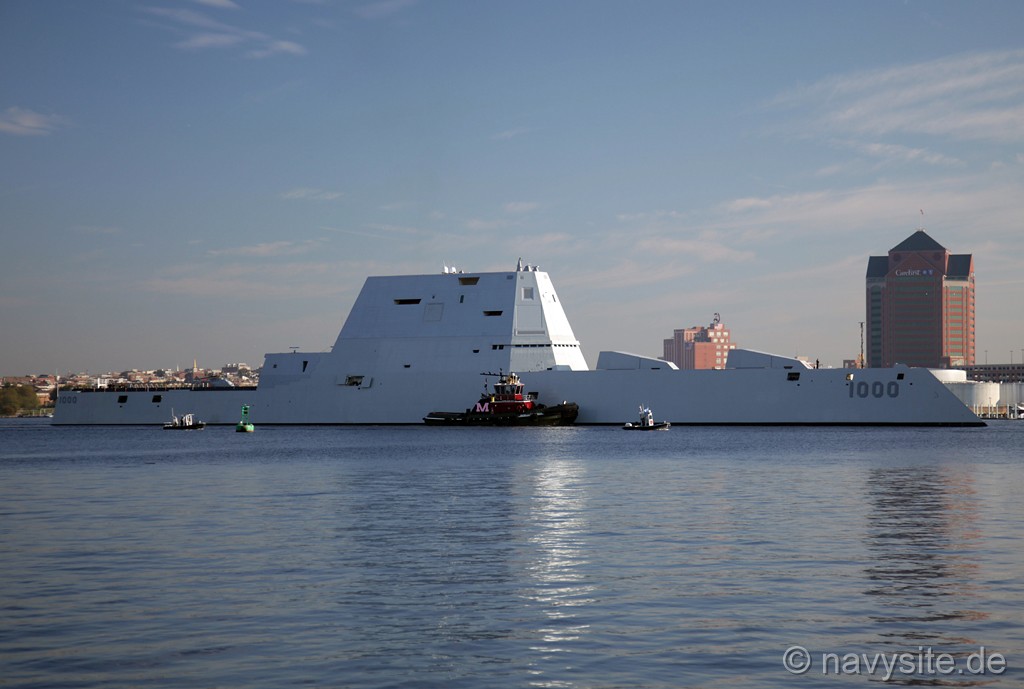
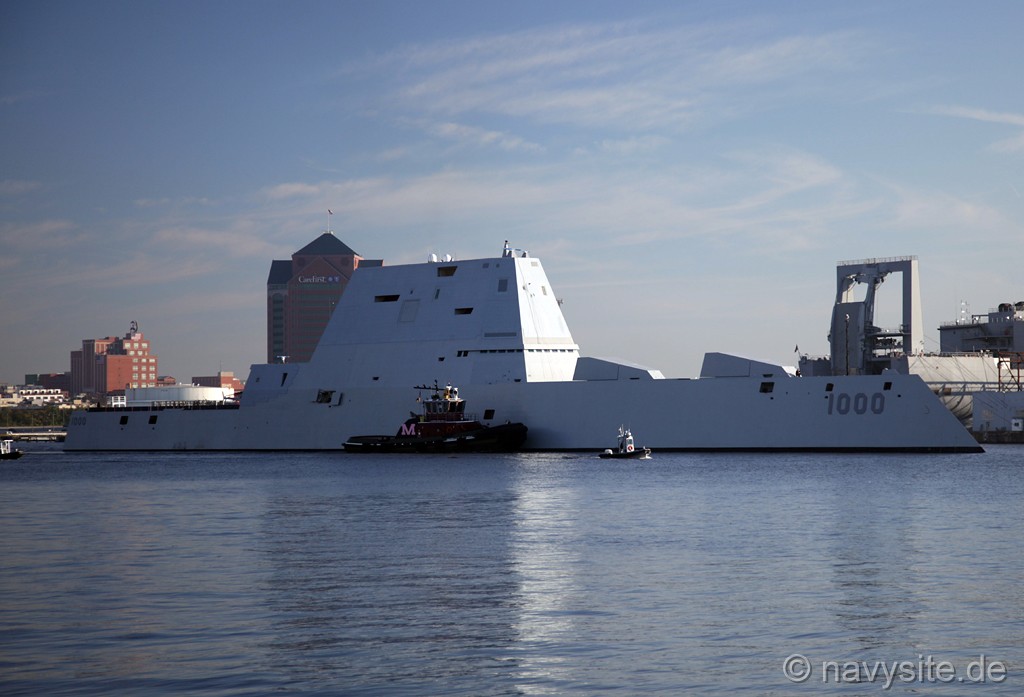
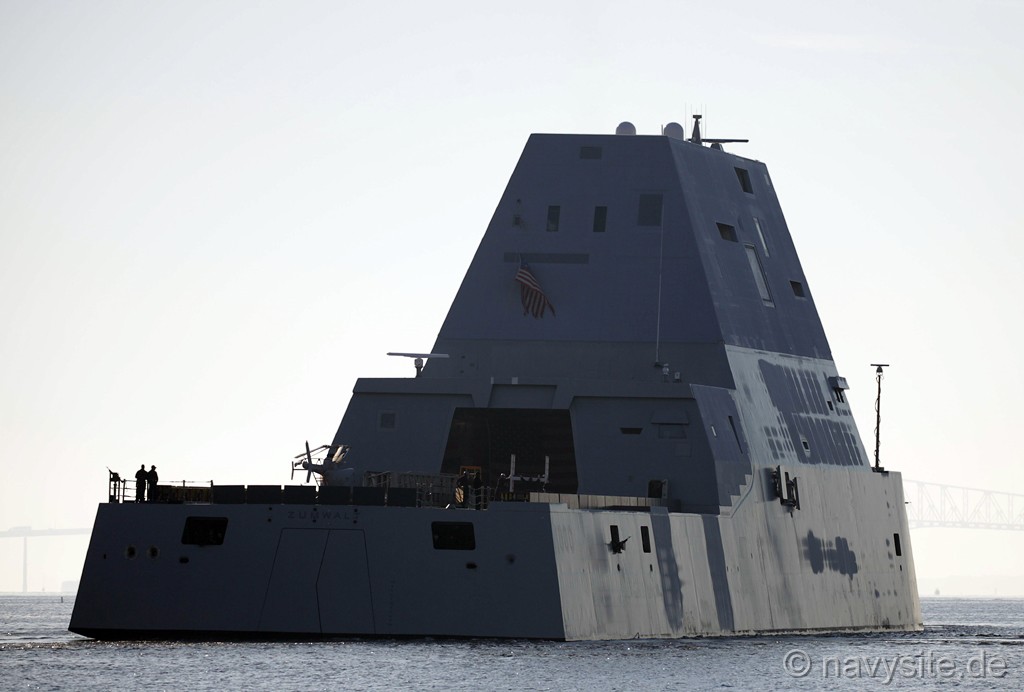
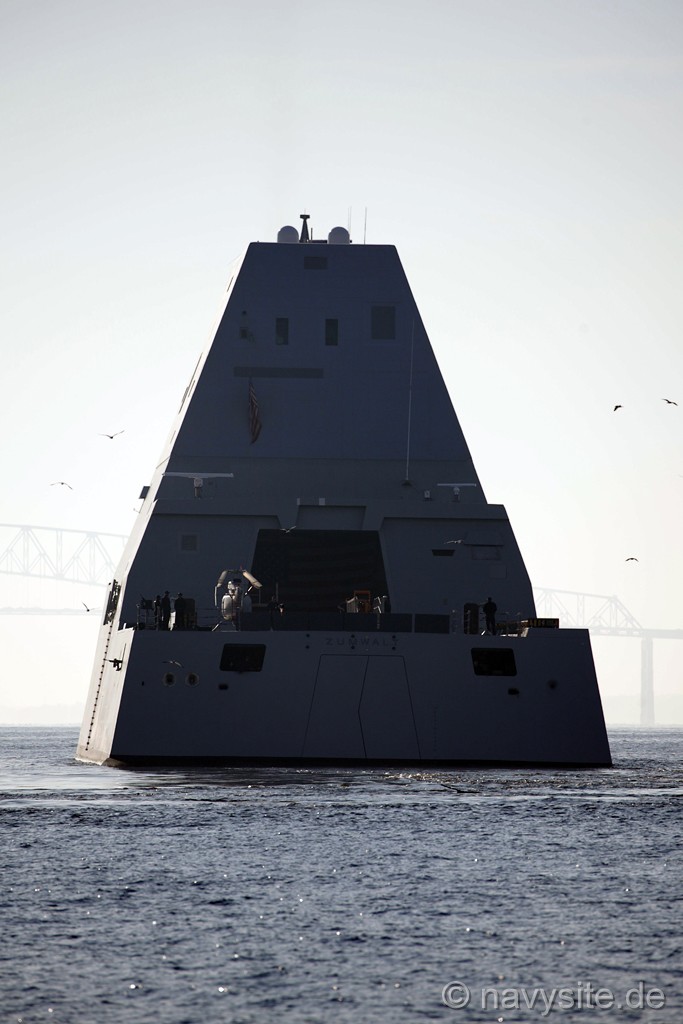
The photos below were taken by Michael Jenning and show the ZUMWALT departing Baltimore, Md., on October 17, 2016.
 |  |  |  |  |
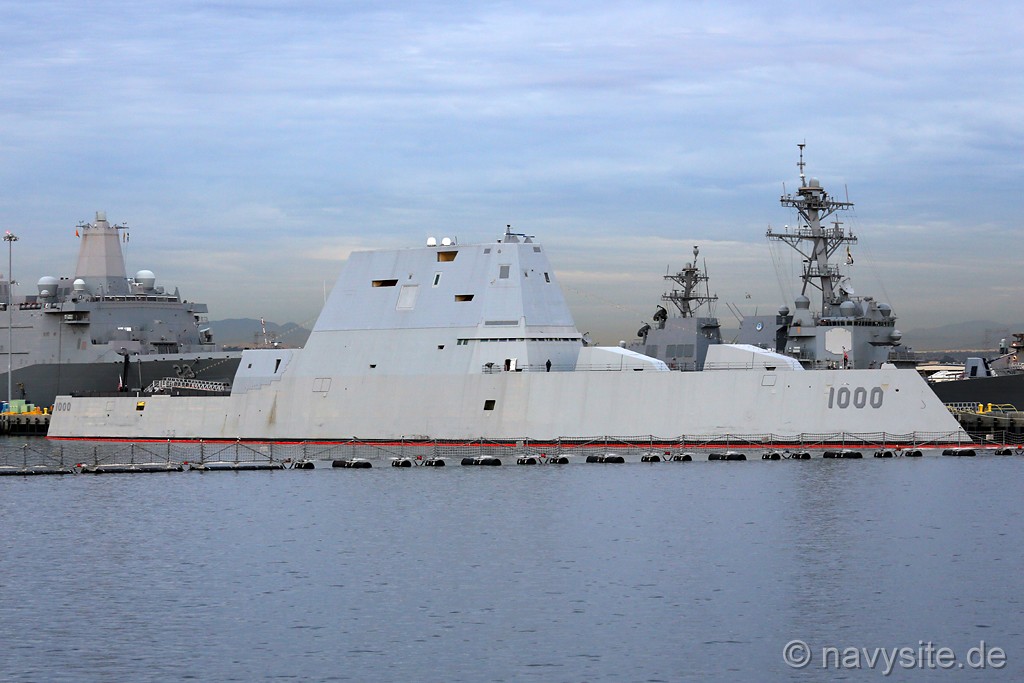
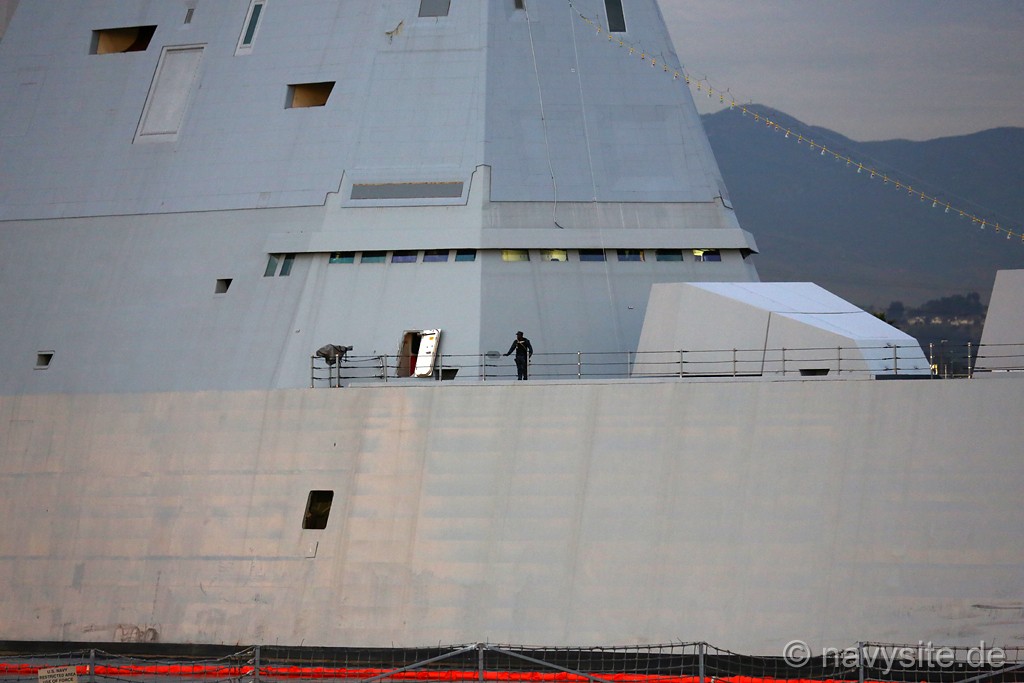
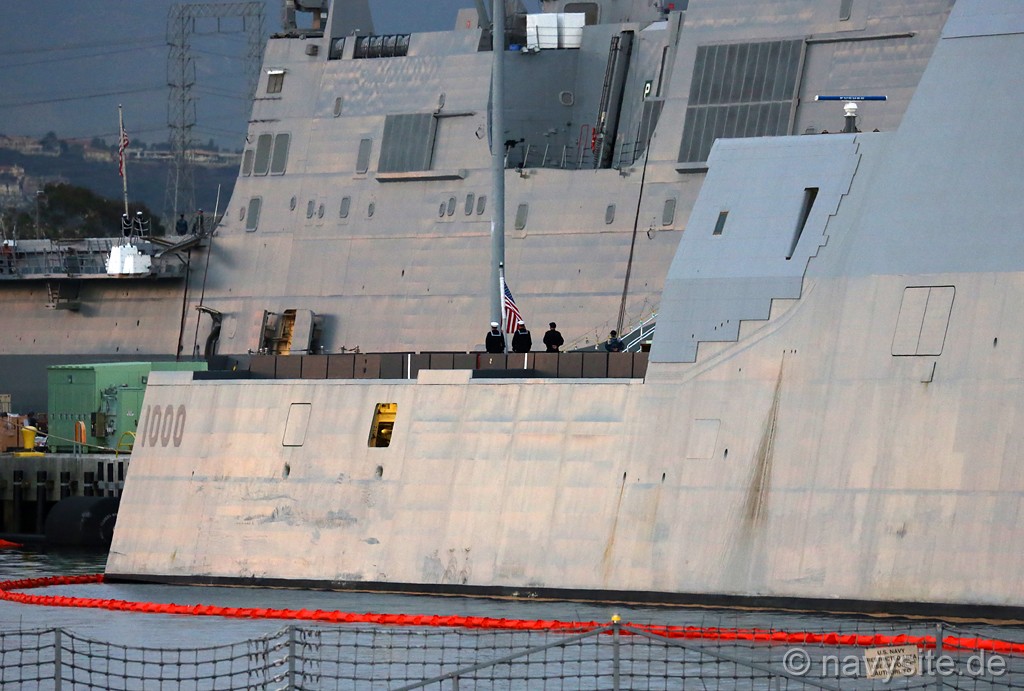
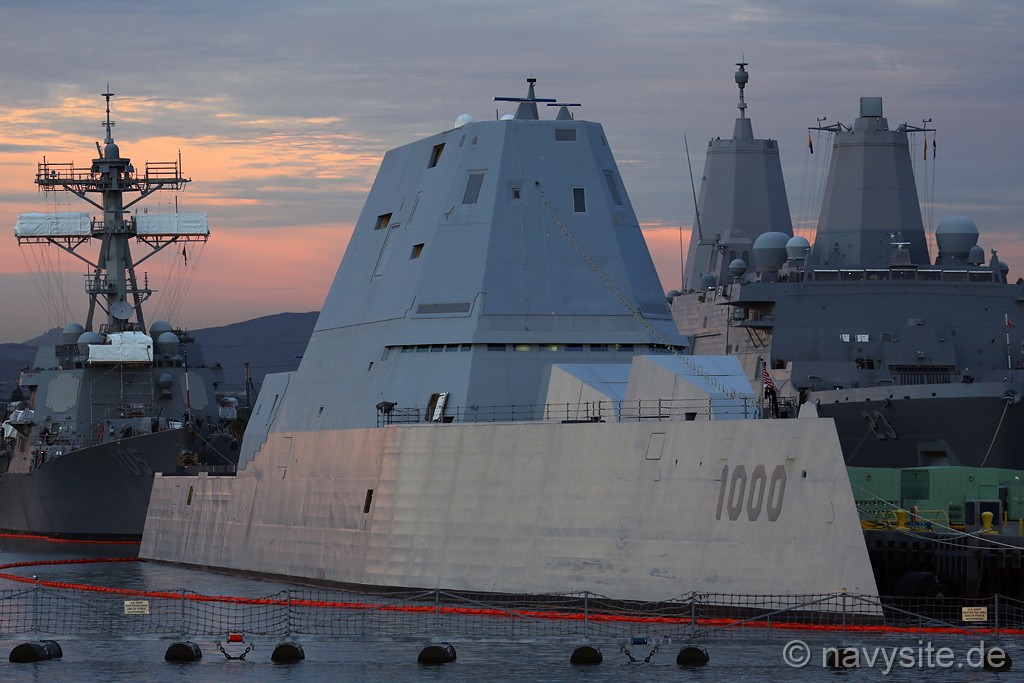
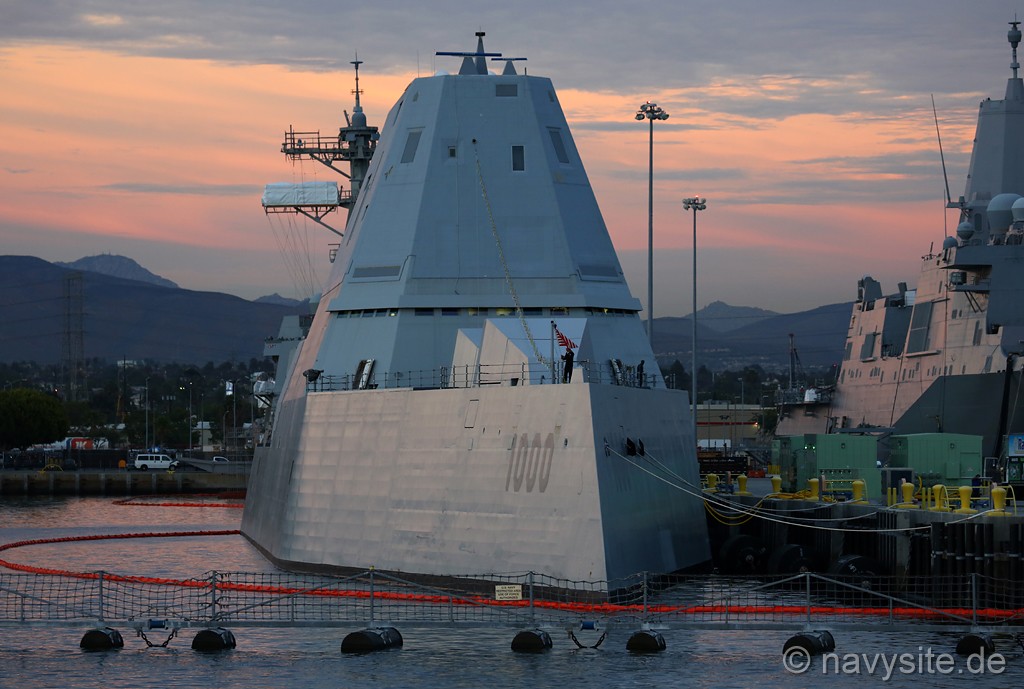
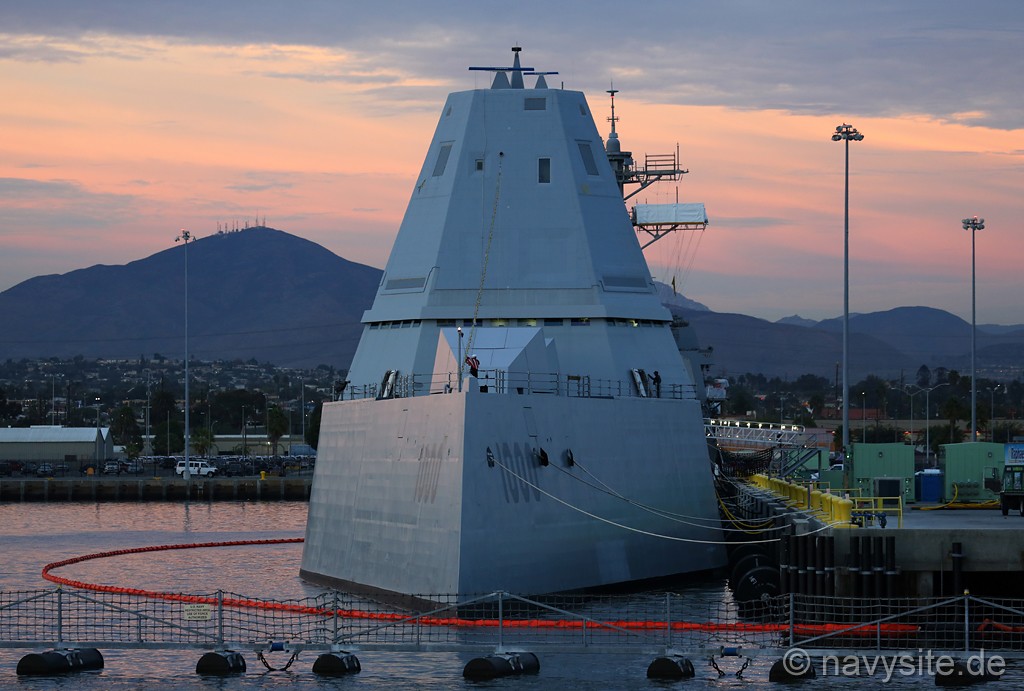
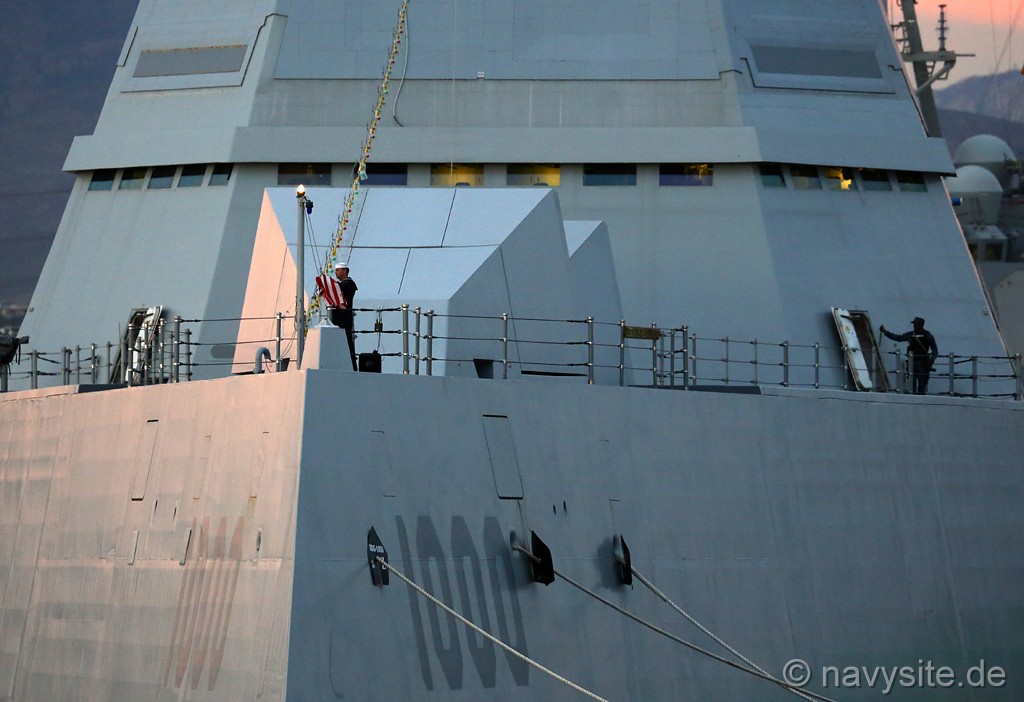
The photos below were taken by Sebastian Thoma and show the ZUMWALT at her homeport of San Diego, Calif., on December 20, 2016. Earlier that day, Capt. Scott A. Tait relieved Capt. James A. Kirk as commanding officer. The ZUMWALT moored at San Diego for the first time on December 8 after a transit from Mayport, Fla., via the Panama Canal. This voyage was interrupted by an engine casualty that forced the ship to stop in Balboa, Panama, for repairs from November 21-30.
 |  |  |  |  |
 |  |  |  |
The photos below were taken by Michael Jenning and show the ZUMWALT at BAE Systems San Diego Ship Repair on October 11, 2017.
 |  |  |
The photos below were taken by Sebastian Thoma and show the ZUMWALT at BAE Systems San Diego Ship Repair on November 10, 2017.
 |  |
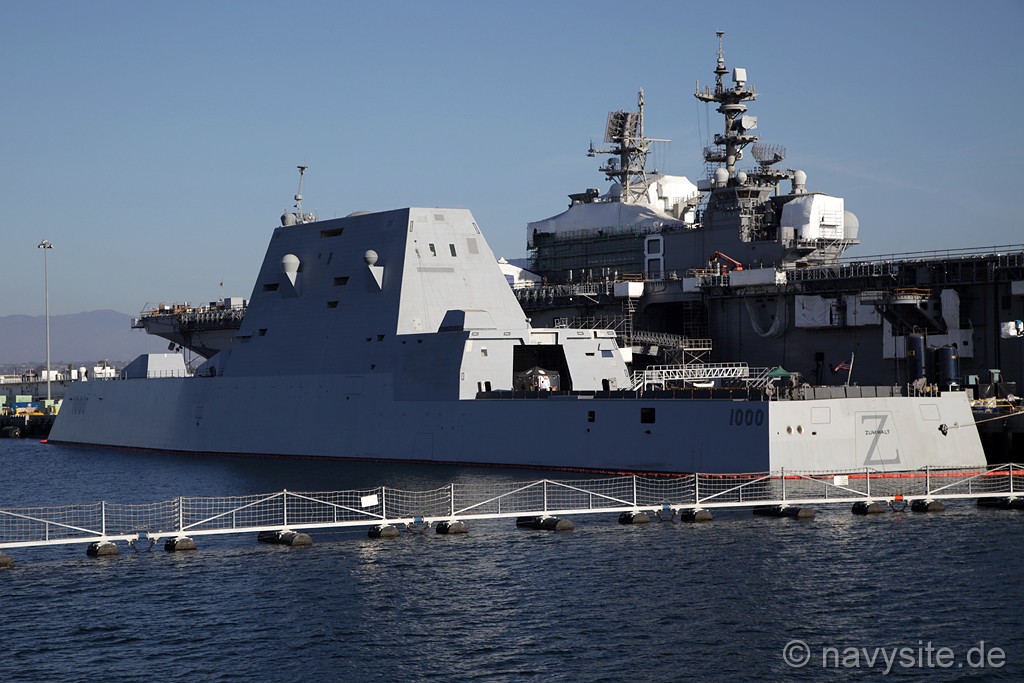
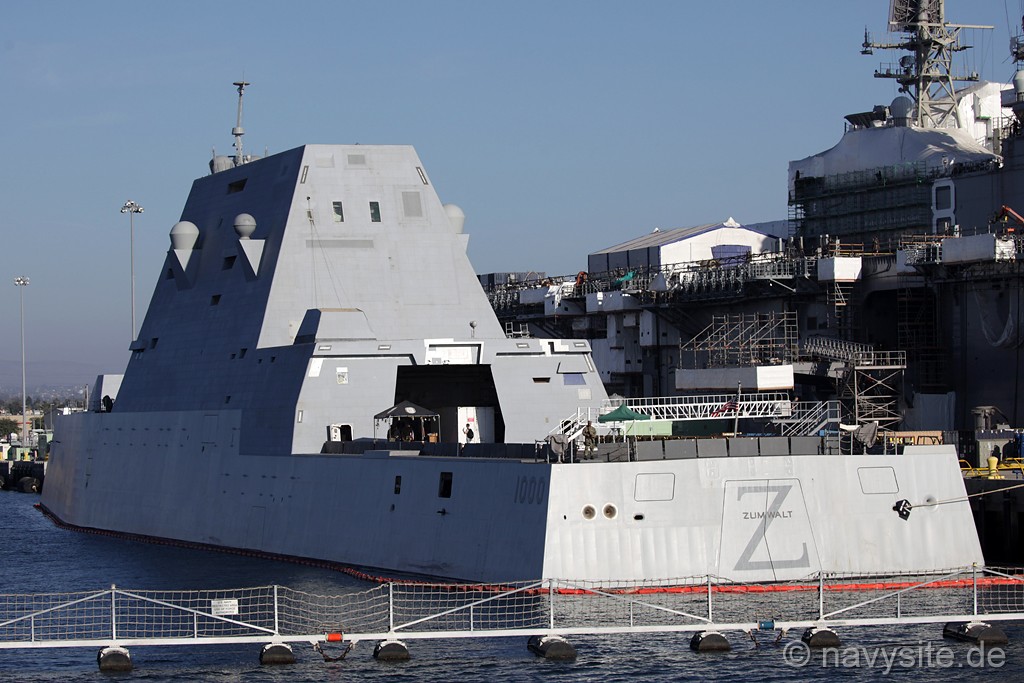
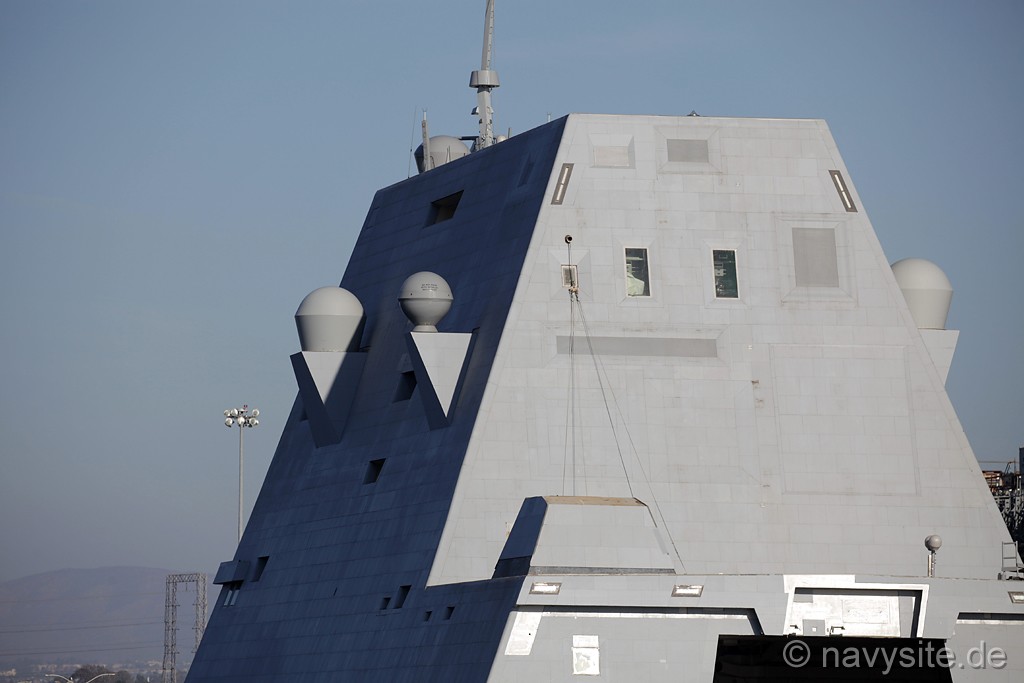
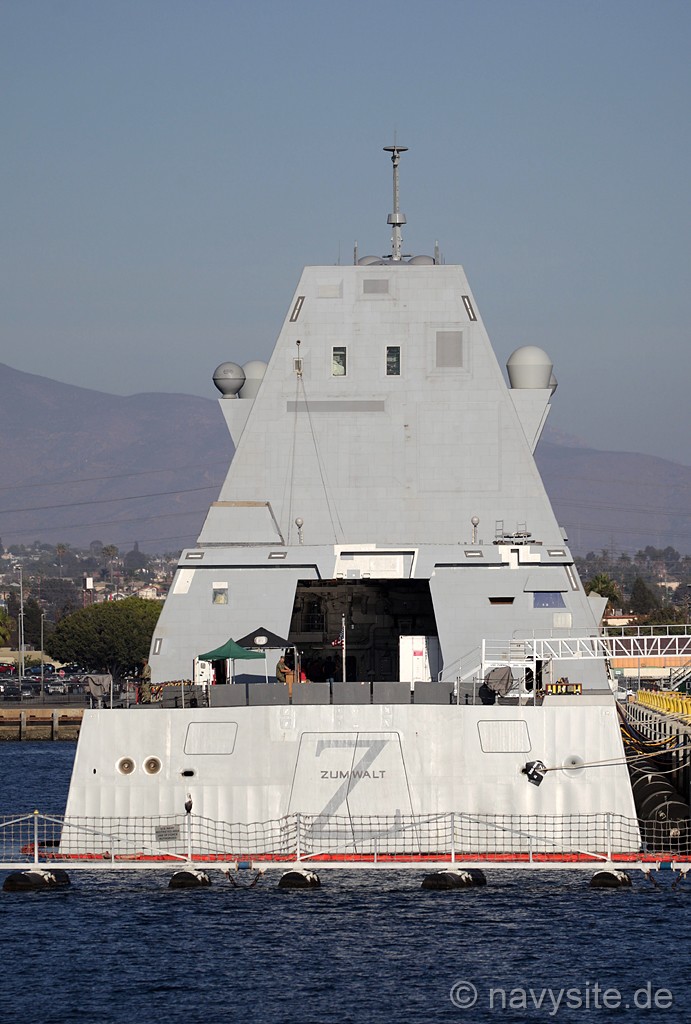
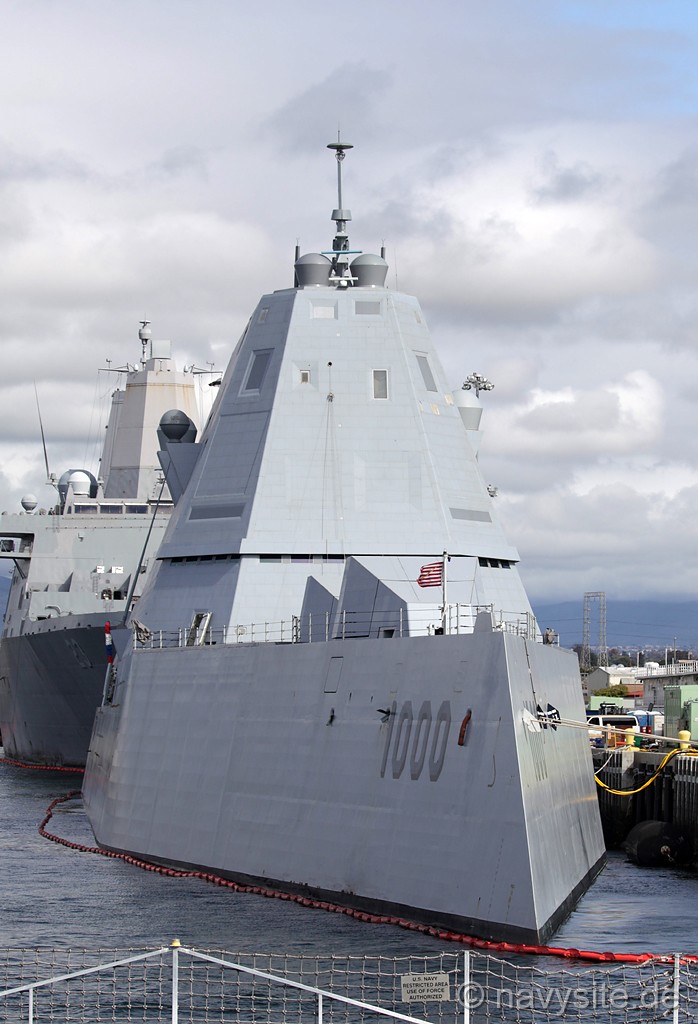
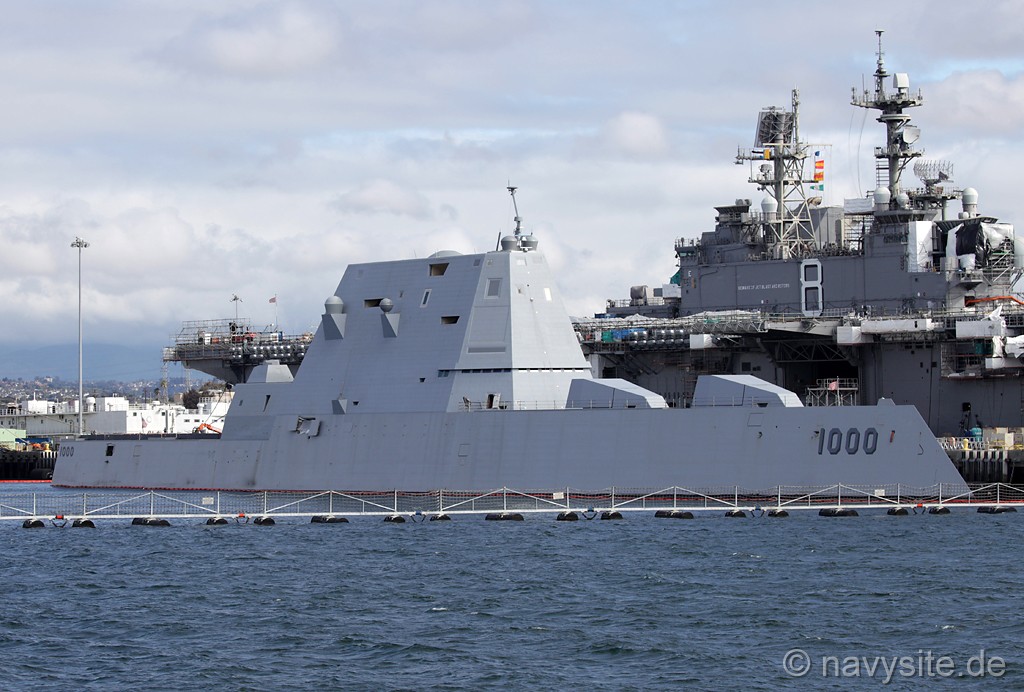
The photos below were taken by Michael Jenning and show the ZUMWALT at Naval Base San Diego, Calif., on September 28, 2018 - two weeks after completion of her extended 17-month Post Shakedown Availability (PSA). New sensors and a mast have been added to her superstructure.
 |  |  |  |  |
The photos below were taken by Michael Jenning and show the ZUMWALT at Naval Base San Diego, Calif., on March 2, 2019.
 |  |  |
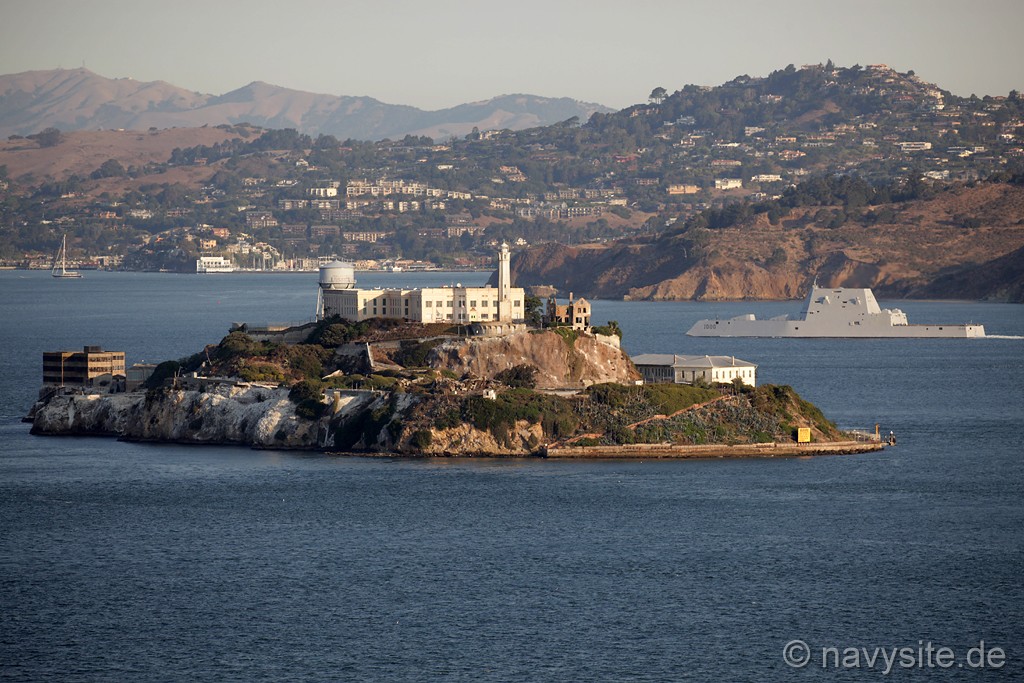
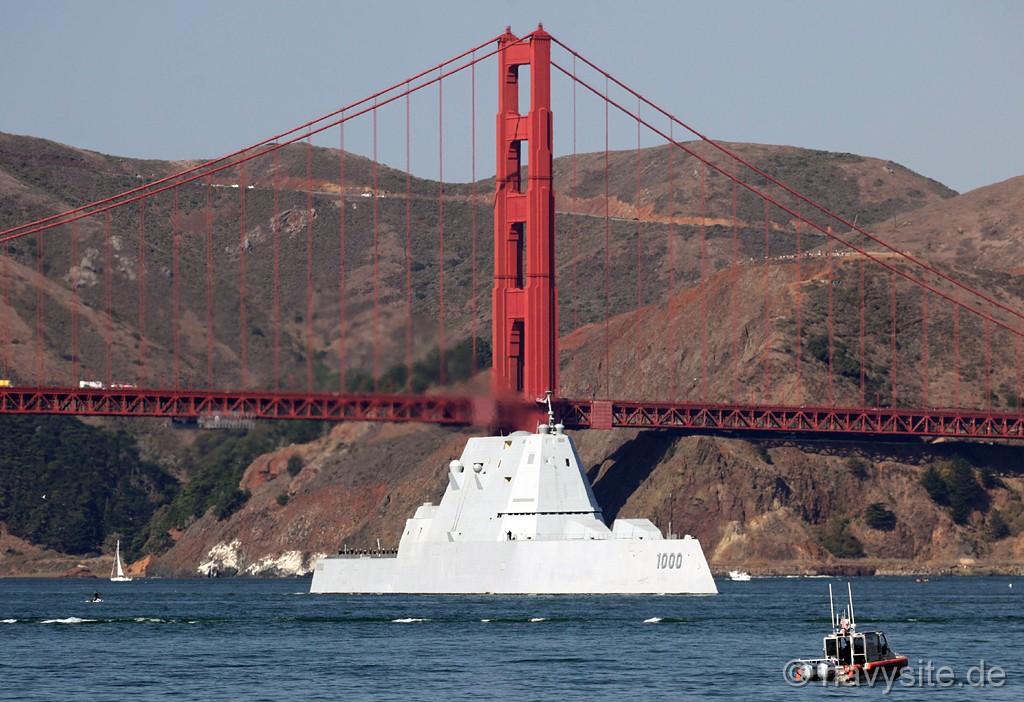
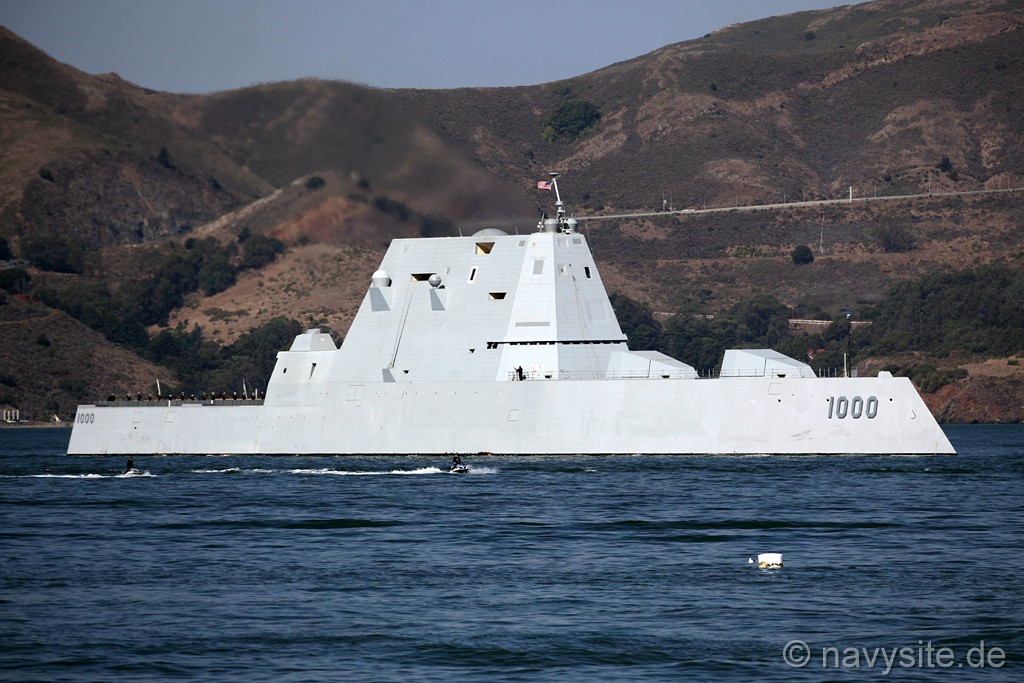
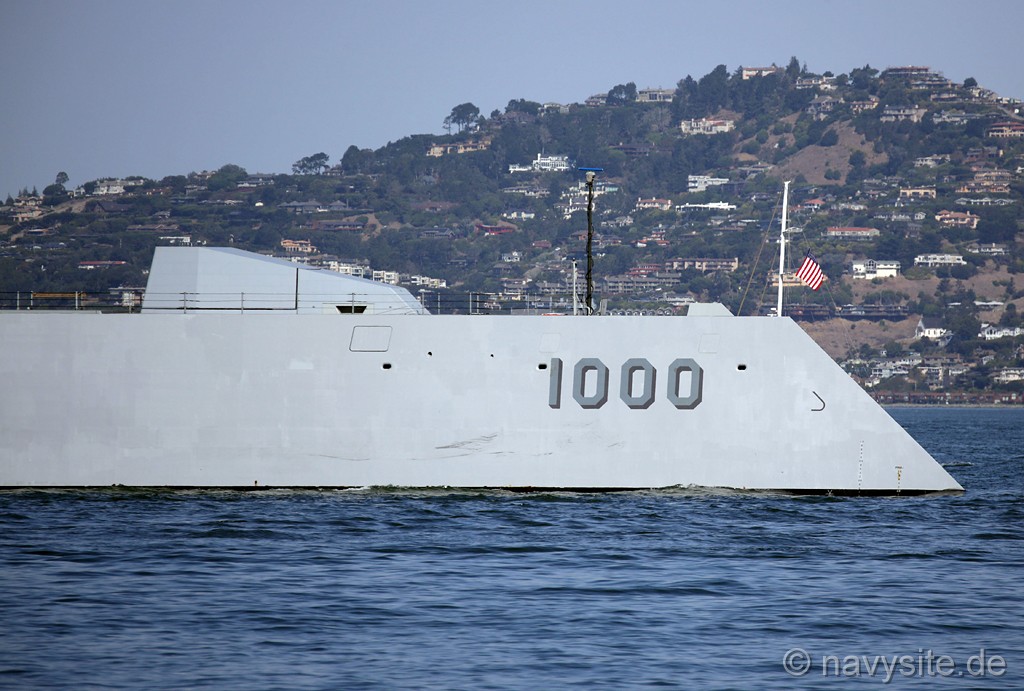
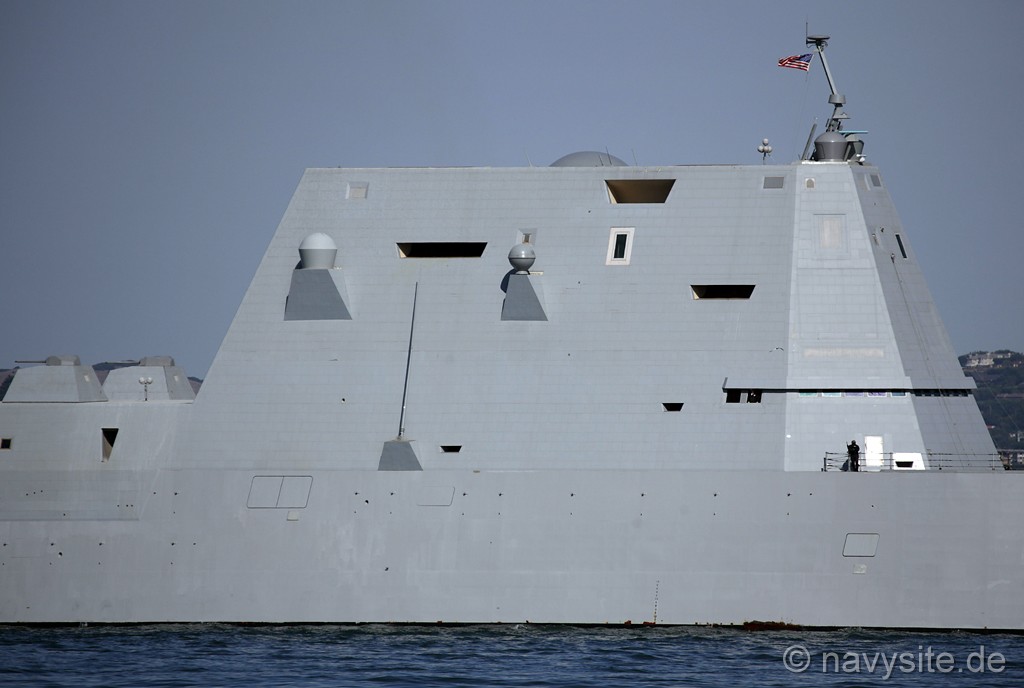
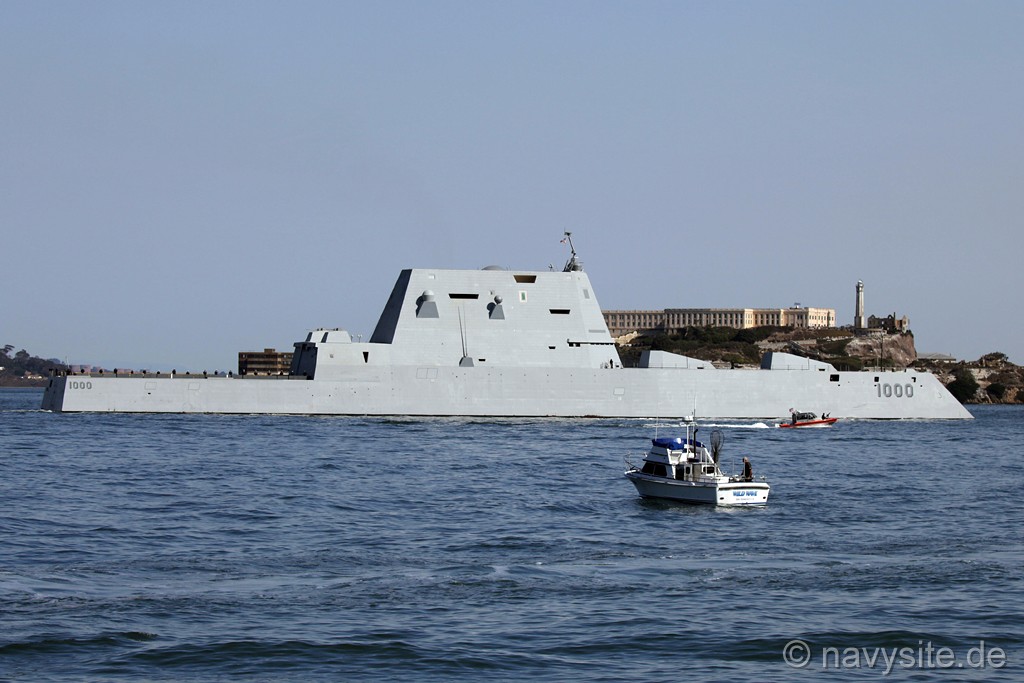
The photos below were taken by Michael Jenning and show the ZUMWALT in San Francisco Bay during the Parade of Ships as part of Fleet Week San Francisco on October 11, 2019.
 |  |  |  |  |
 |  |
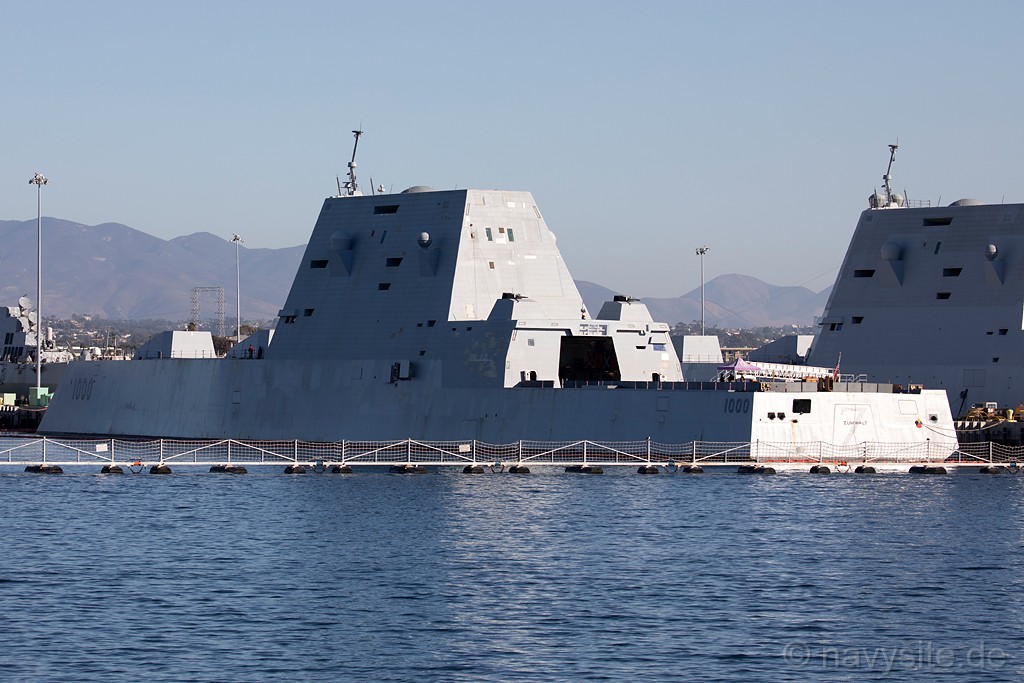
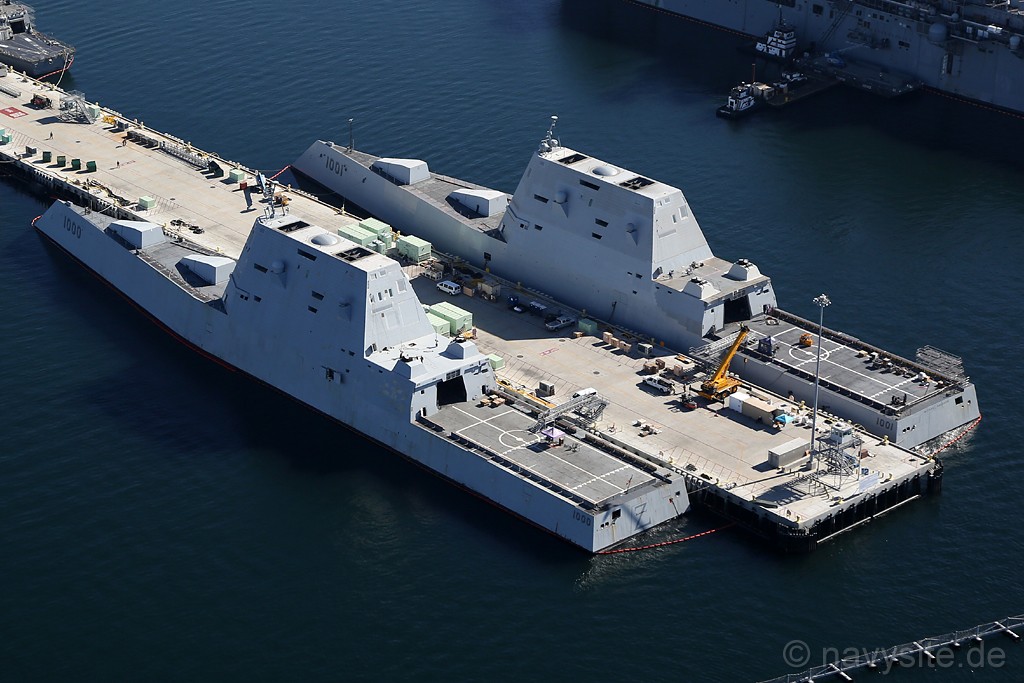
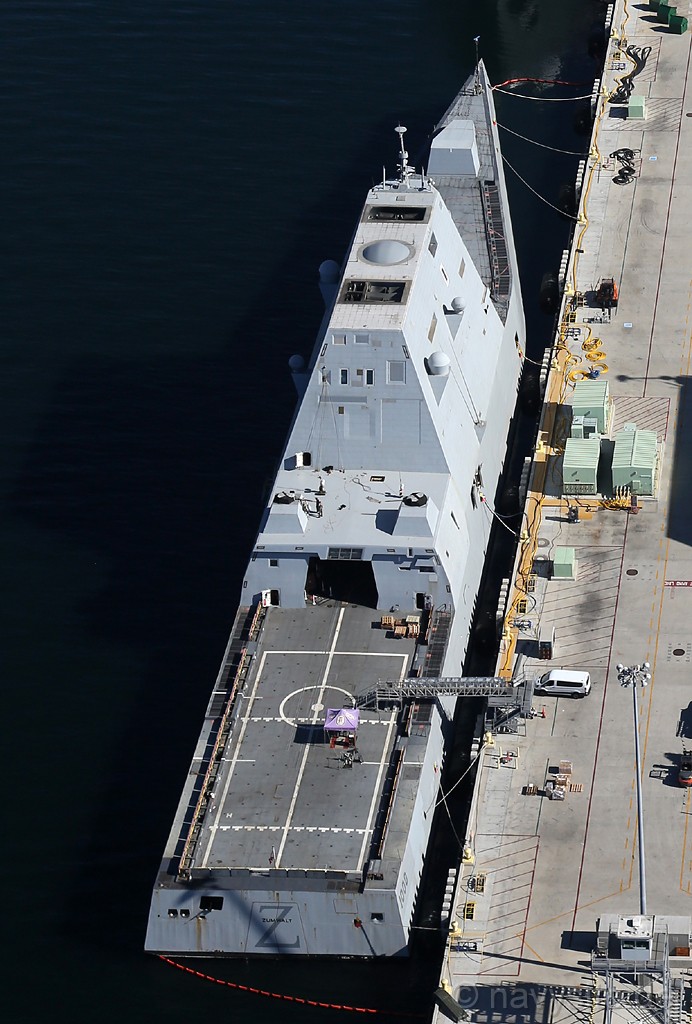
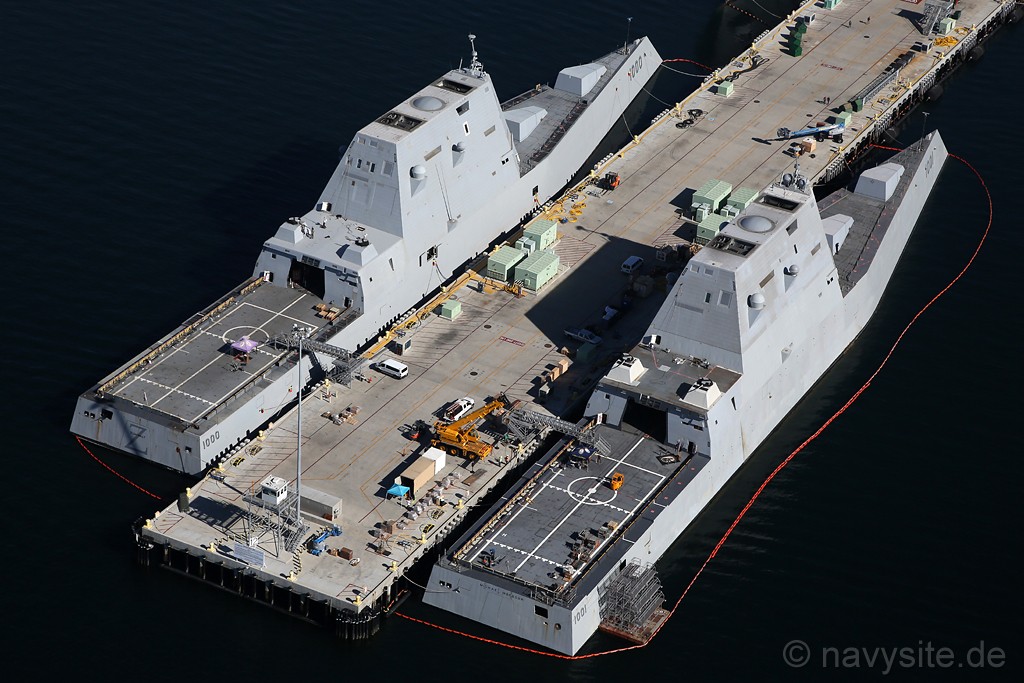
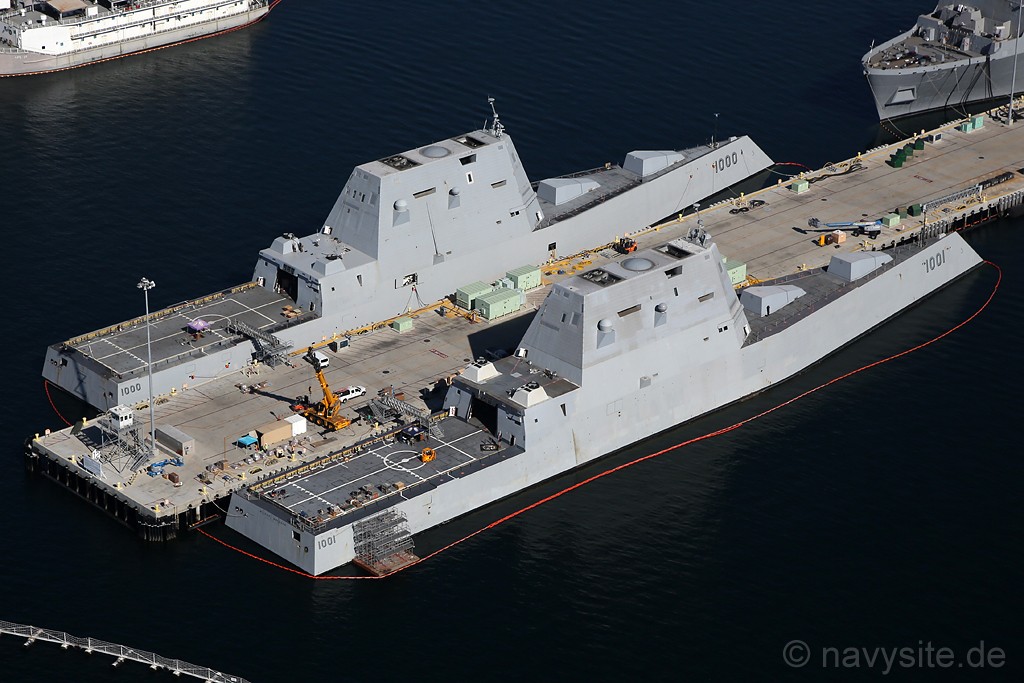
The photos below were taken by Sebastian Thoma and show the ZUMWALT (left) and her sistership MICHAEL MONSOOR (DDG 1001) at Naval Base San Diego, Calif., on November 28 and November 29 (aerial photos), 2021.
 |  |  |  |  |
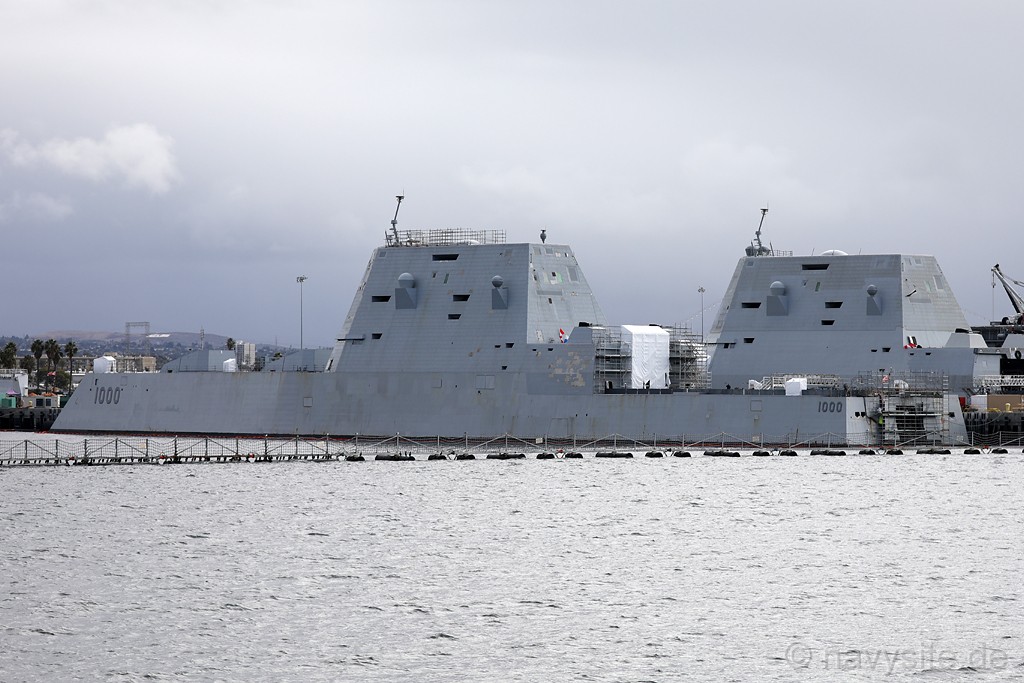
The photo below was taken by Michael Jenning and shows the ZUMWALT at Naval Base San Diego, Calif., on December 28, 2021.
 |
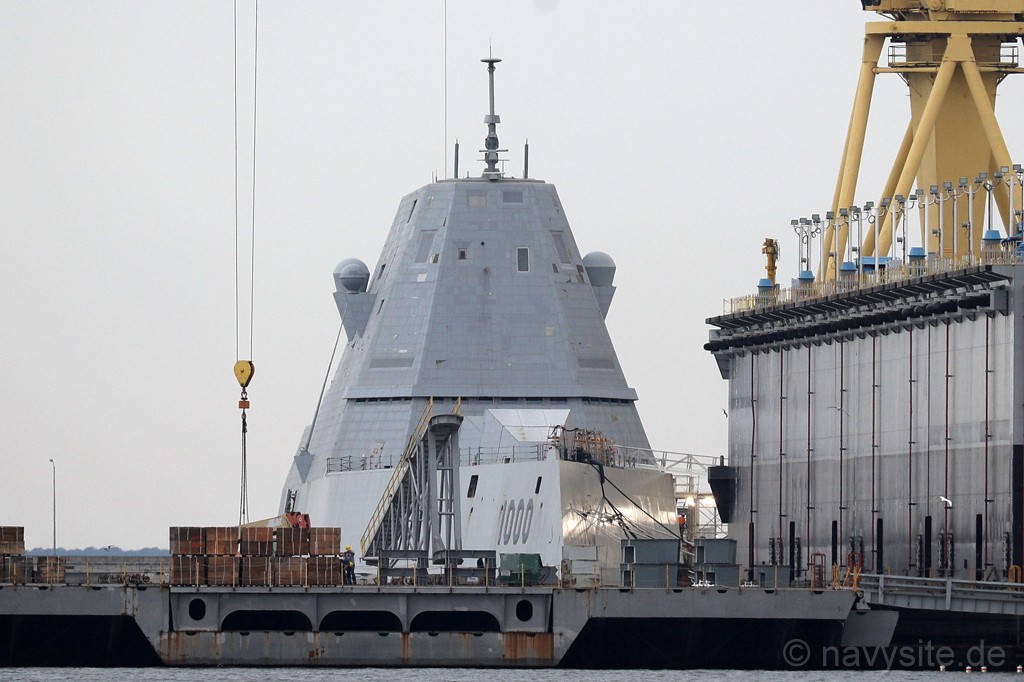
The photo below was taken by Michael Jenning and shows USS ZUMWALT at Ingalls Shipbuilding in Pascagoula, Miss., on October 11, 2023. ZUMWALT arrived at Ingalls Shipbuilding for a modernization availability on August 19, 2023. The main part of the availability will be the removal of the unused Advanced Gun Systems and their below-deck components. They will be replaced by the Conventional Prompt Strike (CPS) weapon system which means that the ZUMWALT will be fitted with four large-diameter vertical launch tubes designed to fire the Navy's new hypersonic CPS missiles. Each tube will be able to store three of the missiles.
 |
back to top
 Back to Destroyers list. Back to ships list. Back to selection page. Back to 1st page.