Search the Site with

|
Search the Site with
|
 General Characteristics Crew List Memorabilia Cruise Books Accidents aboard the Ship USS Texas' Commanding Officers History of USS Texas USS Texas Disposal Image Gallery to end of page
 | 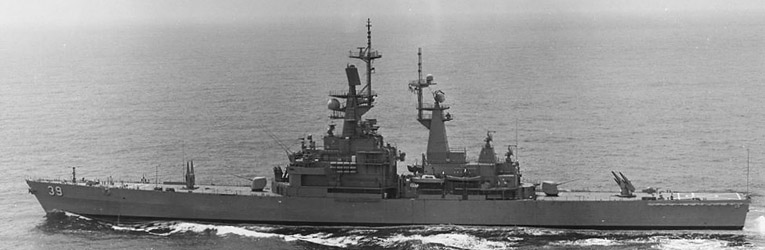 |
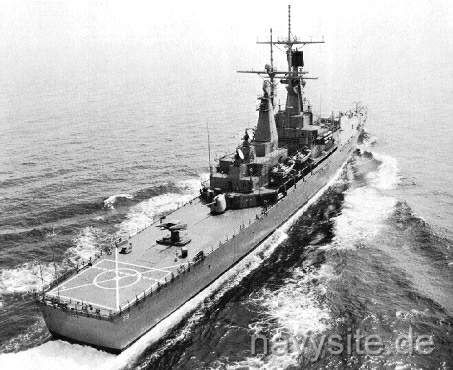
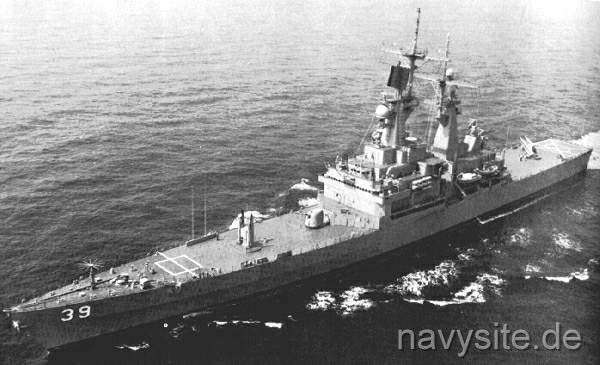
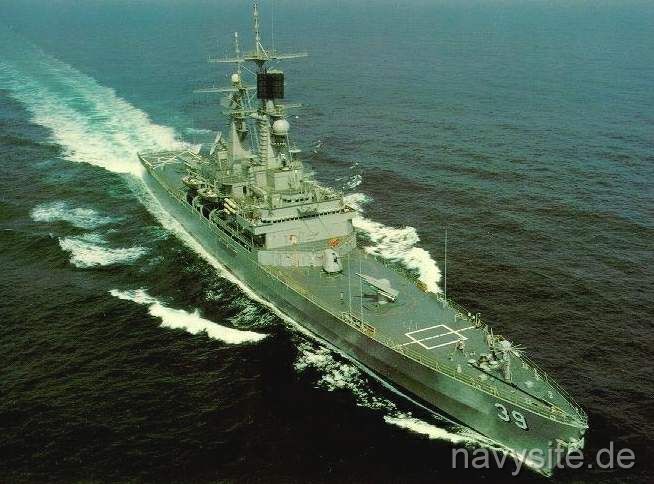
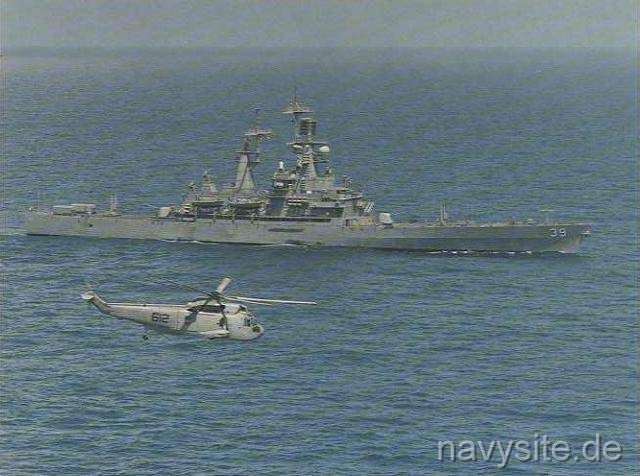
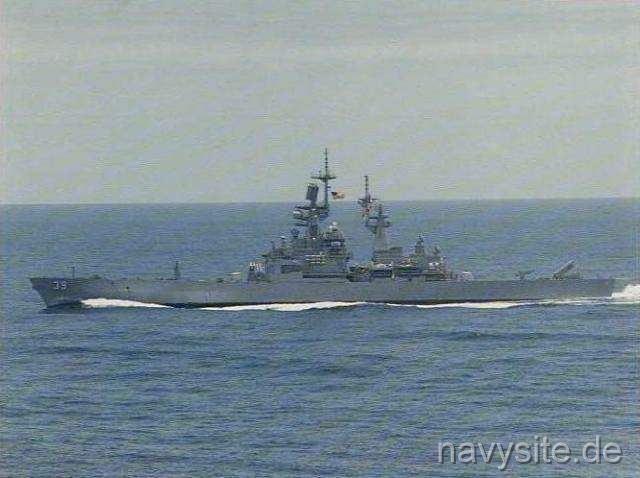
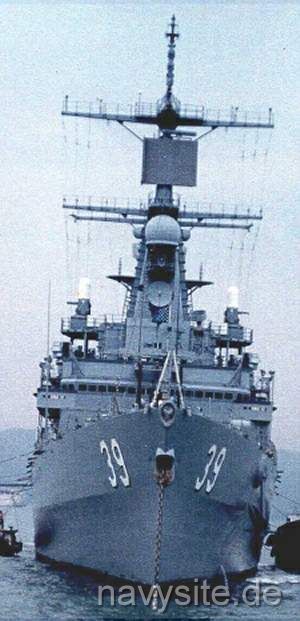
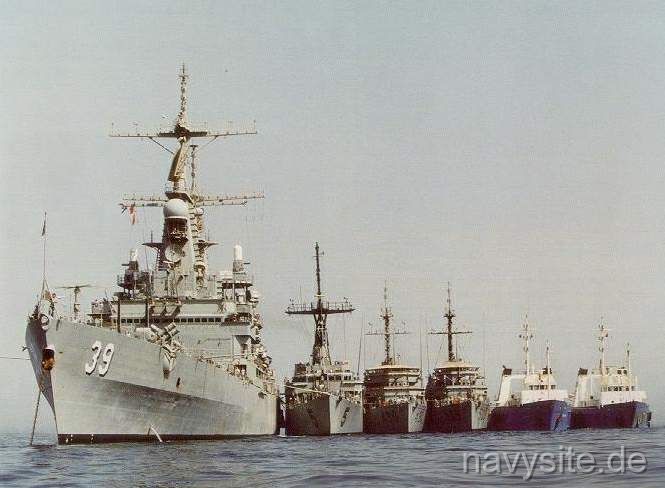
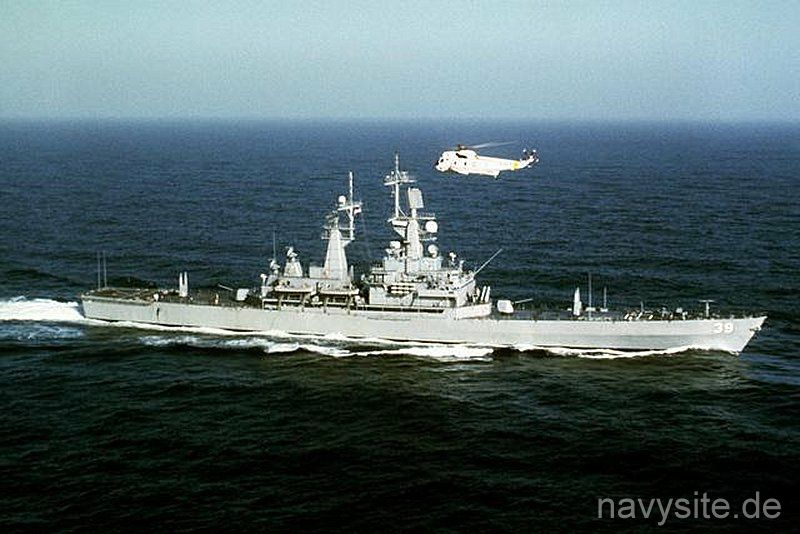
USS TEXAS was the second ship in the VIRGINIA-class of nuclear powered guided missile cruisers and the third ship in the Navy named after the state of Texas. Last homeported in Bremerton, Wash., she was laid up there after decommissioning and later went through the nuclear recycling program at the Puget Sound Naval Shipyard.
| General Characteristics: | Awarded: December 21, 1971 |
| Keel laid: August 18, 1973 | |
| Launched: August 9, 1975 | |
| Commissioned: September 10, 1977 | |
| Decommissioned: July 16, 1993 | |
| Builder: Newport News Shipbuilding Co., Newport News, Va. | |
| Propulsion system: two D2G General Electric nuclear reactors | |
| Propellers: two | |
| Length: 585 feet (178 meters) | |
| Beam: 63 feet (19.2 meters) | |
| Draft: 31,5 feet (9.6 meters) | |
| Displacement: approx. 11,300 tons full load | |
| Speed: 30+ knots | |
| Aircraft: none and no helicopter landing capability | |
| Armament: two Mk-26 missile launcher for Standard missiles (MR) and ASROC, two Mk-141 | |
| Crew: 39 Officers, 539 Enlisted |
 back to top go to the end of the pageback to top go to the end of the page
Crew List:
This section contains the names of sailors who served aboard USS TEXAS. It is no official listing but contains the names of sailors who submitted their information.
back to top go to the end of the pageback to top go to the end of the pageUSS TEXAS Cruise Books:
back to top go to the end of the pageAccidents aboard USS TEXAS:
| Date | Where | Events |
|---|---|---|
| July 19, 1983 | Brisbane, Australia | USS TEXAS is holed above the waterline after hitting a quay while leaving the port of Brisbane, Australia. |
back to top go to the end of the pageUSS TEXAS' Commanding Officers:
| Period | Name |
|---|---|
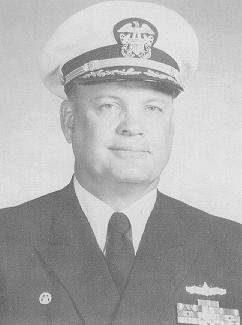
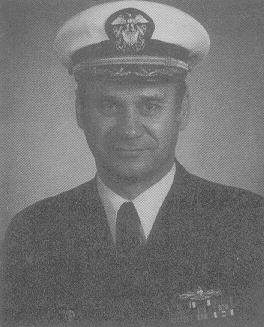
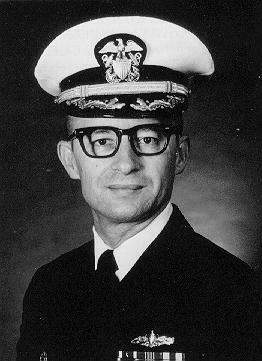
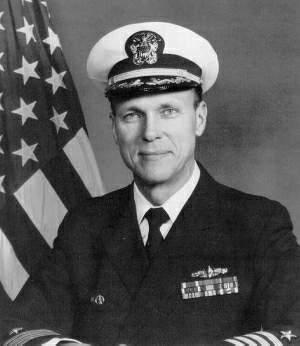
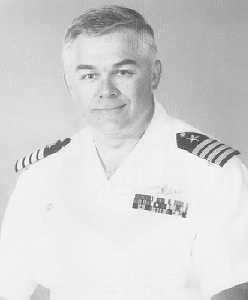
| August 12, 1975 - January 27, 1979 | Captain Peter B. Fiedler, USN |
| January 27, 1979 - March 19, 1982 | Captain Ramon R. Owens, USN |
| March 19, 1982 - July 5, 1985 | Captain William D. Andress, USN |
| July 5, 1985 - August 6, 1988 | Captain George M. Miller, USN |
| August 6, 1988 - June 25, 1991 | Captain William K. Gautier, USN |
| June 25, 1991 - July 16, 1993 | Captain Neil M. Brennan, USN |
back to top go to the end of the pageHistory of USS TEXAS:

 The TEXAS was laid down as a guided missile frigate on 18 August 1973, at Newport News, Va., by the Newport News Shipbuilding and Drydock Co.; reclassified as a guided missile cruiser and redesignated CGN 39 on 30 June 1975; launched on 9 August 1975, sponsored by Mrs. Dolph Briscoe, wife of the Governor of Texas; and commissioned on 10 September 1977, Capt. Peter B. Fiedler in command.
Following a nine-week test of the ship's combat systems, TEXAS loaded out weapons at the Yorktown Naval Weapons station in October and underwent refresher training out of Guantanamo Bay, Cuba, in November. TEXAS spent the first three months of 1978 conducting at-sea evaluation of her propulsion and weapons systems off the Virginia capes and in the Caribbean. On 28 March, she transited to her building yard at Newport News to commence a Post Shakedown Availability (PSA) which was completed on 31 July. The remainder of 1978 was spent in individual ship exercises off the east coast and Roosevelt Roads, Puerto Rico, interspersed with periods in TEXAS' home port of Norfolk.
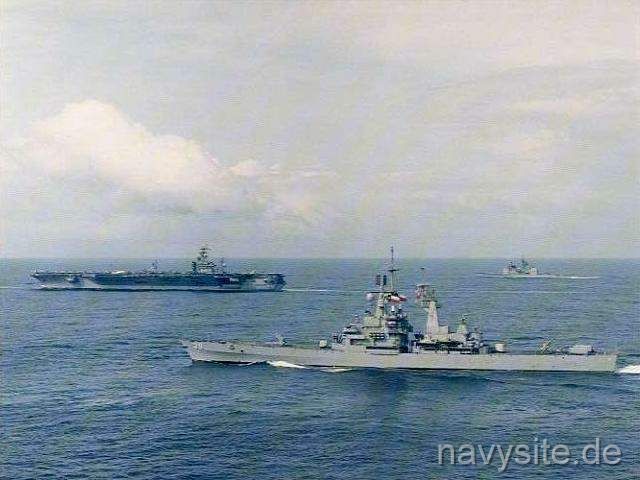
USS TEXAS' maiden deployment was with the USS NIMITZ Battle Group in the Mediterranean Sea and North Arabian Sea during the Iranian Hostage Crisis. She also served as Flagship for Commander, Cruiser-Destroyer Group ONE. TEXAS' second deployment was once again with the NIMITZ Battle Group operating in the Mediterranean Sea. During this period, TEXAS saw combat for the first time, as she responded to Libyan aggression in the Gulf of Sidra.
TEXAS' third deployment was with the USS CARL VINSON Battle Group, and included an around the world cruise which allowed her to visit every inhabited continent except South America and sail all the oceans except the Arctic. The world cruise also included a change of homeport to San Diego, Calilornia, from Norfolk, Virginia. TEXAS spent the first part of the following year operating in the Persian Gulf and Arabian Sea before returning to San Diego. She then began to make preparations for a homeport change to Bremerton, Washington, for a Complex Overhaul. She entered drydock at Puget Sound Naval Shipyard in September, and remained there until April 1986. The overhaul lasted until April 1987, and included the installation of the Tomahawk missile system.
Following a homeport change to Alameda, California, TEXAS deployed with the USS CARL VINSON Battle Group for Westpac 1988 as the Anti Air Warfare Commander. This fourth major deployment included port visits to Japan, Subic Bay, Oman, and Kenya. In 1989, the TEXAS conducted local operations and a short overhaul at Hunter's Point Shipyard in San Francisco. By the end of the year, she was back at sea on counter-narcotics operations off the Coast of South America.
In February 1991, TEXAS commenced her sixth deployment, enroute to the Arabian Sea. She served valiantly during Desert Storm as the Anti air Warfare Commander for the NIMITZ Battle Group, and she returned to San Francisco in August. In April 1992, TEXAS returned to sea and conducted a second counter-narcotics mission that included visits to Ecuador and Panama. In July, TEXAS changed homeport to Bremerton, Washington in preparation for a Refueling Complex Overhaul. She entered the drydock in September and commenced work. The overhaul was canceled on April 1, 1993, and work began to decommission the TEXAS.
back to top go to the end of the pageAbout USS TEXAS' Disposal:
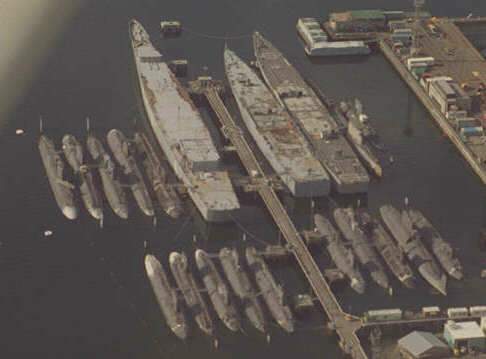
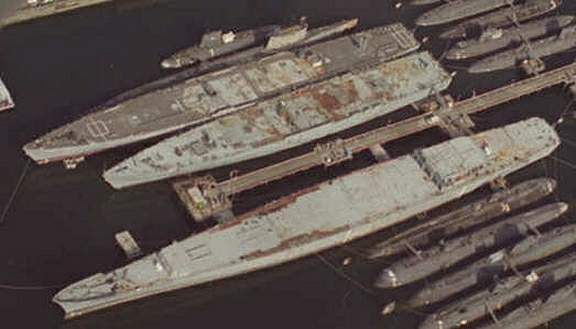
Decommissioned nuclear powered ships of the US Navy are brought to the Puget Sound Naval Shipyard at Bremerton, Wash., where they are awaiting their final disposal. The TEXAS was no exception. When she arrived at PSNS the first action that took place was the removal of the ship's superstructures and since PSNS does not own a dock large enough for two VIRGINIA-class cruisers, a 100 foot long part of the stern of TEXAS was also removed.
The photos below show the TEXAS moored alongside the ex-USS VIRGINIA (CGN 38) and surrounded by numerous nuclear powered submarines. The hull on the portside of the TEXAS is from the ex-USS LONG BEACH (CGN 9) which was the first nuclear powered surface ship in the US Navy. Dismantling of TEXAS' hulk was completed in October 2001.
 |  |
back to top go to the end of the pageUSS TEXAS Image Gallery:
 |  |  |  |  |
 |  |  |  |  |
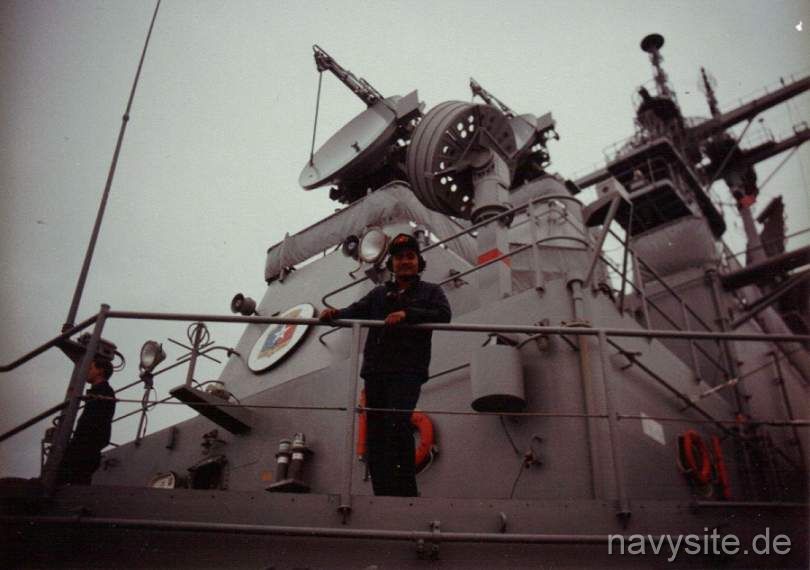
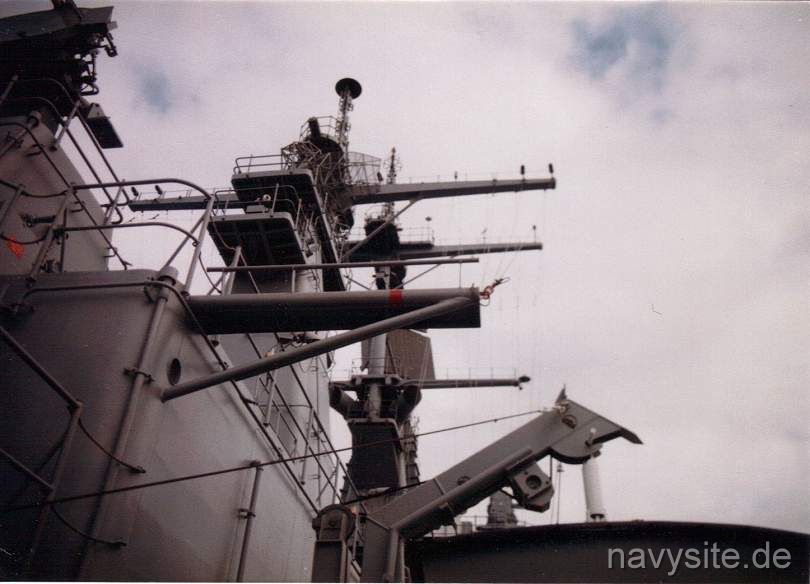
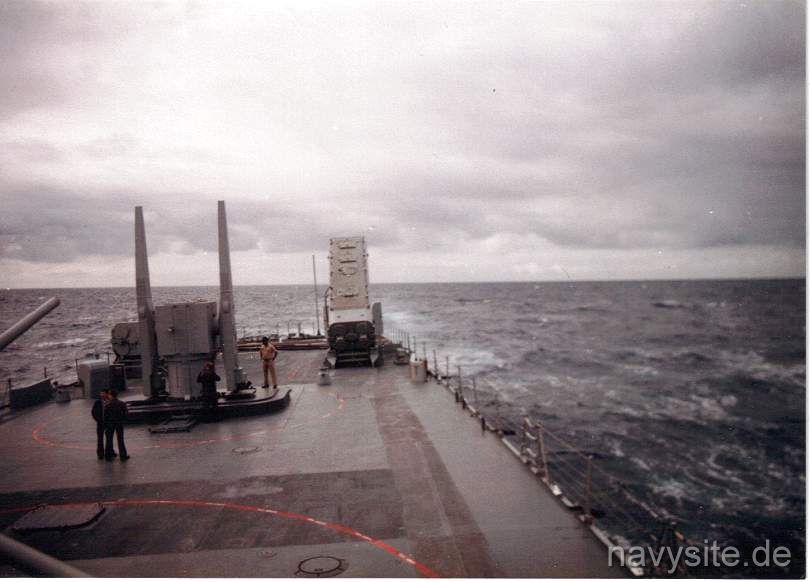
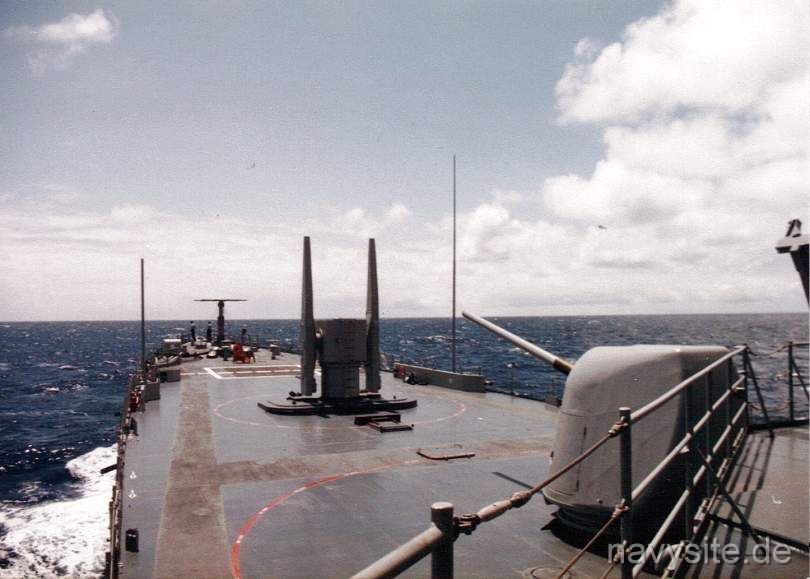
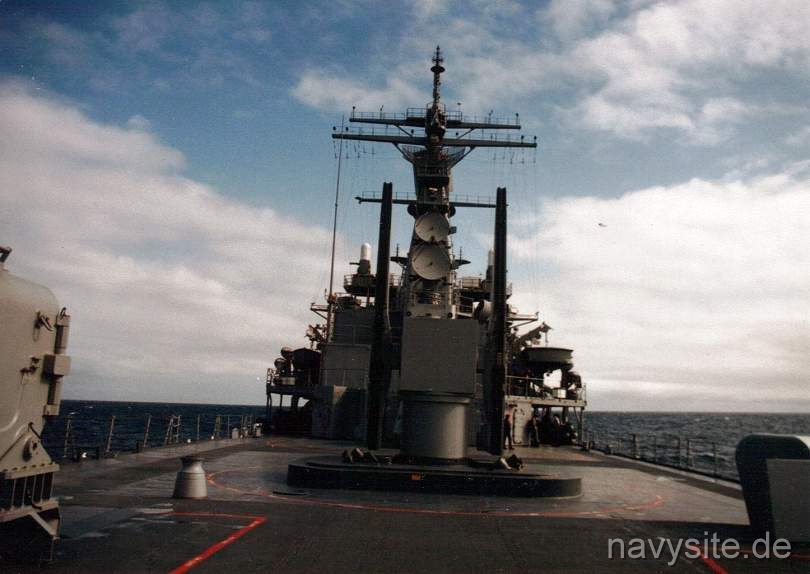
The photos below were taken by Randall Graham during TEXAS' WestPac Cruise in 1988.
 |  |  |  |  |
back to top
 Back to Cruisers list. Back to ships list. Back to selection page. Back to 1st page.