![]() |
Search the Site with
|
![]() | ![]() | ![]() |
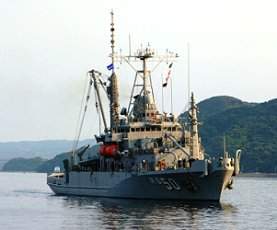
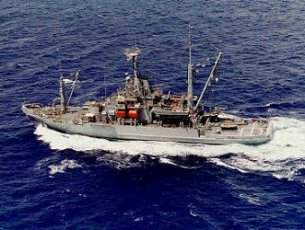
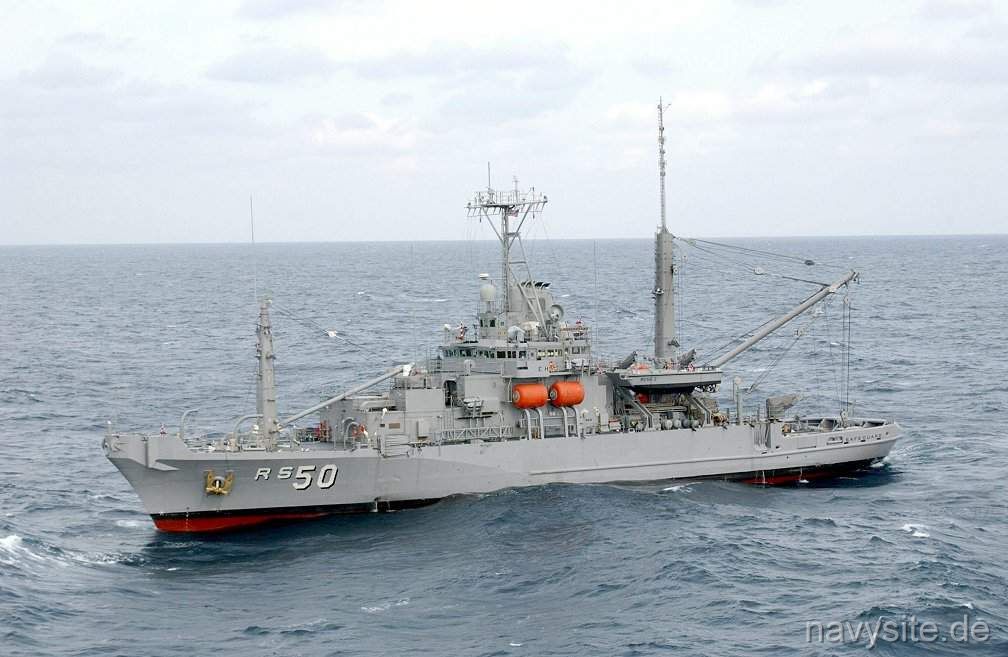
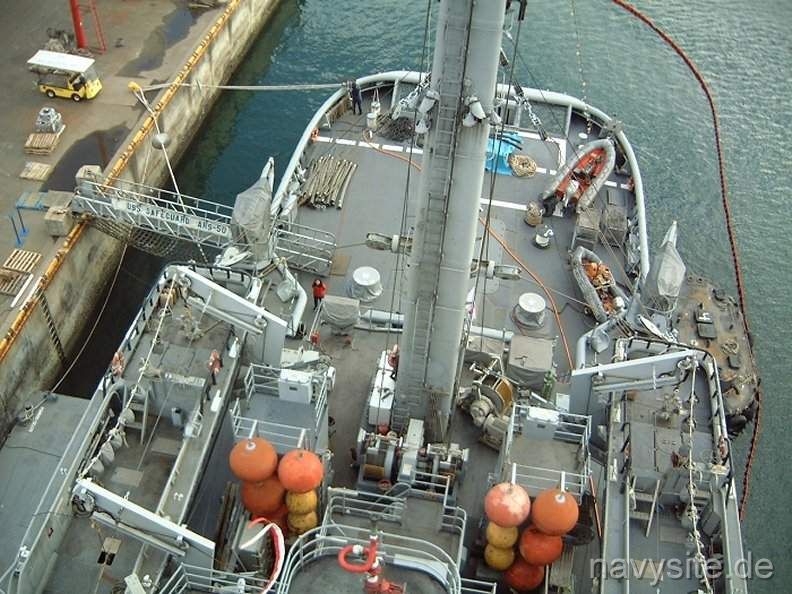
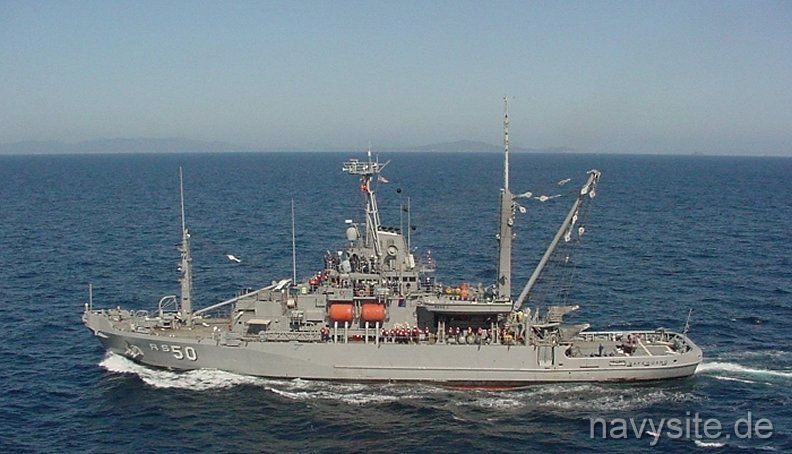
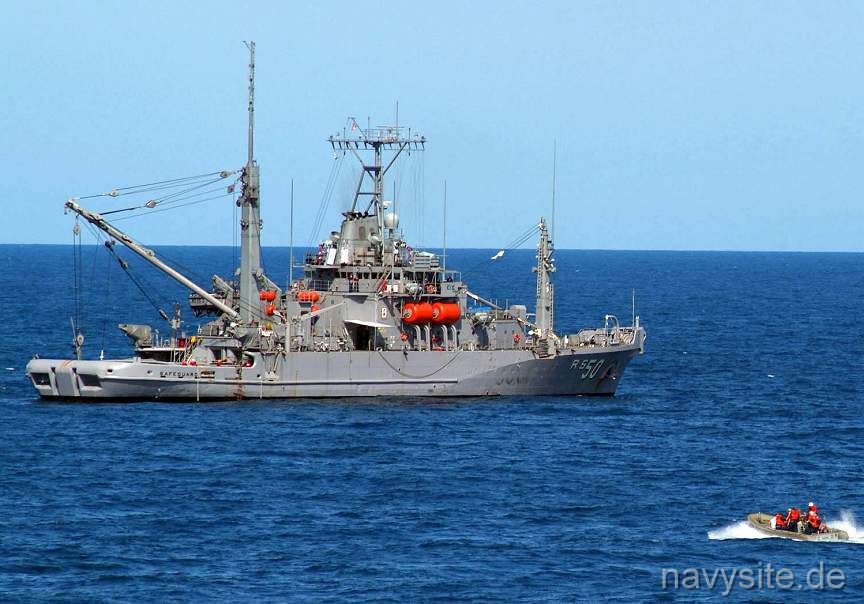
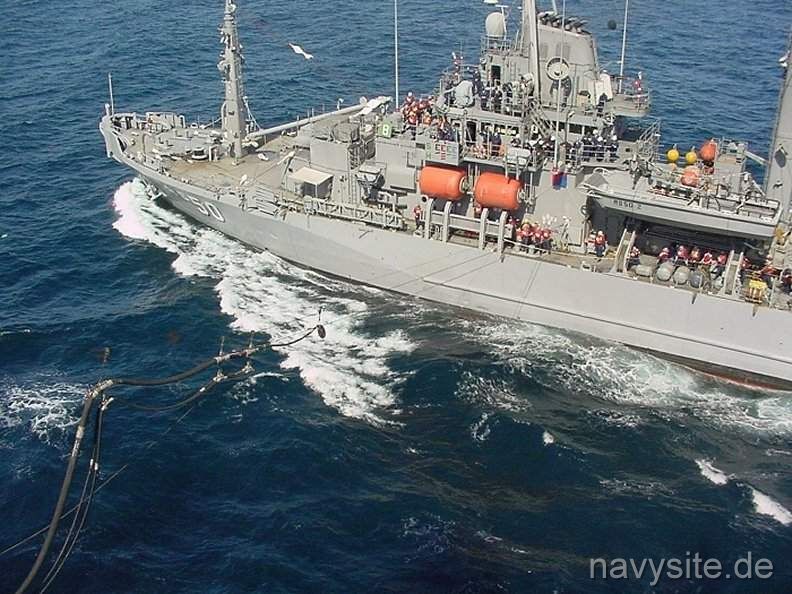
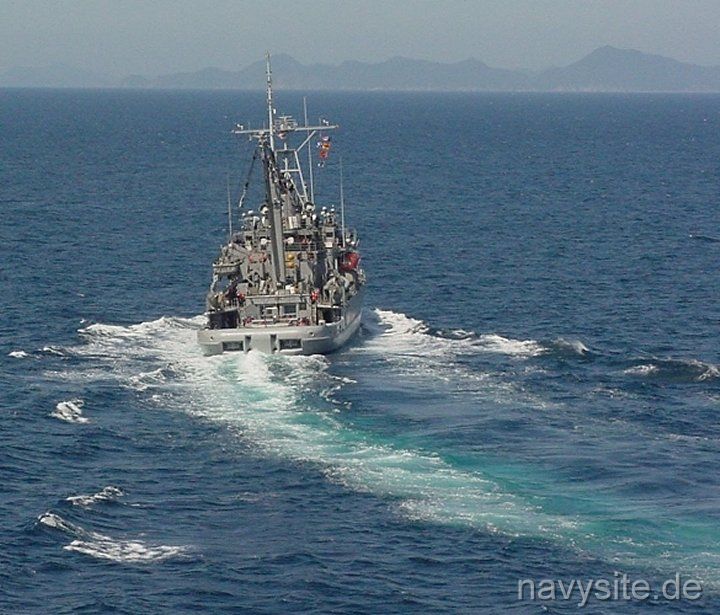
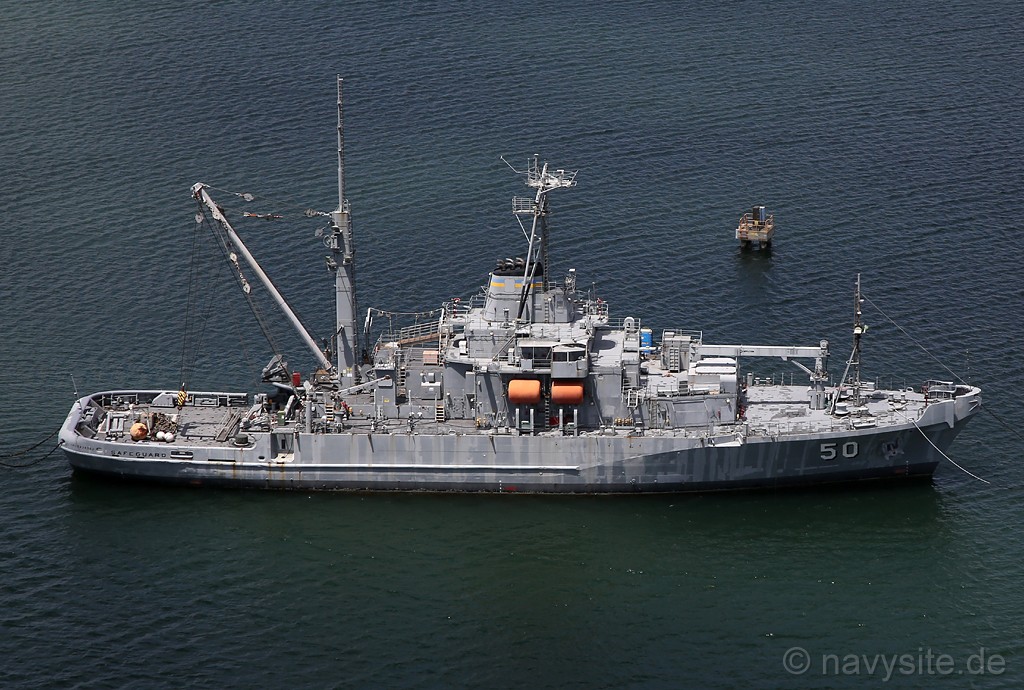
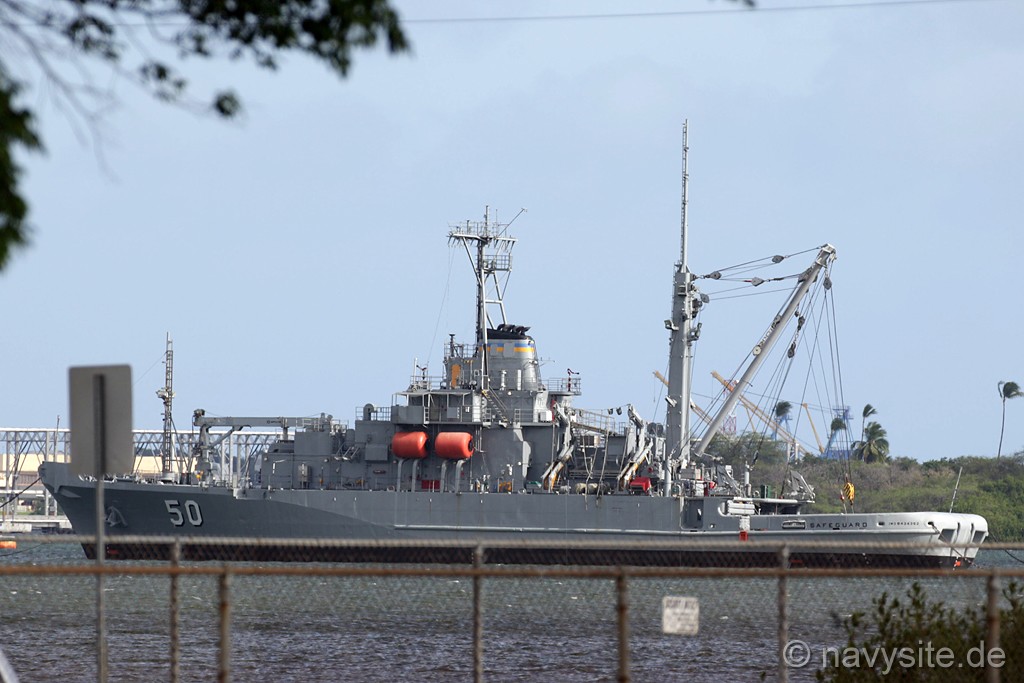
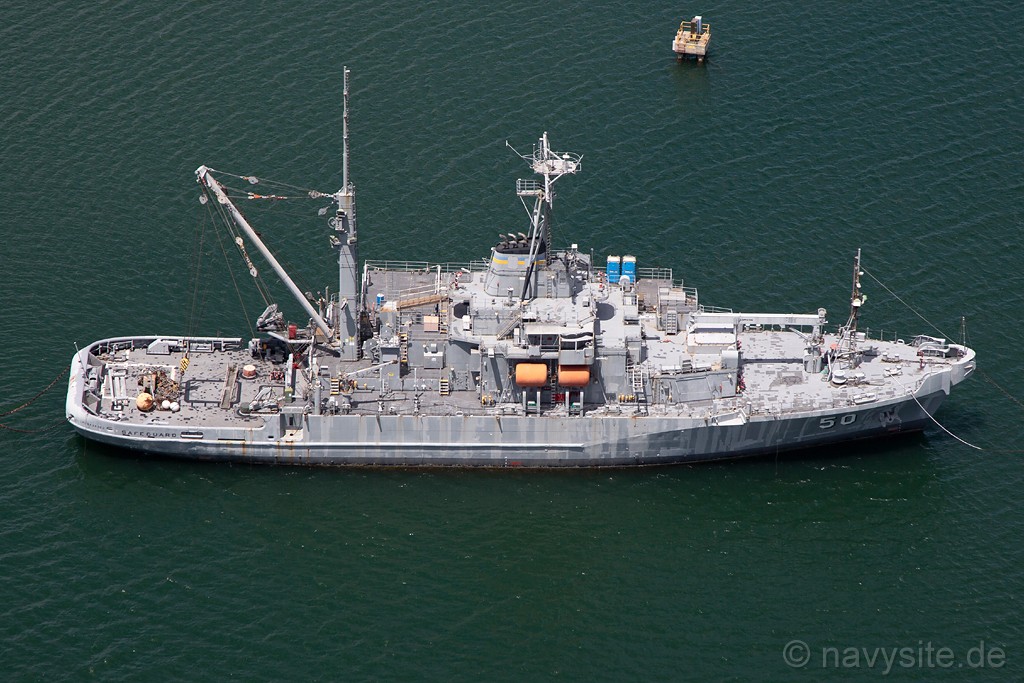
USNS SAFEGUARD was the lead ship of the SAFEGUARD class of Rescue and Salvage Ship. On September 26, 2007, she was decommissioned and transfered to the Military Sealift Command. She subsequently served under Military Sealift Command control for another 9 years before she was deactivated and laid up at Pearl Harbor, Hi.
| General Characteristics: | Awarded: August 28, 1981 |
| Keel laid: November 8, 1982 | |
| Launched: November 12, 1983 | |
| Commissioned: August 17, 1985 | |
| Decommissioned: September 26, 2007 | |
| MSC "in service": September 26, 2007 | |
| Deactivated: October 1, 2016 | |
| Builder: Peterson, Sturgeon Bay | |
| Propulsion system: four Caterpillar 399 Diesel Engines | |
| Propellers: two | |
| Length: 255 feet (77.7 meters) | |
| Beam: 50 feet (15.2 meters) | |
| Draft: 15.5 feet (4.7 meters) | |
| Displacement: approx. 3,200 tons | |
| Speed: 15 knots | |
| Armament: two .50 caliber machine guns; two Mk-38 25mm guns | |
| Workboats: two 35-Ft. Aluminum Boats, two 14-Ft. Inflatable Boats | |
| Crew: 26 MSC and 4 US Navy |
Crew List:
This section contains the names of sailors who served aboard USS / USNS SAFEGUARD. It is no official listing but contains the names of sailors who submitted their information.
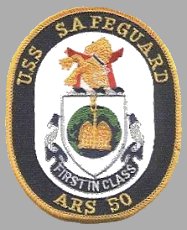
About the Ship's Coat of Arms:
The Shield:
Argent, a terrestrial globe azure with land masses vertical, north pole elevated showing the Pacific Ocean, and superimposed thereon a stato anchor suspended from the center of the globe. The colors white, blue, and gold refer to the sea and excellence. The stato anchor is especially suited for salvage operations because of its extremely high holding power and relatively low weight. It is appropriate symbol of strength and solid support to fleet operations of the Salvage Navy. The globe showing the Pacific Ocean recalls the area of operation of the SAFEGUARD's service.
The Crest:
On a wreath argent and azure, in front of a torii, rules a demi-horse rampant with a rimmed collar attached thereto a chain and hook of silver. The seahorse denotes the reputation gained by the SAFEGUARD as the "Workhorse of the Pacific Fleet", the horse being a noble beast that is useful both in peace and in war; and his color gold is symbolic of excellence and success. The collar represents command and control. The colors, blue and white, signify the sea. The chain and hook suggest the mission of service and support. The red torii, or oriental gateway, refers to SAFEGUARD's service in the area of Japan, Korea, and the waters of the Western Pacific.
USS / USNS SAFEGUARD History:
USS SAFEGUARD began as the lead ship of her rescue and salvage class when her keel was laid at Peterson Builders, Sturgeon Bay, Wisconsin, on November 8, 1982, followed by launch on November 12, 1983, and commissioning on August 17, 1985, in Sturgeon Bay. After fitting out, she departed the shipyard for her new ocean home on September 17, 1985, and - after a 10,200-mile delivery that included the Great Lakes, the St. Lawrence Seaway, an East Coast swing, and passage to the Pacific - she arrived at Pearl Harbor, her first operational home port, on November 12, 1985.
From late 1985 through 1986, she completed her shakedown and the first full operating year of trials and certifications for towing, diving, heavy-lift, firefighting, and well-practiced four-point moors that would define her trade. The ship's crews worked up with Mobile Diving and Salvage Unit teams in the Hawaiian operating areas while the Navy's new post-Vietnam salvage doctrine matured around the SAFEGUARD-class.
In early 1987, SAFEGUARD pushed west, making Guam on January 29 for logistics before continuing into the broader Western Pacific. The late-1980s cycle alternated between Pearl Harbor training and WestPac problem-solving: diving and towing rehearsals, target tow services, and readiness tasking across Micronesia and the Philippine Sea. In September 1989, as Cold War tensions eased but undersea history remained a practical concern, her divers surveyed the World War II wreck of the Japanese submarine RO-65 in Kiska Harbor, Alaska's Aleutians, a technically challenging cold-water job that underscored the class's expeditionary reach. The 1990 operating year maintained the tempo with towing drills, salvage moors, and ship-handling evolutions around Hawaii and westward, keeping crews current on the equipment - beach gear, traction winch, bow and stern rollers - for retractions and lifts.
By 1991, with regional upheaval following Iraq's invasion of Kuwait and natural disaster in the Philippines, SAFEGUARD's schedule reflected the Navy's wider pull between crisis response and fleet sustainment. That summer she prepared and executed a notable heavy-tow evolution connected to the nuclear fast-attack submarine ex-USS PERMIT (SSN 594), an intricate, multi-agency movement in the submarine force's end-of-life pipeline that required detailed planning, coastal routing to West Coast facilities, and constant attention to weather, rig, and escort. Through the early 1990s, she alternated West Coast maintenance and training phases - including time pierside in Alameda for crew instruction - with Western Pacific deployments that kept her divers and deck crews practiced in harbor clearance, small-boat operations, and complex moors.
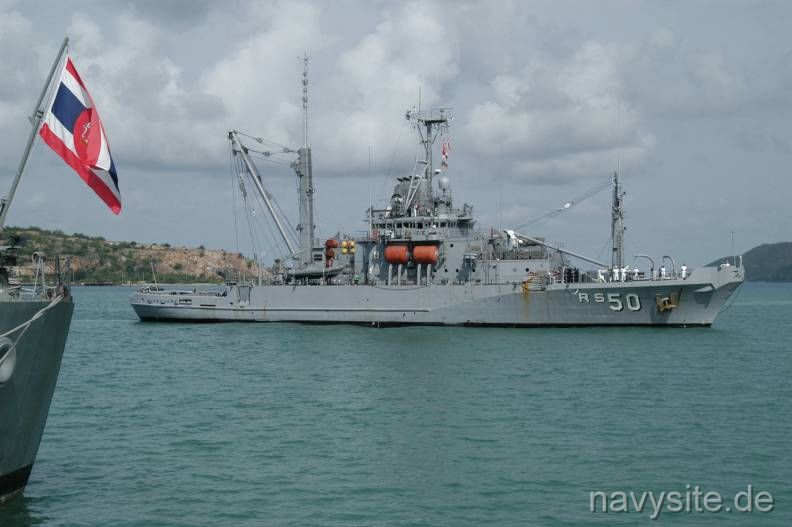
A strategic inflection arrived in 1999, when SAFEGUARD left her longtime Hawaiian base and forward-deployed to Sasebo, Japan, on June 16. From that point, she became the Seventh Fleet's day-to-day rescue and salvage workhorse, routinely operating independently but also in company with amphibious ready groups and destroyer squadrons. The 2001-2002 patrol rhythm showed the pattern: short-notice sorties from Sasebo, proficiency drills in Sasebo Harbor and off Okinawa, and regional run-and-gun logistics. In 2003, she shifted south into Southeast Asia for Cooperation Afloat Readiness and Training. A photographic record shows SAFEGUARD entering Sattahip, Thailand, on June 6, 2003, to begin the Thailand phase, bringing diving gear, small boats, and a platform for bilateral boarding and damage-control drills with the Royal Thai Navy. Forward presence meant frequent liberty and logistics stops - Subic Bay, White Beach, Chinhae as required - and a steady cadence of minor emergent jobs alongside programmed exercises.
A signature bilateral series followed on India's west coast. From September 12 to September 24, 2005, SAFEGUARD conducted SALVEX in and off Cochin with Indian Navy clearance divers, executing twelve days of combined dives, recompression-chamber familiarization, side-scan sonar surveys, and lift-bag practice. She returned to Sasebo on October 16, 2005, after nearly six months away, welcomed as the theater's only forward-deployed rescue and salvage asset. The mid-2000s also saw her in repeated CARAT phases with Southeast Asian partners, interleaving community-relations events with technical serials - off-ship firefighting streams, four-point moors, and towing drills - that validated procedures in hot, high-fouling littorals.
On September 26, 2007, SAFEGUARD's manning and status changed but not her mission: she was decommissioned as a commissioned warship and, in a ceremony at Sasebo, transferred to Military Sealift Command with a civil-service mariner crew as USNS SAFEGUARD (T-ARS 50). The ship remained in Japan and kept at the same jobs - now flying the blue-and-gold MSC stack, she continued to embark Navy divers for operations and training. In March-April 2009, she embarked Mobile Diving and Salvage Unit ONE to Sihanoukville, Cambodia, for a focused diving and engineering exchange from March 31 to April 4, with Cambodian divers using SAFEGUARD's recompression chamber and learning side-scan sonar workflows from the ship's topsides. That summer, she served as a contact-of-interest vessel during the Southeast Asia Cooperation Against Terrorism (SEACAT) scenario, giving regional special-boat teams and coast guard units realistic at-sea boarding reps. In October 2010, she completed another CARAT Philippines phase, again providing the stable diving deck and lift capability that made the class so useful to partner navies.
When the Great East Japan Earthquake and tsunami struck on March 11, 2011, SAFEGUARD and the broader Seventh Fleet turned to humanitarian assistance under Operation Tomodachi. On March 24, 2011, she arrived at Hachinohe with MDSU-1 embarked to begin harbor-clearance diving alongside Japanese authorities. Across March 25-27, U.S. Navy divers from SAFEGUARD, Explosive Ordnance Disposal Mobile Unit 5, and Underwater Construction Team 2 opened the LNG pier and other critical areas, enabling fuel and relief shipments to flow. As the task force shifted effort north and south, SAFEGUARD moved to Miyako on March 28-29 to survey and mark underwater hazards for follow-on salvage, then to Oshima in early April to support debris clearance in island harbors while amphibious ships delivered relief ashore. She later returned to stricken ports for follow-through and, months after the immediate crisis, departed a tsunami-damaged Japanese port in November 2011 with the quiet evidence of cleared channels behind her.
The ship remained a familiar presence around Southeast Asia and the Western Pacific in 2012-2013, with periodic Sasebo upkeep punctuated by short deployments: more dives with regional partners, boarding-and-search drills during multilateral events, and the endless small-boat choreography of a working salvage platform. In April 2014, after the ferry SEWOL disaster in the Yellow Sea, U.S. Pacific Fleet ordered SAFEGUARD toward the Korean peninsula. By April 23, 2014, she was en route to join Republic of Korea authorities and allied units, ready to contribute divers, sonar, and lift as required in the grim maritime recovery operation that followed.
USNS SAFEGUARD's final operational summer came in Hawaii. During Rim of the Pacific (RIMPAC) 2016 she and embarked Navy divers executed harbor-clearance and deep-dive serials through late July, culminating in a final set of successful training lifts and surveys on July 26-28, 2016, even as the ship approached the end of her service life. On October 1, 2016, she was placed "Out of Service, in Reserve" and laid up at the Naval Inactive Ship Maintenance Facility, Pearl Harbor, after three decades as the Pacific Fleet's salvage and rescue utility knife - commissioned and civilian-crewed alike - linking routine harbor jobs and high-stakes clearance under the same disciplined procedures.
USS / USNS SAFEGUARD Image Gallery:
![]() | ![]() | ![]() | ![]() | ![]() |
![]() | ![]() | ![]() |
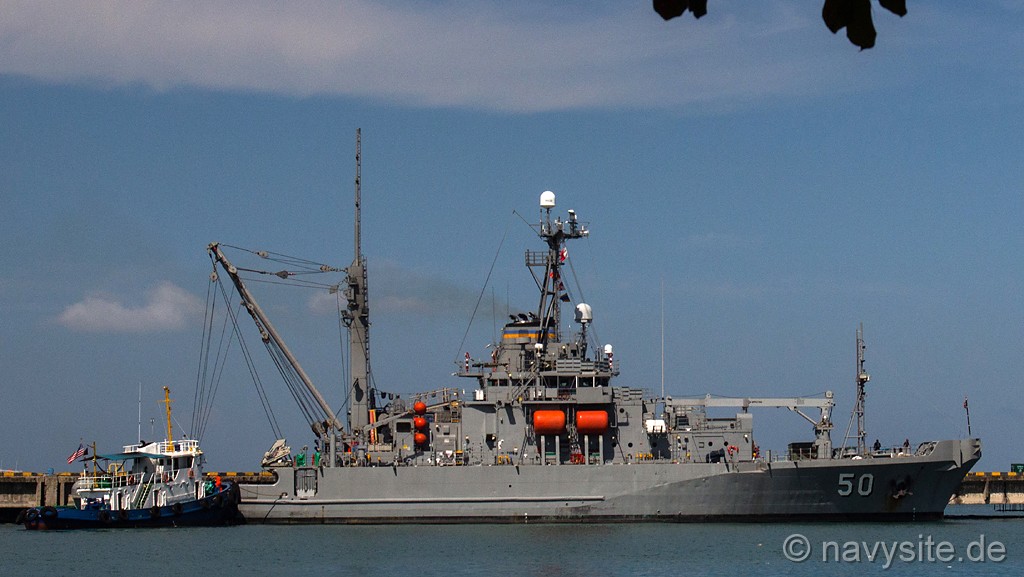
The photo below was taken by Matthias Jenning and shows the SAFEGUARD during a port visit to Sihanoukville, Cambodia, on November 21, 2015.
![]() |
The photo below was taken by Michael Jenning and shows the SAFEGUARD laid up at Pearl Harbor, Hi., on October 15, 2017.
![]() |
The photos below were taken by Sebastian Thoma and show the ex-SAFEGUARD laid up at Pearl Harbor, Hi., on March 18, 2022.
![]() | ![]() |
Back to Rescue and Salvage Ships site.
Back to ships list.
Back to selection page.
Back to 1st page.